Buyers researching signal jammer suppliers and manufacturers need to weigh frequency coverage, power, cooling and certifications against some of the strictest RF regulations on the books. This guide breaks down how jammers work, what leading factories actually quote, and where civilian use is prohibited.
What Is a Signal Jammer and How Does It Work?
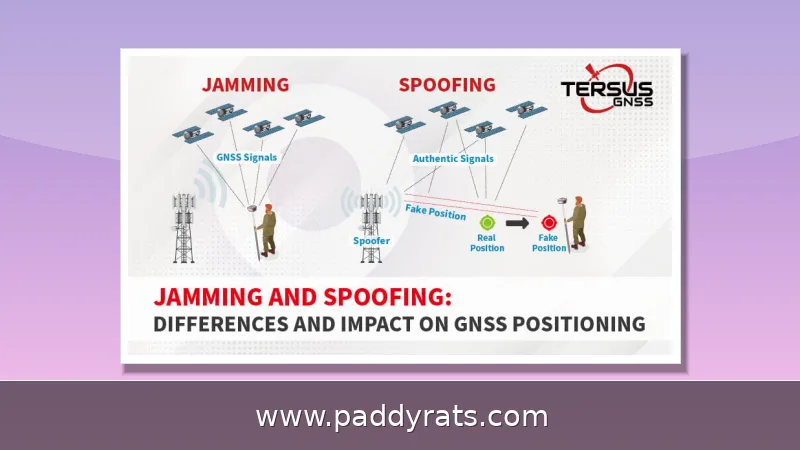
A signal jammer is basically an RF transmitter that floods whatever frequencies a target device depends on with noise. The result is a denial-of-service effect — the noise overpowers the original signal coming from cell towers or satellites. When I'm looking at spec sheets, I use a pretty simple mental model: the jammer isn't intercepting or decrypting anything. It just raises the noise floor until the receiver can't tell legitimate traffic apart anymore. That distinction actually matters a lot for buyers, because it explains why range claims tend to fall apart in dense urban areas — and why adding more bands almost always means more power draw and more heat.
Most cell jammers go after the usual cellular bands — 700MHz, 800MHz, 900MHz, 1800MHz, 1900MHz, and 2100MHz — while GPS sits up at 1575MHz and WiFi runs on 2.4GHz and 5GHz. A basic unit only covers a small slice of that range. Step up to an advanced model and you also get protocol jamming, which goes after the control channels instead of just blocking voice or data. The trade-off is power: the wider the frequency coverage, the more juice it takes, which is exactly why a 31-channel worldwide unit looks nothing like a single-band handheld on the inside.
It's fair to be skeptical of range claims in this market. Basic consumer-grade units typically cover no more than about 30 square feet of usable space, while commercial models advertise a 5 to 40 meter radius, or 200 to 300 square meters of coverage, under ideal line-of-sight conditions. In practice, walls, metal shelving, and competing base stations all shrink those numbers fast. So before I'd treat any range figure as a planning input, I'd ask the supplier what test conditions produced it.
Types of Signal Jammers: Portable, Manpack, Drone and Prison Models
What a buyer ends up choosing usually comes down to where the device will actually be used. Handheld portable jammers are the go-to for close-range privacy and meeting-room settings, while manpack or backpack models pack more power into something you can carry around. Desktop units stay put in fixed installations, and prison jammers are built specifically to shut down contraband phones inside concrete facilities. As for drone or UAV jammers — sometimes sold as anti-drone modules — their job is to take out the control and video links that keep an aircraft in the air.
Bomb jammers—often labeled RCIED or IED jammers—are their own category, designed mainly for convoy protection and military work. The vehicle-mounted versions tend to have the most channels and the steepest price tags. One thing to know about this market: the terminology is all over the place. The same product might be listed as a blocker, a signal blocker, a GPS jammer, a WiFi jammer, or a DDS jammer, depending on who's selling it. I basically treat those names as marketing shorthand and skip past them to the two things that actually matter: the frequency list and the output power.
Portable jammers are where most of the commercial demand is, and the segment is expected to hit $4.98 billion by 2026, growing at a 9.4% CAGR, per an Alibaba supplier guide updated June 24, 2026. About 70% of commercial users point to privacy protection as the main driver, and a 2023 Tech Insights report found demand up more than 40%. Numbers like these go a long way toward explaining why so many Shenzhen factories now treat portable inhibitors as a staple of their catalogs.
Key Specifications to Compare Across Suppliers
When you put quotes from different suppliers next to each other, five specs are what actually tell you whether two units belong in the same comparison: frequency coverage, output power per band, cooling design, channel count, and certification status. On frequency coverage, insist on a band-by-band breakdown instead of a vague range—a unit sold as "20–6000MHz" can still have holes right where specific LTE or WiFi 6 channels sit. Cooling is the one buyers skip over most often and regret later, because a jammer that runs hot will quietly cut its own output within minutes.
The table below summarizes typical spec ranges and price points from the named suppliers — a handy gut check for when a quote comes in way too low or way too high.
| Supplier | Product | Price (USD) |
|---|---|---|
| Shenzhen Jinyatong | 27-antenna portable jammer | $338/piece |
| Shenzhen Jinyatong | 31-channel worldwide jammer | $450/piece |
| Shenzhen Jinyatong | 18-antenna portable jammer | $298-338/piece |
| Shenzhen Jinyatong | 12-antenna full-band jammer | $240-280/piece |
| Shenzhen Jinyatong | 10-antenna 20-6000MHz DDS bomb jammer | $32,800-37,800/piece |
| Shenzhen Jinyatong | Anti-drone GaN modules | $65-190/piece |
| Jammer Master | 4G Phone Jammer JM021 | $520 |
| Jammer Master | Drone UAV Signal Jammer JM004 | $2,399.99 |
Telejammer, for its part, lists a Full Band Drone Detector that covers 700–6300MHz at a range of 800–1000m for $650, marked down from $900, along with an EMP jammer pitched for fishing games and slot machines at $135, down from $180. Over on Alibaba, verified suppliers like Shenzhen Desheng Security quote 10-antenna portable inhibitors with independent band controls and built-in cooling at $125–508, and they'll sell you a single piece. That gap between a $125 handheld and a $37,800 bomb jammer might look strange at first, but it isn't a pricing glitch. These are genuinely different classes of equipment, with very different power requirements and certification burdens behind them.
Leading Signal Jammer Manufacturers and Suppliers
Shenzhen is still where most of this industry lives. Take Shenzhen Al Asar Tech Co., Ltd — they make signal jammers, audio jammers, cell phone detection equipment, bug detectors, DDS jammers, and drone detection and counter systems. They ship to more than 20 countries, bring in over US $20 million a year in exports, and list India, Nepal, Pakistan, and Bangladesh as their main markets, with OEM/ODM available. Then there's Shenzhen Jinyatong Technology Co., Ltd, founded on November 14, 2011. It's a small operation — just 11 employees — but it works as both a factory and a trading company, and its lineup covers jammers, cell phone jammers, anti-drone modules, drone jammers, prison jammers, IED bomb jammers, and drone detectors.
Telejammer positions itself as a manufacturer of wireless coverage products, phone signal boosters, WiFi boosters, anti-drone devices, RF modules, RF amplifiers, gain blocks and VCO, and reports cooperation with customers in over 80 countries alongside OEM/ODM services. TeXin, operating at txjammer.com, builds mobile phone signal jammers customizable by country cellular standard and covers 2G, 3G, 4G, 5G, WiFi, GPS, VHF, UHF, LOJACK, GSM, CDMA, UMTS and LTE, with applications spanning movie theatres, school classrooms, examination rooms, conference rooms, law enforcement, government and military bases.
Beyond those names, Security Pro USA supplies signal jammers, drone jammers, GSM, GPS and WiFi jammers and satellite jammers, while Jammermfg.com runs as a global signal blocker manufacturer and online wholesale store with 24/7 service and Jammer Store manufactures cell phone signal jammers, blockers and GPS and WiFi jamming equipment. Shenzhen Desheng Security Technology Co., Ltd focuses on 10-antenna portable inhibitors with full spectrum 2G to 5G and dual-band WiFi. Alibaba's list of 16 verified portable jammer manufacturers also includes Shenzhen Necom Telecommunication Technologies Co., Ltd, Shenzhen Hengya Brand Management Co., Ltd, Jingtel (Shenzhen) Technology Co., Ltd, RRR (Shenzhen) Tech Co., Ltd, Shenzhen Alishang Trading Co., Ltd, Shenzhen Weidi Digital Trading Co., Ltd and Shenzhen Greetwin Telecom Co., Ltd. Defense Advancement covers suppliers of electronic warfare jammers and jamming systems for military and defense applications, and Jam-Gon announced its Ultra Signal Jammer 3000 product line in March 2023.
Supply-side dynamics favor buyers here. Component and raw material suppliers are numerous, so the bargaining power of suppliers is low according to dataintelo.com, which means sourcing leverage sits with the purchasing side as long as the buyer insists on verified factory status rather than trading-company intermediaries. I would treat a supplier's export history and named reference markets as stronger signals than catalog breadth, since anyone can list 40 product categories but far fewer can document repeat international shipments.
Certifications, OEM/ODM and Customization Options
Most top-tier suppliers maintain CE, RoHS and ISO 9001 certifications, and those three documents are the baseline I ask for before any technical discussion. CE and RoHS speak to product safety and hazardous substance limits, while ISO 9001 addresses manufacturing process consistency, which matters more than it sounds when you are ordering multi-band units that must hold output stability across temperature swings. Certifications do not make a jammer legal to operate, but they do indicate a factory that can pass an audit.
OEM and ODM arrangements are standard across the Shenzhen ecosystem. Customization typically covers frequency selection by country cellular standard, channel count, antenna configuration, enclosure branding and software-defined frequency updates that let a deployed unit be retuned without a hardware swap. For international deployment, verified manufacturers offering OEM, ODM and software-defined frequency updates are generally preferred, because regulatory band plans differ enough between markets that a fixed-frequency unit can become obsolete quickly.
Software-defined architecture is the single most useful customization to negotiate, since it decouples the hardware purchase from future band changes. If a supplier cannot explain how frequency updates are delivered and validated, that is a signal the product is a fixed design with a new label rather than a genuinely configurable platform.
Legal and Regulatory Considerations for Buyers
In the United States it is illegal to sell, advertise, distribute or operate cell signal jammers. The FCC states plainly that jammers are RF transmitters designed to block, jam or interfere with authorized radio communications, and the Communications Act of 1934 outlaws interference with authorized radio broadcasts. That prohibition is not a paperwork technicality, it is enforced, and it applies to the marketing of the device as much as to its operation.
The public safety rationale is concrete. Jammers can interfere with GPS, WiFi, police radar and emergency 9-1-1 calls, which is why the FCC frames them as a serious risk to public safety communications rather than a nuisance. Many other jurisdictions also restrict or prohibit civilian use, so buyers must check local telecommunications laws before purchasing. I would add that importation itself can trigger enforcement even where domestic possession rules are ambiguous, so the compliance question starts at the border, not at the power switch.
For buyers in markets where limited use is permitted, the practical compliance checklist is documentation rather than hardware: confirm the licensing pathway, confirm which frequencies are authorized, confirm the operator holds the required authorization, and keep the supplier's certification file on hand. If any of those four items is missing, the deployment is exposed regardless of how well the jammer performs. This article is informational and does not constitute legal advice.
Market Trends Shaping 2026 Supply
Market forecasts point to sustained growth. Technavio, in a report published May 2024, forecast the signal jammer market to increase by USD 1.08 billion between 2023 and 2028 at a 5.66% CAGR. Fortune Business Insights projects the global market growing from $4.98 billion in 2026 to $9.27 billion by 2034 at an 8.1% CAGR. The two estimates use different scopes and methodologies, but both describe an expanding category rather than a mature one.
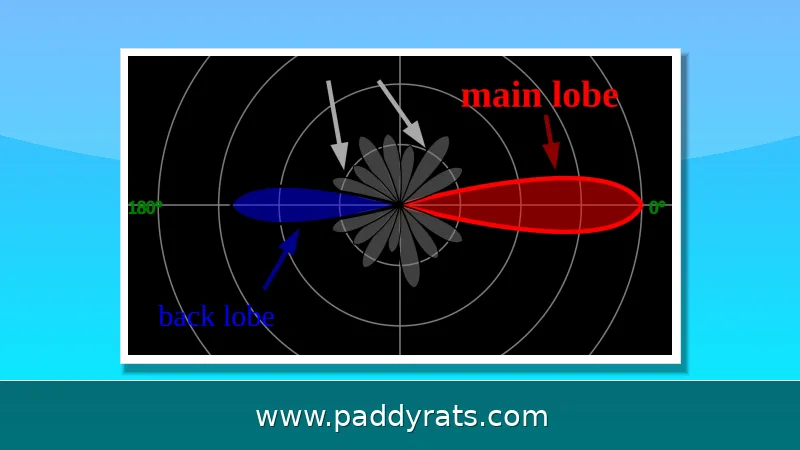
Product direction is shifting toward AI-integrated, sensor-cued jamming with adaptive algorithms and narrow beams, which concentrate energy on a specific target instead of blanketing a site. Demand for manpack and backpack jammers in 10-band or 12-band configurations weighing less than 5kg keeps rising, driven by field teams that need multi-band coverage GSM, 5G, WiFi 6 and GPS L1-L5 in a single carried unit. Layered counter-UAS systems that combine electronic warfare with detection and autonomous interceptors represent the fastest-moving segment.
For sourcing teams, the practical implication is that a supplier's roadmap matters as much as its current catalog. Factories investing in software-defined systems for rapid frequency updates will stay relevant as band plans evolve, while suppliers selling fixed 4G-era hardware at discount prices are effectively liquidating inventory.
Applications and Where Demand Comes From
Documented applications span military and defense, home security, prisons, airports, oil depots, power stations, large gatherings, schools, examination rooms, movie theatres, conference rooms, law enforcement, government places, military base stations, VIP convoy protection and general privacy protection. That list is broad, but the underlying buyer motivations differ sharply: a prison needs contraband phone suppression, an exam room needs controlled silence, and a VIP convoy needs protection against remote triggers.
Procurement paths differ accordingly. Government and military buyers typically work through defense-focused suppliers and electronic warfare integrators, while commercial buyers in permitted jurisdictions source portable units directly from factories. Schools, theatres and conference rooms are the most common civilian use cases cited by suppliers, though buyers in the United States should note that these applications remain prohibited under FCC rules regardless of how the vendor markets the product.
My sourcing advice is to match the unit to the mission before comparing prices. A 10-antenna portable inhibitor with independent band controls is the right answer for a fixed indoor installation, while a manpack under 5kg with 12 bands is the right answer for a mobile team. Buying on price alone usually produces a unit that either cannot cover the required bands or cannot sustain output long enough to be useful.
Frequently Asked Questions
How do signal jammers work?
Jammers transmit radio frequency noise on the same frequencies used by phones, GPS or WiFi, overpowering the original signal from towers and satellites. This denial-of-service effect blocks calls, texts and data within the jamming radius. Advanced models use protocol jamming to disrupt control channels rather than the payload itself.
Are signal jammers legal to buy and use?
In the United States it is illegal to sell, advertise, distribute or operate cell signal jammers, and the FCC says they pose serious risks to public safety communications. Many other jurisdictions also restrict or prohibit civilian use, so buyers must check local telecommunications laws before purchasing, including importation rules at the border.
What should I check when choosing a signal jammer supplier?
Look at frequency coverage such as GSM, 5G, WiFi 6 and GPS L1-L5, power output, range, cooling design and certifications like CE, RoHS and ISO 9001. Verified manufacturers offering OEM, ODM and software-defined frequency updates are generally preferred for international deployment, since band plans differ between markets.
What types of signal jammers are available?
Common types include portable handheld jammers, manpack or backpack models, desktop and prison jammers, drone or UAV jammers, WiFi jammers, GPS jammers and vehicle-mounted bomb jammers. Multi-band models cover 2G to 5G, WiFi and GPS in one unit, with pricing ranging from roughly $125 for a basic handheld to over $37,000 for a DDS bomb jammer.