Schools sometimes ask whether they can jam cell signals to cut classroom distraction, but US federal law bans operating jammers, and the FCC warns they can block 911 calls. Here is how jamming works, what happened in Pasco County, and the legal alternatives schools actually use.
What Is a Signal Jammer and How Does It Work?
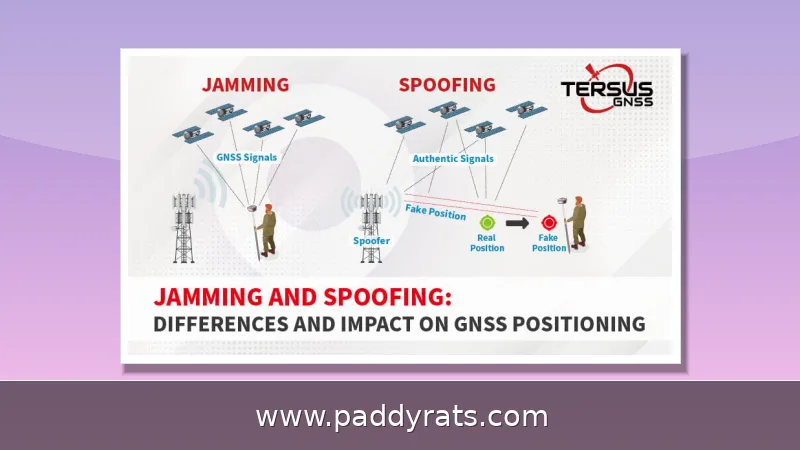
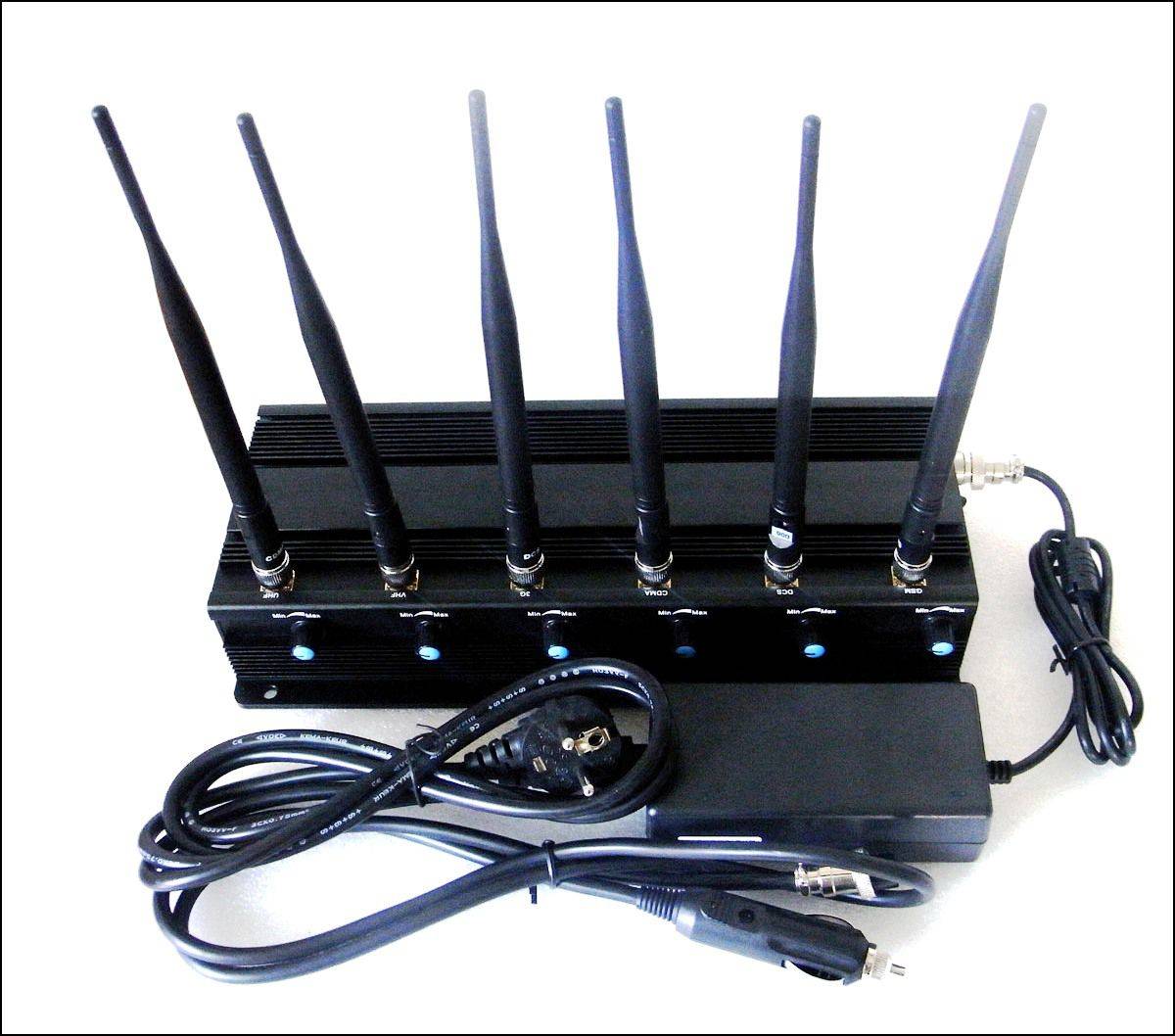
A signal jammer is really just an RF transmitter built to drown out authorized radio communications. The FCC throws a bunch of labels at these things—signal blockers, GPS jammers, cell phone jammers, Wi-Fi jammers, text blockers—and treats every single one as a violation of licensed spectrum. The basic idea is simple: the jammer blasts RF noise on the same frequencies your phone, GPS, or Wi-Fi router relies on. That noise overpowers whatever signal is coming from a cell tower or satellite, creating a wall the device just can't get through.
The technical side of things is really where you see why jammers are such a crude tool. The cheaper units only take out one frequency band, which can trick a phone into thinking there's no network in range at all. Step up to the more advanced models and they use protocol jamming to go after the control channels, while wide-band full spectrum jammers knock out several bands at once. Range is another limitation—most consumer jammers cover no more than about 30 square feet, which is a big reason a single device almost never blankets a whole classroom block in any dependable way.
A jammer makes no distinction between a student sneaking a text and anyone else on their phone—it just blasts RF noise, and everything in range takes the hit. That means GPS, Wi-Fi, and even police radar can get knocked out alongside the cell signal you were trying to kill. It'll also defeat a cell phone signal booster, because a booster can only amplify a signal that's already reaching the building; it has no way to push back against deliberate interference. This spillover is the heart of the problem: regulators treat jamming as a public safety hazard, not a clever way to manage a classroom.
Are Cell Phone Jammers Legal in Schools?
In the US, selling, advertising, distributing, or even just turning on a cell signal jammer is against the law. The Communications Act of 1934 prohibits interference with authorized radio broadcasts, and the FCC doesn't mince words: using an RF jammer is a federal violation. The agency also warns that jammers can block 911 calls and emergency alerts, and they can disrupt law enforcement communications as well. So what might seem like an easy way to keep a classroom under control is actually a serious safety and legal problem.
The UK is just as strict. Under Ofcom regulations and the Wireless Telegraphy Act 2006, mobile phone jammers are completely banned, so a school that imported one would still be breaking the law. Bottom line: when people ask whether schools can jam signals, the answer in both countries is no. However distracting phones have become in the classroom, that legal reality doesn't budge. Which is exactly why schools end up turning to passive pouches or network-level controls instead. Those options don't transmit any interference, so they keep everyone on the right side of the rules.
That legal line is really what shapes every option below. If something is sold as a classroom cell phone signal blocker but it's actually pumping out RF noise, it carries the same federal risk as some homemade jammer. Passive blocking pouches and carrier-side filtering, though, stay on the right side of that line.
Why Schools Have Poor Cell Signal Without Jammers
Plenty of schools already struggle with spotty reception, and more often than not, it's the building itself causing the problem—not some hidden jammer. Wilson Connectivity notes that most of the nation's 331 million mobile phone users deal with poor cell connectivity at some point, and given how schools are constructed, that's pretty much a given. Energy-efficient windows, foam-injected insulation, and metal construction all tend to block incoming cell signal. The Center for Green Schools reports that 5,000 K-12 schools had earned LEED certification as of 2022.
LEED-certified buildings are designed to minimize energy loss, and the same materials that keep heat inside tend to block RF signals from getting in. Throw in the distance to the nearest cell tower and whatever obstacles—trees, hills, other buildings—happen to sit between you and it, and reception drops even further. That's why rural schools and newer green campuses often have the worst indoor coverage. Step inside a building like that and your phone might cling to a single bar, or just drop the signal completely, even when no one is jamming anything.
That distinction is worth keeping in mind whenever a teacher or parent starts to suspect that jamming is happening. If the dead zones only pop up in certain wings, or if they seem tied to how old the building is rather than what time of day it is, that's usually a sign of construction and distance doing the work, not an active blocker. The only way to know what's really going on is to watch for patterns over time, rather than jumping to the conclusion that some device is running.
The 2015 Pasco County, Florida Jammer Incident
When people in the US talk about schools jamming cell signals, the case that almost always comes up is what happened in Pasco County, Florida. In 2015, a science teacher named Dean Liptak used a cell phone jammer at Fivay High School from March 31 to April 2. Verizon caught on pretty quickly and filed a complaint that its network had been disrupted. Superintendent Kurt Browning suspended Liptak for five days, citing both the chance that he had violated federal law and the very real risk that blocking signals could stop someone from reaching 911.
The whole episode shows how quickly a classroom experiment can snowball into a regulatory mess. Verizon noticed the interference on its network, traced it back to the school, and escalated the complaint—which suddenly left school leadership scrambling to make a call about federal compliance. And look at what the suspension actually hinged on: not whether phones were distracting in class, but the fact that a teacher was operating a transmitter that interfered with licensed communications and could have knocked out emergency traffic.
For school administrators, the lesson is that jamming is not a private decision made inside one classroom. It affects carrier networks, emergency services, and anyone within range, and it creates documented legal exposure for the teacher and the district. That is why districts that want phone-free classrooms now look at pouches, policy, and carrier-level tools instead of hardware that transmits.
Specifications and Pricing of Jamming Hardware
Jamming hardware is widely sold online, and the price range shows how varied the devices are. Jammer Master lists an All-in-One Directional Signal Jammer JM030 at $1,220.00, a Built-in Directional Antennas Drone UAV Signal Jammer JM004 at $2,399.99, a 24 Antennas Portable 5G Cellular Signal Jammer JM019 at $1,150.00, and a Full Band Desktop Signal Jammer JM005 at $1,365.99. Smaller units include the 4G Phone Jammer JM021 at $520.00, the Handheld WiFi Bluetooth Signal Jammer JM012 at $569.99, and the Handheld Mobile Phone Jammer with 16 antennas and a 25-meter range, the JM018, at $699.00.
Portable jammers average about 1.5 kilograms, which makes them easy to move between rooms but also easy to conceal. The table below summarizes the listed products and their prices so schools and parents can see what the market actually offers before considering legal alternatives.
How Do School Cell Phone Jammers Work Across Frequency Bands?
Jammers transmit RF noise on the same frequencies as telecommunication devices, which is why they can silence so many different services at once. The bands involved include cellular 700MHz, 800MHz, 900MHz, 1800MHz, 1900MHz, and 2100MHz, GPS at 1575MHz, and WiFi at 2.4GHz and 5GHz. A device that covers several of these bands is described as wide-band or full spectrum.
Because coverage is band-specific, a jammer can miss a particular frequency band used by one network, leaving some carriers working while others fail. UK mobile networks, for example, use 800MHz, 900MHz, 1400MHz, 1800MHz, 1900MHz, and 2100MHz with specific downlink and uplink ranges for Three, EE, Vodafone, and O2. That fragmentation is one reason jamming is unreliable as a school-wide policy tool.
The table below maps the main services to their frequencies and shows what a jammer disrupts when it transmits on those bands.
Alternatives to Jamming: Pouches, Network Controls, and Boosters
Legal alternatives fall into three families: passive blocking, network-level controls, and legitimate signal improvement. Passive blocking pouches create electromagnetic shielding without power, acting like a small Faraday cage, and they are cost-effective. The tradeoff is that inexpensive pouches rarely block signals well, and the process of bagging and unbagging phones can become a noisy distraction of its own.
Network-level controls work from the carrier side. ParentShield SchoolBlock blocks calls, texts, and mobile data during school hours, typically 9am to 3pm, with the schedule set by the network rather than the phone, so a student cannot simply change a setting to bypass it. Children can still call and text two designated Home Numbers, which preserves a safety channel. This approach is legal because nothing is transmitting interference.
Professional signal boosters improve legitimate coverage and are Ofcom compliant under licence exemption in the UK. UCtel reports that educational mobile phone systems cover areas from 930 to 37,000 square meters, with signal amplification providing 70dB to 100dB gain. Industrial boosters cover up to 9,300 square meters and support more than 200 concurrent users per frequency band, while fibre DAS systems cover 2,800 to 37,000 square meters and support 4 to 16 indoor broadcast antennas per remote unit, with optimal results when external reception is 3-5 bars.
WiFi sweeps offer a low-cost complement to these tools. Installing a Wi-Fi signal analyzing app on a teacher's phone lets staff scan for unauthorized hotspots from phones hidden in bags, lockers, or drawers, which addresses the devices students use to bypass policy without touching licensed spectrum.
How to Detect a Jammer and What to Do
Detection starts with symptoms. Look for dropped service that appears suddenly and consistently in one area, especially if it affects multiple carriers at once. Apps claiming to detect jammers are largely unproven and require a working signal to function, so they are unreliable in the exact situation where you would need them. If jamming is suspected, contact law enforcement or file an FCC complaint rather than trying to diagnose the device yourself.
If a jammer is confirmed, the practical steps are limited. Someone can physically locate and disable the unit, switch frequency if they are technically savvy, or relocate, since jamming range is usually no more than 30 square feet. None of these are appropriate for students or staff to attempt on their own, and disabling a device does not resolve the underlying legal exposure for whoever installed it.
It also helps to consider the compliance picture before assuming a jammer is present. Faraday cages work passively and cannot be switched on and off, so a permanent dead zone points to construction rather than an active device. Schools may also use their own cell tower or filtering system instead of a jammer, which is not illegal, so the first question is always whether any transmitter is actually running.
Risks, Compliance, and Limitations
The risks of school jamming are well documented. Jammers can prevent 911 calls and emergency alerts, interfere with law enforcement communications, and block teacher phones and emergency services during the moments when communication matters most. They may also miss a particular frequency band used by one network, creating inconsistent coverage that confuses staff and students alike.
Compliance exposure extends beyond the person pressing the button. The FCC maintains a Jammer Enforcement page and warns that jammers can disrupt authorized radio communications, while Ofcom and the Wireless Telegraphy Act 2006 prohibit mobile phone jammers in the UK. A school that tolerates a device on campus risks federal penalties, carrier complaints, and liability if an emergency call fails.
The limitations of alternatives matter too. Passive pouches require consistent enforcement and can be defeated if a student keeps a second device, and network-level controls depend on the carrier and the specific plan. Boosters improve coverage but do not stop phone use, so most districts combine several tools with a clear classroom policy rather than searching for a single technical fix.
Frequently Asked Questions
Are signal jammers legal in schools?
In the United States it is illegal to sell, advertise, distribute, or operate cell signal jammers, and the FCC warns they can block 911 and emergency calls. In the UK, Ofcom regulations and the Wireless Telegraphy Act 2006 prohibit mobile phone jammers. Schools instead use passive pouches or network-level controls that do not transmit interference.
How does a cell phone jammer work?
A jammer transmits radio frequency noise on the same bands phones use, such as 700MHz to 2100MHz for cellular, 1575MHz for GPS, and 2.4GHz and 5GHz for WiFi. This denial-of-service attack overpowers signals from cell towers so devices cannot connect, and it can also interfere with GPS, Wi-Fi, and police radar.
Why do schools have bad cell signal if they are not jamming?
Energy-efficient windows, foam-injected insulation, and metal construction in many school buildings block incoming cell signal. Distance from the nearest cell tower and natural or manmade barriers also weaken reception, especially in LEED-certified or rural schools, where a phone may show one bar even though no jammer is running.
What can schools use instead of a signal jammer?
Options include lockable phone pouches that create a Faraday cage effect, network-level controls like ParentShield SchoolBlock that disable calls and texts during school hours, WiFi sweeps for unauthorized hotspots, and professional signal boosters to improve legitimate coverage. These approaches avoid transmitting interference and stay on the legal side of FCC and Ofcom rules.