RF jamming is tightly regulated in the US and UK, and the frequency bands a jammer targets determine both its usefulness and its legal exposure. Here is how jamming works, which bands matter, and who can legally operate one.
What Is Signal Jammer Frequency Regulation?
Signal jammer frequency regulation covers the laws and technical rules that govern how RF jamming devices get made, imported, marketed, sold, shipped, and used. This isn't a niche issue, either. A jammer doesn't just mess with its owner's gear — it deliberately degrades licensed spectrum that everyone else relies on, from cell calls and GPS timing to Wi-Fi and aviation and maritime safety systems. In the US, the FCC treats jamming as interference with authorized radio communications, and it doesn't just go after the person pushing the button. Manufacturers, distributors, retailers, and even shippers bringing jamming equipment into the country can all be held responsible.
The rules aren't the same everywhere you look. The UK has been reviewing whether simply possessing a radiofrequency jammer should count as an offense, since current law focuses on use and on supplying non-compliant equipment rather than just owning one. Norway's Nkom and other national regulators each take their own approach, and US federal agencies operate under a separate spectrum framework that the FCC's civilian prohibitions don't govern. So if you're researching jammers, the practical takeaway is this: frequency regulation is a licensing and interference question first, and a product-safety question second.
How Do RF Jammers Work Across Frequency Bands?
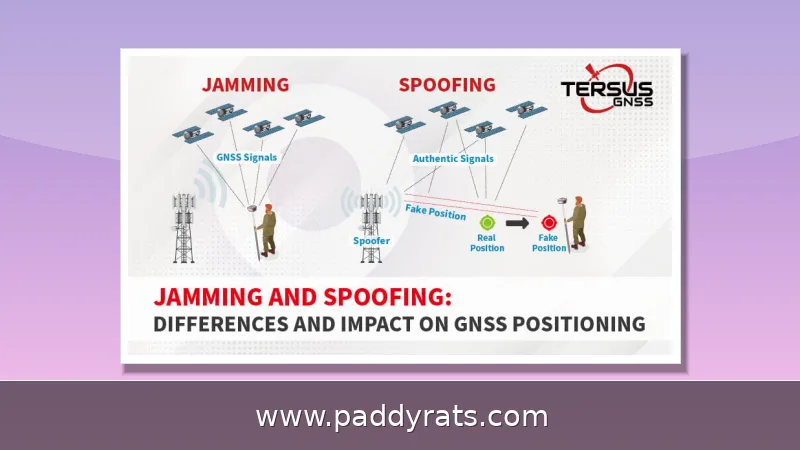
A jammer transmits on the same frequency as the target signal, but at higher power. Because of that, the victim receiver locks onto the jammer's energy instead of the legitimate transmission. The result is a drop in signal-to-noise ratio at the receiver, and once that ratio falls far enough, the receiver can no longer decode the data. That's why jamming is usually called intentional interference: the point isn't to damage the radio, it's to make the wanted signal look like noise.
Not every jammer sounds the same on a spectrum analyzer, and that's by design. Noise jamming simply floods a frequency with continuous noise, while deceptive jamming goes a step further by sending misleading signals that look like legitimate traffic. Barrage jamming spreads itself across a wide frequency range all at once, spot jamming puts everything into a single frequency, and sweep jamming rapidly shifts full power from one frequency to the next. Then there's DRFM, or digital radio frequency memory, a repeater technique that alters and re-transmits received radar energy, tweaking pulse delay to create false targets. Every one of these methods boils down to the same engineering trade-off: how much coverage you get versus how much power density you can apply, which is really the central compromise behind any jammer design.
Which Frequencies Are Targeted by Jammers?
Most portable RF signal jammers don't just hit one frequency—they run across four to eight bands simultaneously, covering cellular networks, Wi-Fi, GPS, and sometimes the control links used by drones. The list below pulls together the bands that come up most often, both in commercial jammer spec sheets and in the enforcement cases regulators have actually brought.
| Category | Typical frequencies | Common use affected |
|---|---|---|
| Cellular | 700MHz, 800MHz, 900MHz, 1800MHz, 1900MHz, 2100MHz | GSM, CDMA, LTE voice and data |
| GPS / GNSS | 1575MHz (L1, E1, E5a designations) | Position, navigation and timing |
| Wi-Fi | 2.4GHz and 5GHz | Wireless LAN and consumer devices |
| Drone links | 433MHz, 900MHz, 1.2GHz, 1.5GHz, 2.4GHz, 5.8GHz | Drone control and video downlink |
| GNSS constellations | GPS, GLONASS, Galileo, BeiDou bands | Satellite navigation receivers |
If you look at market data, the VHF/UHF band is clearly the dominant segment, holding about 30.81% of jammer sales, and the overall market is expanding at a compound annual rate of roughly 8.70%. That concentration isn't surprising once you think about it. VHF and UHF are the bands where most handheld and vehicle-mounted radios live, which is exactly the kind of equipment jammers are built to take down. There's also a physical trade-off at play: higher frequencies don't propagate as far, while lower frequencies can travel much farther, so the band you pick directly determines how wide an area a device's interference will actually reach.
What Do FCC and UK Rules Say About Jammers?
In the U.S., it's generally against the law to operate, make, market, sell, import, distribute, or ship RF jamming devices that are designed to interfere with authorized radio communications — that's set out in 47 U.S.C. 302a(b) and Section 333 of the Communications Act of 1934. According to the FCC's jammer enforcement guidance, each violation can bring fines of up to $112,500, and criminal prosecution is also on the table. One important exception, though: the FCC's prohibitions don't extend to federal government use of spectrum, since that falls outside the agency's civilian regulatory reach.
The UK is a different story in one key respect. On April 10, 2026, the government opened a call for evidence on possession of radiofrequency jammers and the legal framework around them, with responses due by 11:59pm on Friday, May 8, 2026. As things stand, using a jammer or supplying non-compliant equipment is an offense in the UK, but simply having one in your possession isn't specifically banned. That gap is part of what pushed the review forward: UK reporting has flagged jammers turning up more and more in burglaries, vehicle thefts, and organized crime.
Who Can Legally Operate a Drone Jammer?
On the federal side, counter-drone jamming is reserved for a specific set of agencies: the Department of Defense, the Department of Homeland Security, the Department of Justice, the Department of Energy, and the Coast Guard. That list got a bit longer with the SAFER SKIES Act, which was folded into the FY2026 National Defense Authorization Act. Under that law, certain state, local, and correctional agencies can now use counter-UAS jamming too — though they have to meet conditions, including training through the FBI. What hasn't changed is where private parties stand: companies and individuals still can't operate drone jammers, and it makes no difference if the drone is flying over property they own.
Training and coordination run through specific institutions. The FBI National Counter-UAS Training Center in Huntsville, Alabama, and JIATF-401, which updated its guidance in January 2026, are central to how authorized agencies build and maintain these capabilities. For commercial operators, the practical alternative to jamming is detection and tracking: platforms such as the AirGuard detection platform and the Airsight Smart and Autonomous Jammer illustrate the split between monitoring tools that are broadly deployable and jamming tools that remain restricted to authorized government users.
What Technical Requirements and Tests Apply to Jammers?
Jammer circuits combine an RF amplifier, a voltage controlled oscillator, and a tuning circuit. That architecture determines output power, band coverage, and how cleanly the device stays inside its intended frequency range. Authorized use requires specific authorization, output power control, operation within specified frequency ranges, and sufficient immunity to external interference. Testing methods include emission measurement with calibrated equipment, spectrum analysis using a spectrum analyzer or scanning receiver, and immunity testing.
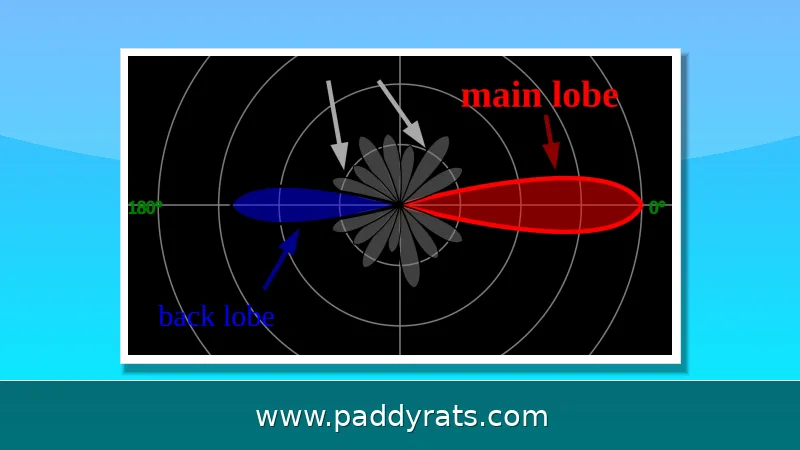
Relevant standards include MIL-STD-461, the IEC 61000 series, CISPR 11, CISPR 22, and FCC rules. Range is not a fixed number: it depends on output power, operating frequency, antenna gain, target signal strength, and the environment. Stationary jammers usually have a range of about 100 meters, while stronger jammers may require a larger jamming radius and a wider frequency band to be effective. Directional antennas focus jamming energy toward the target rather than broadcasting in all directions, which improves efficiency and reduces collateral interference.
What Are the Trade-Offs Between Jamming Techniques?
Spot jamming is focused but ineffective against frequency-agile radar, because the target simply moves to another frequency. Barrage jamming covers many frequencies at once but spreads power across them, making it weaker at any single frequency. Wide-band full-spectrum jammers block multiple bands simultaneously, which is useful against multi-band targets but raises the risk of disrupting unrelated devices. Targeted jammers minimize disruption to other equipment but may miss signals outside their tuned range.
Antenna design is the other half of the trade-off. A directional antenna concentrates energy where it is needed, while an omnidirectional setup spreads it broadly. The Airsight Smart and Autonomous Jammer illustrates the high end of this spectrum, offering 360-degree coverage out to 1.9 miles with manual and automatic activation, and mounting options on fixed positions, tripods, or vehicles. That kind of capability is exactly why authorized-use rules exist, and why unauthorized deployment carries such significant penalties.
What Are the Risks and Compliance Limits?
Improperly deployed jammers can disrupt emergency communications, interfere with nearby aircraft, and knock out wireless infrastructure over a wide area. Jamming can also disrupt Position, Navigation and Timing services that support aviation, maritime transport, emergency services, and financial systems, because those services rely on GNSS signals that jammers treat as targets. The blast radius of a poorly aimed jammer is rarely limited to the device its operator intended to affect.
Compliance is therefore about more than paperwork. Authorized deployments require specific authorization, controlled output power, operation within specified frequency ranges, and enough immunity to external interference to remain stable. For everyone else, the safest reading of the rules is straightforward: owning jamming hardware may be legal in some jurisdictions, but operating it, marketing it, or shipping it into the United States is generally not. Enforcement agencies have continued to update their guidance, including the FCC's jammer enforcement page, which was updated in September 2026.
How Does Jamming Affect Signal-to-Noise Ratio?
At the receiver level, jamming is a signal-to-noise ratio problem. A legitimate transmission arrives with a certain power level, and the receiver needs enough margin above background noise to decode it. When a jammer injects energy on the same frequency at higher power, the noise floor rises and the margin disappears. That is why a jammer can silence a conversation without physically damaging either radio.
You cannot block a jammer with a passive countermeasure, because the jammer emits energy in the spectrum you want to use, and there is no negative energy to cancel it. The realistic defenses are architectural: frequency agility, directional antennas, spread-spectrum modulation, and geographic separation. These are the same reasons military and aviation systems invest heavily in anti-jam design, and why regulators treat deliberate jamming as a serious interference offence rather than a consumer nuisance.
Frequently Asked Questions
Is it legal to own or use a signal jammer?
In the United States, operating, marketing, or selling RF jamming equipment is generally a federal crime under the Communications Act of 1934, with fines up to $112,500 per incident. In the UK, using jammers and supplying non-compliant equipment is an offence, though possession itself is not currently prohibited.
Which frequencies do signal jammers typically target?
Common targets include cellular bands at 700MHz, 800MHz, 900MHz, 1800MHz, 1900MHz, and 2100MHz, GPS at 1575MHz, Wi-Fi at 2.4GHz and 5GHz, and drone links at 433MHz, 900MHz, 1.2GHz, 1.5GHz, 2.4GHz, and 5.8GHz.
How does a signal jammer actually block communications?
A jammer transmits radiofrequency noise on the same frequency as the target signal at higher power, so the receiver picks up the jammer's energy instead of the legitimate transmission. This lowers the signal-to-noise ratio until the device can no longer decode data.
Who is allowed to operate a drone jammer in the United States?
Authorized users include the Department of Defense, DHS, DOJ, Department of Energy, and Coast Guard. Under the SAFER SKIES Act in the FY2026 NDAA, state and local law enforcement and correctional agencies may qualify after FBI training, but private companies and individuals are not authorized.