Rural dead zones usually come from distance, terrain, and building materials, not from a broken phone. A signal booster captures the faint outdoor signal, amplifies it, and rebroadcasts it inside, while shielding is the obstacle it works around.
Why Is Rural Cell Coverage So Weak in the First Place?
More rarely does a rural coverage problem end up being your cell phone. They are affected by distance, terrain, and the type of building you live in—towers spaced further apart; hills and dense trees sucking up radio energy; metal roofing, concrete around a shed or basement office to keep unwanted junk out while letting outdoor signals inside as well as thick insulation from those opposing walls preventing some radio waves from arriving at home along with low–E windows on newer homes blocking whatever signal makes it through. The FCC has estimated that about 24 million Americans live in areas with poor mobile service, frequently mentioned by device manufacturers as Lintratek. That combination is why a phone can work in the driveway but not inside your kitchen.
The upshot is that mediocre rural signal tends to be a bearer transmission problem, not an end-device side. Before shelling out the cash, you should use a signal analyzer app to walk around your property and write down where the strongest signals are located as well as which band is used by your carrier. This connotes whether a booster has something to work with and where you should point an outdoor antenna.
How Does a Cell Signal Booster Actually Work?
A booster consists of three components: an outdoor donor antenna, that acts as a receiver and transmitter; an indoor amplifier for strengthening the original signal inside your home or building; and one or more indoor antennas distributing boosted signals throughout multiple rooms. The donor antenna receives the current 4G or 5G signal from as high up on your roof, pole etc. That signal is sent through coaxial cable to the amplifier, which increases it in strength, and rebroadcast via an indoor antenna inside a building. According to weBoost and signalboosters, boosters can amplify a great existing sign by up to about 32x. That figures describes gain versus coverage, however; you practice on information until the October 2023.
The essential limitation is that a booster does not generate signal. It supercharges existing things, so the external reading has to pass a basic threshold. The working threshold, for most installers is about -110 dBm (or better) as measured on a signal analyzer app. If the least favourable place on your roof comes in worse than that, a booster is going to work harder than ever and you should be looking at satellite internet or similar Satellite phone/comms such as SPOT or Garmin instead.
It is extremely undervalued, but placement (both of the camera and actors) more important than hardware. Install the donor antenna above tree height or rooflines, keep cable runs to a minimum and install within about 30 feet of where folks are sitting. Therefore one would put the donor antenna outside to collect what it could before a human-made fortress of metal and concrete blocks access
Booster vs Shielding: What Each One Solves
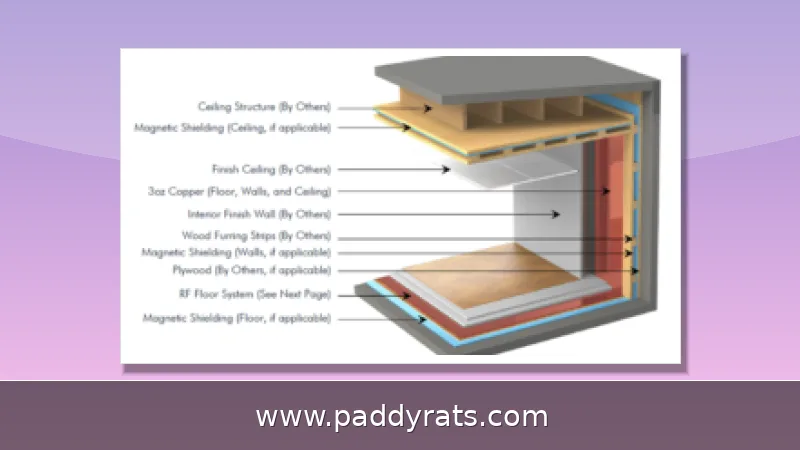
The reason the booster vs shielding question can be confusing to people is because these terms describe different things. Boosting, on the other hand is an active solution: take a weak outdoor signal, amplify it and spreads it around by directing to indoors. Shielding is a passive issue: metal roofing, concrete and oblong bricks, thick encasement material like foil-backed gypsum wall boards or Gyprock panels which are often employed in peculiarly wage-earning locations & energy-reduction stairwells block cellular indicators with their quarry of human scrum types. They did not install the shielding to repair coverage; they determined it was responsible for indoor coverage failure and then bypassed that with an outside contribution antenna.
Actually, shielding is often the hidden culprit. A rural home may be in a useful signal area but not get calls because the building envelope kills it. This completely avoids that problem by moving the donor antenna outdoors! If you have passable outdoor readings but near-zero indoor readings just a few yards away from exterior walls, your real nemesis is shielding—and a sensitively pointed booster could be dead-on the solution.
Which Specs Matter When Comparing Rural Boosters?
Spec sheets reward careful reading. Gain in dB shows you how much the amplifier increases the uplink signal, output power (in dBm) dictates just how far that indoor coverage can reach back to tower location, geographic area or unit is rated out under optimal conditions and band support indicates whether your carrier's rural frequencies will work at all. Check for support of Band 12 and Band 17, the best frequencies to transmit as far away from a tower as possible and travel through walls in rural long-range coverage!
Manufacturer coverage claims deserve skepticism. Depending on the level of rural signal weakness, a system rated for 7,500 square feet might really cover just about 3,000 to 4,000 square feet since real-world coverage usually falls in the range of thirty percent up to fifty-percent or so below that theoretical maximum. Seek gain of 72 dB or better for rural useThe highest-end residential systems max out at around 272 to-date; Directional Yagi and LPDA out perform omnidirectional units in the rural areas, but need to be pointed at tower.
| System | Gain | Stated coverage | Typical price |
|---|---|---|---|
| weBoost Home MultiRoom | 65 dB | Up to 5,000 sq ft | About $479 |
| weBoost Home Complete | 72 dB class | About 2,000 sq ft with 1 bar outside | About $1,299.99 with LPDA bundle |
| Cel-Fi GO X | Up to 100 dB | About 3,000 sq ft, one carrier at a time | Premium tier |
| SureCall Fusion5s | 72 dB class | About 2,000 sq ft | Mid-to-premium |
| Rural Top Signal | Up to 68 dB | About 1,500 sq ft | Entry-to-mid |
| HiBoost 10K Smart Link | 70 dB class | Large home | $539.99 |
The table illustrates why raw coverage numbers are so deceptive. The WEBOOST HOME MULTIROOM reports roughly 65 dB of gain, while the Cel-Fi GO X boasts a big number:150 dBs. Choose your system according to the carrier configuration, outside signal reception strength and rooms that require coverage instead of matching it with the largest number on its packaging.
What Do Real Rural Booster Setups Cost and Deliver?
Budget matters, and the spread is wide. HiBoost lists the Sidekick at $259.99, the 4K Smart Link at $399.99, the 10K Smart Link at $539.99, the 10K Plus Pro at $599.99, and the 15K Smart Link Deluxe at $1,029.99. Wilson Amplifiers prices the weBoost Cabin at $699.99 for one to two rooms with a 24-foot telescoping pole, the Home MultiRoom LPDA Bundle at $799.99, the Home Complete LPDA Bundle at $1,299.99, and the Drive Reach 12-Inch Antenna Bundle at $519.99.
Performance claims are best judged against documented installs. One reported case in rural East Texas took a weBoost Home Complete from 1 bar and -116 dBm to 4 bars and -75 dBm after installation. That is the kind of improvement a well-aimed directional antenna can produce when the outside signal is marginal but present. If your outside reading is already below the -110 dBm threshold, expect far less, and plan an alternative connectivity path instead of a bigger amplifier.
How Do You Install a Rural Booster and Register It With the FCC?
Most rural kits are DIY-friendly if you are comfortable on a roof or ladder. The sequence is straightforward: find the strongest outside signal, mount the donor antenna above trees and obstructions, run coaxial cable from the antenna to the amplifier, place the amplifier near power, and mount indoor antennas where coverage is needed. Complex multi-antenna or long-cable runs are worth handing to a professional, since cable loss and antenna aiming decide the outcome.
In the United States, FCC rules require signal boosters to be registered with your carrier, and certified equipment is legal to use. Registration is a simple, free online process, and reputable boosters include carrier notification instructions in the box. Skipping it is a compliance risk, and poorly designed or improperly installed boosters can cause interference to nearby networks, which is exactly what the FCC rules aim to prevent.
When Will a Booster Not Help, and What Should You Use Instead?
A booster fails in true dead zones. If no usable signal exists outside, there is nothing to amplify, and no amount of gain fixes that. The same applies when terrain blocks the tower completely or when the only available band is not supported by the hardware. Before buying, test outside readings at multiple points on the roof and confirm your carrier's band support against the booster's specifications, including Band 12 and Band 17 for rural range.
For genuinely signal-free locations, satellite internet, a satellite phone, or a communicator such as SPOT or Garmin is the realistic answer. A booster is the right investment when a weak but usable signal exists outdoors and building materials are the reason it disappears indoors, which describes most rural homes. Diagnose first, then buy hardware sized to the real-world coverage you need.
What Is the Bottom Line on Booster vs Shielding?
Shielding is the diagnosis and boosting is the treatment. Metal roofing, concrete, brick, and low-E windows block cellular signals, and an outdoor donor antenna sidesteps that blockage by collecting signal before the building interferes. The booster then amplifies and redistributes it indoors. If your outdoor signal clears roughly -110 dBm, a directional Yagi or LPDA setup with 72 dB or higher gain is the practical rural fix.
If it does not clear that bar, spend your money on satellite connectivity instead of a larger amplifier. About 80 percent of cellular traffic originates indoors, according to a SureCall white paper, which is why rural homeowners notice the gap so sharply. Measure outside, aim carefully, register with your carrier, and size coverage expectations to 30 to 50 percent of the advertised square footage.
Frequently Asked Questions
Does a cell signal booster work if there is no signal at all in a rural area?
No. A booster amplifies an existing signal and cannot create one. The outdoor antenna needs to pick up at least a minimal signal, roughly -110 dBm or better on a signal analyzer app. For truly no-signal locations, satellite internet, satellite phones, or communicators such as SPOT and Garmin are more appropriate.
What is the difference between boosting and shielding in weak rural coverage?
Boosting captures a weak outdoor signal with an antenna, amplifies it, and rebroadcasts it indoors. Shielding refers to building materials such as metal roofing, concrete, brick, and energy-efficient windows that block cellular signals. A booster overcomes shielding by placing the donor antenna outside and distributing the amplified signal inside.
How much real-world coverage should I expect from a rural signal booster?
Manufacturer-stated coverage of 3,000 to 25,000 square feet assumes ideal conditions. In rural areas with very weak incoming signal, expect real-world coverage of 30 to 50 percent of the stated maximum. A booster rated for 7,500 square feet may cover only 3,000 to 4,000 square feet.
Is a cell signal booster legal in the United States?
Yes, when you use FCC-certified equipment. The FCC requires all signal boosters to be registered with your carrier, a simple free online process. Reputable boosters include carrier notification instructions in the box. Poorly designed or improperly installed boosters can cause interference, which the rules are designed to prevent.