RF shielding blocks the signals you rely on, so emergency communication inside a Faraday cage or shielded room has to be planned in advance. Here is how grounding, alternative devices, and satellite SOS keep a lifeline open.
How does RF shielding affect emergency calls?
A shielded room functions as it was designed to do, keep all electromagnetic energy from penetrating its walls. For instance, TitanRF Faraday Fabric blocks cell, WiFi, Bluetooth and GPS from low MHz to 40 GHz range (over100kHz–3500MHz for most of RF devices) with single-layer material rated by >65 dB attenuation or better. Certified to MIL-STD-188–125 and IEEE 299.2006 Which is great for privacy and much more terrible for an EMP, just 'cause the tower signal never actually makes it to your handcord in a tomb.
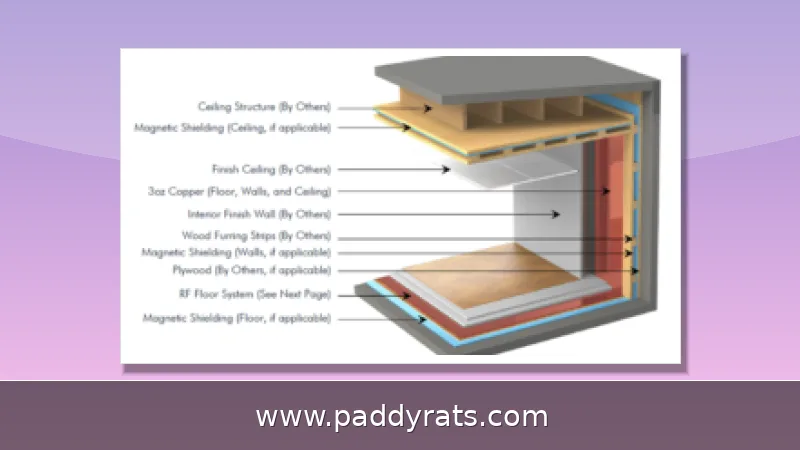
That barrier is often steel paneling, bolted together with RF-tight gaskets along the seams60plus shielded doors61filtered power entry62and treated ventilation penetrations63 — in a room instead of a fabric pouch. Now T98 is the most widely used shielding paint, although it can also be sprayed on walls and ceilings alike, which tangibly reduces signal generally coming from nearby towers. The practical outcome in every case is the same: a phone can present bars, but uplink to carrier network has been degraded or lost and E911 location fixes become erratic.
What are the risks of poor grounding in a shielded room?
Grounding is the most frequently-mishandled aspect of shielded-room design, producing two separate hazards at once. The first is electrical shock. An un-bonded large conductive enclosure can acquire a potential difference against nearby equipment, at the same time anyone bridging from panel to ground and maybe taking one with hand could become this way part of path between two wires. The second is data leakage: when the enclosure isn't properly grounded it behaves like a leaking box, letting conducted interference in and emitted sensitive emissions go out.
The standard practice is single-point ground on the same panel hosting the EMC power line filters, connected to a true earth by means of an attached metal rod suitably hammered into place. Where you have a noisy local electrical environment, an isolation transformer may be necessary so outside disturbances don't ride the ground conductor right into that room. In practice, I treat grounding not as an afterthought but rather as a commissioning item and require it to be proven with actual measurements — what the drawings suggest doesn't mean anything.
What alternative communication methods work in a shielded space?
Once you accept that the cellular link isn't dependable, the answer is redundancy across different physical paths. Each option below fails for different reasons, which is exactly why relying on just one is a mistake.
| Method | Works inside shielding? | Best use |
|---|---|---|
| Landline or hardwired phone | Yes, if wiring enters through filtered penetrations | Primary voice path for fixed rooms |
| Two-way family band radio | Yes, between units inside the space | Coordinating people on site |
| HAM radio with external antenna | Yes, with an antenna outside the shield | Reaching responders when networks are down |
| Satellite phone or SOS text device | Yes, with a view of the sky | Calling out when no terrestrial network survives |
| Social media and messaging apps | Only if an external data link exists | Status updates, not life-safety traffic |
If the phone line is fed via this same access, therefore not turning the enclosure into a Faraday Cage then we have hope! For example, radios tie occupants together with each other but do not connect to the outside world on their own. But unless a satellite device can see the sky, and this usually means taking two steps out of an unshielded doorway or providing it with an external antenna using upfeed from suit shields as appropriate to their overall design.
How do satellite SOS and texting support emergency calls?
Satellite-enabled SOS text solutions [for 911] popping up to fill the void left when terrestrial networks fail, a realistic fallback now rather than niche hobbyist tool. Others, in SOS mode only allow emergency calls over satellite (others are telephoning via a sat link) and the big three messaging firms which have enabled their services this last year are more or less designed for exchanging short text messages back-and-forth with a dispatch office that passes it tot he right PSAP The main constraint is bandwidth and time: instead of having a symbiosis with dialogue (760 characters), you are just sending tens of letters.
Texting in general is definitely worth including into your plan. The FCC and FEMA have repeatedly directed us to "try/attempt text messaging ( SMS ) when voice channels are congested, as short messages queue & retry at much lower power levels." A text with your location, what the emergency is and how many people are involved, if a voice call cannot be connected → this may often get through fastest.
How can you prepare for emergencies in a shielded environment?
Preparation is a sequence, and skipping steps is how people end up discovering a gap in the middle of an emergency. I go through the same checklist with every shielded installation I work on, whether it's a single room or a larger facility.
| Step | Action |
|---|---|
| 1 | Assess shielding effectiveness and document measured attenuation |
| 2 | Verify proper grounding and clean ground continuity |
| 3 | Identify and provision alternative communication methods |
| 4 | Test emergency calls from inside the space |
| 5 | Apply FCC and FEMA communication guidance |
| 6 | Train every occupant on the procedure |
Testing deserves emphasis because it is the step most often faked. A phone showing signal bars inside a shielded room tells you almost nothing; what matters is whether a call actually completes and whether the dispatcher receives a usable location. Test with the door closed, with ventilation running, and with normal equipment powered on, since interference from external sources such as ventilation systems can change the outcome.
What do FCC and FEMA recommend for emergency communications?
The official guidance is short and worth memorizing. Call 911 only for genuine emergencies, and keep non-emergency traffic off the network so capacity stays available for people who need it. Keep calls brief and state your location first. Try texting when a voice call will not go through. Adjust your phone settings to conserve battery, since a dead handset is worse than a slow one, and expect that a degraded network may take several attempts.
For a shielded facility, those tips translate into a written procedure posted at the exit: how to leave the shielded area, which device to pick up first, what to say, and who is responsible for calling. The Red Cross check-call-care framework is a useful structure for the first minutes, and it maps cleanly onto a room where one person is designated to make contact while others handle the immediate hazard.
What should you do if you need to call 911 from a shielded space?
Move first, then call. If the situation allows, step outside the enclosure or to a doorway that is not shielded, and place the call from there. If movement is not possible, pick up the landline or the two-way radio and have someone outside the shield relay to 911 on your behalf. Give the address, the entrance to use, and the specific hazard, because responders navigating a shielded facility need to know which door leads in.
If no terrestrial path exists, use a satellite SOS device and send a text rather than attempting voice. Keep the message short: location, emergency type, number of people. Then conserve battery by lowering screen brightness and disabling unnecessary radios, and stay with the device until you get an acknowledgement. The single most common failure I see is people cycling a phone on and off repeatedly, burning the battery before the message ever leaves.
What are the common failure points to watch for?
The failures cluster in predictable places. Grounding done to code on paper but never measured is the first. Untested penetrations for ventilation, doors, and power are the second, because each one is a potential leak that also lets interference in. A third is assuming a phone with bars is connected when the uplink is attenuated below usable levels. Finally, occupants who have never rehearsed the procedure will default to dialing 911 from inside the room and waiting, which is the one thing that reliably does not work.
The fix is unglamorous: measure the shielding, verify the ground, provision at least two independent communication paths, test them under realistic conditions, and drill the people who will actually be in the room. Do that and a shielded space stays a protected space rather than a dead zone.
Frequently Asked Questions
Will my cell phone work inside a Faraday cage or RF-shielded room?
Usually not for normal calls. Shielding materials such as TitanRF Faraday Fabric block cell, WiFi, Bluetooth, GPS, and EMP signals from the low MHz range up to 40 GHz, so a handset inside the enclosure typically cannot reach a tower. You need an alternative path such as a landline, a radio, or a satellite device.
Why is grounding important for an RF-shielded room?
Proper grounding protects people from shock hazards and prevents interference. Without correct grounding, the room can be leaky and sensitive information may be exposed. A separate clean ground, sometimes with an isolation transformer, may be needed so outside disturbances do not enter the room through the ground conductor.
What should I do if I need to call 911 from a shielded space?
Move to an unshielded area if you can, or use an alternative method such as a landline, two-way radio, or satellite phone. Follow FCC and FEMA guidance: call 911 only for real emergencies, keep the call brief, state your location first, and try texting when a voice call will not connect.
Can texting or satellite SOS work when cellular calls fail?
Yes. FCC and FEMA advise trying text messaging because short messages retry and use less battery, and satellite-enabled SOS text solutions can reach 911 when traditional networks fail. Some phones in SOS mode can still place an emergency call over a satellite connection when no terrestrial signal is available.