Blocking 5G comes down to conductive mass, grounded metal, and the right coating for the job. Here is what actually attenuates 5G, in dB, and where boosters still help.
Why 5G Signals Struggle Indoors
I've done signal surveys in offices where your phone shows full bars by the window, then drops to one bar just ten feet inside. That's not your carrier slacking—that's physics. 5G FR1 (sub-6 GHz) covers 410 MHz to 7.125 GHz with channel bandwidth up to 100 MHz. The higher bands above 2.5 GHz move more data, but they diffract around obstacles far less than 3G or 4G ever did. And mmWave 5G—the 24 GHz, 28 GHz and 39 GHz range—travels only about 300 to 1,600 feet before buildings, trees, even rain wipe it out.
Signal strength is measured in dBm, and for context, -50 dBm is about as good as it gets while -120 dBm means you've basically got nothing. The number worth remembering when you're thinking about shielding is that every +/-3 dB cuts or doubles your received power. That means a wall costing you -10 dB has already dropped your signal to a tenth of what it was outside. Stack a few walls like that and you can see why indoor 5G falls apart well before the coverage map suggests it should.
Building Materials That Block 5G and Their dB Loss
Most people assume their walls are neutral. They're not. Everyday construction materials soak up or bounce back radio energy, and that loss stacks up as the signal works its way through each layer of the building envelope. The table below pulls together measured loss figures published by the signal-booster vendors Wilson Amplifiers and Bolton Technical — field data I've found lines up pretty well with my own meter readings.
| Material | Typical loss | Notes for 5G |
|---|---|---|
| Drywall | -2 dB | Minimal impact alone |
| Fiberglass insulation | -2 dB | Adds up in thick walls |
| Clear glass | -4 dB | Low-E glass is far worse |
| Plywood | -4 to -6 dB | About -9 dB at 5G bands |
| Solid wood | -5 to -12 dB | Density dependent |
| Plaster | -8 to -16 dB | Often over metal lath |
| Brick and stone | -8 to -28 dB | Worst common wall type |
| Concrete, 6 inches | -10 to -20 dB | Rebar makes it worse |
Weather and vegetation play a role here too. Heavy rain will cost you about -3 to -5 dB, while foliage can knock off anywhere from -7 to -20 dB depending on how thick it is and what season you're in. So here's the thing: a single brick or concrete wall can eat up most of your indoor 5G margin, which explains why metal and masonry buildings end up acting like accidental shields. But if your goal is to block 5G rather than receive it, those same numbers work in your favor—they tell you exactly which materials to add, not strip away.
How 5G Blocking Paint and Faraday Cages Work
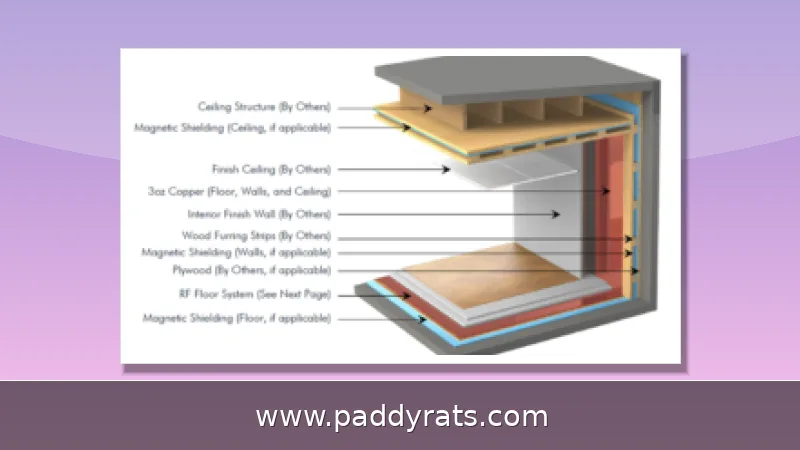
A Faraday cage isn't some mysterious piece of technology. It's really just any continuous conductive enclosure that catches incoming radio waves and sends the induced current to ground, which leaves the space inside quiet. Metal foil, wire mesh, metalized fabrics, and conductive coatings all work this way. What makes 5G blocking paint stand out is how well it conforms to surfaces. You can roll it or spray it onto complex shapes, around corners, over conduit, and inside cabinets, things foil and rigid gaskets simply can't handle cleanly. And since water-based conductive paints are low odor and non-flammable, they show up in homes, offices, server rooms, MRI rooms, and government projects.
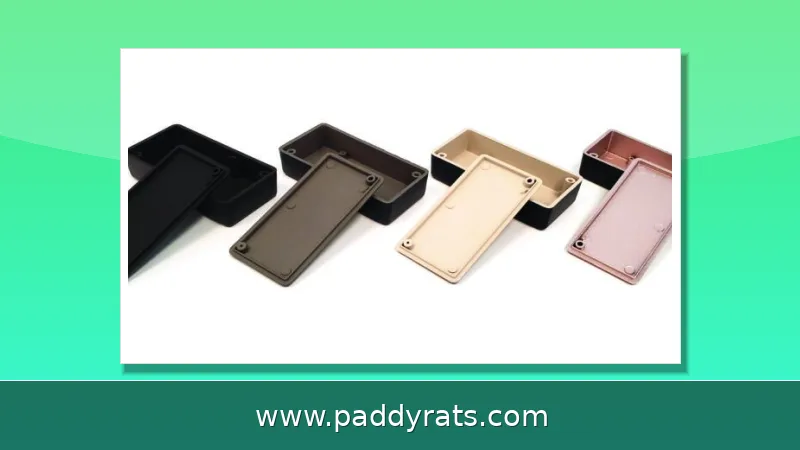
MG Chemicals is pretty much the reference brand here. Their 842WBU water-based conductive coating measured 60 to 85 dB of attenuation — that's roughly 99.9999% to 99.999999% signal reduction — while 841WBU came in around 30 to 60 dB, or 99.9% to 99.9999%. Those numbers come from the company's own shielding tests, and honestly, they're the figures I'd hand to anyone comparing the shielding effectiveness of different 5G signal blockers. One thing worth knowing: aluminum enclosures were mostly replaced by ABS plastic because it's cheaper and lighter, but that switch wiped out their natural EMI shielding, and conductive paint is how manufacturers bring it back.
Shielding Effectiveness: Attenuation Data and Standards
Attenuation claims are only as trustworthy as the test methods behind them. That's where MIL-STD 285 and IEEE-299.1:2013 come in — these are the standards that matter. Their typical testing range spans 10 Hz to 18 GHz, though MG Chemicals pushed that ceiling up to 40 GHz in their own evaluations. Why does that extended range matter? Because 5G's higher bands operate well above the usual cellular test window. Just because a coating holds up at 1.8 GHz doesn't mean it'll do the same at 28 GHz — not even close.
Here's the trade-off in plain terms: conductive paint outperforms foils, tapes, gaskets and wire mesh when it comes to conforming to intricate contours and covering entire rooms or buildings, but it only works if you ground it properly and apply it with full coverage. Higher frequencies are easier to disrupt than lower ones, which means mmWave is the simplest 5G flavor to stop and low-band is the toughest. And shielding effectiveness ultimately depends on how much power the source is putting out — the stronger the signal, the more attenuation you need before things actually go quiet inside.
5G Signal Boosters: What They Can and Cannot Boost
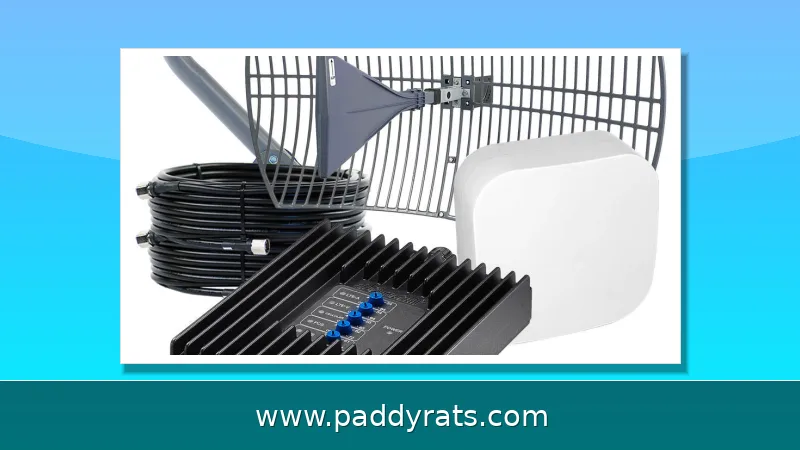
Boosters fix the opposite problem, and they tend to get misunderstood a lot. A typical consumer 5G booster only amplifies certain low bands—usually 700 MHz, 850 MHz, 1900 MHz, and 1700/2100 MHz—which happen to overlap with the low-band 5G bands n5, n2, and n66. So if your phone is showing a plain 5G icon without a UC, Plus, or UW tag next to it, you're almost certainly riding on low-band, and in that case a booster really can make a difference. What boosters can't do is touch mid-band or mmWave 5G. A C-band or mmWave signal won't get any stronger, no matter what the packaging claims.
| Product | Price | Gain / bands |
|---|---|---|
| Cel-Fi GO G41 | $1,499.99 | Up to 100 dB gain |
| weBoost Drive Reach | $499.99 | Vehicle-focused, low-band |
| Wilson Amplifiers kits | Varies | 700/850/1900/1700-2100 MHz |
Carrier branding is a useful shorthand: T-Mobile 5G UC, AT&T 5G+ and Verizon 5G UW indicate mid-band or mmWave, which boosters cannot touch. Prices above are the published list prices from the vendors at the time of writing. If your indoor problem is mid-band coverage, spend the money on router placement or a wired connection instead of a booster.
Optimizing 5G Router Placement for Better Signal
For fixed wireless and 5G home internet, placement beats hardware almost every time. Inseego's guidance, which matches what I see in practice, is to put the router by a window or up high for a clearer line of sight, and to keep it away from obstructions and metal objects such as filing cabinets, appliances and ductwork. Use omnidirectional antennas in dense urban areas where towers surround you, and directional antennas in rural areas where you can aim at a single known tower.
Then do an actual site survey rather than guessing. Monitor RSRQ and SINR across multiple towers, not just signal bars, and make small incremental adjustments, moving the unit a foot at a time and rechecking. RSRQ reflects quality and SINR reflects how much usable signal you have above noise; both matter more than raw dBm for real throughput. Verizon, T-Mobile and AT&T all publish coverage tools, but the only measurement that counts is the one taken at your address.
Does Metal Block 5G Signal, and What About Jammers?
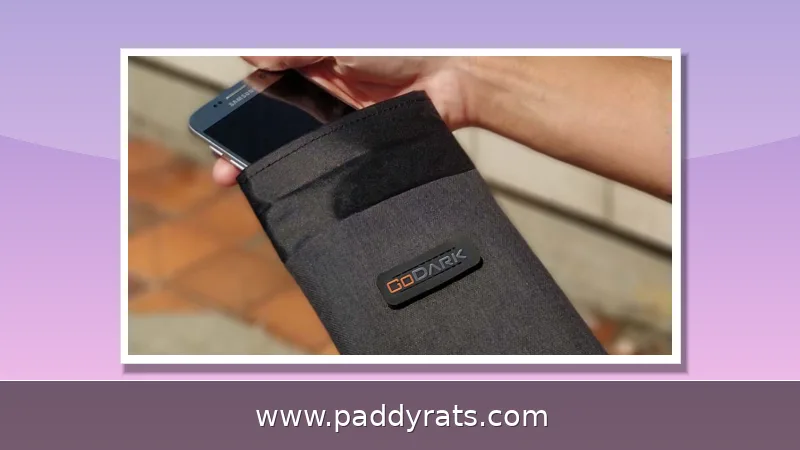
Yes, metal blocks 5G. Metal foil, particularly when grounded, blocks all wireless cellular transmissions, which is why shipping containers and metal-clad buildings are notorious dead zones. Trees, hills and buildings block RF signals as well, with mmWave above 20 GHz the most easily stopped. If you want to test this cheaply, wrap a phone in aluminum foil and watch the bars vanish; that is a Faraday cage in its simplest form.
Jammers and full-band blockers are a different category and are regulated products in most countries, including the United States. Their real-world performance depends on emitted signal power, and 5G's higher base station power and greater density make full-band 5G blockers less effective than they were against 3G and 4G. Manufacturers can improve them with higher emission power and more dedicated 5G shielding modules with finer frequency division, but that is a compliance question as much as an engineering one. Nothing here is legal advice, and I would check local rules before buying or installing any active blocking device.
Turning Off 5G: When It Actually Helps
Disabling 5G in your phone settings is a common tip at large events where towers are overwhelmed. It reduces signal speed and may slightly reduce RF output in the short term, since the phone falls back to LTE. That trade-off is usually worth it in a stadium or convention center, where mid-band and mmWave capacity collapses under load and low-band LTE remains usable. It is not a shielding strategy, though, and it will not reduce exposure from ambient signals around you.
If your goal is blocking rather than managing, work in this order: identify which band you are actually fighting, measure with RSRQ and SINR, then choose materials accordingly. Low-band is the hardest to stop and needs grounded conductive mass; mid-band and mmWave fall to ordinary brick, concrete and low-E glass. Matching the material to the band is what separates a shielding project that works from one that just looks expensive.
Frequently Asked Questions
What materials block 5G signals?
Metal, concrete, brick, stone, plaster, low-E glass and conductive coatings all block or weaken 5G. Measured loss ranges from about -2 dB for drywall to -28 dB for brick and stone, and 5G is affected more than 4G because it uses higher frequencies that diffract around obstacles less effectively.
How does 5G blocking paint work?
Electrically conductive paint creates a Faraday cage around electronics or a room, intercepting incoming radio signals and routing the induced current to ground. MG Chemicals' water-based 842WBU showed attenuation between 60 and 85 dB across the 5G spectrum, while 841WBU ranged about 30 to 60 dB, according to the company's shielding tests.
Can a signal booster improve indoor 5G?
Boosters amplify specific bands such as 700 MHz, 850 MHz, 1900 MHz and 1700/2100 MHz, overlapping low-band 5G bands n5, n2 and n66. They do not boost mid-band or mmWave 5G. A plain 5G icon usually means low-band, which boosters can genuinely help with.
Why is 5G harder to shield than 4G?
5G base stations transmit at higher power and use high-frequency bands above 2.5 GHz with wider bandwidth but weaker diffraction. That higher power and greater tower density make full-band 5G blockers less effective than they were for 3G and 4G, and they raise the attenuation you need before a room is actually quiet.