signal jammers flood the same radio frequencies your phone, GPS, or Wi-Fi uses, turning a normal connection into a denial-of-service dead zone. Here is how the technology works, what it costs, and why selling or operating one is illegal in the US.
What Is a Signal Jammer and What Does It Block?
A signal jammer is a device that deliberately puts out radio frequency energy to mess with communication systems, stopping a target device from sending or receiving data. The important thing here is intent: jamming is deliberate interference, whereas plain interference usually refers to unintentional disruption caused by overcrowded spectrum or faulty hardware. In short, a jammer cuts the link between a device and its signal source, whether that's a cell tower, a GPS satellite, or a Wi-Fi router.
In practice, a jammer broadcasts on the very same radio frequencies that a phone or other receiver is tuned to—so in effect, it's a denial-of-service attack delivered over the air. Simpler units only take out a single narrow frequency, but even that limited punch can trick a handset into thinking there's no network in range at all. And according to Wilson Amplifiers, real-world jamming range typically tops out at around 30 square feet, which is exactly why most consumer-grade jammers are room-scale tools rather than something that could blanket a whole neighborhood.
The technology didn't start out in some consumer electronics store. Jammers were originally built for the military and law enforcement, mainly to deal with cell phone-triggered explosives and to shut down communications during hostage situations. That backstory actually matters for the legal side of things we'll get into later, since the very same capability that keeps a bomb squad safe can just as easily cut off a 9-1-1 call.
How Do Jammers Work: Noise, Spot, Sweep, and Barrage Techniques
There are basically two families of jamming techniques: noise techniques and repeater techniques. Noise jamming just floods a receiver with competing energy until the real signal gets lost in the mess, while repeater jamming takes a different approach—it listens to an incoming signal and then plays it back in a distorted form. Within the noise category, three methods come up over and over in technical write-ups, and each one strikes a different balance between concentrating power and covering a wider range of frequencies.
Spot jamming is the simplest approach: you dump every watt of available power onto one frequency. Against a target that stays put on that frequency, it's brutal. Against frequency-agile radar that just hops somewhere else? Pretty much a waste of power. Sweep jamming takes a different tack—it moves full power rapidly across a band, so it covers more territory, though it can't linger long enough on any single frequency to be as effective there. Then there's barrage jamming, which hits multiple frequencies at the same time. The trade-off is obvious: since the power gets divided among all of them, the signal is weaker at any one point than it would be if you'd focused everything on a single target.
Repeater techniques, on the other hand, are a lot more surgical. The most common one is DRFM — digital radio frequency memory. Basically, it grabs incoming radar energy, messes with it, and sends it back out to create false targets on the operator's screen. Radar spoofing follows a similar logic: it records incoming radar pulses and replays them either with a delay or several times over, or it shifts the frequency to throw off Doppler radars. In the end, though, everything comes down to the jamming-to-signal ratio — usually written as J/S or JSR. If the jamming signal that reaches the receiver is significantly stronger than the return signal, the jammer wins.
Types of Jammers: Cell Phone, GPS, Wi-Fi, Drone, and Radar
Jammers get categorized by what they're aimed at. Phone jammers cut off GSM, 3G, 4G, and 5G signals. GPS jammers mess with navigation. Wi-Fi jammers take out either the 2.4GHz or 5GHz band. RF jammers cast a wider net, targeting broad-spectrum radio frequency energy. Drone jammers are a bit different—they hit the control link and the GPS feed at the same time, which usually pushes the drone into failsafe mode, so it hovers in place or heads back to where it launched instead of just dropping out of the sky.
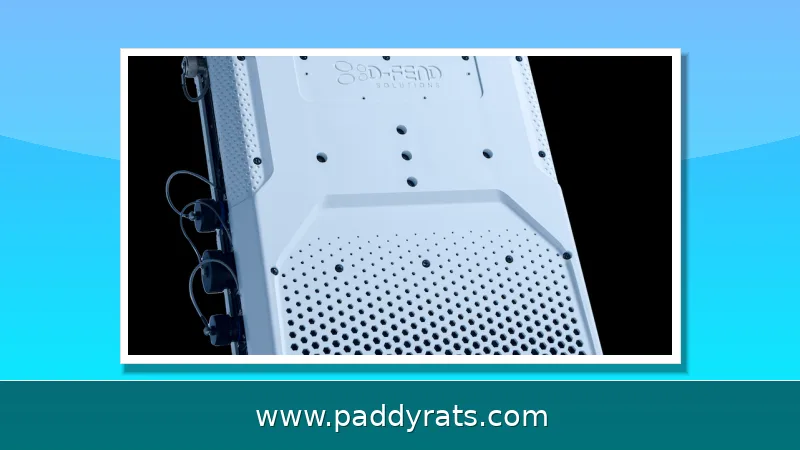
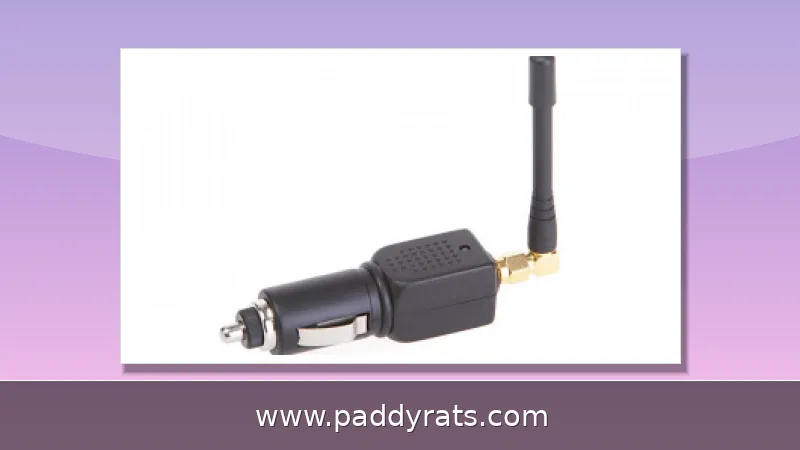
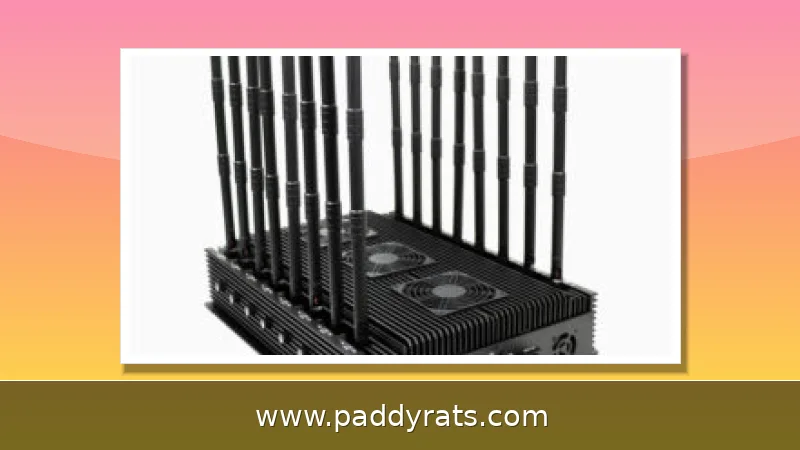
Form factor matters just as much as frequency does. Portable jammers are the handheld kind — battery-powered, cordless, and typically built with their antennas already inside. If you go with a desktop or suitcase-style unit, you're basically giving up mobility in exchange for more output power and a wider spread of bands. Then there are military and convoy jammers, which sit in a completely different league: they can block HF, VHF, UHF, SHF, cellular, satellite phones, and GPS all at once.
Radar jamming is worth calling out on its own, since this is where the arms race between jammers and the systems they target is easiest to see. Low probability of intercept, or LPI, radar is built to resist jamming in a few different ways: frequency hopping, careful power management, and advanced scan patterns. Take FMCW radar, which usually runs on a triangular waveform and spreads its energy out continuously rather than in sharp pulses. Then there's PSK, which shifts the phase of the signal so the returning echoes stand out more clearly from background noise, letting the radar operate at lower transmit power. FSK works differently again, hopping between discrete frequencies in a pattern that looks random to a jammer trying to keep up.
Key Specifications: Frequency Bands, Power, and Range
Frequency coverage is usually the first thing buyers and researchers check. Cell phones run on a handful of bands — 700MHz, 800MHz, 900MHz, 1800MHz, 1900MHz, and 2100MHz. GPS is built around the 1575MHz L1 band, though you'll sometimes see jamming specs list L1, L2, and L5 together. Wi-Fi sits at 2.4GHz and 5GHz, and a few products claim to cover 2.4, 5.2, and 5.8GHz as well. Wide-band jammers, often marketed as "full spectrum," knock out several bands at the same time. More advanced models go a step further and use protocol jamming to hit control channels head-on.
The table below breaks down a handful of representative models and what their spec sheets actually claim, pulling from both Jammer Store and Jammer Master listings. It's a handy way to see the pattern: as you add more bands, more power, and more range, the price climbs right along with it.
Is Jamming Legal? FCC Enforcement and Public Safety Risks
It is illegal to sell, advertise, distribute, or operate cell signal jammers in the United States and much of the world. The FCC states that jamming equipment poses serious risks to critical public safety communications, can prevent 9-1-1 and emergency calls, and interferes with law enforcement communications. Radio frequencies are legally protected under the Communications Act of 1934, which outlaws interference with authorized radio broadcasts.
The risk is not limited to phones. A jammer also interferes with GPS, Wi-Fi, and police radar, which means a device marketed as a privacy tool can degrade navigation and emergency response for everyone nearby. The FCC maintains a dedicated Jammer Enforcement page, dated September 16, 2026, tracking its actions against sellers and operators.
If you believe you are being jammed, the practical response is to physically locate and disable the device if it is safe and lawful to do so, try switching frequency or band, or relocate. Beyond that, report the situation to law enforcement or file a complaint with the FCC. Buying a jammer to solve a nuisance problem generally creates a much larger legal problem than the one it was meant to fix.
Detecting and Countering Jammers: Detectors and Anti-Jam Methods
Detection starts with symptoms. The most common sign of jamming is dropped service in a location where coverage should be reliable. Consumer apps that claim to detect jammers are largely unproven and need a working signal to function at all, which is a problem when the signal is exactly what is being blocked. Dedicated hardware is more dependable. The PKI 6825 Jammer Detector uses fuzzy scanning technology to detect 50MHz to 6.0GHz without being confused by cell phones, WiFi, WLAN, Bluetooth, or DECT traffic.
The PKI 6825 shows signal strength on 10 LEDs that run from green to yellow to red, includes an environment noise verified circuit, and provides a 1A relay normally-open alarm output. It measures 130 x 68 x 26mm, weighs about 195g, and runs on 9V-24VDC, so it can be used stationary or with batteries in the field.
On the defensive side, anti-jam methods mirror the techniques used against radar. Frequency hopping, spread spectrum modulation, and power management all make a signal harder to overpower. If you suspect illegal jamming, contact law enforcement or file an FCC complaint rather than attempting to jam back, which would only add a second violation to the situation.
DIY Circuits and How a Basic Cell Phone Jammer Is Built
A basic cell phone signal jammer circuit needs three subcircuits working together: an RF amplifier, a voltage controlled oscillator, and a tuning circuit. The component list is short but specific. Resistors R1 and R2 handle emitter loading and base biasing. Capacitors C1 through C7 cover frequency generation, feedback, noise reduction, coupling, and decoupling. Transistor Q1 provides amplification, and inductor L1 works with C1 to generate the target frequency.
The tuned circuit formed by C1 and L1 acts as an oscillator, producing a high frequency with minimum damping, and the resulting output blocks UMTS, 3G, CDMA, GSM, and PHS traffic. The design is widely published and easy to find, which is precisely why regulators treat it as a controlled capability rather than a harmless hobby project. Building one for personal use still runs into the same federal prohibition that applies to buying one.
Frequently Asked Questions About Signal Jammers
The questions below cover the points readers ask most often, from how the technology works to what happens when a jammer meets a signal booster or a hidden transmitter.
Can a Signal Jammer Block a Cell Phone Signal Booster?
Yes. A signal jammer will interfere with a cell phone signal booster. Boosters work by amplifying an existing signal, but if that signal is blocked by a jammer, the booster has nothing to amplify and will not work. Any signal jammer is also, by definition, a signal booster jammer, which is one reason the two product categories are regulated so differently.
How Do I Detect a Signal Jammer?
The most common symptom is dropped service in an area that should have coverage. Consumer apps claiming to detect jammers are largely unproven and need a working signal to function. Dedicated detectors like the PKI 6825 scan 50MHz to 6GHz with 10 LEDs and a relay alarm output. If you suspect illegal jamming, contact law enforcement or file an FCC complaint.
Frequently Asked Questions About Signal Jammers
How does a signal jammer work?
A jammer transmits radio frequency noise on the same frequencies a device uses, such as cellular, GPS, or Wi-Fi bands. This noise overpowers the original signal from towers or satellites, creating a denial-of-service effect that stops devices from sending or receiving transmissions within range. Jamming success depends on the jamming-to-signal ratio, so the jamming signal must be much stronger than the original.
Are cell phone signal jammers legal?
It is illegal to sell, advertise, distribute, or operate cell signal jammers in the United States and much of the world. The FCC says jamming equipment poses serious risks to public safety communications and can prevent emergency 9-1-1 calls, and the Communications Act of 1934 outlaws interference with authorized radio broadcasts. Penalties can include substantial fines and seizure of the equipment.
Can a signal jammer block a cell phone signal booster?
Yes. A signal jammer will interfere with a cell phone signal booster. Boosters work by amplifying an existing signal, but if that signal is blocked by a jammer, the booster has nothing to amplify and will not work. Any signal jammer is also a signal booster jammer, which is why the two product categories face very different regulatory treatment.
How do I detect a signal jammer?
The most common symptom is dropped service. Consumer apps claiming to detect jammers are largely unproven and need a working signal. Dedicated detectors like the PKI 6825 scan 50MHz to 6GHz with 10 LEDs and a relay alarm output. If you suspect illegal jamming, contact law enforcement or file an FCC complaint rather than attempting to jam back.