RFID skimming is real, but the idea that criminals can read your contactless card from across a parking lot is not. Here is how point-of-sale skimming actually works, what the data shows, and how to protect your cards at checkout.
What Is RFID Skimming and How Does It Differ from Card Skimming?
RFID skimming means stealing data wirelessly from a contactless card, digital wallet, or smartphone using a portable RFID reader. Card skimming is a different crime altogether. In that case, a counterfeit reader hidden on or inside an ATM, POS terminal, or fuel pump captures magnetic-stripe data when you swipe or insert your card. Criminals often pair it with a pinhole camera or a keypad overlay to record your PIN. The FBI describes skimming as devices illegally installed on or inside these machines to capture card data and PINs. Both are fraud, but only one requires you to touch the machine.
The two attacks also differ in what they steal and how that data gets used. RFID skimming goes after the short-range radio signal that a contactless chip emits, and the data it captures would most plausibly end up fueling card-not-present fraud online. Card skimming, by contrast, harvests magstripe data along with PINs, which is what lets criminals clone a physical card and then make unauthorized purchases or cash withdrawals. That distinction matters: chip-enabled cards protect in-person payments far better than magnetic stripes do, yet the magstripe on the back of a chip card is still vulnerable to a well-placed skimmer.
How Do Criminals Install Skimmers at Point-of-Sale Terminals?
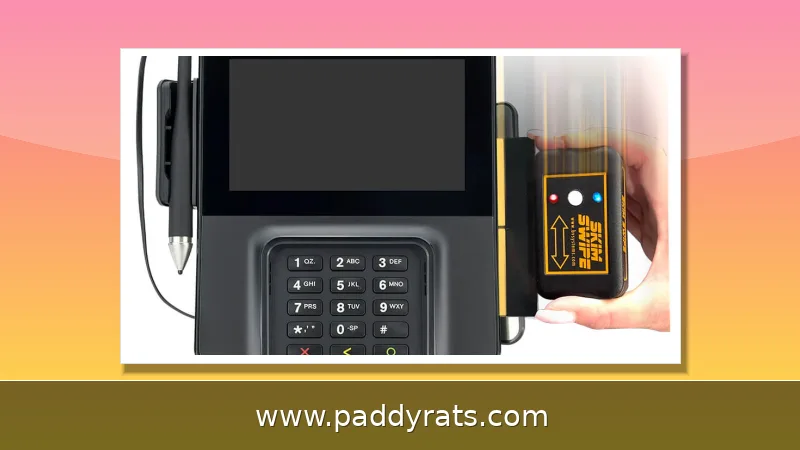
Installing a skimmer takes only a few seconds, and criminals often do it right in front of people. According to the Orion Policy Institute, skimming moves through four phases: getting the device, installing it, capturing data, and then using that data fraudulently. One common trick is to distract a clerk briefly while snapping an overlay onto a POS terminal. Once in place, these devices either store the stolen data for later download or send it wirelessly in real time to a nearby receiver. POS skimmers built to grab EBT card data, for instance, are usually overlays fitted on the terminal with wireless transmission built in.
Scammers pick targets based on weak spots, not novelty. EBT card data has been a prime target for skimming groups since at least 2021, since benefits cards largely aren't chip-enabled, according to MidSouth Community Federal Credit Union. That makes them easier to compromise and cash out—and EBT cardholders have far fewer protections than credit and debit cardholders do. None of this is a fringe theory, either: FICO reported a 452% jump in points of compromise from 2021 to 2022, per the Orion Policy Institute, and RFID skimming is estimated to cost financial institutions and consumers more than $1 billion every year in the US alone, according to Gorilla Technology.
Can RFID Scanners Really Read Cards from a Distance?
That viral claim about an RFID scanner grabbing your credit card data from 15 to 20 feet away? It's false. According to the Roy Howard Community Journalism Center, experts say contactless cards are encrypted and simply don't broadcast sensitive information, and there's no credible evidence of this kind of theft ever happening. Think about it practically, too—bodies, bags, and everyday interference make long-distance capture really difficult in the real world. Most RFID skimmers can only read from about 19 inches (50 cm) away, and even that's under favorable conditions.
The physics explains why. Passive RFID tags don't have a battery; instead, they soak up energy from the reader's field, power up their chip, and send the stored data back over a short distance. Active tags do use batteries and can reach much farther, but that's not how your contactless card works. The frequency bands back this up: low frequency at 125–134 kHz reads from contact to about 10 cm, high frequency/NFC at 13.56 MHz gets you near contact to roughly 30 cm, and ultra-high frequency at 860–960 MHz stretches from several feet to 10-plus meters. Long-range readers do exist, sure, but they aren't quietly harvesting your Visa in a checkout line.
| RFID type | Frequency | Typical read range | Power source |
|---|---|---|---|
| Low frequency | 125-134 kHz | Contact to ~10 cm | Passive |
| High frequency / NFC | 13.56 MHz | Near contact to ~30 cm | Passive |
| Ultra high frequency | 860-960 MHz | Several feet to 10+ meters | Passive |
| Active RFID | 433 MHz / 2.45 GHz | 30-100+ meters | Battery ($15-$50 tags) |
Read range isn't some fixed number—it varies depending on the tag type, how powerful the reader is, the antenna setup, and even the surrounding environment. Active RFID systems can hit 300 feet, and up to 1,500 feet with a signal repeater, according to ButterflyMX. But those systems rely on battery-powered tags and cost way more than the contactless card in your wallet. That's the key point: the scary distances you see in viral posts are describing industrial tracking equipment, not the encrypted chip you tap at checkout.
What Are the Real Risks of RFID Skimming at Checkout?
The honest answer is that the risk is low, but it isn't zero. The odds of being targeted are small, though the consequences can be severe once fraud actually lands — and the risk goes up in crowded places like malls, airports, and transit hubs, where people stand close together. A criminal with a concealed reader would need proximity and a fair amount of luck; encryption and short read ranges do most of the defensive work. In practice, the bigger danger at checkout is the old-fashioned skimmer mounted on the terminal itself.
This is where the money actually moves. Card skimming grabs magstripe data and PINs, which lets criminals clone cards and pull cash from ATMs, while RFID skimming is wireless and contactless but held back by encryption and short read range. Chip cards secure payments far better than magnetic stripes, but the magstripe data on the back of a chip card is still vulnerable. EBT cards, which lack chips, are easier to compromise and cash out. And skimming carries real legal weight: it falls under computer fraud and theft statutes, including 18 U.S.C. 1030.
How Can Consumers and Merchants Prevent Skimming?
Consumers should start with a quick physical inspection. Check ATMs, POS terminals, and card readers for loose, crooked, damaged, or scratched parts, and pull at the keypad edges to see whether an overlay lifts away. Cover the keypad when entering your PIN, use a chip card or tap-to-pay when available, and avoid debit cards linked to multiple accounts. Monitor your statements for unauthorized activity, and if something looks wrong, freeze the card and notify your bank immediately.
At the fuel pump, choose a pump closer to the store and in view of the attendant, run your debit card as credit, and pay inside when you can. Merchants have their own checklist: confirm terminal serial numbers match, look for odd changes, damaged security stickers, or replaced cables, and be cautious of unannounced service visits. Train employees to spot tampering and use encrypted POS systems. For EBT cardholders, never provide your PIN, verify any message with your state benefits agency, and use known balance inquiry lines. Reimbursement for stolen benefits may take weeks and may not be full, so prevention is the better deal.
What Role Do RFID-Blocking Products Play?
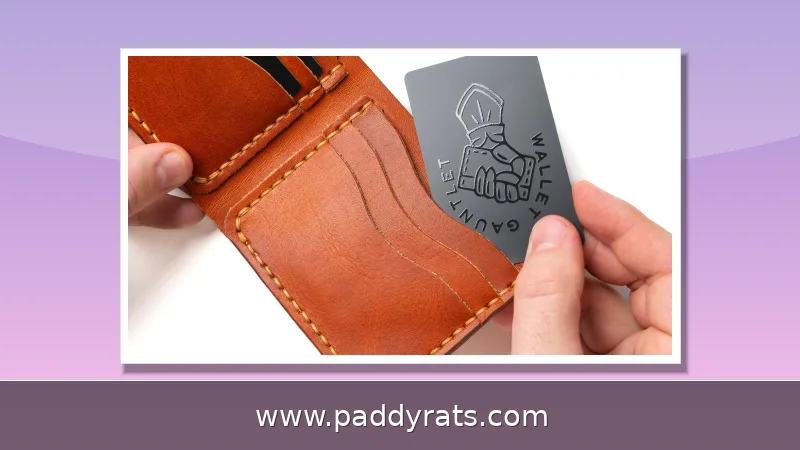
RFID-blocking wallets, sleeves, and cards create a barrier that blocks scanner signals, and they do work as advertised. The catch is that the threat they defend against is vastly overstated. Experts say long-range RFID credit card skimming is not a realistic danger for contactless cards, which are encrypted and do not broadcast sensitive data. A blocking product is an optional extra layer of peace of mind, not a necessity, and it will not stop a skimmer mounted on a terminal or a cloned magstripe.
I treat RFID-blocking gear the way I treat a bike lock in a quiet town: cheap insurance, not a substitute for judgment. The habits that actually reduce your exposure are inspecting terminals, covering your PIN, using chip or tap-to-pay, and watching your statements. If you carry an EBT card or a debit card tied to your main account, those habits matter far more than the foil in your wallet.
Is RFID Skimming Real, and How Common Is It?
Yes, the method exists, but long-distance RFID theft is largely unfounded. The technology to read a card exists, and real-world conditions make it hard to copy data illegitimately. The prevalence question is harder to pin down because card-not-present fraud and classic skimming generate most of the reported losses. What is clear is that skimming overall is a serious, growing problem: FICO's 452% jump in points of compromise from 2021 to 2022 shows criminals investing in physical compromise points, and EBT data has been a favored target since at least 2021.
For everyday readers, the practical takeaway is to separate the myth from the mechanism. A stranger cannot vacuum your card details from across a room, but a skimmer clipped onto a gas pump or POS terminal can capture your magstripe and PIN in seconds. Focus your defenses on the machines you touch, not on the air around you.
Frequently Asked Questions
Can criminals really skim my credit card with an RFID scanner from several feet away?
No. Experts say contactless cards are encrypted and do not broadcast sensitive information. RFID scanners cannot read full card data from 15 to 20 feet away, and there is no credible evidence of such thefts. Most skimmers read from up to about 19 inches (50 cm), and real-world conditions make long-distance capture very difficult.
What is the difference between a card skimmer and RFID skimming?
A card skimmer is a hidden device installed on or inside ATMs, POS terminals, or fuel pumps that captures magnetic-stripe data, often paired with cameras or keypad overlays to record PINs. RFID skimming uses a portable reader to wirelessly scan contactless card signals, but contactless cards are encrypted and not vulnerable to long-distance scanning.
How can I protect myself from skimming at a point-of-sale terminal?
Inspect the terminal for loose, crooked, damaged, or scratched parts. Pull at the keypad edges and cover the keypad when entering your PIN. Use chip cards or tap-to-pay when available, avoid debit cards linked to multiple accounts, and monitor your statements for unauthorized activity.
Are RFID-blocking wallets necessary to prevent RFID skimming?
RFID-blocking wallets, sleeves, and cards can block scanner signals, but the threat of long-range RFID card skimming is vastly overstated. The technology exists, yet real-world conditions make it hard to copy data illegitimately. Blocking products are an optional extra layer, not a necessity.