Passive RFID blocking uses metal-lined sleeves and wallets to absorb or deflect reader signals, while active RFID blocking uses a battery-powered jammer card to broadcast interference. Here's how each one actually works, what it stops, and which makes sense for your cards, passport, and keys.
What Is RFID Blocking and Why Does It Matter?
RFID blocking is all about cutting off the radio conversation between a reader and the microchip inside your contactless card, passport, or key fob. Here's how that conversation normally goes: a reader sends out radio waves that power up a passive chip, and the chip responds by sending data back. Blocking systems work by weakening the reader's transmitted signal enough that the chip can't power up and reply—this is the same mechanism RFID Cloaked walks through in its technical writeup. And once the chip can't answer, there's nothing left for anyone to capture.
The threat model matters more than the marketing. Take a typical modern credit card—Visa payWave, Mastercard PayPass, American Express ExpressPay. When you tap it, the card generates a one-time encrypted token instead of transmitting your actual card number. According to Sandmarc, 99% of modern fraud happens through online phishing and data breaches, not physical skimming. And think about what a physical thief would actually have to do: press a reader against your pocket at close range. That's the real-world bar. So the practical question isn't whether you're being skimmed constantly—you're probably not. It's whether a cheap extra layer of protection is worth having for travel and crowded transit systems.
How Passive RFID Blocking Works: Materials and the Faraday Cage
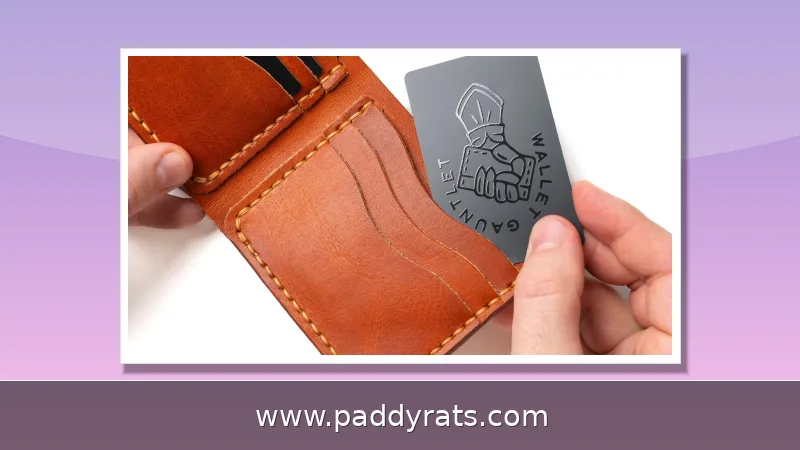
Passive shielding works by putting conductive material between your card and the reader. The shield defeats the signal in two ways: reflective loss, where RF energy bounces off the conductive layer, and absorption loss, where the energy gets soaked up inside the material itself. Get enough of both and the chip never receives the power it needs to wake up. It's the same idea as a Faraday cage, just scaled down to fit a wallet sleeve or a card-sized insert.
What you make the shield out of matters just as much as the design itself. Aluminum foil does a solid job against UHF, copper gives you excellent shielding at both HF and UHF, steel and metalized films are standard in commercial sleeves, and carbon-loaded plastics land somewhere in the middle, according to RFID4U and AssetPulse. Conductive fabrics woven with silver, copper, or stainless steel fibers tend to show up in passport covers and wallet linings, while ferrite is used specifically to absorb RF instead of reflecting it. In the end, how well any of this works depends on conductivity, thickness, grounding, and frequency—which explains why a cheap sleeve and a tested fabric can perform so differently.
Frequency is the detail most buyers overlook. The main target is 13.56 MHz — the band used by contactless credit cards, passports, Apple Pay, and Google Pay. The older 125 kHz band still shows up in some office key cards, and as Sandmarc points out, most RFID wallets don't block it. Blocking 13.56 MHz banking cards is relatively straightforward. Blocking 125 kHz security cards is a different story — it calls for near-field shielding, which is a much harder engineering problem. RFID Cloaked's RFIDsecur fabric, tested at Plymouth University's Brunel department and made in the UK, is one example of a material designed for exactly this job.
How Active RFID Blocking Works: Jamming Cards and Microchips
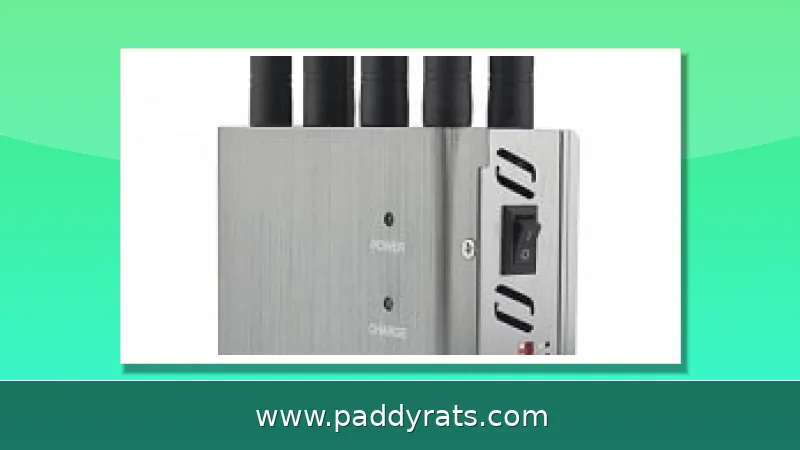
Active RFID blocking takes the opposite approach. Rather than soaking up the reader's energy, a battery-powered card sends out its own interfering signal on the same frequency. That counter-signal can do one of two things: it can pose as another card and create a card clash, or it can drain power from the reader signal so your real card never finishes the handshake. The big difference here is that active jamming doesn't rely on reader energy to power its field, which means its protection isn't capped by how strong the incoming reader happens to be.
Armourcard is the best-documented example out there. It jams at 13.56 MHz, and the company says its active field covers over 150 mm (about 6 inches) in total—76 mm (3 inches) front and rear. Armourcard also holds patents AU2013354900 and US 9596051, and it states compliance with FCC rules in the US, ACMA/RCM in Australia, and CE in Europe. That regulatory side is not just a footnote, either. A device that deliberately transmits radio energy gets regulated in ways a metal sleeve never will, so buying an uncertified jammer card really is a different risk category from buying a wallet.
Passive vs Active RFID Blocking: Key Differences and Trade-offs
The two approaches differ on almost every practical level—power source, mechanism, coverage, lifespan, and cost. The table below breaks down the comparison, drawing on figures from Armourcard, jnrfid.com, Atlas RFID Store, and Sandmarc.
| Factor | Passive blocking | Active blocking |
|---|---|---|
| Power source | None; metal or conductive material | Battery-powered microchip |
| Mechanism | Reflects and absorbs reader signal | Emits interfering counter-signal |
| Typical lifespan | Often 5–10 years | Shorter; battery-dependent |
| Target frequency | Usually 13.56 MHz; rarely 125 kHz | 13.56 MHz |
| Claimed coverage | Depends on material and fit | Over 150 mm total (Armourcard) |
| Regulatory status | Not a radio transmitter | FCC, CE, ACMA/RCM compliance needed |
Passive blocking wins on simplicity and cost. There's no battery to check, no charging routine to remember, and nothing to replace beyond normal wear and tear. It's also the most common approach out there, which helps keep prices down. The knock against it is that it only weakens the signal rather than killing it outright. Armourcard points to a report by Kristin Paget, chief hacker at Recursion Ventures, who says passive shields and metal wallets only cut signal strength and won't stop a high-powered RFID reader. Whether that actually matters to you comes down to whether you think a high-powered reader is a realistic threat in your everyday life.
Active blocking does have one clear edge: it doesn't depend on the reader's power to do its job. But that independence comes with a battery, and batteries die. Atlas RFID Store notes that active RFID tags generally need replacing every three to four years, and an active blocking card may not last as long as a passive sleeve. Not everyone treats the two as separate categories, either. MoreRFID, for instance, describes active cards as more of an advanced version of passive ones—an extra layer of protection rather than a whole new approach. My take: active is a premium pick for someone who wants the widest claimed field and doesn't mind maintaining it. It's not the default purchase.
Which Type Should You Choose for Cards, Passports, and Keys?
Start by checking your cards for the contactless symbol. If a card has no contactless capability, blocking makes no difference to it, and you can skip the sleeve entirely. For cards that do, adding them to a digital wallet such as Apple Pay or Google Pay is a strong defense in itself, because tokenization means the merchant never receives your real card number. That is a software fix that costs nothing and does not wear out.
For physical protection, match the product to the object. A shielded passport cover is the highest-value purchase for international travel, since passports carry identity data and are handled in crowded places. A slim blocking sleeve works for the two or three contactless cards you actually carry. If you live in or visit dense transit cities such as London, New York, or Tokyo, where crowds press bodies together and older contactless cards are still common, a blocking wallet earns its place. For office key cards on 125 kHz, check the spec before buying, because most RFID wallets will not block that band.
The honest prioritization is that rigged physical card readers and terminal tampering are cited as a bigger real-world risk than pocket skimming. A blocking wallet does nothing about a compromised point-of-sale terminal or an online breach. Buy the shield for the narrow, cheap-to-close gap it covers, and put more energy into monitoring statements and using tokenized payments.
Limits, Risks, and Real-World Effectiveness
Passive shielding is not a binary. Effectiveness shifts with material conductivity, thickness, grounding, and the frequency in play, which is why independent testing matters more than a product label. A sleeve that attenuates 13.56 MHz well may do little at 125 kHz. Fit matters too: a card that slides partly out of a loose sleeve is exposed. Critics argue high-power readers can penetrate passive shields, and while that claim is contested, it is a fair reason to treat passive protection as risk reduction rather than a guarantee.
Active jamming has its own boundaries. It operates on a specific frequency, 13.56 MHz, so it does nothing for 125 kHz keys or UHF tags. It requires battery power, meaning a dead card is a silent failure. And because it transmits, it must meet FCC, CE, or ACMA/RCM rules depending on where you live. MoreRFID and other sources also flag broader RFID vulnerabilities, including cloning, eavesdropping, physical attacks, and service denial, none of which a wallet or jammer card fully solves.
The practical conclusion is layered defense. Use tokenized digital wallets for everyday spending, keep a shielded passport cover for travel, choose a passive sleeve or wallet for the cards you carry most, and consider an active jammer card only if you want the widest claimed field and will accept the battery and compliance overhead. No single product replaces attention to your accounts.
Does Passive RFID Shielding Block High-Power Readers?
This is the most contested claim in the category. Armourcard cites a report by Kristin Paget stating that passive metallic wallets only reduce signal strength and will not block a high-powered RFID reader. Passive effectiveness varies by material and construction, so a tested fabric may outperform a thin foil insert. Treat passive shielding as meaningful attenuation rather than an absolute barrier.
How Long Do Passive and Active RFID Blocking Cards Last?
Passive blockers often last 5–10 years with no batteries, according to jnrfid.com, and they fail mainly through physical wear rather than electrical degradation. Active cards rely on a battery and may need replacement sooner. Active RFID tags in general have limited battery life, with replacement every 3–4 years per Atlas RFID Store, so plan on a maintenance cycle if you go active.
Do I Really Need an RFID-Blocking Wallet?
Most modern cards use one-time encrypted tokens, and 99% of fraud happens online rather than through physical skimming, per Sandmarc. A thief would need to press against your pocket to have any chance. Still, shielded passport covers and blocking wallets are low-cost precautions for travelers and commuters carrying older contactless cards, so they are reasonable rather than essential.
Frequently Asked Questions
What is the difference between passive and active RFID blocking?
Passive RFID blocking uses metal-lined sleeves, wallets, or cards to absorb or reflect incoming radio signals, creating a Faraday cage effect. Active RFID blocking uses a battery-powered microchip that emits a jamming signal to disrupt communication between your cards and a reader. Passive is far more common, while active claims a stronger and wider protective field.
Can a powerful RFID reader penetrate passive shielding?
Some sources say passive shields only reduce signal strength and may not block a high-powered RFID reader. Armourcard cites a report by hacker Kristin Paget stating that passive metallic wallets only reduce signal strength and will not stop a high-powered reader. Passive effectiveness varies by material, thickness, and construction, so results differ between products.
How long do passive and active RFID blocking cards last?
Passive blockers often last 5–10 years with no batteries, according to jnrfid.com, and they typically wear out physically rather than electrically. Active cards rely on a battery and may need replacement sooner. Active RFID tags in general are noted to have limited battery life, with replacement every 3–4 years per Atlas RFID Store.
Do I really need an RFID-blocking wallet?
Most modern cards use one-time encrypted tokens, and 99% of fraud happens online rather than through physical skimming, per Sandmarc. A thief would need to press against your pocket to have any chance. Still, shielded passport covers and blocking wallets are low-cost precautions for travelers and commuters carrying older contactless cards.