Beamforming anti-jamming antennas steer RF energy toward real GNSS satellites and spatial nulls toward jammers, letting military receivers keep position, navigation and timing under heavy interference. Here is how CRPA hardware, digital beamforming and multi-band processing deliver 110-120+ dB J/S protection.
Why Are Military GNSS Signals So Vulnerable to Jamming?
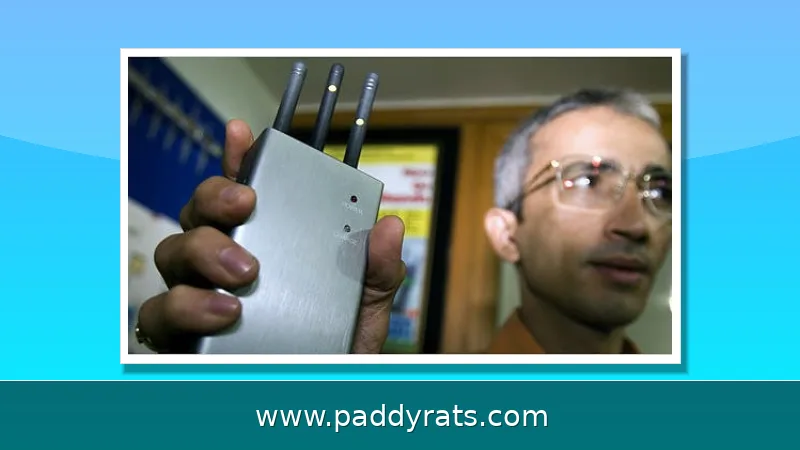
GNSS satellites sit about 20,000 km above Earth, and by the time their signals reach a receiver, they're incredibly faint. In practice, the power a receiver's antenna picks up is often under 50 watts, so even a low-power transmitter on the ground can easily drown out the satellite signal. That imbalance is what makes jamming such a serious problem, and it's why military users can't just depend on standard receivers that passively take in whatever arrives at the antenna.
Civilian and military users are stuck sharing the same physical bands, which really limits what you can do. Take GPS: L1 at 1575.42 MHz handles mostly non-military traffic, L2 at 1227.60 MHz is reserved mainly for military service, and L5 at 1176.45 MHz is the newer one, built with better interference resistance and a stronger signal. Here's the thing, though—a jammer going after one band often leaves the others alone. That gap is exactly what multi-band anti-jamming GNSS receivers take advantage of, letting them keep positioning, navigation and timing (PNT) up and running.
The threat has grown sharply. GPS jamming has become far more common since 2016, and by 2024 the eastern Mediterranean, the Black Sea, the Baltic region, Poland and parts of Scandinavia ranked among the most heavily jammed areas in the world. Before that, hotspots included South Korea, the Suez Canal, Cyprus and Israel. Cheap jammers that are easy to get hold of have turned what used to be a niche electronic warfare problem into a routine operational risk for defense, aviation, maritime and autonomous systems.
How Beamforming and Nulling Work in Anti-Jam Antennas
Anti-jam systems don't work like the receiver in your phone or car. A normal receiver just sits there and takes whatever hits its antenna. An anti-jam system does the opposite — it's constantly probing the RF environment around it and adjusting on the fly. That process unfolds in a chain: first it watches signal quality and noise levels without pause, then it looks for weird power spikes or spectral patterns that shouldn't be there, then it figures out what kind of interference it's dealing with, then it suppresses or filters that interference out, and finally it makes sure the real GNSS signals are still being tracked. Every stage hands off to the next, and the whole thing loops continuously — because the RF picture never stays still for long.
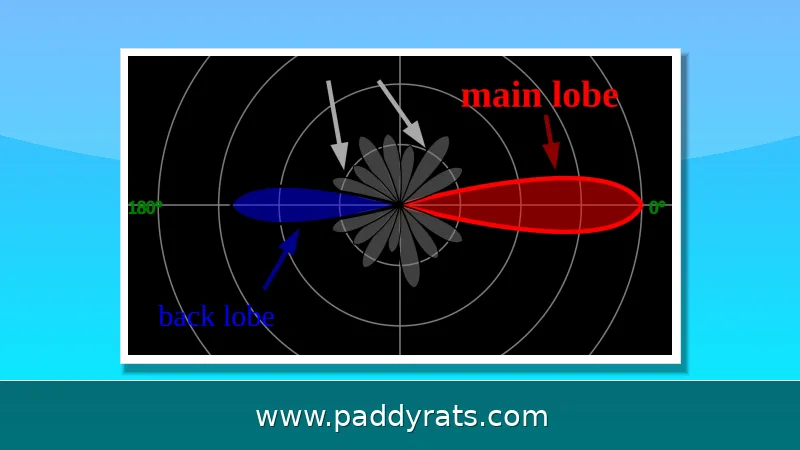
Beamforming and nulling are the two spatial tricks that make up the core of that response. With beamforming, the antenna steers an RF beam toward a GNSS satellite it recognizes, which means a jammer would basically have to park itself right in that satellite's line of sight to break the link. Nulling flips the idea around: instead of boosting a direction, it carves out a spatial null—a blind spot, essentially—aimed straight at the jammer. How many nulls a system can pull off depends on its channel count, so the more antenna channels you have, the more jammers it can shut down at the same time.
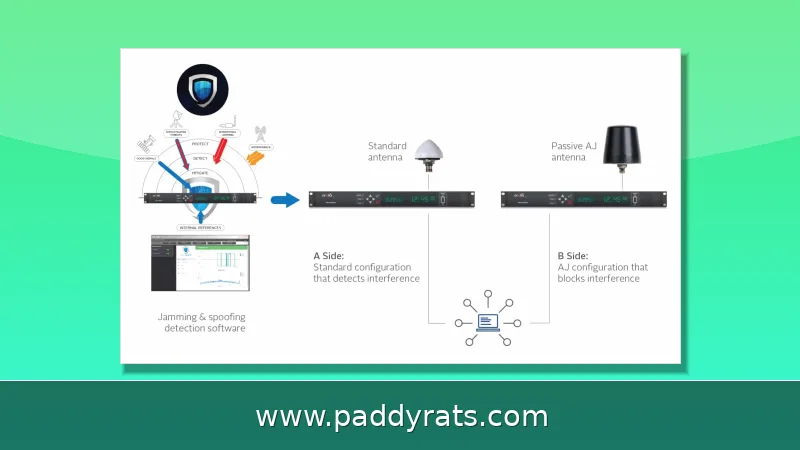
Digital beamforming relies on digital signal processing to control the antenna's reception pattern with real precision—shaping it electronically instead of mechanically. That difference matters a lot in dynamic environments, where platforms are rolling, pitching, and maneuvering while jammers move around or switch up their waveforms. Chelton lays out three complementary anti-jam methods: nulling, which points a null at the jammer; beamforming, which steers an RF beam toward a recognized GNSS satellite; and excision, which wipes out narrowband interference that crosses a statistical threshold. From there, receiver firmware algorithms run digital filters to detect and strip out jamming before the positioning engine ever touches the signal.
What Is a CRPA and How Does Spatial Filtering Protect Receivers?
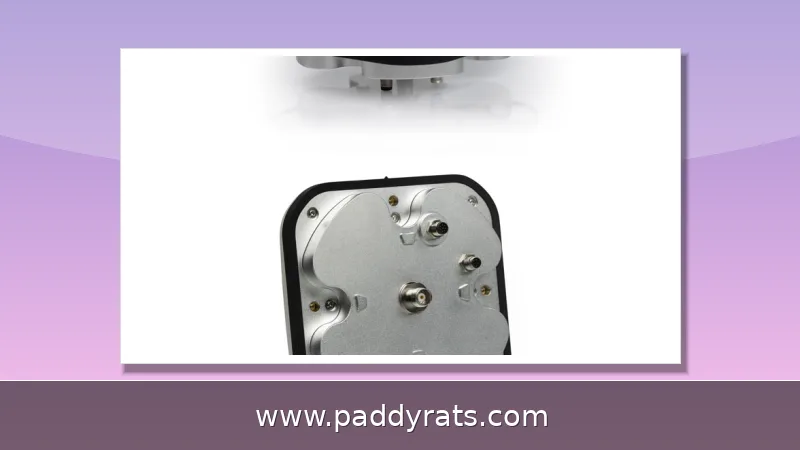
A Controlled Reception Pattern Antenna, or CRPA, is the hardware that makes spatial filtering possible in the first place. It relies on multiple elements laid out in a precise geometry, and by comparing phase and amplitude across those elements, it can figure out where incoming signals are coming from. Once the antenna knows the direction of arrival, it can form spatial nulls toward the jammer while staying sensitive to the satellites. In other words, it steers the reception pattern instead of just broadcasting it uniformly.
One big practical upside here is that a CRPA swaps in for the existing antenna while leaving the GPS receiver untouched. For platforms already in the field, that's a pretty appealing upgrade path — you're adding anti-jam capability right at the antenna instead of ripping out and replacing the whole receiver. And when you pair that with adaptive filtering algorithms that learn and adjust in real time as the RF environment shifts, the antenna stops being just a passive aperture. It effectively becomes a sensing and mitigation system in its own right.
Frequency diversity is another tool that works hand in hand with spatial filtering. If a jammer goes after one band, the others may come through just fine, so a dual- or multi-frequency receiver can simply fall back on an unaffected band. And the benefit here isn't just theoretical: by letting receivers pull signals from across frequencies, multi-band anti-jamming GNSS systems deliver roughly 3.5 times the jamming resilience of single-frequency setups. Sensor fusion layers even more protection on top of that. An INS tracks acceleration and rotation to keep positioning going when GNSS drops out, covering gaps that last anywhere from minutes to hours depending on the unit's grade, while visual odometry, barometric altimeters and terrain contour matching pile on additional resilience.
Anti-Jam Performance: dB J/S Levels and Multi-Frequency Resilience
J/S, or jamming-to-signal ratio, is the go-to metric for measuring anti-jam performance. Basically, it tells you how much jammer power a receiver can handle before it loses the GNSS signal it's actually trying to track. The higher the dB J/S figure, the more interference the system can push through and still keep working. Below, we've laid out the key numbers and capabilities reported for the military anti-jam systems out there today.
| System | Anti-Jam Performance | Key Capability |
|---|---|---|
| BAE Systems DIGAR (upgraded) | Over 120 dB J/S | Beamforming with Trimble receivers on host platforms; compatible with advanced M-Code |
| BAE Systems SABR-M | More than 110 dB J/S | Position, velocity, altitude and time data; jamming and spoofing protection |
| Multi-band receiver vs single-frequency | 3.5x jamming resilience | Cross-frequency signal use across L1, L2 and L5 |
The DIGAR upgrade is notable because it enables beamforming with Trimble receivers on host platforms and increases GPS jamming protection for aircraft by a million-fold, according to BAE Systems. SABR-M is form-compatible with previous SABR generations, which simplifies integration on existing airframes. Both figures sit at the high end of what is publicly reported, and both depend on the antenna, the receiver firmware and the platform integration working together rather than on any single component.
Real-World Military Systems: DIGAR, SABR-M and M-Code
BAE Systems is the most visible player in this space, with Doug Lloyd, director of weapon systems GPS, representing the company's public position on the technology. DIGAR is aimed at fixed wing, rotary wing and unmanned airborne platforms, delivering over 120 dB J/S while remaining compatible with advanced M-Code. SABR-M, offering more than 110 dB J/S, is designed for drones, JDAM precision-guided munitions and long-range missiles, including some hypersonic systems, and provides position, velocity, altitude and time data with protection against both jamming and spoofing.
The supplier ecosystem extends well beyond one company. Trimble receivers appear in the DIGAR beamforming configuration, Septentrio offers the AIM+ anti-jam product line, and Chelton brings antenna expertise, with Joe Humphrey serving as ATC Manager and Dr. Neil Tisdale as Chief Engineer. SBG Systems, infiniDome, NovAtel and CRFS round out a market that spans antennas, receivers, inertial sensors and RF monitoring, while GPSjam tracks interference activity for public visibility.
Constellation diversity reinforces the hardware story. GPS (United States), Galileo (Europe), GLONASS (Russia), BeiDou (China), QZSS (Japan) and IRNSS (India) all provide signals, and services such as GPS M-Code and Galileo PRS add signal authentication and encryption that help prevent spoofing. BAE Systems is also moving into a new 280,000 square foot facility in Cedar Rapids, Iowa, combining manufacturing and engineering operations that were once 20 miles apart, a sign of how demand for anti-jam PNT has grown.
Which Jamming Types Must Anti-Jam Systems Counter?
Anti-jam design is shaped by the specific threats in the field. Wideband noise jamming floods the entire GNSS spectrum, while narrowband jamming targets specific frequencies such as L1 or L2 within about 2 MHz ranges. Sweep jamming rapidly shifts frequencies to evade simple filters, and proximity jamming places the jammer physically close to the receiver, where signal strength is highest and geometry offers the least spatial separation.
Continuous Wave (CW) jamming emits a steady single frequency or narrow band, which is comparatively easy to excise once detected. More challenging are modulation techniques that transmit signals resembling genuine GPS signals, enabling spoofing and complex interference that can mislead a receiver rather than simply deafen it. Spoofing is a distinct threat from jamming, and it is why signal authentication and encryption matter as much as raw suppression capability.
The operational response follows a defined sequence: detect interference, identify its characteristics, then adaptively suppress or filter it while preserving authentic signal tracking. Operators combine electronic protection, jamming identification and geolocation of the jamming source, because ceasing operations is not an option and moving around jamming is costly. Monitoring networks detect and locate jamming sources so that mitigation can be swift and targeted.
Jamming Hotspots and the Limits of Anti-Jam Technology
Anti-jamming remains a technological arms race. Jammers use sweeping frequencies, burst transmissions and deceptive waveforms, so defenses must continually evolve rather than reach a fixed endpoint. Researchers are exploring machine learning-based detection and quantum-resistant authentication, and signal-of-opportunity navigation uses terrestrial sources such as TV, radio or cellular signals when satellites fail. None of these is a complete substitute for robust GNSS, but together they widen the margin of resilience.
Geography tells the story of demand. Jamming cases are rising with cheap, easy-to-acquire jammers, and the 2024 concentration across the eastern Mediterranean, Black Sea, Baltic areas, Poland and parts of Scandinavia followed earlier hotspots in South Korea, the Suez Canal, Cyprus and Israel. In those environments, anti-jamming has shifted from a niche military capability to a critical component across defense, aviation, maritime and autonomous systems.
The practical lesson for operators is that no single layer is sufficient. Multi-band receivers, CRPA antennas, digital beamforming, excision filters, inertial bridging and authenticated signals work as a stack, and the 3.5x resilience gain from multi-band operation only materializes when the antenna and receiver can actually exploit it. As jammers get cheaper and more sophisticated, the systems that survive will be the ones that adapt fastest.
How Does Beamforming Protect GNSS from Jamming in Practice?
In practice, beamforming changes the geometry of the problem. Because the beam points at the satellite, a jammer would have to sit in the satellite's path to interfere, which is a far harder position to occupy than simply broadcasting power toward a receiver. Meanwhile the system maintains spatial nulls toward detected interference sources, so the receiver keeps tracking authentic signals even as the RF environment deteriorates around it.
This is why the combination of nulling and beamforming outperforms either technique alone. Nulling alone reduces jammer power but can also reduce wanted signal if the geometry is poor; beamforming alone improves gain toward satellites but does not directly reject a strong nearby emitter. Together, with excision handling narrowband threats and multi-band operation providing frequency diversity, they form the layered defense that modern military GNSS receivers depend on.
Frequently Asked Questions
How does beamforming protect a military GNSS receiver from jamming?
Beamforming directs an RF pattern, or beam, toward a recognized GNSS satellite rather than the jammer. Because the beam points at the satellite, a jammer would have to sit in the satellite's path to interfere, making jamming far more difficult while the receiver keeps tracking authentic signals.
What is a CRPA and how does it relate to beamforming?
A Controlled Reception Pattern Antenna uses multiple elements in a precise geometry. By comparing phase and amplitude across elements, it determines the direction of arrival and forms spatial nulls toward the jammer while keeping sensitivity toward satellites. A CRPA replaces the existing antenna without changing the GPS receiver itself.
What anti-jam performance levels do military beamforming receivers reach?
BAE Systems reports that its upgraded DIGAR enables beamforming with Trimble receivers and delivers anti-jam performance of over 120 dB J/S. The SABR-M receiver, used for drones, precision-guided munitions and missiles, offers more than 110 dB J/S for strong anti-jam protection.
Why are GNSS signals so vulnerable to jamming in the first place?
GNSS satellites orbit roughly 20,000 kilometers above Earth, so by the time signals reach a receiver they are extremely weak, less than 50 watts. Even low-power transmitters can overwhelm them, which is why anti-jamming antennas and signal processing are needed.
What is a beamforming anti-jamming antenna and how does it work?
A beamforming anti-jamming antenna uses multiple elements to steer RF energy toward real GNSS satellites while creating spatial nulls toward jammers. By comparing phase and amplitude across elements, it determines the direction of arrival of incoming signals. This lets it amplify wanted satellite signals and suppress interference, keeping military receivers locked onto position, navigation and timing even under heavy jamming.
What does dB J/S mean in anti-jam GNSS systems?
J/S stands for jamming-to-signal ratio, the standard figure of merit for anti-jam performance. It expresses how much jammer power a receiver can tolerate relative to the wanted GNSS signal. Higher dB J/S numbers mean the system keeps tracking under stronger interference. For example, BAE Systems DIGAR offers over 120 dB J/S, while SABR-M exceeds 110 dB J/S.