Signal jammer detectors watch the radio spectrum for the RF noise that GPS, Wi-Fi, and cellular jammers emit. This guide explains how detection works, which bands matter, and how to pick a device for property, vehicle, or field security.
What Is a Signal Jammer Detector Device?
A signal jammer detector is a receive-only device that monitors the radio spectrum and flags the abnormal RF energy a jammer puts out. Jammers work by flooding the same frequencies a target device depends on with noise, which creates a denial-of-service effect: GPS locks drop, cell calls fail, Wi-Fi cuts out. A detector doesn't transmit anything—it just watches for that noise and tells you when something looks wrong. And as jamming has turned into a mainstream problem, these tools have moved from government labs to commercial catalogs, with names like Chronos Technology, PKI Electronic Intelligence, Lynx Electronics, Digitpol, CIU Co., and GPSPATRON now selling them.
The market data makes the urgency hard to ignore. U.S. Customs and Border Protection has recorded roughly an 830% increase in signal jammer seizures since 2021, according to Post Alarm. Meanwhile, Security Systems News reports that jammers disrupt about 25% of commercial and public safety tracking systems across major U.S. and EU markets — losses that pile up to an estimated $2.5 billion every year. The global anti-jamming market was valued at USD 5.43 billion in 2025, and Fortune Business Insights projects it will reach USD 12.97 billion by 2034. Consumer demand tells a similar story: Tualcom's data shows searches for cheap anti-jammer solutions have surged 150% since October 2025.
How Does a Signal Jammer Detector Work?
Spotting a jammer doesn't begin with some alarm blaring. It begins with listening to the air itself. A detector repeatedly sweeps the bands you care about, sampling RF energy across the spectrum and comparing each reading against a baseline of normal background noise captured for that specific location. That baseline matters a lot, since ambient RF on a quiet rural property looks nothing like it does on a packed city block. It's the thing that tells a genuine threat apart from the everyday hum of cell towers, Wi-Fi routers, and broadcast transmitters. Once jamming starts, the signature tends to be fairly obvious: a sudden, sustained spike in RF power concentrated into a narrow set of frequencies, often with the flat, unmodulated shape of a continuous-wave jammer. Frequency-modulated and wideband jammers show up differently on the spectrum display because they spread their energy over a wider stretch, but they still stand out clearly against normal traffic. The way a detector processes those readings is where designs begin to differ. Some units, like the PKI 6825, use fuzzy scanning logic to weigh several signal characteristics before flagging anything, while others depend on environment noise verification circuits that cross-check readings to reduce false alarms from legitimate transmitters. Either way, the goal stays the same: catch real jamming quickly without drowning the operator in noise.
Once you've confirmed there's a threat, how the alert actually reaches you matters just as much as the detection itself. Budget-friendly units tend to keep things simple, flashing an LED or sounding a buzzer so you know something's off. Move up to better models and you get vibration alerts for noisy environments, relay outputs that can trip a siren or feed straight into an alarm panel, and timestamped event logs you can export as CSV or PDF when you need a forensic trail. Cloud-connected modules from Digitpol go further still, sending alerts by SMS, email, API, or portal while adding IMSI catcher and rogue base station detection on top. There's also a network-side option worth knowing about: watching packet delivery ratio to catch the kind of slow degradation that looks like ordinary congestion but is actually interference.
When you're out in the field, the whole routine is pretty simple—and it's entirely passive. You just mount a portable detector on a windshield holder, leave it running in monitoring mode while you patrol, and let it flag anything unusual without transmitting a single thing. Take the GP-Probe Nano L1, for example: it's a wearable that's about the size of a USB flash drive, and a single charge gets you 30 days in Detector Mode or three months in Logger Mode. When it picks something up, it alerts you through vibration, sound, and 36 LEDs.
Which Frequencies and Bands Do They Cover?
Coverage is the single biggest factor that separates a budget detector from a professional-grade one. Cheap models typically only monitor the cellular and GPS bands. That'll catch the most common vehicle-theft jammers, sure, but it leaves a lot of gaps. Professional units cast a wider net, adding Wi-Fi, Bluetooth, and the 315/433/868 MHz bands that key fobs, gate openers, and alarm sensors rely on — which matters, because those are exactly the signals a thief might try to spoof or block before ever getting to the GPS. The PKI 6825 is a good example, scanning a sweeping 50 MHz to 6.0 GHz, and Lynx Electronics' LXJD-100 covers cellular 2G/3G/4G/5G, Wi-Fi/Bluetooth, and GPS/GALILEO all in one box. Portable GNSS specialists like the GP-Probe Nano take the opposite approach, zeroing in tightly on the GNSS L1 band, where the physics is at its most brutal.
| Detector | Coverage | Type |
|---|---|---|
| Economy models | Cellular and GPS bands | Fixed or handheld |
| Professional units | Adds Wi-Fi, Bluetooth, 315/433/868 MHz | Fixed or handheld |
| PKI 6825 | 50 MHz to 6.0 GHz | Handheld |
| Lynx Electronics LXJD-100 | Cellular 2G/3G/4G/5G, Wi-Fi/Bluetooth, GPS/GALILEO | Fixed |
| GP-Probe Nano | GNSS L1 band | Portable wearable |
This is a physics problem that catches people off guard. GNSS signals arrive at the Earth's surface at around -130 dBm, which is absurdly weak—barely above the thermal noise floor. A jammer emitting only 10 to 20 mW can drown those signals out across 250 to 300 meters. That's exactly why GPS interference is so easy to pull off, and it's also why a detector has to be sensitive enough to catch these low-power sources before a tracker ever loses its lock. The table below breaks down typical coverage across the main classes of detectors.
| Detector Class | Typical Bands Covered | Example Model |
|---|---|---|
| Economy handheld | Cellular, GPS | Generic jammer detector apps and budget units |
| Professional handheld | Cellular 2G-5G, Wi-Fi/Bluetooth, GPS/GALILEO | LXJD-200, PKI 6825 |
| Fixed installation | Cellular, 2.4G Wi-Fi, 315/433/868 MHz | Suresafe fixed detector, RFD-12S |
| GNSS specialist | GNSS L1 (wearable or vehicle) | GP-Probe Nano L1 |
| Cloud module | 2G-5G, GPS/GLONASS/GALILEO, Wi-Fi/Bluetooth | Digitpol GSM detection module |
Fixed vs Handheld vs Portable Detectors
Fixed detectors are designed for permanent coverage — they stay mounted in one spot and monitor the RF spectrum 24/7. Models like the RFD-12, RFD-12S, and LXJD-100 are typically installed indoors or inside a vehicle, running continuously on 12V–24V DC while pulling as little as 150 mA. That's low enough to keep them powered indefinitely without draining a battery or putting any real strain on a building's electrical system. Honestly, that always-on capability is the whole selling point. You get round-the-clock protection for warehouses, data rooms, fleet yards, and executive vehicles without relying on someone to remember to flip a switch or grab a portable unit on their way out. The downsides are fairly obvious, though. Installation requires planning and wiring, and the cost usually runs higher than a handheld device. More importantly, a fixed detector only covers the area it's actually watching, so if your property or fleet is spread across multiple sites, you'll need to seriously think about where the coverage gaps are.
| Model | Type | Power | Typical Use |
|---|---|---|---|
| RFD-12 | Fixed | 12V-24V DC | Indoor permanent installation |
| RFD-12S | Fixed | 12V-24V DC | Indoor permanent installation |
| LXJD-100 | Fixed | 12V-24V DC | Vehicle or building mount |
Handheld and portable detectors are built for a different mission: quick spot checks and mobile sweeps rather than round-the-clock coverage. Units like the RFD-19, LXJD-200, and GP-Probe Nano slip into a pocket or clip onto a windshield, which means a security team can confirm a site is clean before trusting it, or keep watch while patrolling a route. The GP-Probe Nano pushes this further, offering up to 30 days of battery life in Detector Mode and roughly 500 meters of detection range against cigarette-lighter GPS jammers, with vibration, sound, and 36-LED alerts for noisy or hands-busy environments. Cloud-based modules such as Digitpol's take another path, adding mesh networking and remote alerting by SMS, email, API, or portal, but they lean on constant connectivity and a subscription-style data SIM, a real recurring cost that field budgets have to absorb. That trade-off explains why many security buyers end up running both: fixed coverage guarding high-value sites, and handheld units reserved for investigations and field operations where mobility matters most.
Key Specifications to Compare
Spec sheets reward careful reading. Frequency range tells you what threats you can see; sensitivity tuning and environment noise verification determine whether you get false alarms at 3 a.m.; alarm outputs decide whether the device notifies a human or a system. Power options, battery life, and operating temperature decide whether the unit survives a real deployment. The table below puts several well-known models side by side using published specifications.
| Model | Detection Scope | Power / Battery | Alerts and Outputs |
|---|---|---|---|
| PKI 6825 | 50 MHz-6.0 GHz | 9V-24V DC | 10 LEDs, 1A relay alarm output |
| GP-Probe Nano L1 | GNSS L1, up to ~500 m for cigarette-lighter jammers | USB Type-C, 30 days Detector Mode / 3 months Logger Mode | Vibration, sound, 36 LEDs |
| Digitpol module | 2G/3G/4G/5G, GPS/GLONASS/GALILEO, Wi-Fi/Bluetooth, IMSI catcher and rogue tower detection | 5V/12V/110V/220V, 24h internal backup, optional 1-month battery | SMS, email, API, portal |
| Suresafe fixed | Wideband cellular and 2.4G Wi-Fi | 12V-24V DC, 150 mA | Alarm integration |
| CIU anti-jammer unit | Detects signals from 2 jammers | Compact unit, L 11.6 x W 7 x T 3.3 cm excluding antenna | Local alarm |
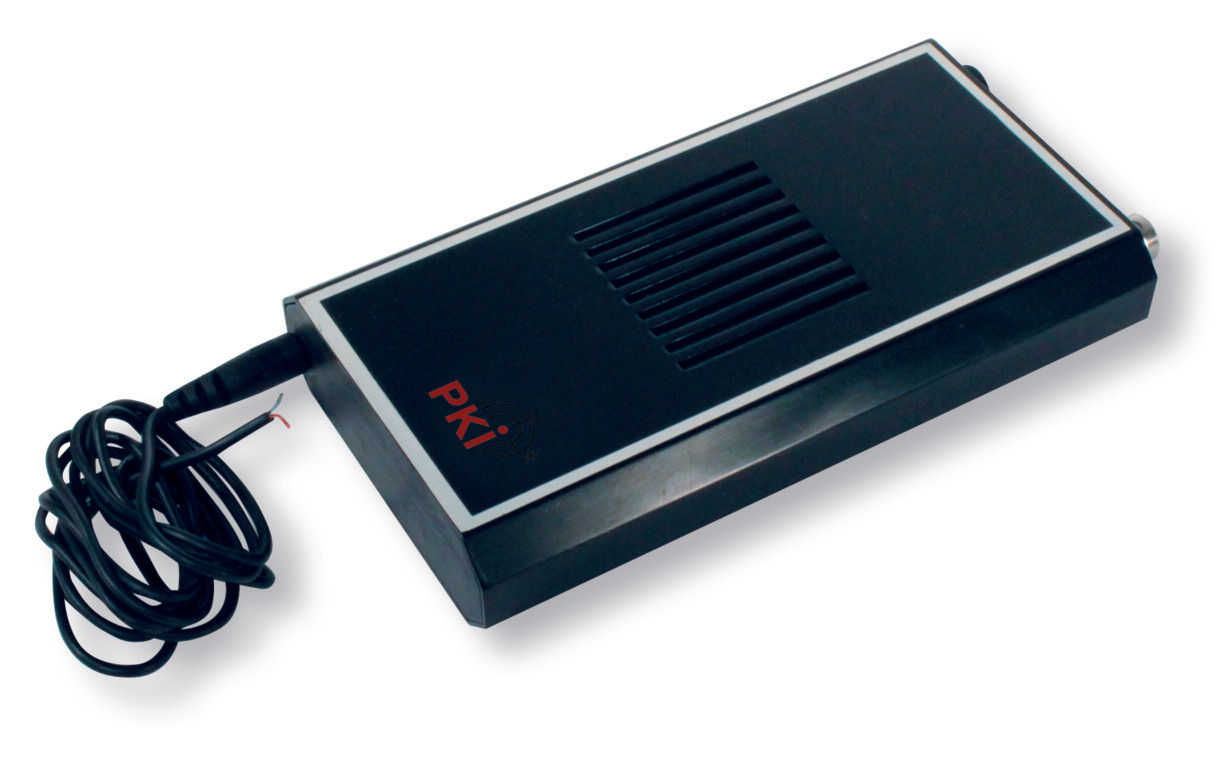
Two details separate serious hardware from toys. The first is physical size and mounting. Take the PKI 6825: at 130 x 68 x 26 mm and roughly 195 grams, it is small enough to tuck behind a shelf, inside a vehicle console, or near any asset you are trying to protect, which matters because a detector that cannot be concealed is a detector an attacker can simply avoid. The second is logging. Timestamps and exportable records turn a one-time detection event into usable evidence, and that distinction shows up later, when you have to brief law enforcement or file an insurance claim after an incident. A detector that only blinks an LED tells you something happened; one that saves a time-stamped file tells you when, how often, and for how long. So buy for the threat you actually face, then confirm the spec sheet supports it.
Real-World Use Cases: Property, Vehicles and First Responders
Vehicle theft is where jammer detectors earn their keep in the commercial world, and the numbers explain why. Law enforcement sources cited by the UK Government, reporting through GPSPATRON, found that 80–85% of organized vehicle thefts now involve GPS jammers—meaning the crew shows up expecting the tracker to go dark before the car ever moves. That single tactic swings the outcome dramatically: recovery rates fall from 90–95% when a tracker is working to roughly 23–25% when it isn't. In other words, a functioning tracker is close to a guarantee, while a jammed one leaves owners with about a one-in-four chance. This is why a detector mounted in a fleet vehicle or a high-value car matters. It won't stop the jammer, but it gives the driver or dispatcher an early warning that the tracker has been blinded—often the difference between a recovery and a write-off. For fleets, that warning can also trigger a manual response: call the driver, check the last known location, or alert authorities while the vehicle is still nearby.
Property owners and security teams run into the same problem, just on a smaller scale. A jammer doesn't need to defeat every device on site — it only has to knock out the links your system depends on, whether that's an alarm panel reporting to a central station, a wireless door or motion sensor, or the wireless backhaul feeding your cameras. That's why a detector built to watch cellular, Wi-Fi, and the 315/433/868 MHz bands covers the entire security stack instead of leaving gaps between devices. For first responders and field units, the stakes shift from property loss to officer safety: a jammed GPS or radio link can strand a team mid-operation with no way to call for backup. This isn't hypothetical. The Department of Homeland Security reported that jamming devices were used in several Vermont bank robberies in June, and jamming devices were recovered in an attempted jewelry store robbery in La Verne, California, according to Post Alarm. Incidents like these are why detection has moved out of the lab and into everyday incident response planning.
Risks, Compliance and Legal Limits
Detectors are receive-only monitoring devices, and that distinction matters legally. Jammers themselves are illegal to sell, advertise, distribute, or operate in the United States and much of the world under FCC rules and the Communications Act of 1934. If you suspect jamming, the correct move is to contact law enforcement or file an FCC complaint, not to deploy a countermeasure that transmits. Nothing in this guide is legal advice, and local rules vary by country.
There are also technical limits worth acknowledging. A detector can only see what its antenna and frequency range allow; a jammer operating outside those bands stays invisible. Apps that claim to detect jammers are largely unproven and require a working signal to function, which is exactly what jamming removes. Signal boosters do not help either, because a booster amplifies an existing signal that is already being blocked. The realistic posture is layered: detectors for awareness, wired connections where possible, and law enforcement for enforcement.
How to Choose the Right Jammer Detector
Start with the threat model, not the spec sheet. If you protect vehicles, prioritize GNSS detection with long-range sensitivity and logging. If you protect a building, prioritize fixed coverage across cellular, Wi-Fi, and key-fob bands with relay outputs wired into your alarm panel. If you run field operations, prioritize portability, battery life, and passive alerting that does not require you to stare at a screen. Match detection bands to the jammers you realistically face, then verify the unit's sensitivity tuning can be adjusted to your RF environment.
Budget follows function. Chronos Technology lists the CTL3510-LOG Jammer Detector and Logger at $1,242.00 and the CTL3520 Directional GPS Jammer Detector and Locator at $2,539.00, both marketed in the U.S. by NavtechGPS. That is professional-grade pricing, and it buys direction finding and forensic logging rather than a simple yes/no alarm. For smaller deployments, handheld and fixed units from Lynx Electronics, CIU Co., and PKI cover the essentials at lower cost. Whatever you buy, test it against a known low-power source before you rely on it, and keep the event logs.
How Do You Confirm a Jammer Is Actually Being Used?
Jamming rarely announces itself as jamming. The practical signs are service loss across multiple devices at once, sudden signal fluctuations, Wi-Fi disconnections, high latency, and packet loss, while wired Ethernet connections keep working normally. That last detail is the tell: if the wired link is fine and every wireless path is degraded in the same place at the same time, interference is the likely cause rather than a carrier outage.
A detector turns suspicion into evidence. Look for a sustained RF anomaly on the bands your devices use, then check whether it moves with a suspect vehicle or stops when the vehicle leaves. Log the event with timestamps and export it. If the pattern repeats at the same location, escalate to law enforcement or file an FCC complaint with the records in hand. Awareness plus documentation is what makes a case, and it is also what protects your own operations from the next attempt.
Where the Anti-Jamming Market Is Heading
The direction of travel is toward integration. Detectors are being folded into broader security platforms, with cloud dashboards, mesh networking, and API alerts replacing standalone buzzers. Digitpol's module already detects 2G through 5G, GPS, GLONASS, GALILEO, Wi-Fi, and Bluetooth, plus IMSI catchers and rogue towers, with operating temperatures from -15C to +55C and a 24-hour internal backup battery. That is a monitoring platform, not a gadget.
Demand is being pulled by both crime and regulation. The 830% rise in jammer seizures since 2021 and the 150% jump in anti-jammer search interest since October 2025 show a market reacting to a real problem. For buyers, the takeaway is simple: treat jamming as a foreseeable risk, pick a detector whose bands match your assets, and keep records. The technology is mature enough to deploy today, and the cost of ignoring it is measured in stolen vehicles, disabled alarms, and lost cargo.
Frequently Asked Questions
How does a signal jammer detector work?
A jammer detector monitors the radio spectrum and looks for anomalous RF energy on bands used by phones, Wi-Fi, Bluetooth, GPS, and GNSS. When jamming noise appears, it alerts users via LED, sound, or vibration, and some models log events with timestamps for later analysis. It is a receive-only device, so it never transmits.
What frequencies can a jammer detector cover?
Coverage varies by model. The PKI 6825 scans 50 MHz to 6.0 GHz, while the LXJD-100 detects jamming in cellular 2G/3G/4G/5G, Wi-Fi/Bluetooth, and GPS/GALILEO bands. Portable GNSS detectors such as the GP-Probe Nano focus on the GNSS L1 band, where signals are weakest and easiest to overpower.
Are signal jammer detectors legal to use?
Detectors are receive-only monitoring devices, but jammers themselves are illegal to sell, advertise, distribute, or operate in the United States and much of the world under FCC rules and the Communications Act of 1934. If you suspect jamming, contact law enforcement or file an FCC complaint rather than deploying a transmitting countermeasure.
How far away can a jammer detector detect a jammer?
Range depends on the jammer's power and the environment. The GP-Probe Nano detects standard cigarette-lighter GPS jammers at up to about 500 meters in open areas. In urban settings with obstructions, effective range is shorter but often still enough to identify a vehicle before it leaves the patrol area.