UK law already bans using, making or selling signal jammers under the Wireless Telegraphy Act 2006, with up to two years in prison and an unlimited fine. Now the government is asking whether simply possessing one should be a crime too.
What Does UK Law Currently Say About Signal Jammers?
People ask me about this all the time, and honestly, signal jammers occupy a weird gray area in UK law: using one is plainly illegal, but simply owning one isn't specifically banned yet. The Wireless Telegraphy Act 2006 is the foundation of all this. It outlaws using equipment that interferes with wireless telegraphy, and it also prohibits manufacturing, importing, selling, or renting non-compliant jamming devices. Ofcom, the regulator for electronic communications and postal services, doesn't authorize or license jammers under any circumstances. There's no form to submit, no permit to purchase, no exception carved out for hobbyists, landlords, or small businesses. If a device blocks radio signals, operating it in the UK is against the law.
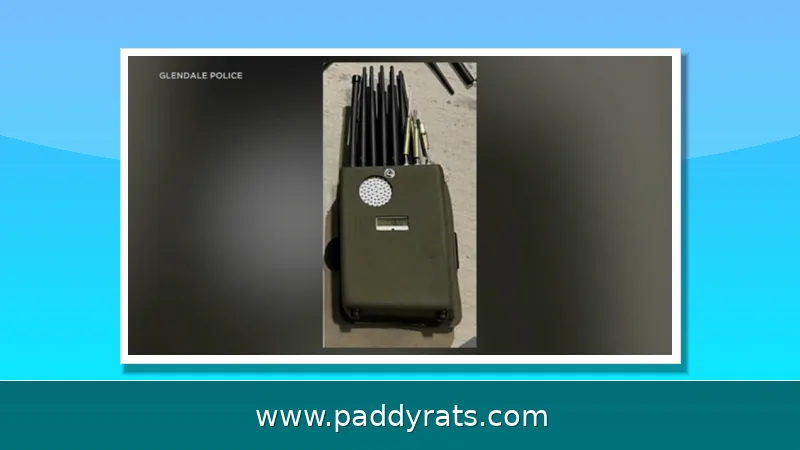
There's one nuance here that tends to get overlooked: the WTA was designed to go after interference and non-compliant equipment, not to treat a jammer as contraband in the way a gun or an illegal drug is treated. Prosecutors have to prove that someone actually used a device to disrupt a signal, and that's genuinely tough to evidence. A jammer is typically just a small black box—no screen, no log, nothing that obviously ties it to the theft or disruption it caused. That gap in the evidence chain is precisely why ministers are now considering possession as a standalone offense instead of leaning solely on use.
Is Possessing a Signal Jammer Illegal in the UK?
Right now, there's no law in the UK that specifically makes it a crime just to own a radiofrequency jammer—even though using one is illegal, and so is supplying one. That gap catches people off guard, especially since The Telegraph has reported that jammers are advertised online for as little as £20. Buying one is easy; using it is a criminal offense. The government's April 2026 call for evidence, launched by the Department for Science, Innovation and Technology, asks directly whether possession should be addressed, and if so, how. It runs for four weeks and closes at 11:59pm on Friday 8 May 2026, and it was published under the 2024 to 2026 Starmer Labour government.
The Crime and Policing Bill is moving along a parallel track, and it would make it illegal to possess or share electronic devices used to steal cars, with penalties of up to five years behind bars. That's a narrower target than jammers as a whole, sure — but it signals where things are headed. Lawmakers want to go after the device itself, not just the act of using it. So if you're sitting there wondering whether you could get prosecuted simply for having a jammer stashed in a drawer, here's the honest answer as things stand: it depends on what else that device is connected to. And that ambiguity is exactly the kind of gap this consultation is designed to close.
How Do Signal Jammers Work and Which Signals Do They Block?
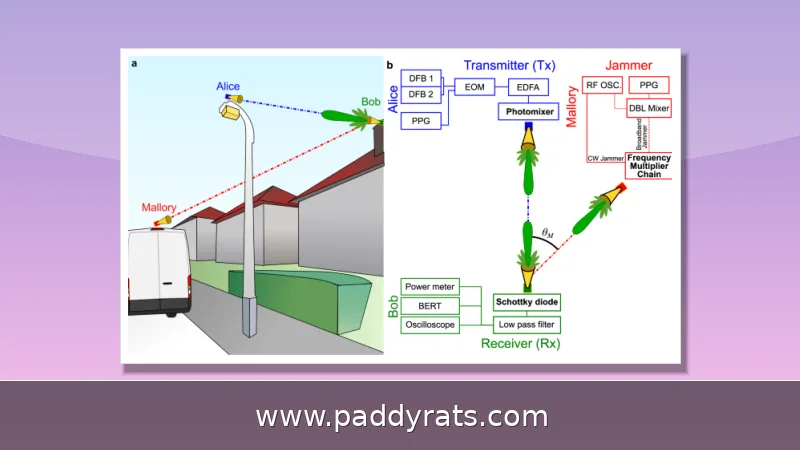
Think of a jammer as a denial-of-service attack you can hold in your hand. It blasts the same radio frequencies your phone, GPS receiver, or Wi-Fi device depends on, blanking out a small area around it. This isn't eavesdropping, and it isn't decryption — it just buries the signal you actually want under a pile of noise. A cell phone jammer, for instance, puts out an RF signal stronger than the nearest tower's on a similar frequency. Your handset grabs the stronger one, the weaker one gets cancelled out, and suddenly you've got zero bars. The jamming itself happens on the downlink — that's the tower-to-phone path.
Here's the technical side of it: jamming works by lowering the signal-to-noise ratio, which means the signal you actually want is still there, just buried under everything else. Basic jammers simply blast broadband noise across an entire band, while more sophisticated models pull off protocol-aware jamming that targets control channels specifically. Since different devices go after different slices of the spectrum, the table below lays out the bands you'll typically come across in vendor specs and regulatory filings.
What Penalties and Enforcement Apply Under the Wireless Telegraphy Act 2006?
The penalties under the WTA aren't minor. If you intentionally disrupt a wireless signal, you can face up to two years in prison, an unlimited fine, or both. Making, importing, selling, or even renting out jammers is illegal too. Ofcom handles enforcement alongside the police, and the regulator simply doesn't grant licenses for jammers — not under any circumstances. That said, in practice, enforcement tends to target sellers and cases where the interference can actually be traced back to someone, since proving that a specific person used a specific device to cause interference is genuinely hard to evidence.
Only a small group of organizations is allowed to use jammers: law enforcement agencies, intelligence services, and penal institutions, all under strict oversight. In the UK, those bodies have been using signal jammers since 2012. Policy discussions point to a few legitimate uses, like keeping contraband phones out of prisoners' hands in secure facilities, or military exercises in combat settings. For everyone else, though, it's a different story. Whether you're a delivery driver trying to block a tracker or a shoplifter disabling security tags, you're breaking the law. And if the Crime and Policing Bill passes as drafted, simply possessing or sharing electronic devices used to steal cars could land you up to five years in prison — a harsher punishment than what the WTA currently allows.
Why Is the UK Government Consulting on a Possession Ban?
The reason this April 2026 call for evidence exists is that the current rules hinge on proving use, and use is notoriously hard to prove. DSIT has warned that a single week of disruption to the UK's positioning, navigation and timing infrastructure could cost the economy as much as £7.64 billion — a figure The Register puts at £7.62 billion, or roughly $10.2 billion. This isn't some hypothetical about a handful of stolen cars. It's a national infrastructure risk, because GPS timing sits underneath telecoms, finance, energy and transport.
The consultation is asking a wide range of questions: how jamming affects communications, PNT services, businesses and ordinary people; whether current laws and enforcement by Ofcom and the police actually work; what legitimate uses and existing exemptions look like; whether possession itself should be addressed, and if so, how; and what penalties would be proportionate. This isn't a brand-new concern, either. According to The Register, the UK government has been tracking jammers as a crime issue since at least 2020. One case that stands out involved devices allegedly built by a Bulgarian company called SOS Autokeys, stuffed into old Game Boy Color shells and sold for thousands of pounds to carjacking crews around Europe. In 2021, West Yorkshire Police arrested several suspects, saying the devices, which cost around £20,000 (roughly $30,000), came pre-loaded to open cars from Hyundai, Kia, Mitsubishi, Nissan and Genesis in seconds.
How Are Jammers Used in Crime, and How Widespread Is It?
The criminal use cases are well documented and surprisingly varied. Blocking GPS signals in vehicles aids theft and lets crews bypass vehicle security and empty vans of tools. Disabling home security systems such as video doorbells enables burglaries. Shoplifters block wireless security tags so alarms do not trigger. Jammers can also interfere with mobile coverage and emergency radio networks, hindering emergency response, and some devices are disguised as everyday tech such as digital watches.
The scale is significant. The Telegraph reported that last year it was estimated four in 10 car thefts nationwide used signal jammers, rising to six in 10 in London. The 2022/23 Crime Survey for England and Wales found electronic devices were used in 40% of vehicle thefts, with the Metropolitan area highlighted. Across the Atlantic, the US Department of Homeland Security reported an 830 percent increase in seizures of Chinese-made signal jammers, which shows this is not a UK-only problem. For anyone tracking the market, the terms used in listings include signal jammer, RF jammer, signal blocker, signal scrambler, mobile phone jammer, GPS jammer, Wi-Fi jammer, Bluetooth jammer, drone jammer, counter-drone or counter-UAS, and Faraday cage.
How Can You Detect Jamming and What Countermeasures Exist?
Detection starts with symptoms. Service dies where coverage is usually solid, several phones drop at once, a router freezes, or a GPS unit cannot get a fix under open sky. A dropped signal is the first sign, but faulty equipment, physical obstructions and lawful devices on the same frequencies can cause identical symptoms, so a single outage is not proof of an attack. Spectrum analyzers can detect jamming by analyzing frequencies, but they are not commonly available and require specialized knowledge. Jammer-detection apps are largely unproven.
If authorized communication is being jammed, the practical step is to contact the wireless network provider, which can assess interference patterns and escalate to Ofcom. Cell phone signal detectors are legal and common in correctional facilities even where jammers are banned, which is a useful reminder that detecting a signal and blocking one are treated very differently under UK law. For businesses, the more durable defenses are layered: backup timing sources for critical systems, physical security that does not depend on wireless tags alone, and logging that captures anomalies before they become an incident report.
Which Legitimate Uses and Exemptions Exist for Jammers?
Legitimate use in the UK is narrow and tightly controlled. Law enforcement agencies, intelligence services and penal institutions may operate jammers under strict regulation, and prisons are the clearest example because contraband phones undermine safety inside facilities. Military exercises in combat are the other commonly cited case. There is no general exemption for private security firms, event organizers, landlords, or consumers who want to stop nuisance calls or tracking. Ofcom does not authorize or license jammers, and no legal procedure exists to obtain authorization in the UK.
That is why the consultation asks about legitimate uses and existing exemptions rather than assuming there are none. If possession becomes an offence, the design question is how to write exemptions for police, prisons and the military without creating a loophole that importers and resellers can drive through. The penalties also have to be proportionate: an unlimited fine and up to two years under the WTA, versus up to five years under the Crime and Policing Bill for car-theft devices. The final shape of the rules will depend on the responses DSIT receives by 8 May 2026 and on how the Crime and Policing Bill progresses through Parliament.
What Should UK Readers Watch For Next?
The key dates and documents are worth tracking if this affects you. The call for evidence launched on 10 April 2026 and closes at 11:59pm on Friday 8 May 2026. The Crime and Policing Bill carries the possession and sharing offence for car-theft devices with up to five years in prison. The WTA remains the primary tool for interference and supply offences, with up to two years and an unlimited fine. If you sell, import or rent jammers, or if you rely on GPS and wireless systems for your business, this is the moment to review your exposure.
My honest read is that possession is likely to become an offence in some form, because the evidentiary problem with use is real and the PNT cost estimate gives ministers a strong argument. The open questions are scope and exemptions. A narrow ban tied to car theft is easier to pass but leaves broader jamming unaddressed. A broad possession ban is more protective but needs carefully drafted carve-outs for police, prisons and defense. Either way, the era of buying a £20 jammer online with no legal consequence is coming under serious pressure.
Frequently Asked Questions
Is it illegal to use a signal jammer in the UK?
Yes. Under the Wireless Telegraphy Act 2006, intentionally disrupting a wireless signal is an offence, and Ofcom does not authorise jammers. It is also illegal to manufacture, import, sell or rent them. Only limited bodies such as law enforcement, intelligence services and penal institutions may use them under strict regulation.
Can you be prosecuted just for possessing a signal jammer in the UK?
Current law does not specifically prohibit possession of a radiofrequency jammer, though it bans use and supply of non-compliant equipment. The government's April 2026 call for evidence asks whether possession should be addressed, and the Crime and Policing Bill targets devices used to steal cars.
What penalties apply for jamming offences in the UK?
Under the Wireless Telegraphy Act 2006, someone who intentionally disrupts a wireless signal can face up to two years' imprisonment, an unlimited fine, or both. The Crime and Policing Bill would make possessing or sharing electronic devices used to steal cars punishable by up to 5 years in prison.
How do signal jammers actually block phones and GPS?
A jammer transmits radiofrequency noise on the same frequencies a device uses, at a stronger power than the incoming tower or satellite signal. The receiver cannot separate the wanted signal from the noise, so the link fails. Cell bands include 700 to 2100 MHz, GPS sits at 1575 MHz, and Wi-Fi uses 2.4 GHz and 5 GHz.
What penalties apply under the Wireless Telegraphy Act 2006?
Intentionally disrupting a wireless signal carries up to two years' imprisonment, an unlimited fine, or both. Manufacturing, importing, selling or renting jammers is also illegal. The parallel Crime and Policing Bill would impose up to five years in prison for possessing or sharing electronic devices used to steal cars, a stiffer penalty than the current WTA maximum.
What is the UK government consulting on in April 2026?
The Department for Science, Innovation and Technology launched a four-week call for evidence on 10 April 2026, closing at 11:59pm on Friday 8 May 2026. It asks whether possession of signal jammers should be criminalised, how enforcement by Ofcom and police could improve, what exemptions are needed, and what penalties would be proportionate.