A vehicle-mounted anti drone jammer turns any moving platform into a rolling counter-UAS shield, scanning the RF spectrum and jamming drone command, video and navigation links on the move. Here is how these mobile systems work, what they cost in power and weight, and who is legally allowed to run one in the US.
What Is a Vehicle-Mounted Anti Drone Jammer?
A vehicle-mounted anti-drone jammer is a counter-UAS system that's either built into or bolted onto a mobile platform, so it can keep protecting an asset even while that asset is on the move. Rather than guarding a fixed perimeter, it throws up a moving jamming bubble that travels along with the convoy, motorcade, or patrol vehicle and covers every direction at once. Think of it as the difference between a fence and a bodyguard: a fixed-site jammer holds a line, a hand-held jammer only reaches as far as the operator can see, but a vehicle-mounted counter-UAS system keeps a 360-degree envelope around whatever it's escorting.
That distinction matters, because modern drone threats don't sit still. A cheap FPV drone can cover 500 meters toward its target in seconds, which means protection has to keep pace with whatever it's guarding. In practice, a vehicle-mounted system pulls RF detection sensors, a jamming payload, antennas and situational-awareness software into a single integrated package. The detection layer scans for drone RF signatures, the software decides whether a contact is actually hostile, and the jammer then transmits on the bands the drone needs to stay airborne. And all of it happens while the vehicle is rolling — that's the real engineering feat here.
How Does On-the-Move Drone Jamming Work?
At its core, a vehicle-mounted anti-drone jammer works by disrupting RF signals. Drones rely on radio links for three basic things: getting commands from the operator on the ground, sending video back, and locking onto satellite navigation. The jammer scans the 300 MHz to 6 GHz spectrum, using spectral scanning and protocol analysis to hunt for the RF signatures of multi-rotor, fixed-wing, and FPV drones. Once it identifies a threat, it fires high-power noise on the relevant command, video, and navigation bands. That cuts the link between the drone and its operator, leaving the aircraft with no choice but to land, hover in place, or head back to where it came from.
Speed is really what makes the mobile format worth it. Detection-to-alert usually takes under 5 seconds, and jamming can kick in within about 3 seconds—a pretty tight window when an FPV drone can close 500 meters in just seconds. The tougher engineering challenge is pulling this off at highway speed. An aerodynamic body cuts drag and keeps the platform stable, so detection and countering can keep going while the vehicle is moving at up to roughly 150 km/h, with low-altitude protection around a convoy reaching as far as 3 km. That mix of mobility and continuous coverage is what sets on-the-move drone jamming apart from parked or tripod-based setups.
Which Frequency Bands Are Targeted?
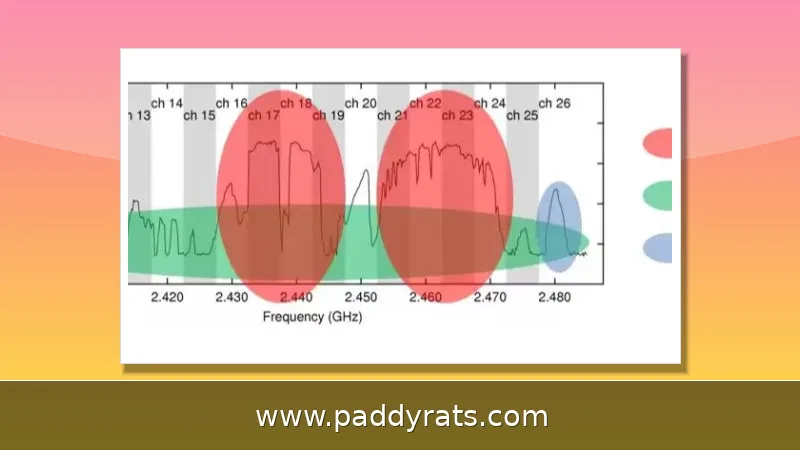
Most vehicle-mounted anti-drone jammers focus on the bands where consumer and tactical drones actually operate. Those core control and navigation frequencies come down to 900 MHz, 1.2 GHz, 1.5 GHz, 2.4 GHz, 5.2 GHz, and 5.8 GHz. For consumer quadcopters, the 2.4 GHz and 5.8 GHz bands handle the bulk of command-and-control and video traffic, while 1.2 GHz and 1.5 GHz tend to show up in FPV video feeds and satellite navigation links. A few vendors push their coverage wider than that. Autelpilot/SkyFend, for instance, lists 868 MHz, 915 MHz, 1.3 GHz, 2.4 GHz, and 5.8 GHz, and MYT's FPV defense system relies on SDR broadband technology that stretches from 70 MHz all the way to 8000 MHz.
Power per band is the other half of the story. Take Autelpilot/SkyFend: it rates interference power at up to 100 W per band, keeps total weight at 20 kg or less, and runs fully automated jamming, so there's no manual control to worry about. Then there's RDSignal's 3 km vehicle-mounted system, model SRD-VIP JAM8UAV, which covers 8 bands across 20–6000 MHz with a total output of 550 W and 1000 W of power consumption. The table below pulls together the band and power profiles you'll see most often in vendor specs.
Three Types of Vehicle Integration Explained
Not every vehicle needs that same level of integration, and honestly, the market has pretty much settled into three practical tiers. At the top is full factory integration — the counter-UAS package gets built right into a military vehicle at the production level, wired into the Battle Management System alongside integrated GPS and compass. It's the most capable option and also the priciest, and it's reserved for platforms where the jammer counts as a permanent mission system rather than some add-on you bolt on later.
The second tier covers quick-mounted, semi-integrated hardware—built to go on and come off fast, whether that's an APC, IFV, ATV, or LAV. These kits usually tie into live vehicle mapping through a situational-awareness layer like IRIS, so the crew can see drone contacts overlaid right on top of their own position. Then there's the third tier: light vehicle kits, meant for lightly armored or unarmored platforms, including LAVs, VIP vehicles, police cars, and even ordinary civilian cars. MyDefence's Ridgeback is a solid example—it pairs the wearable Wingman RF detector with ATAK software and AA101 Sharkfin antennas on magnetic mounts, which means you can turn a sedan or SUV into a sensor node in just a few minutes.
MyDefence takes the same modular approach across the rest of its lineup. Detection falls to the Watchdog 150 and 250 RF sensors, while the Dobermann 151 jammers do the neutralizing—and the whole kit is ruggedized and Power over Ethernet compatible. Then there's the Situational Awareness software, which comes with a Vehicle Mode offering 360-degree awareness, offline maps, and GPS and compass integration. That last part matters more than it might sound: when you're running a border patrol or moving in a convoy and the network drops, you still need eyes on everything around you.
Key Specifications: Range, Power and Weight
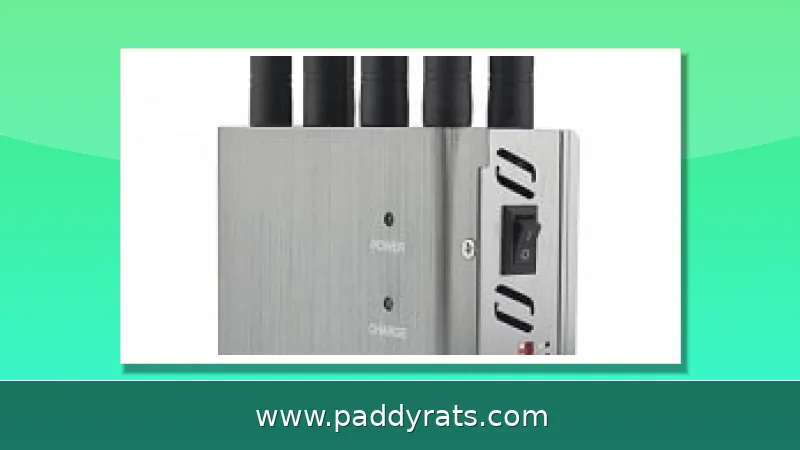
Spec sheets in this category are all over the place, so it's worth lining up a few representative systems side by side. TeXin's vehicle mount system clamps onto a standard roof rack and takes on drones out to 2 km in every direction, whether you're parked or rolling, with everything controlled from inside the car through computer software. An upgraded version bumps that up to roughly 10 channel frequencies and claims a jamming range of up to 10 km. TeXin's 3 Channel Aluminium Vehicle-Mounted Jammer is a much lighter option at 6.5 kg, with a maximum RF range of 1.5 km. Then there's the Monitoring Vehicle Mount Anti Drone System, which doesn't necessarily drop a drone outright—it forces it to leave the area or land slowly somewhere within 1000–1500 meters.
MYT (MiaoYi Tang Technology) takes a different architectural approach with its vehicle-mounted FPV defense system: interference range of 1 km to 2 km as an effective suppression radius, 8-band to 12-band interference configurations, several hundred watts of total output, SDR broadband covering 70 MHz to 8000 MHz, and MIMO microstrip antenna arrays. It mixes omnidirectional antennas for 360-degree awareness with directional antennas for concentrated suppression, and the AI-driven detection layer comes out of the Institute of Internet of Things under the Chinese Academy of Sciences, using clutter algorithms to filter weather, bird migrations and ground clutter.
Dedrone approaches the problem from the software and sensor side. DedroneDefender 2 is an AI-powered smart jammer, DedroneOnTheMove is a vehicle-mounted counter-drone protection solution, and DedroneTracker.AI is a multi-sensor platform that fuses RF, PTZ and radar inputs with countermeasures. Its RF sensors are passive and rated for detection ranges up to 10 km, and the company is now part of Drone Violations. The table below compares the headline specs of the systems covered here.
Where Are Vehicle-Mounted C-UAS Systems Deployed?
Deployment patterns tell you where the pain is felt most. Military convoys and border patrol units were the first adopters, because a moving column is exactly the target profile that fixed jammers cannot cover. VIP motorcades, quick response teams and rapid deployment units followed, since those missions involve unpredictable routes and short notice. Public events, stadiums and government buildings use vehicle-mounted systems as flexible supplements to fixed infrastructure, rolling the jammer to wherever the crowd or the VIP happens to be.
Critical infrastructure is another strong fit. Power plants, military bases, oil refineries, airports and prisons all have perimeters that are too large or too irregular to cover with fixed sites alone, and a patrol vehicle with an integrated jammer covers ground while it does its normal rounds. Law enforcement vehicles and border security units are increasingly specified with these kits as well. The common thread is mobility plus a need for 360-degree awareness, which is precisely what a vehicle-mounted counter UAS system delivers.
Market Growth and the Threat Driving It
The numbers behind this category are moving fast. The UAV (drone) jammers market was estimated at USD 1.77 billion in 2026 and is projected to reach USD 5.90 billion by 2031 at a CAGR of 27.2%, according to market research cited in the source material. Vehicle-mounted systems held approximately 26.8% of the product type market in 2025 and are projected to sustain a CAGR of roughly 13.6%, with the vehicle-mounted segment expected to emerge as the largest segment in signal jammer market share.
The threat context explains the demand. By early 2026, Ukrainian and Russian forces were expected to use 5,000 to 10,000 drones each week, ranging from $400 FPV racing drones fitted with shaped charges to $20,000 Shahed-pattern kamikaze drones. In the first three quarters of 2025, German airport authorities noted 172 drone sightings compared with 129 by the end of Q3 2024, and over 300 drones flying near World Cup stadiums in the US were seized by federal authorities. When a $400 airframe can threaten a multimillion-dollar platform, spending five figures on a mobile jammer starts to look cheap.
Drone Jammer Legality: Who Can Actually Operate One?
Legality is where a lot of buyers get surprised. Under the Communications Act of 1934, the FCC prohibits operating, marketing or selling RF jamming equipment except for authorized government entities. Authorized users include the Department of Defense, DHS, DOJ, DOE and the Coast Guard, and the SAFER SKIES Act also authorizes trained state and local law enforcement. A private company cannot simply buy a vehicle-mounted jammer and switch it on, no matter how real the drone threat to its facility may be.
That does not mean private operators are helpless. Detection is generally treated differently from jamming, so passive RF sensors, radar and camera-based tracking can be deployed more broadly, and many vendors sell the detection layer separately from the mitigation payload. For civilian sites, the practical path is usually detect, alert and coordinate with law enforcement rather than jam. If you are evaluating a system for a non-government site, confirm the detection-only configuration and get the legal review done before you sign a purchase order. This article is not legal advice, and rules vary by jurisdiction and change over time.
What to Check Before You Buy
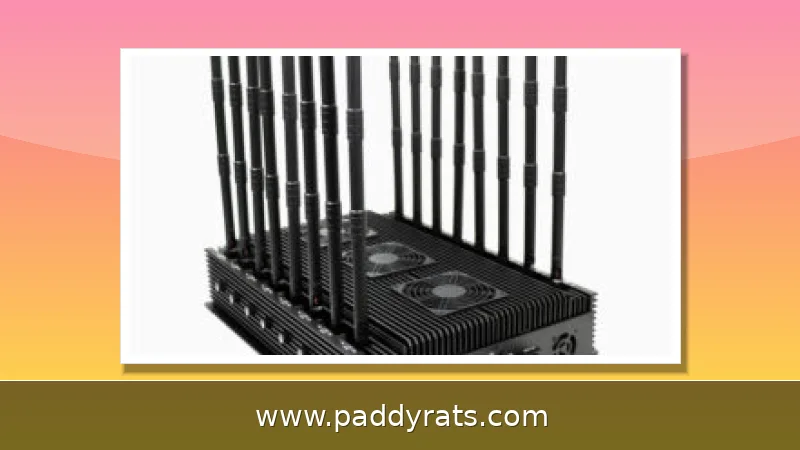
If you are specifying a vehicle-mounted anti drone jammer, start with the platform rather than the payload. Weight and power budget decide almost everything: a 6.5 kg three-channel unit fits a police SUV, while a 45 kg eight-band system with 550 W output and 1000 W consumption needs serious alternator and cooling capacity. RDSignal's SRD-VIP JAM8UAV, for example, runs on AC220V or a 28V DC 50ah battery, uses 8 high-gain omni antennas with an aluminum radiator and cooling fans, and is rated from -20C to +65C at up to 80% humidity with VSWR, over-voltage and over-current protection.
Then match the band set and range to your actual threat. A 1000-3000 meter shielding radius covers most convoy and motorcade scenarios, while 10 km claims usually assume a clean RF environment and favorable network conditions. Check the control interface too: some systems are fully automated, others use an LCD display remote control, and integration with ATAK or a battle management system can matter more than raw wattage. Finally, confirm warranty and customization terms, since OEM/ODM options for logo, colors and frequencies are common in this market and can affect delivery time and price.
How does a vehicle-mounted drone jammer work?
It scans the 300 MHz-6 GHz spectrum, identifies drone RF signatures, then transmits high-power noise on command, video and navigation bands such as 900 MHz, 1.2 GHz, 1.5 GHz, 2.4 GHz, 5.2 GHz and 5.8 GHz. This breaks the link between drone and operator, forcing it to land, hover or return home. Detection-to-alert runs under 5 seconds and jamming deploys in about 3 seconds.
What is the difference between a vehicle-mounted jammer and a fixed-site jammer?
A fixed-site jammer protects a perimeter, while a hand-held jammer only works within the operator's view. A vehicle-mounted jammer creates a moving jamming bubble that travels with the asset, providing 360-degree coverage even while the vehicle is moving. That mobility is what allows it to protect convoys, motorcades and patrol routes that fixed installations simply cannot cover.
Who can legally operate a drone jammer in the United States?
Under the Communications Act of 1934, the FCC prohibits operating, marketing or selling RF jamming equipment except for authorized government entities. Authorized users include the Department of Defense, DHS, DOJ, DOE and the Coast Guard, and the SAFER SKIES Act also authorizes trained state and local law enforcement. Private companies generally cannot operate jammers and should rely on detection plus law enforcement coordination instead.
What jamming range can a vehicle-mounted anti-drone system achieve?
Ranges vary by product. Some systems provide 1,000-3,000 meters of shielding, others offer low-altitude protection up to 3 km, and upgraded multi-channel versions claim jamming range up to 10 km. Effective range depends on the local signal environment and network conditions, so treat vendor maximums as best-case figures and validate them against your own RF environment before deployment.
Frequently Asked Questions
How does a vehicle-mounted drone jammer work?
It scans the 300 MHz-6 GHz spectrum, identifies drone RF signatures, then transmits high-power noise on command, video and navigation bands such as 900 MHz, 1.2 GHz, 1.5 GHz, 2.4 GHz, 5.2 GHz and 5.8 GHz. This breaks the link between drone and operator, forcing it to land, hover or return home.
What is the difference between a vehicle-mounted jammer and a fixed-site jammer?
A fixed-site jammer protects a perimeter, while a hand-held jammer only works within the operator's view. A vehicle-mounted jammer creates a moving jamming bubble that travels with the asset, providing 360-degree coverage even while the vehicle is moving, which is essential for convoys and motorcades.
Who can legally operate a drone jammer in the United States?
Under the Communications Act of 1934, the FCC prohibits operating, marketing or selling RF jamming equipment except for authorized government entities. Authorized users include the Department of Defense, DHS, DOJ, DOE and the Coast Guard, and the SAFER SKIES Act also authorizes trained state and local law enforcement.
What jamming range can a vehicle-mounted anti-drone system achieve?
Ranges vary by product. Some systems provide 1,000-3,000 meters of shielding, others offer low-altitude protection up to 3 km, and upgraded multi-channel versions claim jamming range up to 10 km. Effective range depends on the local signal environment and network conditions.