Drone jammers flood the radio links that keep a drone under control, forcing fail-safe behavior like hovering or returning home. Here is how the technology works, which frequencies it targets, what the hardware specs look like, and why US law treats jamming as illegal.
What Is a Drone Jammer and How Does It Work?
A drone jammer is basically an RF transmitter that drowns out the link between a drone and whoever's flying it. It blasts a strong signal on the same bands the aircraft relies on for command, control, video, and navigation, so the receiver can't tell the real instruction apart from the noise anymore. Once that link is gone, most flight controllers fall back into a fail-safe mode—return to home, hover in place, or just land. That's really all there is to counter-UAS jamming, and it's why you'll also hear these devices called UAV radio blockers or anti-drone jamming systems.
The physics here matter way more than any spec sheet or marketing claim. Jamming strength drops off as 1/distance squared, which means those impressive range numbers tend to fall apart pretty fast once you're dealing with real conditions. Take a jammer sitting 3 km away from a drone: if it radiates 47 dBm, the jamming signal that actually reaches the drone works out to roughly -53 dBm in free space, giving you a jamming-to-signal ratio of about 27 dB. Of course, terrain, buildings, and antenna gain will all shift those figures one way or another. But the inverse-square law is exactly why a jammer that looks overpowered on paper can still lose to a drone that's simply flying behind a hill.
Which Frequencies Do Drone Jammers Target?
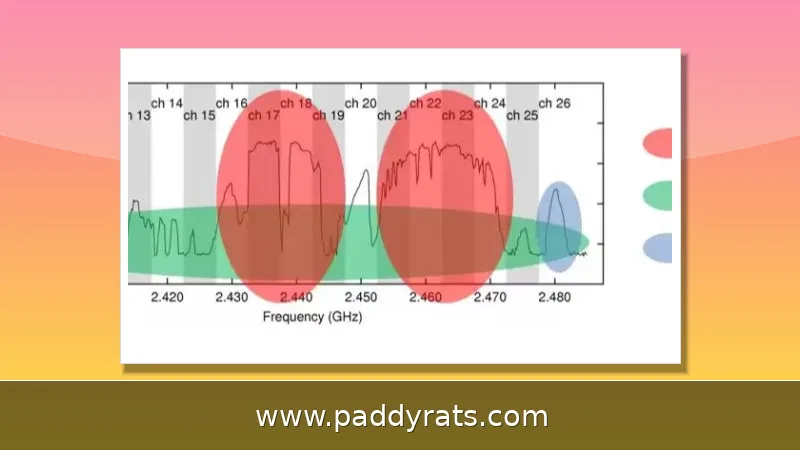
No decent jammer on the market today targets just one slice of the spectrum. Most commercial and DIY drones split their functions across several bands at once: 433 MHz and 900 MHz often carry control signals on hobbyist builds, 1.2 GHz and 1.5 GHz handle video feeds and telemetry, while 2.4 GHz and 5.8 GHz serve as the main command-and-control link for DJI and most consumer drones. So a jammer has to pick its battles carefully—take out the video feed alone, and the pilot is still flying. GNSS is the other front. GPS, GLONASS, Galileo, and BeiDou satellites all transmit somewhere between 1164 MHz and 1610 MHz, and once that signal gets drowned out, the drone loses track of where it is. That's exactly why GNSS bands show up on nearly every serious counter-UAS spec sheet right alongside the control frequencies.
| Band | Typical Use |
|---|---|
| 433 MHz, 900 MHz | Control links on commercial and DIY drones |
| 1.2 GHz, 1.5 GHz | Video and telemetry |
| 2.4 GHz, 5.8 GHz | Primary command-and-control (DJI and most consumer platforms) |
| 1164–1610 MHz | GNSS: GPS, GLONASS, Galileo, BeiDou |
So a jammer that only covers 2.4 GHz and 5.8 GHz is really only doing half the job. Even if you kill the control link, the drone might still be able to hear its navigation constellation, which means it can just keep flying along a pre-programmed route as if nothing happened. That's why any serious counter-UAS jamming system needs multi-band coverage stretching from 433 MHz all the way through 5.8 GHz, plus the GNSS bands on top of that. It's the baseline, not a nice-to-have. And it explains why spec sheets rattle off frequency ranges the same way security cameras rattle off resolution numbers — it's the first thing anyone who knows what they're looking at checks.
Types of Drone Jammers: Portable, Stationary, and High-Power
Jamming isn't just one technique — it's a whole family of approaches, and each one messes with the drone's radio link in its own way. Broadband jamming is the blunt instrument of the bunch: it blasts high-power noise across a wide frequency range and basically hopes to drown out whatever the drone is listening for. Spot jamming is more surgical, focusing all that energy on a single band. Barrage jamming lands somewhere in between, hitting several frequencies at once to smother every channel the drone might be using. Protocol-aware jamming is subtler still — rather than pure noise, it mimics and overlays the original signal, so the receiver takes corrupted instructions as if they were legitimate. It's also worth separating intent from accident here. Intentional jamming is deliberate interference, while unintentional jamming comes from Wi-Fi, cell phones, and all the other wireless devices crammed into urban environments.
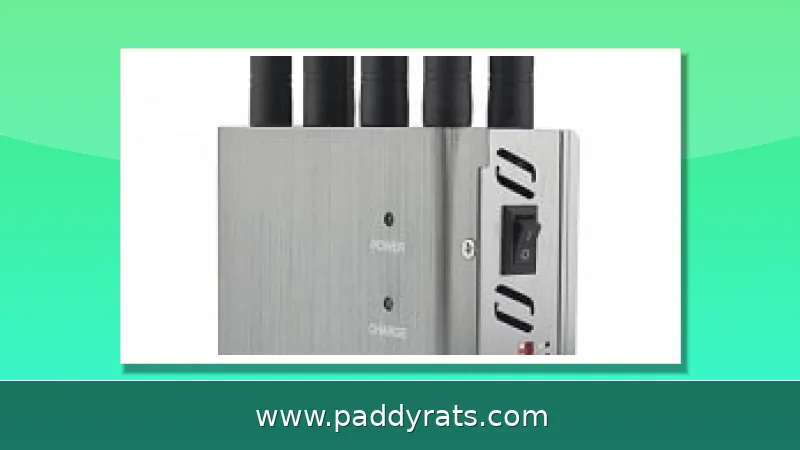
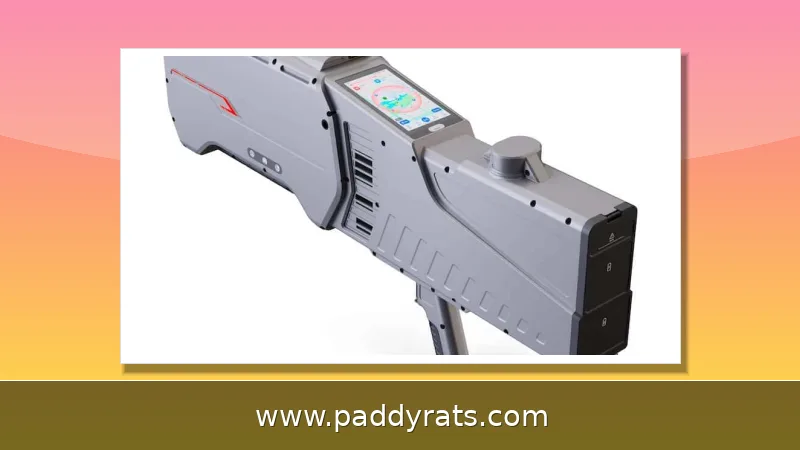
Form factor follows mission, and that one idea explains why counter-drone hardware looks so different from one deployment to the next. Handheld drone guns are built to look like rifles, and they fire streams of radio waves at whatever's nearby. That narrow, aimed approach makes them the least hazardous option when people are standing around, because the energy stays pointed at the drone instead of washing over everything in the area. The trade-off is handling: under pressure, with a drone moving fast and only a split second to react, keeping your aim steady is a lot harder than it sounds. Fixed-site systems flip the approach entirely, mounting directional antennas on masts or vehicles so they can cover a wide area around a base, prison, or airfield without a person tracking every flight path by hand. High-power jammers push things even further, broadcasting in every direction and saturating both the RF and GPS spectrum until they carve out a communications dead zone. Since that blanket interference also hits phones, Wi-Fi, and navigation signals well beyond the intended target, these systems tend to be reserved for wartime use, where the collateral damage is considered acceptable.
Drone Jammers vs. Spoofers: Key Differences
A jammer and a spoofer both target the same radio link between a drone and its operator, but once they get there, they work in completely opposite ways. Picture a jammer as someone yelling over a conversation: it floods the frequency with noise until the real signal can't get through, so the drone loses its command link and falls into fail-safe mode — it returns home, hovers in place, or lands by itself. A spoofer, on the other hand, is more like an impersonator. Rather than drowning out the signal, it sends out a counterfeit that mimics the legitimate source, only stronger, so the aircraft gets fooled into trusting the fake over the real thing. In a GPS spoofing attack, for instance, the drone might lock onto coordinates that no actual satellite ever transmitted. That handoff is exactly what makes spoofing so dangerous: since the drone accepts the false signal as genuine, whoever is operating the spoofer can potentially seize control of the aircraft, pull up its camera feed, and read live flight data — all while the operator on the ground has no idea anything has changed.
| Method | How it attacks the link | Effect on the drone |
|---|---|---|
| Jammer | Overwhelms the frequency with noise | Loses connection, enters fail-safe mode |
| Spoofer | Transmits a stronger counterfeit signal | Accepts the fake signal as real, can be hijacked |
That difference drives every trade-off between the two approaches. Spoofers are designed to look and feel like portable drone guns, so at a glance they seem interchangeable with jammers. But rather than drowning out a signal, a spoofer impersonates one — usually by broadcasting fake GNSS coordinates that the drone accepts as genuine. That trick only lands if the drone is actually navigating by satellite positioning. Send a drone along a pre-programmed route with no GPS input, and the spoofer has nothing to hijack. Jammers have their own blind spots for much the same reason: they also struggle against pre-programmed aircraft flying without GPS, because there's no live control link to overwhelm. And even when jamming works, it never gives you positive control — you can push a drone away or force it into fail-safe mode, but you can't steer it. Neither tool will tell you who was flying the drone or where the flight started, either. Both disrupt; neither identifies.
Are Drone Jammers Legal and Who Can Operate Them?
In the United States, the short answer is no. The Communications Act of 1934 — specifically 47 U.S.C. §§ 301, 302a, and 333 — gives the FCC clear authority to ban the operation, marketing, and sale of RF jamming equipment. That covers pretty much anyone who isn't the federal government itself. Break the rule and you're looking at fines of up to $112,500 per incident, plus the possibility of criminal prosecution. Only authorized government entities may legally operate jammers, and that authorization does not extend to private security firms, airports, or curious hobbyists — a point that often surprises people who assume a business or a public agency can simply buy its way into jamming. Most other countries take a similar line, which is why the devices are sold openly in some markets and treated as contraband in others.
The practical fallout is broader than the legal risk, and that is the part buyers tend to underestimate. Jammers do not discriminate — they cannot tell a drone's command link from anything else transmitting nearby — so the same noise that grounds a quadcopter can also disrupt cellphones, Wi-Fi, and other everyday wireless traffic. In a worst-case scenario, that interference could prevent someone nearby from completing a 9-1-1 call. Spoofers carry a parallel problem: they flood the area with counterfeit GPS signals, which can confuse navigation for aircraft, ships, and drivers far from the original target, not just the drone in question. For anyone weighing a purchase, the honest answer is that legality, not capability, is the binding constraint.
Drone Jammer Specifications and Market Options
Spec sheets are where counter-UAS marketing meets engineering, and the gap between the two can be wide. Three numbers matter most: range, power, and frequency coverage. Get any one of them wrong for your use case, and an otherwise impressive system may prove useless in the field. Range alone can swing from a few hundred meters for a handheld unit to well over 10 kilometers for a fixed installation. Power ratings range from around 80 watts to 300 watts, and frequency coverage must span the bands your target drones actually use. The table below summarizes representative products and their published parameters.
| Product | Type | Range | Power | Frequency Coverage |
|---|---|---|---|---|
| Drone Killer 6 | Portable | Not specified | 120W | 433–5800 MHz |
| Drone Killer 8 | Portable | 1000 m | 150W | Not specified |
| DJ-3017 | Portable | 1000 m | 82W | 4 bands |
| PDJ-4075 | Backpack | 1000 m | Not specified | 5 bands |
| DedroneDefender 2 | Smart jammer | 300+ m | Not specified | Broad-spectrum + GNSS |
| Airsight Smart and Autonomous Jammer | Stationary | 1.9 miles | Not specified | Not specified |
| HJ1 | Portable | 3 km | Not specified | Not specified |
| DFJ | Fixed-site | 8 km | Not specified | Not specified |
| Dedrone DefendAir Max | Stationary | 10 km | 300W | 2.4 GHz, 5.8 GHz, GPS L1/L2 |
| Maddos | Stationary | 12 km | Not specified | Not specified |
| EAGLE 108 | Stationary | Not specified | Not specified | 20–6,000 MHz (Wi-Fi 2.4/5.8 GHz) |
| Consumer-grade SDR jammer | Portable/Stationary | 5–10 km jamming; 20 km spoofing | Not specified | 300–6000 MHz |
| Product | Range | Power | Frequency Coverage |
|---|---|---|---|
| Drone Killer 6 | Not specified | 120W | 433-5800 MHz |
| Drone Killer 8 | 1000 m | 150W | Multi-band |
| DJ-3017 | 1000 m | 82W | 4 bands |
| PDJ-4075 backpack | 1000 m | Not specified | 5 bands |
| EAGLE 108 | Not specified | Not specified | 20-6,000 MHz |
| Dedrone DefendAir Max | 10 km | 300W | 2.4 GHz, 5.8 GHz, GPS L1/L2 |
Beyond the table, the market splits into tiers. Portable jammers generally cover 200-1000 meters, with handheld units like the UPJ1 featuring foldable real-time displays. Mid-range systems such as the HJ1 reach up to 3 km, while fixed installations like the DFJ stretch to 8 km and Maddos stationary jammers claim up to 12 km. Dedrone's DedroneDefender 2 uses a 20-degree targeting cone, broad-spectrum and GNSS jamming, and a high-gain multi-band custom antenna to neutralize multiple drones at once, integrating with its DedroneTracker.AI platform. Airsight's Smart and Autonomous Jammer offers 360-degree coverage out to 1.9 miles and pairs with the AirGuard detection platform.
How Big Is the Counter-UAS Jamming Market?
Market researchers disagree on the exact size of the category, which is normal for a young defense-adjacent segment. MarketsandMarkets puts the UAV jammers market at USD 1.77 billion in 2026 growing to USD 5.90 billion by 2031, a 27.2% CAGR. Research and Markets frames a narrower drone jammer market at USD 1.48 billion in 2026 rising to USD 2.01 billion by 2030 at 8% CAGR. Dataintelo reported the global drone jammers market reached USD 1.87 billion in 2024.
The demand signal behind those numbers is real. RUSI estimated in May 2023 that Ukrainian forces were losing as many as 10,000 drones per month, mainly due to Russian jamming, a figure that illustrates how decisive electronic warfare has become on a modern battlefield. That pressure is pushing development toward smarter systems: directional antennas that focus energy on a specific target, selective frequency targeting, and protocol-aware techniques that disrupt a link without blanketing an entire neighborhood.
Can Drone Jamming Be Countered?
Yes, and the countermeasures are increasingly built into the drones themselves. Doodle Labs puts a Sense LPI and anti-jam feature on its Mesh Rider Radios, which detects interference and automatically switches channels or bands before the link degrades. A fiber-optic cable between drone and operator removes the radio link entirely, making the aircraft resistant to jamming because there is nothing in the air to jam. Fortem Technologies has also published comparisons of drone interceptors versus jammers and spoofers, arguing that kinetic and net-capture approaches solve problems that electronic attack cannot.
For defenders, the lesson is that jamming is one tool in a layered stack rather than a silver bullet. Detection platforms such as DedroneTracker.AI and AirGuard identify the aircraft first; jamming or spoofing may follow, subject to legal authority. Without detection, a jammer is just a noisy transmitter that may not know what it is aiming at.
What Should Buyers and Operators Understand First?
Anyone evaluating counter-UAS jamming should start with the legal question, not the spec sheet. In the US, private operation of RF jamming equipment is prohibited, and the fines run up to $112,500 per incident, so the realistic buyers are government and authorized entities. Even then, the operational limits matter: jammers do not locate the pilot or the flight path, they can knock out nearby cell service, and they are less effective against drones flying pre-programmed routes without GPS.
The technical checklist is short. Look for multi-band coverage from 433 MHz through 5.8 GHz plus GNSS, realistic range figures that account for the inverse-square law, and power ratings that match the environment. If the goal is to protect a fixed site, a stationary system with directional antennas will outperform a handheld gun. If the goal is to understand what is overhead, invest in detection first. Jamming without detection is guesswork with legal consequences.
Drone Spoofing vs. Jamming: Which Approach Fits Which Scenario?
The choice between spoofing and jamming depends on what you need to accomplish. Jamming is a denial tactic: it forces the drone into fail-safe behavior and buys time, but it gives no control and no attribution. Spoofing is a takeover tactic: it can capture the aircraft, its camera feed, and its flight data, but it depends on the drone trusting GNSS and is equally illegal for private operators in most countries.
Both approaches share the same blind spots. Neither reliably locates the pilot or reconstructs the flight path, and both can disrupt nearby communications. For critical infrastructure, airports, and public events, the workable model is detection plus authorized mitigation, with the legal authority established before any transmitter is switched on.
Frequently Asked Questions
How does a drone jammer work?
A drone jammer is a radio frequency transmitter that overwhelms the communication link between a drone and its operator. It broadcasts a powerful signal on the same frequencies the drone uses for command, control, video, and navigation, forcing the drone into a fail-safe mode such as returning home, hovering, or landing.
Are drone jammers legal in the United States?
No. Under the Communications Act of 1934 (47 U.S.C. 301, 302a, 333), the FCC prohibits operating, marketing, or selling RF jamming equipment. Violations carry fines up to $112,500 per incident and potential criminal prosecution. Only authorized government entities may legally operate jammers.
What is the difference between a drone jammer and a drone spoofer?
A jammer broadcasts noise to make radio signals unintelligible, disrupting the drone's link. A spoofer hijacks radio signals by transmitting compatible signals strong enough to replace the source, taking control of the drone. Where a jammer overwhelms, a spoofer overrides.
What frequencies do drone jammers target?
Modern drone jammers target multiple bands: 433 MHz and 900 MHz for commercial and DIY control, 1.2 GHz and 1.5 GHz for video and telemetry, 2.4 GHz and 5.8 GHz for primary command-and-control, and GNSS bands (GPS, GLONASS, Galileo, BeiDou) to disrupt navigation.