Employers sometimes ask whether they can jam cell signals to stop phone use on the floor. Federal law says no, and the FCC has fined companies real money for trying.
Are cell phone jammers Legal in the Workplace?
No—and there's no gray area here. The FCC says outright that operating, marketing, selling, importing, distributing, or shipping RF jammers violates federal law, with no exceptions for private businesses, warehouses, or factory floors. I've seen managers talk themselves into believing a jammer is just a stricter version of a phone policy. It isn't. It's an unlicensed transmitter that deliberately interferes with licensed spectrum, and the employer who plugs one in becomes the violator—not the phones.
The confusion usually comes down to intent. An employer who jams phones is just trying to cut down on distraction or prevent accidents, and in a safety meeting that sounds perfectly reasonable. But here's the thing: intent doesn't change the physics, and it doesn't change the statute either. A jammer doesn't politely silence one employee's handset — it floods a slice of spectrum that everyone nearby is sharing, including people who never signed off on your policy. That's why the answer to the headline question is a flat no, and why the rest of this article walks through the law, the enforcement record, and what actually works instead.
What Federal Law Says About Jamming Cell Signals
The legal backbone here is the Communications Act of 1934, which makes it illegal to willfully or maliciously interfere with authorized radio communications. That same law also bans manufacturing, importing, selling, offering for sale, shipping, or even using any device that doesn't meet FCC regulations. And since a jammer's whole job is to interfere with authorized equipment, it can never get certified in the first place — meaning there's no compliant version out there for an employer to buy, even if someone were bold enough to sell one openly.
The FCC takes the position that jammers are inherently unsafe and that they pose serious risks to critical public safety communications. That wording carries real weight in enforcement, because it shuts down the defense employers tend to reach for—that they used the device carefully, or that it only covered a small area. The agency treats the device category itself as the violation, not just whatever harm it happens to cause on a given day. What that means in practice is that a single complaint from a carrier can set off an investigation, bring a field agent to the site, and end in a forfeiture order, no matter how limited the employer believed the jamming was.
There are a few narrow exceptions, but they're reserved for federal government use in specific situations, not for private employers. So if you run a business and you're wondering whether your facility might qualify, the short answer is no. The only legitimate path forward is to stop transmitting altogether and deal with the behavior through policy instead, which I get into further down.
How Cell Phone Jammers Work and Why They Block 911 Calls
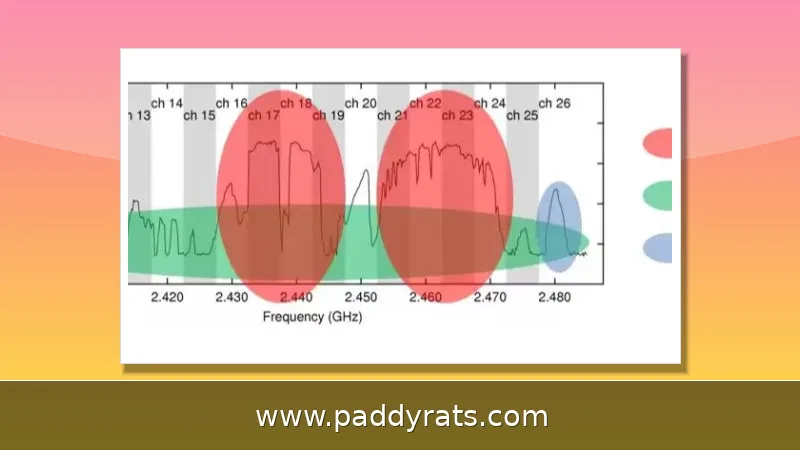
A jammer works by broadcasting an RF signal that's stronger than whatever the closest cell tower is putting out, and it does this on a similar frequency. Your phone ends up receiving both signals on that same frequency. It can't separate them, so it latches onto the stronger one — and the weaker signal gets wiped out in the process. Since the jamming targets the downlink, your phone shows zero bars and you just figure the coverage stinks. Cheaper jammers only take out a single frequency band, but the fancier ones can sweep across several at once.
That design flaw is exactly why emergency calls fail. If a phone can't get a usable downlink, it can't complete a 911 call—and the person in trouble may have no idea their phone is being intentionally silenced. Jammers don't stop there, either. They can mess with GPS, Wi-Fi, and police radar, and they can cut off first responders like law enforcement and firefighters who are trying to work near the jammed area. Maritime, aviation, and rail safety communications rely on nearby spectrum too, which is why the FCC calls this a serious risk rather than a theoretical one.
People tend to misread how far a jammer actually reaches. In practice, the range is usually no more than about 30 square feet—which may sound pretty contained, until you stop to think that a loading dock, a break room, or a hospital hallway fits easily inside that space. And the interference doesn't respect property lines, either: if a carrier notices a sector dropping out, there's no way for them to know your building is the cause until someone actually goes out and investigates.
Real FCC Enforcement Cases and Fine Amounts
The enforcement record is honestly the most useful part of this whole topic, since it shows what actually happens once someone files a complaint. Take one case: the FCC's Enforcement Bureau went after a warehouse business in Texas after a telecom provider reported interference. The owner came clean about using a signal jammer to keep employees off their cell phones. He also mentioned that a son had already gotten a warning that these devices are illegal, claimed the jammer had been thrown out, and then reportedly tried to sell it to the agent anyway — who turned him down.
In that case, the FCC handed down a total fine of $22,000. It broke down like this: $10,000 for running an unauthorized device, $7,000 for interfering with authorized communications, and another $5,000 for what the agency called egregious conduct. The business tried to appeal, but the FCC stood by its decision and the fine stuck. That breakdown is worth paying attention to, because it shows the commission piling on penalties instead of brushing off jamming as some minor, one-off violation.
Then there were the April 2013 cases, which involved The Supply Room in Oxford, Alabama, and Taylor Oilfield Manufacturing Inc. in Broussard, Louisiana. The Supply Room makes military uniforms and insignia, and it installed cellphone jammers to keep employees off their phones. General manager Tim Barton even called the setup "the perfect solution," pointing to safety concerns around a 10-ton press and embroidery needles. The FCC didn't see it that way and fined both companies. The penalties included $10,000 for operating without FCC authorization, $5,000 for using unauthorized or illegal equipment, and $7,000 for interference with authorized communications — plus a $16,000-per-day fine for violating the signal jamming prohibition. Both companies cooperated with the investigation, and their fines were eventually reduced. As Barton put it, "We did not know they were illegal."
The Supply Room subsequently restricted phones to lockers, posted the policy in the employee handbook and on signs, sent violators home without pay, and adopted zero tolerance. That pivot is the real lesson: the safety goal was achievable through rules and discipline, and the company only found that path after paying for the jammer. In my experience covering workplace technology disputes, the fine is rarely the largest cost. The investigation time, legal fees, and the message sent to employees about how management treats federal law tend to linger longer.
What Penalties Can an Employer Face for Jamming?
Under U.S. rules, fines for a first offense can range as high as $11,000 for each violation, and the device used may also be seized. The use or marketing of a jammer may bring significant monetary penalties, seizure of unlawful equipment, and criminal sanctions including imprisonment for up to one year. Because each day of operation can be treated as a separate violation in some circumstances, a device left running for a week is not one mistake; it is a series of them.
The table below summarizes the penalty categories that appear in FCC enforcement actions and the general statutory framework. I include it because employers often assume the worst case is a warning letter, and the actual structure is considerably more expensive than that assumption.
Legal Alternatives to Jamming Employee Phones
The National Labor Relations Board has upheld an employer policy forbidding workplace cell phone use, which means the compliant path is available and defensible. Employers can set rules in the employee handbook, post signage, and enforce discipline consistently. The Supply Room's post-fine approach is a working template: phones stay in lockers during shifts, the policy appears in the handbook and on posted signs, violators are sent home without pay, and the rule is applied without exceptions.
Analyst Holger Mueller of Constellation Research has said cellphone use should be managed intelligently by enterprises and employees, and that managers should coach and oversee rather than jam. Communications lawyer Scott R. Flick of Pillsbury Winthrop Shaw Pittman has said companies jam because they think it is easier than making and enforcing a rule, and he noted that jammers can be found online for as little as $24.99. That price gap is the trap: the device is cheap, and the forfeiture is not.
A common follow-up question is whether a signal booster can defeat a jammer. It cannot. A booster amplifies the signal it receives, and a jammer also jams the booster, so the two devices simply fight over the same spectrum with the employer on the wrong side of the law. If coverage inside a building is genuinely poor, the correct move is to contact the carrier about a lawful in-building solution, not to install transmitting equipment of your own.
How to Detect Jamming and Respond Lawfully
A dropped signal is the first sign of jamming, but bad connections can also come from faulty equipment, physical obstructions, or lawful devices operating on the same frequencies. Apps claiming to detect jammers are largely unproven, and I would not rely on one to accuse a neighboring business. Spectrum analyzers can detect jammers, but they are not commonly available and require specialized knowledge to interpret correctly.
If jamming is suspected, contact the wireless network provider, consult the device manual, contact law enforcement, or file a complaint with the FCC. The carrier is often the fastest route because it can see interference patterns across its network and has engineers who know what deliberate jamming looks like. Documenting times, locations, and symptoms helps the investigation move faster, and it also protects you if the source turns out to be your own equipment.
Jammer Rules Outside the United States: Canada and the UK
Canada prohibits jammers under sections 4, 9, 10, and 15.1 of the Radiocommunication Act. Subsection 4(4) prohibits installation, use, possession, manufacture, importation, distribution, lease, offer for sale, or sale. Subsection 9(1)(b) prohibits interference with radiocommunication without a Ministerial Exemption. Counter-drone devices that emit RF and are capable of interference are also treated as jammers, including spoofing devices, which is a detail many employers miss when they buy security gear.
Canadian penalties are steep. Individuals face up to $25,000 for a first violation and $50,000 for subsequent violations, while businesses face up to $10 million for a first violation and $15 million for subsequent violations, plus device seizure. Exemptions are granted by Ministerial Order on a case-by-case basis for national security and public safety purposes, which is a government channel, not a commercial one.
The United Kingdom follows a similar prohibition through its wireless telegraphy framework, where using equipment to deliberately interfere with wireless communications is an offense, and enforcement is handled by the national regulator. The practical takeaway for a multi-site employer is that jamming is illegal across the major English-speaking markets, so a policy built around jammers cannot be exported. A handbook rule, signage, locker storage, and consistent discipline travel anywhere, and they do not come with a forfeiture order attached.
Quick Reference: Penalty and Enforcement Summary
The table below condenses the fine categories and enforcement outcomes discussed in this article. It is a summary of published FCC actions and the general statutory framework, not legal advice for a specific situation.
| Violation or Category | Typical Amount or Outcome | Source Context |
|---|---|---|
| Operating an unauthorized device | $10,000 | Texas warehouse case |
| Interfering with authorized communications | $7,000 | Texas warehouse case |
| Egregious conduct | $5,000 | Texas warehouse case |
| Operating without FCC authorization | $10,000 | 2013 Alabama and Louisiana cases |
| Using unauthorized or illegal equipment | $5,000 | 2013 Alabama and Louisiana cases |
| Signal jamming prohibition violation | Up to $16,000 per day | 2013 Alabama and Louisiana cases |
| First offense under U.S. rules | Up to $11,000 per violation | General statutory framework |
| Criminal exposure | Up to one year imprisonment | General statutory framework |
Read the table as a warning about compounding, not as a price list. The Texas case totaled $22,000 for what the owner likely saw as a modest attempt to cut phone distraction, and the 2013 cases added a per-day figure that can dwarf the underlying fine if a device stays powered on. Equipment seizure is also on the table, which means the employer loses the device and still owes the money.
What Employers Should Do Instead of Jamming
The compliant playbook is unglamorous but effective. Write a clear phone policy, put it in the employee handbook, post it where employees actually see it, and apply it evenly across shifts and roles. If the concern is safety around heavy machinery, pair the rule with a practical storage solution such as lockers or a phone check-in at the start of each shift. The Supply Room did exactly this after its fine and turned a losing enforcement fight into a workable policy.
Training matters as much as the rule. Managers should explain why the policy exists, especially in environments with presses, needles, or moving equipment, and they should model the behavior themselves. Analyst guidance points toward coaching and oversight rather than technical suppression, and that approach also avoids the retaliation and labor-relations complications that come with surveillance-style enforcement.
If a facility has genuine coverage problems, the answer is a carrier-approved in-building solution, not employer-owned transmitting gear. Signal boosters and amplifiers cannot defeat jammers, and installing one to fight a jammer just adds a second piece of unlicensed equipment to the equation. The clean path is policy, signage, discipline, and a phone call to the carrier when the network itself is the problem.
Finally, if you suspect a neighboring business is jamming, report it rather than retaliating with your own device. The FCC complaint process exists for exactly this scenario, and carriers can often identify the source faster than any employer could. Two wrong transmitters do not make a legal right, and the second one usually gets fined too.
Why Employers Keep Asking About Jammers
The question persists because the frustration is real. Managers see phones at workstations, they worry about distracted operators near dangerous equipment, and a $24.99 device online looks like a shortcut around a policy nobody wants to enforce. What that shortcut hides is the entire enforcement apparatus behind it: carrier complaints, field investigations, forfeiture orders, equipment seizure, and in the worst case criminal exposure.
The honest framing for any employer is that jamming is not a stronger version of a phone ban. It is a separate federal violation layered on top of a management problem that still needs solving. The companies in the enforcement record all had legitimate safety concerns, and none of those concerns justified the device. The ones that recovered did so by writing rules, posting them, and enforcing them, which is also the only approach that scales across multiple sites and countries.
Frequently Asked Questions
Are cell phone jammers legal in the workplace in the United States?
No. The FCC prohibits operating, marketing, selling, importing, distributing, or shipping radio frequency jammers. There are no exceptions for private businesses, warehouses, or factory floors. Using a jammer is an unlicensed transmission that deliberately interferes with licensed spectrum, and the employer who installs one becomes the violator under federal law.
What penalties can an employer face for using a cell phone jammer?
Fines for a first offense can reach as high as $11,000 per violation, and the device may be seized. Penalties can include significant monetary forfeitures, seizure of unlawful equipment, and criminal sanctions including imprisonment for up to one year. Each day of operation can be treated as a separate violation, so a jammer left running for a week can trigger multiple fines.
Why do cell phone jammers block 911 calls?
A jammer emits a stronger radiofrequency signal on the same frequency as the nearest cell tower. The phone locks onto the stronger signal and cannot complete a call, including 911. Jammers can also interfere with GPS, Wi-Fi, police radar, and first responder communications, which is why the FCC considers them inherently unsafe.
What are legal alternatives to jamming employee cell phones?
Employers can set rules in the employee handbook, post signage, require phones in lockers during shifts, and enforce discipline consistently. The NLRB has upheld policies forbidding workplace cell phone use. If indoor coverage is poor, contact the carrier about a lawful in-building solution instead of installing your own transmitting equipment.