GPS jammers are cheap RF transmitters that drown out satellite signals, and they are behind a fast-growing share of cargo theft and fleet-tracking disputes. Here is how they work, what the law says, and how fleets can detect and defend against them.
What Is a GPS Jammer and How Does It Work?
A GPS jammer is basically a tiny, self-contained radio transmitter that blasts noise on the same frequencies GPS satellites use. The result? Any receiver close enough can't separate the real satellite signal from the interference anymore. Civilian GPS mostly lives on the L1 band at 1575.42 MHz, and pricier jammers also go after the L2 band at 1227.60 MHz. Here's the thing that makes it so easy: satellite signals reach us at around -130 dBm, which is incredibly faint. So even something like 10 milliwatts of interference nearby is more than enough to wipe them out.
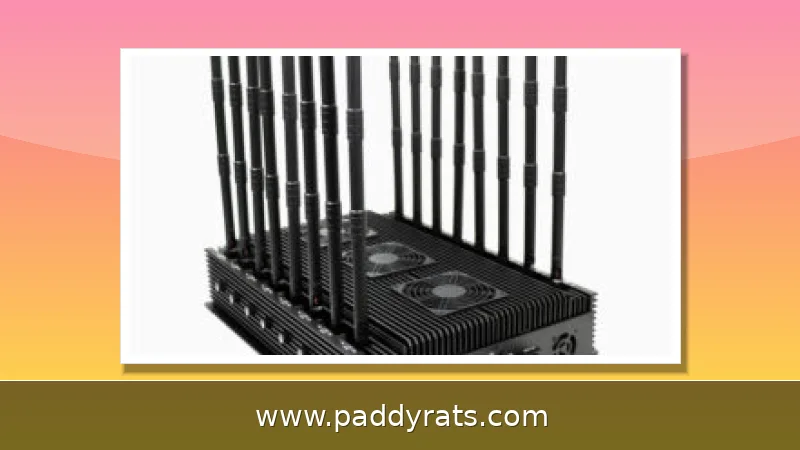
The way it works is pretty simple, at least in principle. A GPS receiver depends on very faint microwave signals coming in from four or more satellites, and it uses trilateration to figure out where it is. A jammer just blasts noise on that same frequency at a much higher power, so the receiver either loses the fix completely or gets stuck showing the last position it managed to calculate. Chirp jammers are a bit different — they sweep across roughly 1565 to 1585 MHz instead of sitting on one spot. Then there are the so-called hedgehog jammers, which use a bunch of antennas to broadcast on L1 or L2 at around 10W. Some units go even further and hop between frequencies or go after multiple GNSS constellations at once, including GPS, GLONASS, Galileo and BDS BeiDou, along with cellular or Wi-Fi bands.
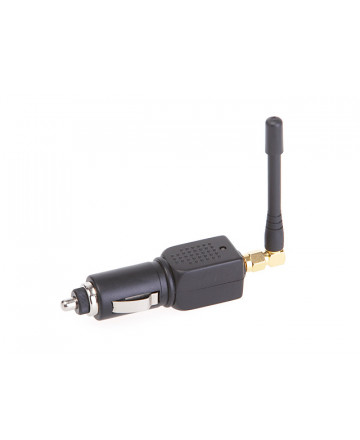
A typical plug-in unit is a small plastic box—roughly 60mm by 45mm by 20mm—with a 12V power plug and one or two short antennas. That compact size is exactly what makes these devices so easy to hide inside a vehicle. Even a 1-watt ground jammer can overwhelm the satellite signal in its immediate area without much trouble, and a single unit plugged into a car's 12V cigarette lighter socket can wipe out GNSS signals across a radius of several hundred meters. In one controlled signal study, the weakest jammer still interfered with tracking at around 300 meters and with acquisition at around 600 meters, while the strongest jammer disrupted tracking at even greater distances.
GPS Jamming vs GPS Spoofing: What Is the Difference?
People tend to talk about jamming and spoofing as if they're the same thing, but they're actually two different attacks, and they leave very different fingerprints. Jamming is all about blocking. The device floods the GPS frequency with noise, so the satellite signal gets buried and the receiver either gives up and reports no fix at all or just freezes on the last position it managed to calculate. Spoofing works the opposite way. Instead of drowning out the real signal, it imitates it, broadcasting fake satellite data that convinces the receiver it's somewhere it isn't. The tracker keeps reporting like nothing's wrong, except the coordinates are bogus or the route makes no sense at all. That distinction really matters if you're running a fleet. A jammed tracker typically just goes dark, which is annoying but obvious. A spoofed one keeps feeding you data, and the problem is that none of it is real.
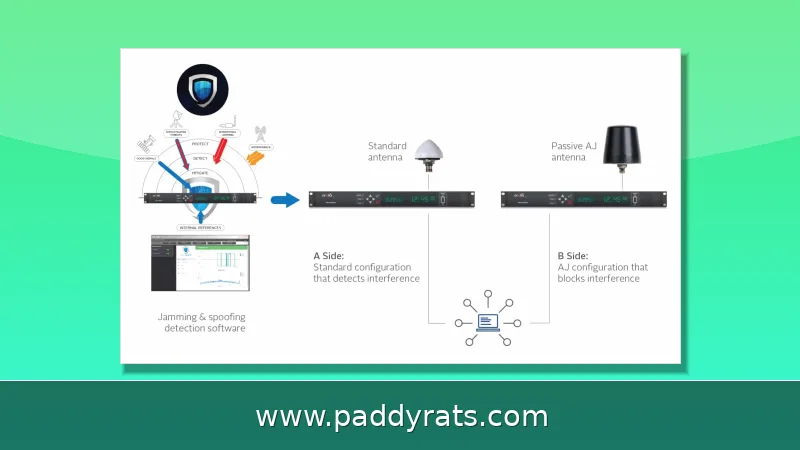
Detecting the two looks completely different, too. Jamming is basically rogue RF energy sitting on GNSS frequencies, and anyone with a receiver tuned to those bands can spot it. How big that detectable bubble gets depends on the jammer's power — somewhere between tens and hundreds of meters around an active unit. Spoofing, on the other hand, is much tougher to catch at the RF layer. It usually gets flagged by data analytics instead: say, a vehicle that seems to be flying down the road at an impossible speed, or one that keeps jumping between coordinates with no road connecting them.
In the real world, criminals and drivers trying to dodge tracking usually reach for jamming instead. The hardware is cheap, and you can buy it just about anywhere online. Spoofing is a different story — it takes real technical skill, so you mostly see it in military, maritime, and research settings. That gap also explains why anti-theft and telematics companies are starting to combine RF monitoring with route analytics. One tool picks up the noise, and the other picks up the lie.
Types of GPS Jammers: Portable, Vehicle, Stationary and Chirp
The market sorts into a few recognizable buckets, though specs swing wildly depending on what you pay and how much power you're dealing with. On the low end, those simple cigarette-lighter jammers push out about 10mW on L1. On the high end, hedgehog jammers with a cluster of antennas can broadcast on L1 or L2 at roughly 10W. In between, you've got portable battery units that only cover a few meters on GPS L1, cigarette-lighter plug-ins that reach somewhere around 10 to 50 meters on L1 (and sometimes L2), hard-wired multi-band units that stretch across tens of meters while hitting GPS L1/L2 plus cellular and Wi-Fi, and stationary high-power systems capable of covering a much larger area across multiple GNSS constellations.
If you look at vendor listings, you can get a decent sense of how much these devices cost and what they claim to do. The table below rounds up some representative models and their advertised specs — just keep in mind these are vendor claims, not independent lab results.
| Device | Bands / Type | Advertised Range | Price |
|---|---|---|---|
| GJ6 | GPS, GLONASS, LoJack; 6 antennas | Up to 20 m | $395.00 (sale from $459.00) |
| GP5000 car anti-tracking blocker | Vehicle GPS blocker | Not specified | $119.99 |
| APJ-16 portable all-in-one | 164-5900 MHz | Not specified | $1,200.00 |
| TITAN 8-band (8W) | Mobile phone jammer | 10-30 m | $620.00 |
| Albatross Pocket 3G (GPS) GSM | Portable | About 5 m | $179.00 |
| Altron-4 (35W) | 4-band | GPS up to 500 m; drones up to 60 m | $840.00 |
| MONSTRO 10 handheld | Portable | 15 m | $499.00 |
Then there's the other end of the spectrum: commercial and military-grade hardware. Take the KBR MGDS micro GPS jammer—it has two RF outputs at 1575 and 1227 MHz and can be field programmed with a laptop. Castnav, meanwhile, rates its jamming performance at 1000 m/s velocity, a 173dB signal range, and support for up to eight elements. So what does this mean for anyone trying to defend against jamming? Basically, the cheap stuff is disposable and everywhere, while the high-end gear is precise and tunable. No single detection strategy is going to catch both.
Who Uses GPS Jammers and Why?
GPS jamming started out as a military tool, but these days there's a whole consumer and criminal market built around it. Drivers who speed use jammers to dodge police detection, thieves use them to hide vehicle thefts, and trucking fleet drivers use them to keep their employers from knowing where they are. Some employees have even been caught running personal errands or side jobs on company time with a jammer, and taxi and heavy goods vehicle drivers have used them to get around maximum driving hours rules.
The commercial stakes are high. GPS jamming reached approximately 978,000 events globally in Q1 2026, with more than 1,100 vessels affected in the Middle East Gulf alone, according to tracking and monitoring data cited in industry reporting. In Mexico, 85% of cargo thefts involve a GPS jammer, per COTS Journal, and the average loss per cargo theft incident in the United States was $587K in 2023. Those numbers explain why insurers and logistics operators now treat jamming as a core operational risk rather than a technical curiosity.
There is a broader economic dimension too. More than 3.3 million jobs in the United States rely heavily on GPS, generating approximately $122.4 billion in annual economic benefits, which means interference does not just hurt one fleet. It degrades the timing and positioning layer that supports dispatch, navigation, delivery estimates and emergency response.
Are GPS Jammers Legal and What Are the Penalties?
No. GPS jammers are illegal in the United States, Canada and the United Kingdom. In the U.S., the Communications Act of 1934, 47 USC 333 and FCC regulations prohibit operating, manufacturing, marketing, selling, importing, distributing or shipping RF jamming devices, and there are no exemptions for business, classroom, residence or vehicle use. Canada's Radiocommunication Act bans importing, manufacturing, distributing, selling, possessing and using them, and the UK has similar restrictions.
Penalties are severe and well documented. In May 2016, the FCC fined a Chinese electronics manufacturer and online retailer $34,912,500 for marketing 285 models of jamming devices. In August 2013, the agency proposed a fine of nearly $32,000 for illegal use near Newark Airport, and one driver received a $32K FCC fine for using a jammer at that airport the same year. Earlier actions included $144,000 and $125,000 fines in April 2013 and enforcement against 20 online retailers in 12 states over more than 200 models in October 2011. Penalties can also include imprisonment and loss of equipment.
Enforcement is complicated by jurisdiction. Local law enforcement generally lacks independent authority over RF interference, and only limited federal exceptions apply, so cases typically route through the FCC or national regulators. There is also a public safety dimension: jammers can block 9-1-1 and emergency calls and interfere with police, fire and EMS communications, which is why regulators treat even low-power consumer devices as a serious offense.
How GPS Jamming Impacts Fleets, Theft Recovery and Public Safety
For fleets, the first symptom of jamming is usually a tracking gap. A telematics unit stops reporting, a route history shows a suspicious dropout, or a vehicle reappears hours later far from where it was last seen. Because portable jammers create a dead zone of roughly 10-50 meters, small units can hide a single vehicle in a parking lot or on a highway shoulder, while some sources cite 5-30 feet for small units and 16-33 feet for common plug-in devices.
The recovery window is short. When a jammer is active during a cargo theft, dispatchers lose the ability to direct law enforcement to a live location, and the vehicle may be stripped or the load transferred before the signal returns. That is why anti-theft programs increasingly combine GPS with covert secondary trackers, RF detection and driver-behavior analytics, so the loss of one signal source does not mean the loss of the asset.
Public safety exposure extends beyond cargo. Jamming can degrade the positioning that supports emergency calls, dispatch routing and aviation and maritime navigation, and the Q1 2026 figures showing more than 1,100 vessels affected in the Middle East Gulf illustrate how regional interference can scale quickly. Regulators and industry groups such as GPS.gov, the FCC and university radionavigation labs continue to track these events, and vendors including Geotab, Verizon Connect, TruckX, CRFS, Septentrio and Spire now build interference awareness into their platforms.
How to Detect GPS Jamming and Protect Trackers
Detection starts with monitoring the RF environment. Anyone with a receiver tuned to GNSS frequencies can detect the anomalous RF energy a jammer produces, and spectrum monitoring plus mobile direction-finding systems can locate the source. The detectable bubble around an active jammer extends tens to hundreds of meters depending on power output, so a drive-around survey with a handheld detector such as the GP-Probe Nano L1 can confirm a suspected dead zone quickly.
Once jamming is suspected, layered defenses reduce the damage. The table below outlines practical countermeasures fleets can deploy, ordered from cheapest to most involved.
| Defense | What It Does | Best For |
|---|---|---|
| RF detection sweep | Confirms jamming and locates the source | Investigations, high-value routes |
| Covert secondary tracker | Keeps reporting when the primary unit is jammed | Theft recovery |
| Multi-constellation GNSS | Uses GPS, GLONASS, Galileo and BDS for redundancy | Mixed fleets and cross-border lanes |
| Driver and route analytics | Flags impossible routes and unexplained gaps | Detecting spoofing and collusion |
| Geofence alerts | Triggers when a vehicle enters a known dead zone | High-theft corridors |
Technology alone is not enough. Fleets should pair detection with policies: document tracking gaps, train dispatchers to escalate immediately, and coordinate with carriers and insurers on theft-response protocols. Because jamming is illegal in the U.S., Canada and the UK, evidence of interference can also support regulatory complaints and insurance claims. The goal is not to win an RF arms race, but to shorten the time between a signal loss and a human response.
What Should Fleet Operators Do Next?
The practical playbook is to assume interference will happen and design around it. Audit which vehicles carry only a single GPS-dependent tracker, add at least one covert or non-GNSS secondary source on high-value assets, and set alerts for reporting gaps longer than a few minutes. Review vendor claims carefully, because advertised ranges from portable units to stationary systems vary by an order of magnitude, and real-world performance depends on terrain, antenna placement and the power of the jammer.
It also helps to understand the legal landscape before acting. Because jammers are illegal in the U.S., Canada and the UK, any confirmed use is a regulatory matter, and penalties can reach fines of $100,000 or more, equipment seizure and imprisonment. Documenting incidents with timestamps and RF evidence gives regulators and insurers what they need, and it turns a silent tracking failure into an actionable case.
Finally, keep the threat in proportion. Most fleets will never face a military-grade jammer, but cheap cigarette-lighter units are widely sold and increasingly common in cargo theft. A layered defense, clear escalation rules and routine RF awareness training cover the realistic risk without turning every driver into a suspect.
Frequently Asked Questions
How does a GPS jammer work?
A GPS jammer is a small RF transmitter that broadcasts noise on the same frequency as GPS satellites, primarily the L1 band at 1575.42 MHz. Because satellite signals arrive extremely weak, even low-power noise overpowers them, so nearby receivers lose their position fix or freeze at their last known location.
Are GPS jammers illegal?
Yes. Under the Communications Act of 1934 and FCC rules, it is illegal in the United States to operate, manufacture, market, sell, import, distribute or ship RF jamming devices. Canada's Radiocommunication Act and the UK also ban them. Penalties include fines up to $100,000 or more, equipment seizure and imprisonment.
Can GPS jammers be detected?
Yes. Anyone with a receiver tuned to GNSS frequencies can detect the anomalous RF energy. Spectrum monitoring and mobile direction-finding systems can locate jammers, and the detectable bubble around an active jammer extends tens to hundreds of meters depending on power output.
What is the difference between GPS jamming and spoofing?
Jamming drowns the satellite signal with noise so the receiver reports no fix or freezes at its last known location. Spoofing mimics real satellite signals to feed false coordinates, so the receiver keeps reporting confidently but shows a wrong position or an impossible route.
What is a GPS jammer and how does it work?
A GPS jammer is a small radio frequency transmitter that broadcasts noise on the same frequencies GPS satellites use, such as the L1 band at 1575.42 MHz. Because satellite signals are extremely weak, even about 10 milliwatts of interference can drown them out, causing receivers to lose their position fix or freeze at the last known location.
Are GPS jammers legal in the United States?
No. GPS jammers are illegal in the United States under the Communications Act of 1934 and FCC regulations. It is prohibited to operate, manufacture, market, sell, import, distribute, or ship RF jamming devices, with no exemptions for business, classroom, residence, or vehicle use. Penalties can include heavy fines, imprisonment, and equipment seizure.