GPS jammers are cheap, pocket-sized RF transmitters that can blind a fleet tracker in seconds, and they now show up in a large share of organized vehicle thefts. Here is how jamming actually works, how fleets detect it, and what the law says.
What Is a GPS Jammer and How Does It Work?
Verizon Connect (December 29, 2025) describes a GPS jammer as "a small, high-power RF transmitter that prevents or interferes with legal communication signals such as GPS and / or mobile phone signal. It does not cheat the tracker or brute force a encryption. So basically, it just blasts out the radio noise on those same frequencies that the receiver is trying to listen to and the lower signal loses.
The physics is how something so small will even work. GPS satellites fly at approximately 20,000 to 20200 km above earth and reach pretty much -130 dBm (incredibly weak) as the signal reaches your receiver. The L1 band at 1575.42 MHz and the L2 band at 1227.60 Mhz of GPS Since those frequencies are part of the bands used by satellites, even 10 milliwatts can cause jamming - sound an alarm in other words (Airpinpoint (March 31, 2026), GPSPATRON(March-11-,2026).
For position, receivers utilize trilateration and therefore require signals from four or more satellites. Upon masking that data, the tracker will often display no signal or freeze at the last known position. In some cases, it keeps reporting old coordinates as if a vehicle hasn't moved in all this time. Advanced jammers are frequency hopping, they may also block more than one GNSS constellation—such as GPS, GLONASS and Galileo—in addition to blocking GSM cellular 2G or LTE network bands so the device does not revert to a network fix.
What Do GPS Jammers Look Like in a Fleet Vehicle?
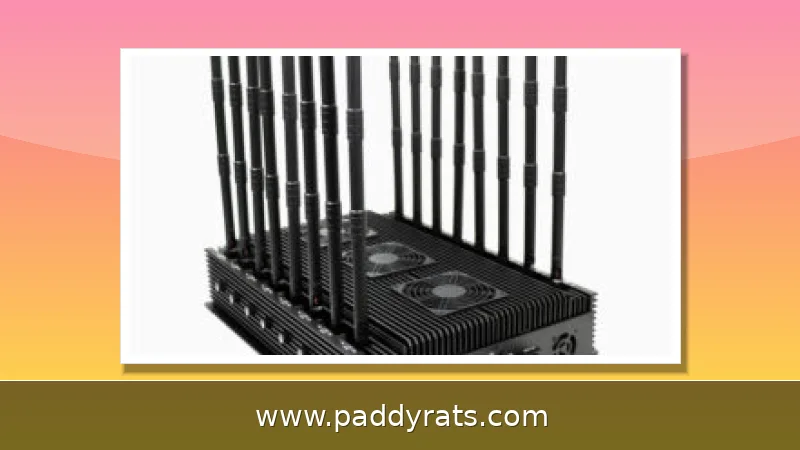
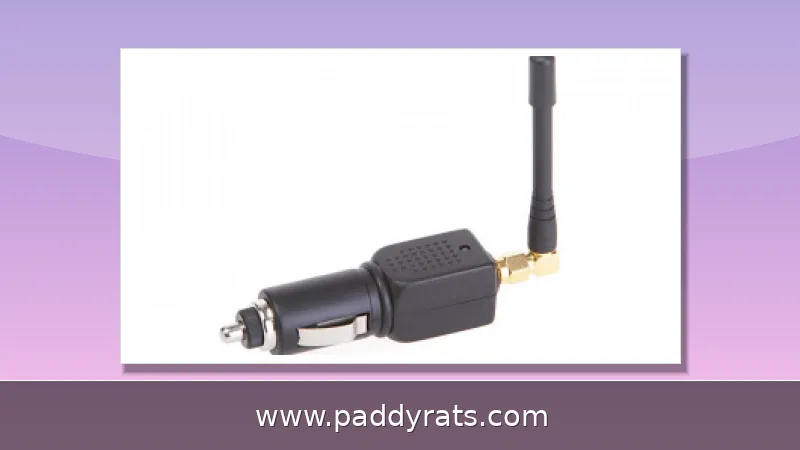
Most consumer jammers do not resemble a piece of spy gear. According to Airpinpoint, a simple GPS jammer costs $25-50 and can be plugged into cigarette lighter so that one could install/remove it within seconds with no tools or trace whatsoever! For reference, GP5000 is sold directly through Jammer Store; an online retailer that actually sells these devices openly for $119.99 list price. The core problem for fleet managers is that the price point costs approximately as much to defeat a $2000 telematics install: about one tank of fuel.
How far a jammer reaches depends on the unit and the surroundings. Geotab (July 8, 2025) puts the interference radius at 16 to 33 feet, Azuga says 5 to 10 meters, and Airpinpoint describes a dead zone of 10 to 50 meters. In dense urban areas, buildings and other obstructions shrink that footprint, which is why GPSPATRON notes that detection range in cities varies quite a bit. And a jammer tucked inside a cab doesn't need to cover an entire depot—it just needs to cover the one vehicle it's riding in.
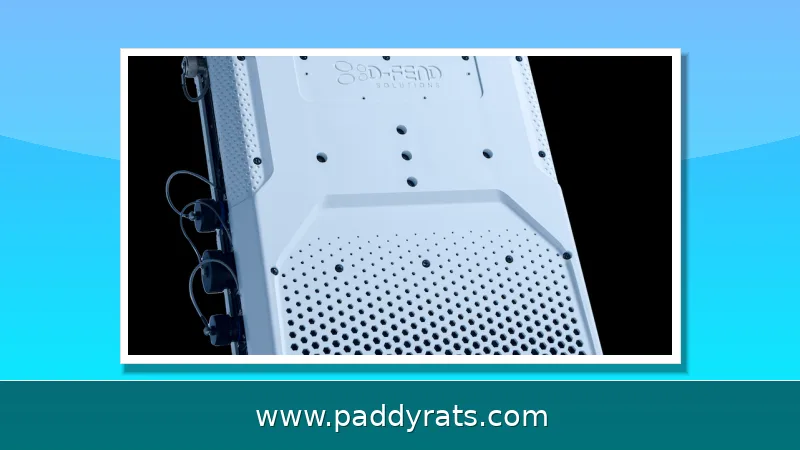
The table below compares the two devices you'll see referenced most often in vendor and retailer documentation — a jammer and a detector — since fleets usually end up weighing both sides of the problem.
Are GPS Jammers Legal? Fines and Penalties
No—GPS jamming is illegal in the United States, Canada, the United Kingdom, and plenty of other countries too. Here in the U.S., the Communications Act of 1934 and 47 USC 333 make it against the law to market, sell, or operate jammers, and both Geotab and Trak-4 (March 2, 2026) point out that fines can hit $100,000 or more, on top of possible imprisonment and seizure of the equipment. Those penalties are intentionally harsh, and for good reason: jamming doesn't just disrupt the one vehicle where the device is installed.
That's the part most drivers fail to see: jamming puts more than just a fleet's own tracking data at risk by blocking 9-1-1 and emergency calls, plus interfering with police, fire, and EMS networks. An employer can also be liable for up to $250,000 in penalties if a driver simply installs a device that costs less than 30 bucks. The bottom line here for fleet operators is that a jamming event should be viewed not just as an HR issue, but rather as compliance and legal exposure events that require documentation and escalate action.
And also separating legality from detection matters. An illegal jammer is not a rare thing. According to Airpinpoint, the UK Sentinel project has discovered incidents of jamming occurring on major roads in the UK suggesting that between 5 and 10 percent of commercial vehicles carry jammers at any point. If that estimate is evenclose, a mid-sized fleet must be jamming objects every day.
How GPS Jamming Impacts Fleet Operations and Costs
The damage usually starts well before anyone can confirm a jammer is in play. According to GPSPATRON, which cites UK Government sources, 80 to 85 percent of organized vehicle thefts now involve GPS jammers. That same reporting shows recovery rates dropping from 90 to 95 percent when a tracker is working to roughly 23 to 25 percent when it isn't. And in high-risk regions, jamming plays a role in 85 percent of cargo hijackings, per GPSPATRON (March 30, 2026). These aren't marginal numbers. They point to a tool that theft rings now treat as standard equipment.
Even omission could cite stock cost of ownership as without theft. And creeping beyond your data capabilities, exposed unwarranted mileage burns fuel, overshadowing gaps are cutting asset life through missed maintenance intervals and payroll plus hours-of-service records are drifting out of accuracy. The fleet also assumes compliance risk and insurance liability for trips it cannot prove. Some of these losses can stack up for weeks before anybody notices a pattern, because the tracker freezes instead of going completely dark at its last known location.
There is a second-order cost too: trust in the data itself. Once managers suspect that tracking gaps are deliberate, they start second-guessing every missing trip, which erodes the value of the entire telematics investment. Restoring confidence requires both detection technology and a clear policy that treats signal loss as an event to investigate rather than a routine glitch.
3 Ways to Detect a GPS Jammer in Your Fleet
Detection starts with software, not hardware. Advanced GPS tracking platforms can flag deliberate signal loss and alert managers in real time, and platforms such as Azuga and Geotab can identify jamming automatically. The signals to watch for are missing or interrupted trips, GPS signal error alerts, and devices registering zero satellites while the vehicle is clearly moving. Setting explicit alerts on those conditions is the single highest-return step most fleets can take.
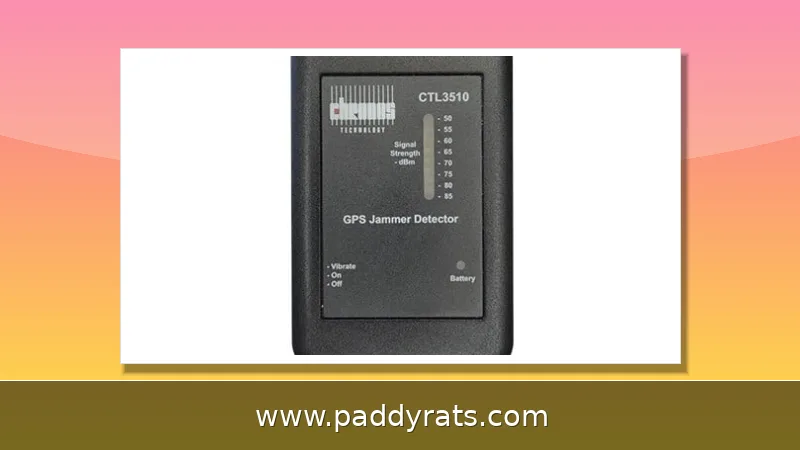
The second method is field detection. A portable detector such as the GP-Probe Nano L1 can be mounted on a windshield; it alerts when a jammer-equipped vehicle passes nearby, and its LED scale rises as the officer or investigator approaches the source. GPSPATRON rates its detection range at up to about 500 meters in open environments, with the caveat that urban range varies with buildings and obstructions.
The third method is policy and workflow. Authorize privacy mode for legitimate personal use instead of allowing drivers to reach for a jammer, and make clear that a jammer in a company vehicle is grounds for termination and referral. The table below summarizes the three approaches and where each one fits.
GPS Jamming vs Spoofing: What Is the Difference?
Jamming and spoofing are frequently lumped together, but they are different attacks with different signatures. Jamming emits radio frequency noise on GPS frequencies, preventing a device from receiving satellite data so it cannot determine location at all. Spoofing mimics real satellite signals to feed false location data, making a vehicle appear in the wrong place, follow an impossible route, or seem stationary while it is actually moving.
That difference matters for detection. Jamming usually produces an obvious outage: no satellites, no fix, a frozen last known location. Spoofing can look like normal operation, which is why it is harder to catch and why cross-checking GPS against cellular, engine, and fuel data is useful. A tracker that reports a plausible but physically impossible route is a spoofing red flag, not a jamming one.
One practical exception is worth remembering: Bluetooth Find My tracking at 2.4 GHz is not blocked by GPS jammers. That is why some recovery teams layer a low-cost Bluetooth tag alongside the primary telematics unit, so a GPS blackout does not eliminate every location signal at once.
Specifications and Trade-Offs: Jammer vs Detector Hardware
Hardware specs are where the marketing claims get separated from reality. The GP5000 is a cigarette-lighter jammer with a working frequency within 24 to 1575 MHz, 21 dBm of power, 5 meters of coverage, 100 mA working current, a built-in 3 dB antenna, dimensions of 80x21x21 mm, 35 grams of weight, a 0 to 50 C temperature range, 5 to 80 percent humidity tolerance, 12 to 24 V power, an external antenna option, and no built-in battery. Vendor documentation claims it fully silences OnStar, Family Link, Verizon Fleet Administrator, and Track What Matters, while only partially blocking DriveCam.
On the detection side, the GP-Probe Nano L1 is USB flash drive sized and offers three alert methods: vibration, an audible speaker, and a 36-LED power scale. It runs up to 30 days in Detector Mode and up to 3 months in Logger Mode, connects over USB Type-C to the Android GPSPATRON Connect app, and detects at up to roughly 500 meters in open environments. The GJ6, a portable all-civil-bands unit sold for $395 to $459, works against GPS, GLONASS, and LoJack.
The trade-offs are straightforward. Jamming blocks signals completely, while spoofing deceives the receiver with fake data. Portable jammers have limited range but create localized outages; vehicle-mounted jammers block multiple signals; stationary jammers cover larger zones. For fleets, the practical conclusion is that detection hardware is cheap relative to the cost of a single stolen vehicle, and pairing software alerts with at least one portable detector covers the most common scenarios.
What Should Fleet Managers Do First?
Start with the data you already have. Pull trip reports and look for repeated gaps, zero-satellite events, and vehicles that freeze at the same coordinates. Then configure automated alerts so the platform flags those patterns instead of waiting for a human to notice. Azuga, Geotab, and similar platforms can surface jamming automatically, and turning that on costs nothing beyond configuration time.
Next, decide on a response protocol. Document the incident, preserve the telematics logs, and involve legal counsel before confronting a driver, because the conduct may be a federal offense rather than a policy violation. Finally, consider a layered recovery strategy: a primary telematics unit plus a Bluetooth tag at 2.4 GHz, which GPS jammers do not block. No single control eliminates jamming risk, but software alerts, a portable detector, and a clear policy together make a fleet a much harder target.
Frequently Asked Questions
How do GPS jammers work against fleet trackers?
A GPS jammer is a small RF transmitter that broadcasts noise on GPS frequencies, mainly the L1 band at 1575.42 MHz. It overpowers weak satellite signals arriving at about -130 dBm, creating a 10-50 meter dead zone where trackers lose position lock or freeze at the last known location.
How can fleets detect GPS jamming?
Advanced telematics systems detect deliberate signal loss and alert managers in real time. Signs include missing or interrupted trips, GPS signal error alerts, and devices registering zero satellites. Some platforms, like Azuga and Geotab, flag jamming automatically, while portable detectors such as the GP-Probe Nano L1 sense jamming RF bubbles.
Are GPS jammers legal for fleet vehicles?
No. GPS jamming is illegal in the United States, Canada, the United Kingdom, and many other countries. In the U.S., the Communications Act of 1934 and 47 USC 333 prohibit marketing, selling, or operating jammers, with fines up to $100,000 or more, imprisonment, and equipment loss.
What is the difference between GPS jamming and spoofing?
Jamming emits radio frequency noise on GPS frequencies, preventing a device from receiving satellite data so it cannot determine location. Spoofing mimics real satellite signals to feed false location data, making a vehicle appear in the wrong place, follow an impossible route, or seem stationary while moving.