GPS jamming is now a routine part of organized vehicle theft, and a silent tracking gap is often the first clue. Here is how telematics platforms flag interference, how jamming differs from spoofing, and what fleet managers should do next.
What Is a GPS Jammer and How Does It Work?
A GPS jammer is just a small radio transmitter that drowns out the satellite signals your fleet tracker relies on. Here's why that's so easy to do: GPS satellites orbit about 20,200 km above Earth, and by the time their signals reach us, they're incredibly faint—around -130 dBm, which is well below the ambient noise floor. That weakness is the entire vulnerability. A cheap device broadcasting noise on the GPS L1 band at 1575.42 MHz can mask a signal that traveled 20,000 km. Pricier units also hit L2 at 1227.60 MHz. Even 10 milliwatts of interference at close range is enough to break the fix.
Most of these run $25 to $50, and they're nothing fancy—just a little plastic box around 60mm x 45mm x 20mm with a 12V plug and a stubby antenna or two. On the other end, your receiver needs at least four satellites before it can work out a position, using timing and trilateration, and only then does it send that position and velocity back over the cellular network. The jammer itself never communicates with the tracker at all. It just floods the same frequency with noise, drowning out those faint satellite signals until the receiver can't get a fix.
Range depends a lot on power output and antenna design. Geotab puts the interference radius at 16 to 33 feet, while Azuga cites 5–10 meters and Airpinpoint reports a dead zone of 10–50 meters. Then there's GP-Probe Nano's data, which shows that even a low-power jammer running at 10–20 milliwatts can overwhelm GNSS signals across 250–300 meters — and a sensitive detector can pick up that jamming from as far as 500 meters away.
What Types of GPS Jammers Do Fleets Actually Encounter?
Jammers aren't all built the same, and the form factor alone can tell you a lot about what a thief is actually trying to defeat. Verizon Connect sorts these devices into four broad categories: portable, vehicle-mounted, stationary, and spoofer. Among those, the stationary high-power systems deserve extra attention. They're far more common outside the United States, and when they're deployed, they can blanket an entire zone at once, knocking out multiple GNSS constellations such as GPS, GLONASS, and Galileo all at the same time.
The table below sums up the real-world ranges and frequency bands that vendors and detector manufacturers have reported.
How Do You Detect GPS Jamming on Fleet Tracking Devices?
Telematics platforms keep an eye on how strong and clean the incoming satellite signals are. If a device sees a sudden drop in GPS signal quality—or a sustained one that looks like jamming—it logs a timestamped jamming detection event and sends an alert to the tracking platform. From there, it keeps logging based on the last known position until the signal comes back. That last-known-position behavior is a big deal: it keeps the trip record intact instead of leaving a blank spot in the data.
You can set up these alerts right inside the tracking platform, usually under the alerts or notifications section, and choose how you want them delivered—email, text message, or a push notification in the app. It's also worth knowing that the platform can pull together a report of every jamming detection event, which comes in handy for compliance and audits. That way, if an insurer or law enforcement ever asks what happened, you've got the records ready to show them.
Azuga breaks detection down into three approaches: privacy mode authorization for authorized personal use, built-in jamming detection on more advanced tracking devices, and catching blockers by looking for missing or interrupted trips along with GPS signal error alerts. Transpoco makes a similar point, noting that fleet managers can spot jamming through advanced telematics systems that come with anti-jamming technology and signal loss alerts.
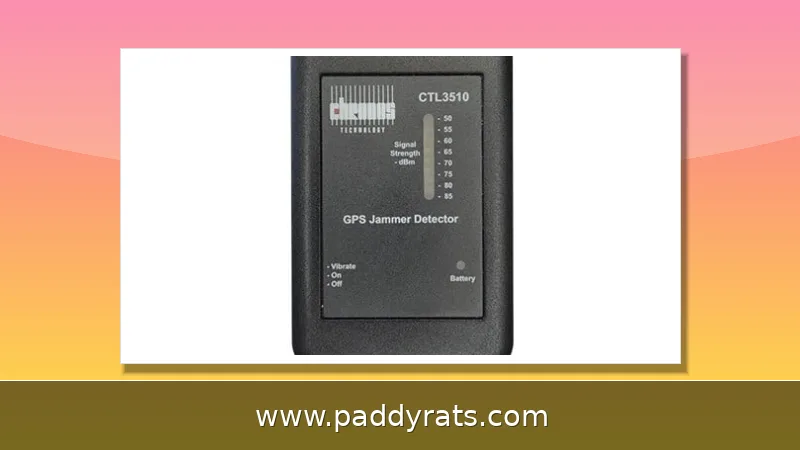
Dedicated hardware gives you a second layer of defense. Take the GP-Probe Nano L1: it's a wearable GNSS interference detector, roughly the size of a USB flash drive. It packs a vibration motor, a speaker, and a 36-LED power scale that shows interference intensity, which helps you figure out which direction the signal is coming from. In Detector Mode, the battery lasts up to 30 days of continuous use, while Logger Mode records interference events on its own for up to 3 months. Plug it into an Android device via USB Type-C, open the GPSPATRON Connect app, and you get real-time power graphs, signal-to-noise ratio readouts, and geotagged measurements. The app offers three modes: Monitoring, Patrol, and Sentinel.
GPS Jamming vs GPS Spoofing: Why the Difference Matters
Jamming and spoofing get lumped together a lot, but they're actually doing two different things to your receiver. A jammer simply drowns out the real satellite signals with noise, so the receiver can't get a fix at all — that's why you end up with gaps or dropouts in your tracking data. Spoofing is sneakier: it sends out fake signals that mimic the real ones, so the receiver happily keeps reporting a position, except that position is wrong or completely made up. Think an impossible route, or a truck that looks parked on the map while it's actually rolling down the highway. Worth noting: under 47 USC 333, transmitting either one is illegal in the US.
That distinction should shape your whole investigation. When a tracker gets jammed, it just goes dark. When it gets spoofed, it keeps reporting like nothing's wrong — except the data is fake. So if a truck shows a clean, believable position that doesn't line up with a fuel receipt or a dock camera, spoofing is probably your answer. But if the unit vanishes from the map completely, interference is the smarter first guess.
What Warning Signs Appear in Fleet Tracking Data?
The pattern is usually visible in the data before anyone says the word jammer. Watch for a vehicle frozen at its last reported location, disappearance from the live map, gaps in trip history, unusual straight lines in trip histories, unreliable route and arrival-time information, missing geofence events, incomplete proof-of-service records, delayed theft investigations, and difficulty confirming whether a driver followed an assigned route.
Not every gap means deliberate interference. Tunnels, underground car parks, dense urban canyons, metal structures, wet trees, damaged equipment and poor installation can all degrade GPS reception. Review the context of each alert before concluding that a jammer was involved, and compare the timing against known routes and driver schedules.
Are GPS Jammers Legal, and What Are the Penalties?
No. Federal law prohibits operating, marketing or selling GPS jamming equipment that interferes with authorized radio communications, with no exemption for vehicles, businesses or private property. Penalties can include fines of up to $100,000 or more, imprisonment, equipment seizure and loss of equipment. The relevant framework includes the US Communications Act of 1934 and 47 USC 333, enforced by the FCC, with parallel restrictions under Canada's Radiocommunication Act and in the UK and Australia.
The stakes are not theoretical. According to law enforcement sources cited by the UK Government, 80-85% of organized vehicle thefts now involve GPS jammers. Recovery rates fall from 90-95% with a functioning tracker to approximately 23-25% without one. That gap is the entire business case for detection.
Why Do Employees or Thieves Use Jammers?
The motives split into two groups. Criminal crews use jammers to defeat trackers during theft, which is why the devices are cheap, small and easy to conceal in a vehicle. Employees sometimes use them to hide unauthorized stops, side jobs, extended breaks or off-route mileage, and some drivers buy blockers marketed as anti-tracking devices for personal privacy.
That is why privacy mode authorization exists in platforms like Azuga's: it gives fleets a legitimate way to pause tracking for authorized personal use, so an unexplained outage stands out instead of blending into normal operations. Without that baseline, every gap looks suspicious and every alert becomes noise.
What Should Fleet Managers Do When Jamming Is Detected?
Treat a jamming detection event as a security incident, not a data glitch. Confirm the alert in the platform, check whether the vehicle is still moving by other means, and contact the driver through a channel that does not depend on the tracker. Preserve the timestamped event log and the last known position, because that record is what insurers and law enforcement will ask for.
Then close the loop operationally. Review signal loss alerts weekly, tune notification thresholds so tunnels and parking garages do not trigger constant false alarms, and train dispatchers to recognize the difference between a coverage gap and a deliberate outage. If a pattern repeats on the same vehicle or route, escalate it.
Finally, layer your defenses. Built-in jamming detection, signal loss alerts and a portable GNSS interference detector cover different failure modes, and the recovery-rate gap between tracked and untracked vehicles is large enough to justify the spend. This article is not investment advice.
Quick Reference: Jammer Types, Bands and Ranges
Use this table as a field guide when you are trying to match an observed outage to a likely device class. Ranges are vendor-reported and vary with terrain, antenna gain and mounting position.
| Jammer type | Power source | Typical range | Bands blocked |
|---|---|---|---|
| Portable battery unit | Internal battery | A few meters | GPS L1 |
| Cigarette-lighter plug-in | Vehicle 12V socket | 10-50 meters | GPS L1, sometimes L2 |
| Hard-wired multi-band | Wired to vehicle power | Tens of meters | GPS L1/L2 plus cellular and Wi-Fi |
| Chirp jammer | 12V or battery | Varies | Sweeps GPS L1 across the band |
| Stationary high-power system | Mains power | Whole zone | GPS, GLONASS, Galileo |
None of these consumer-grade units block Bluetooth at 2.4 GHz, which is why Find My relays outside the jammed radius can still surface a stolen vehicle. Hard-wired multi-band units are the most disruptive because they also cut cellular and Wi-Fi, so a tracker cannot fall back to a network-based position.
How Should You Respond to a Signal Loss Alert?
Start with triage. A single short gap on a known route through a tunnel is routine; a sustained outage on an open highway with no coverage explanation is not. Pull the timestamped jamming detection event, compare it with the driver's last check-in and the vehicle's telematics history, and decide within minutes whether to escalate.
If the vehicle is moving and unreachable, notify law enforcement and provide the last known position plus the event log. If it is parked and the driver is reachable, confirm the situation directly. Either way, document the alert, the response time and the outcome, because repeated incidents on the same asset or route are a pattern worth investigating.
What Data Should You Keep for Compliance and Insurance?
Keep the raw jamming detection events, not just the summarized report. A timestamped log with the last known position, the alert delivery method and the restoration time gives an insurer or auditor a defensible chain of events. Generate the platform's jamming detection report on a regular schedule so the record exists before you need it.
Pair that with driver-facing documentation. If your platform supports privacy mode authorization, record which vehicles and drivers are authorized for personal use and when. That baseline is what makes an unexplained outage meaningful rather than ambiguous, and it protects drivers who are doing nothing wrong.
How Do You Tell a Jammer Apart From Ordinary Coverage Gaps?
Ordinary coverage gaps have context: a tunnel, an underground garage, a dense downtown corridor, a known dead zone on a regular route. Jamming tends to appear suddenly, persist while the vehicle is in the open, and end abruptly when the vehicle moves away from the interference source. The shape of the gap in the trip history is a strong clue.
A complete tracking gap and an implausible but valid-looking location point to different problems, so check whether the unit kept reporting old coordinates. If a moving vehicle looks parked, or a route draws a straight line that no road follows, you are probably looking at spoofing rather than simple jamming. Match the symptom to the mechanism before you accuse anyone.
Do You Need a Dedicated GPS Jammer Detector?
Platform alerts tell you that something happened; a dedicated detector helps you find where it is coming from. Handheld GNSS interference detectors like the GP-Probe Nano L1 show interference intensity on a 36-LED scale and support direction finding, which is useful for depot sweeps, yard checks and investigations after a theft attempt.
For most fleets, the practical stack is built-in jamming detection plus signal loss alerts in the telematics platform, with one or two portable detectors for high-value yards or repeat incidents. That combination covers the everyday outage and the targeted attack without turning every vehicle into a rolling laboratory.
What Are the Best Practices for Fleet-Wide Jamming Response?
Write the response down before you need it. Define who monitors signal loss alerts, who calls the driver, who contacts law enforcement and who preserves the event log. Assign a single owner for the weekly alert review so patterns do not get lost between shifts.
Then tune the technology. Set notification thresholds that ignore normal coverage gaps, enable jamming detection on every unit that supports it, and keep firmware current so detection logic reflects the latest vendor releases. Review the data monthly, and treat any repeat jamming event on the same asset as a security issue rather than a hardware fault.
Why Does My Fleet Tracker Go Offline?
A tracker goes offline for three broad reasons: it lost satellite reception, it lost its cellular backhaul, or it lost power. Tunnels, garages and urban canyons explain the first. A hard-wired multi-band jammer can cause the first two at once, which is why those units are the most disruptive. A loose connection or a drained backup battery explains the third.
Work through the possibilities in order. Check the alert type, the vehicle's location at the time, and whether the unit came back online on its own. If the outage lines up with a known dead zone, log it and move on. If it happened in the open with no explanation, treat it as possible interference and follow your incident response process.
How Do Jamming Alerts Fit Into Daily Dispatch?
Jamming alerts should feed the same workflow as any other exception, not sit in a separate inbox. Route them to the dispatcher who owns the vehicle, with a clear escalation path if the driver cannot be reached. That keeps response times short and avoids the classic failure where an alert fires at 2 a.m. and nobody sees it until the morning shift.
Review alert volume weekly. If a route generates constant false positives, fix the threshold or the installation rather than ignoring the alert category. An alert that everyone has learned to dismiss is worse than no alert at all, because it hides the one event that actually matters.
What Hardware and Platform Features Should You Look For?
Look for built-in jamming detection, configurable signal loss alerts, timestamped event logs, and exportable reports for compliance and audit. Verify that the platform distinguishes a coverage gap from a jamming detection event, because the two require different responses. Check whether privacy mode authorization is available if your drivers take vehicles home.
On the hardware side, confirm the unit reports signal quality and strength, not just position. A tracker that only reports coordinates gives you nothing to analyze when the data stops. If you operate high-value yards, add a portable GNSS interference detector with direction-finding capability and keep it charged.
How Reliable Are Jamming Detection Alerts?
Detection is good but not perfect. A low-power jammer at 10-20 milliwatts can still overpower GNSS signals across 250-300 meters, and a sensitive detector can identify jamming up to 500 meters away, so the alert fires when the receiver loses lock rather than the moment the jammer turns on. Short, targeted bursts may also fall below notification thresholds.
That is why context matters. Use jamming detection as one signal among several, cross-check against driver communication and route history, and treat repeated alerts on the same asset as a strong indicator. No single alert should be the sole basis for accusing a driver or filing a police report.
What Happens After a Jammer Is Confirmed?
Once jamming is confirmed, preserve the evidence first. Export the timestamped jamming detection events, the last known positions and the alert delivery records. Photograph any device found in the vehicle and note where it was mounted. Then notify law enforcement and your insurer with that package in hand.
After the immediate incident, review the route and the asset. If the same vehicle or corridor keeps producing jamming events, consider a portable detector for that yard, adjust dispatch to avoid predictable patterns, and brief drivers on what to do if their tracker goes dark. Prevention is cheaper than recovery, especially when recovery rates drop from 90-95% to roughly 23-25% without a working tracker.
Are There Legal Limits on Using Detection Equipment?
Detection is passive and legal; transmitting interference is not. Receiving and analyzing GNSS signals, including with a handheld interference detector, does not require a license, but operating, marketing or selling jamming equipment does violate federal law in the United States under 47 USC 333 and the Communications Act of 1934, with parallel rules in Canada, the UK and Australia.
Fines can reach $100,000 or more, and penalties can include imprisonment and equipment seizure. If you find a jammer in a company vehicle, do not test it, do not resell it and do not leave it powered on. Document it, secure it and hand it to law enforcement.
How Do You Train Drivers to Recognize Jamming?
Keep the training simple and practical. Drivers should know that if dispatch cannot see their vehicle and their phone still works, they should call in rather than assume the system is broken. Give them a single phone number and a short script: where they are, what they can see, and whether anything unusual is plugged into the 12V socket.
Drivers should also know not to unplug or tamper with a suspected device. The goal is a fast, calm report, not a confrontation. A five-minute briefing during onboarding, plus a refresher when a new alert type is enabled, is usually enough to close the gap between the platform and the road.
What Is the Bottom Line for Fleet Managers?
GPS jamming is cheap, common and directly linked to organized vehicle theft, and the recovery-rate gap between tracked and untracked vehicles is enormous. Built-in jamming detection, configurable signal loss alerts and a portable GNSS interference detector together give you the evidence and the speed to respond.
Start with the platform features you already pay for, then add hardware where the risk justifies it. Review alerts weekly, document every event, and keep the legal line clear: detection is your right, transmission is not. This article is not investment advice.
Frequently Asked Questions
How do you detect GPS jamming on a fleet tracking device?
Telematics platforms monitor satellite signal quality and strength. When a device logs a sudden or sustained loss of GPS signal quality consistent with jamming, it records a timestamped jamming detection event, sends an alert by email, SMS or in-app notification, and keeps logging using the last known position until the signal returns. Dedicated GNSS interference detectors can add direction finding.
What does a jammed GPS tracker look like on a fleet map?
The vehicle may appear frozen at its last reported location, disappear from the live map, or leave a gap in its trip history. Some units keep reporting old coordinates, making a moving vehicle look parked. A complete tracking gap and an implausible but valid-looking location point to different problems.
Is every GPS tracking gap caused by a jammer?
No. Tunnels, underground car parks, dense urban canyons, metal structures, wet trees, damaged equipment and poor installation can all degrade GPS reception. Review the context of each alert before concluding that deliberate interference occurred, and compare the timing against known routes and driver schedules.
Are GPS jammers legal in the United States?
No. Federal law prohibits operating, marketing or selling GPS jamming equipment that interferes with authorized radio communications, with no exemption for vehicles, businesses or private property. Penalties can include fines of up to $100,000 or more, imprisonment, equipment seizure and loss of equipment.
How can I tell if my fleet tracker is being jammed?
A jammed tracker typically logs a sudden or sustained loss of GPS signal quality while the vehicle is in the open, then reports a timestamped jamming detection event. The platform may show the vehicle frozen at its last known position, gaps in trip history, or missing geofence events. Unlike ordinary coverage gaps, jamming often starts abruptly, persists, and ends when the vehicle moves away from the interference source.
What is the difference between GPS jamming and GPS spoofing?
Jamming overwhelms or blocks legitimate satellite signals, so the receiver usually loses its ability to calculate a location and the tracker goes quiet. Spoofing transmits false signals that imitate real satellite data, so the receiver may keep reporting a location that is inaccurate or fabricated, such as an impossible route or a stationary vehicle that is actually moving. The distinction changes how you investigate: a jammed tracker drops off the map, while a spoofed tracker keeps talking but lies.