A signal jammer deliberately breaks the link between a device and its signal source by transmitting interference on the same radio frequencies. This guide covers what jammers block, how they work, who uses them, and why they are illegal in the US and much of the world.
What Is a Signal Jammer and What Is It Used For?
A signal jammer is a device built to deliberately cut off the link between a device and whatever signal source it relies on. Take a cell phone jammer: it blocks the communication between a cell tower and a mobile phone, which is why the handset ends up showing no signal bars. You'll also see this same kind of hardware sold or described under other names, like cell jammers, mobile phone jammers, signal blockers, GPS jammers, text stoppers, and RF jammers.
Signal jamming didn't begin as some consumer gadget or a prank device. It came out of military and law enforcement work, where the stakes were life and death. Bomb squads needed a way to stop cell phone-triggered IEDs, because one call could set the thing off. Hostage negotiators and tactical teams ran into something similar: if a captor could keep talking to accomplices on the outside, they could coordinate, take instructions, or trigger a device at the worst possible moment. Cutting that link off became a tactical necessity, and jammers were how they did it. Over time, the technology trickled down into commercial and private hands. Cheaper parts, online tutorials, and a growing demand for "quiet" spaces made jammers easier to get than ever before. And that shift is exactly where the legal trouble starts.
People give all sorts of reasons for using jammers, but most of them boil down to one thing: keeping certain conversations or devices off the air. In corporate settings and secure offices, jammers get pitched as a way to shut down unauthorized calls and recordings during sensitive discussions. Conference rooms and private meetings come up a lot too, along with investigative and security operations where teams want a controlled communication environment. Some users point to drone blocking, which severs the link between a drone and whoever's operating it. Others focus on protecting confidential meetings, preventing unauthorized recordings, and controlling communication in sensitive areas like government or research facilities. Then there's a quieter, more technical use case: cutting down on interference in places where stray signals mess with equipment. And proponents often argue that jammers are simply necessary because people can't seem to follow basic cell phone etiquette—whether that's in schools, theaters, cars, or on a quiet train ride.
People who defend jammers usually bring up the same handful of places where phone etiquette goes out the window — schools, theaters, cars, quiet train cars — and make the case that a jammer is just the tool that enforces the silence people won't keep on their own. On the surface, that pitch isn't crazy: if folks won't silence their phones, why not silence the network itself? Regulators in most countries haven't bought it, though, and there's a good reason why. A jammer doesn't politely zero in on the one rude caller; it kills service for everyone in range, including the person trying to dial 9-1-1. So it's worth pulling apart what a jammer can technically do from what you're actually allowed to do with one — a distinction that starts to matter a lot once you dig into the laws.
How Does a Signal Jammer Work?
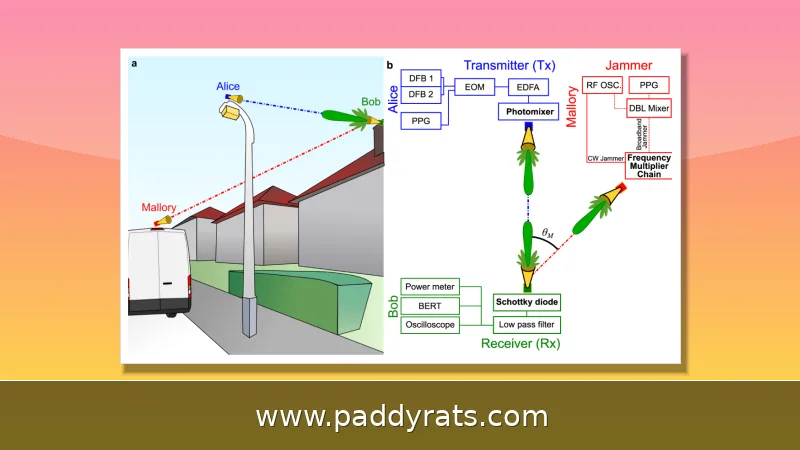
At its core, jamming comes down to one simple trick: the jammer broadcasts on the exact same radio frequencies the target device is trying to use, flooding the airwaves with interference. Picture a phone caught between two signals on the same frequency. It has no way to tell which one is legitimate, so it just locks onto the stronger of the two, and the weaker one gets canceled out. That's why a jammed phone often shows no signal bars at all instead of some obvious error message. Security professionals call this a denial-of-service attack against a wireless link, and the name fits, since nothing is physically broken. The connection is simply drowned out. Less sophisticated jammers take an even blunter approach, blocking only a single frequency, which can fool a device into thinking no signal exists in the first place.
Cell jamming goes after the downlink signal — the path that runs from the cell tower down to your phone — rather than the uplink coming from the handset itself. Your phone relies on that tower signal to confirm it has coverage, so when the downlink gets disrupted, there's nothing for the handset to lock onto. The result? No signal bars on the screen, no error message, no warning of any kind. To the user, it just looks like the phone has wandered into a dead zone, which is exactly what a jammer is built to accomplish. Simpler jammers take a more basic route: they block just one frequency, and that narrow bit of interference can be enough to fool a device into thinking no signal exists at all.
How well a jammer actually performs comes down to physics, not marketing. The device's output power sets the ceiling on how far its interference can reach, and that reach drops off fast as you move away from the target devices. Distance matters in both directions: a phone sitting close to the jammer is much easier to knock out than one on the other side of the room. Physical obstacles like walls, floors, and other structures also absorb or reflect RF energy, so a jammer that works fine in an open conference room may do almost nothing through a concrete wall. And then there's the original signal itself — a strong, clean cell tower signal is harder to override than a weak one. One source puts typical jamming range at no more than about 30 square feet, which is far smaller than the coverage vendor marketing tends to imply.
Multi-band devices can handle several frequencies at once, which is why one unit might be able to take out cellular service, WiFi, and GPS all at the same time. But there's a trade-off: the more bands a jammer tries to cover, the more power it has to spread across them, and that usually means its effective range gets shorter.
What Signals and Devices Can a Jammer Affect?
Jammers aren't only good for killing phone calls. The signals they go after most often include cellular networks on every generation still in use — 2G, 3G, 4G, and 5G — plus WiFi and Bluetooth, GPS and other tracking systems, radio traffic on VHF and UHF bands, and even police radar. That covers a lot of ground, which is why one device can either silence a room full of phones or bring a drone down out of the sky. Some jammers are designed to hit just a single signal type, which keeps them simple and inexpensive. Others are multi-band systems that handle several frequencies at once, so they cast a wider net across more devices and more situations.
wifi jammers are designed to broadcast on the same 2.4 GHz and 5 GHz bands your router relies on, which explains why they can take a wireless network down in seconds. The thing is, those bands aren't just for internet traffic. Bluetooth shares that space, and so do cordless keyboards and mice, wireless security cameras, video doorbells, smart speakers, thermostats, and a long list of other smart-home devices. So a WiFi jammer isn't limited to killing one laptop's connection — it can silently take out an entire ecosystem of gadgets all at once. One detail worth holding onto: wired Ethernet connections keep right on working during a WiFi jam. A hardwired link doesn't depend on radio signals at all, so it stays up while everything wireless goes dark. That split is actually one of the cleanest ways to tell deliberate jamming apart from a normal outage — with an ordinary outage, you'd usually expect the whole connection to go down, not just the wireless half.
GPS jamming is its own category, and it's a particularly sensitive one. GPS signals come down from satellites at very low power, which means even a modest jammer can overpower them across a surprisingly wide area. When that happens, it's not just your phone's map that suffers—navigation, package tracking, and the timing systems that a lot of networks quietly depend on can all get thrown off.
A jammer and a signal booster are opposites. A signal jammer will interfere with a cell phone signal booster, and because boosters only amplify an existing signal, a booster cannot restore service that has been blocked. Signal amplifiers are not an effective defense against jammers.
Main Types of Signal Jammers: Portable, Fixed, and Advanced Systems
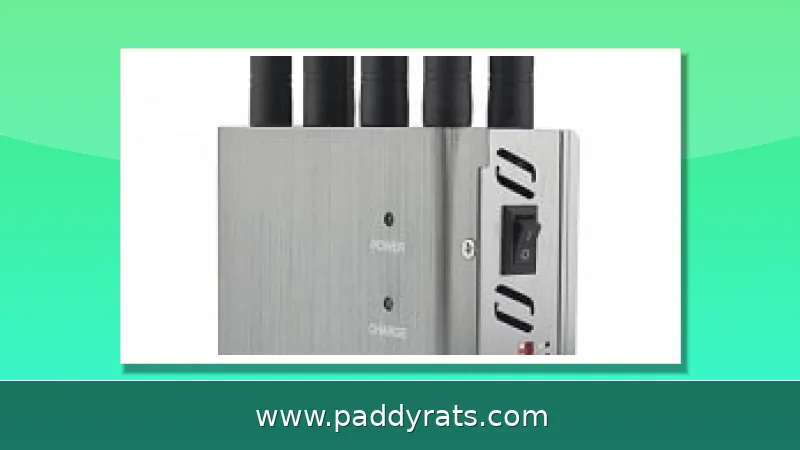
Jammers come in three broad form factors, and the differences matter for both coverage and enforcement. Portable jammers are compact and easy to transport, intended for temporary operations, off-site meetings, and mobile environments. Fixed jammers are permanently installed with higher power and broader coverage, used in executive offices, conference rooms, and high-security facilities. Advanced signal control systems integrate with detection devices for precise signal management, often in government or critical-infrastructure settings.
The table below summarizes how the main categories compare on the factors buyers and investigators care about most.
| Type | Coverage | Typical setting | Portability |
|---|---|---|---|
| Portable jammer | Small, localized | Temporary operations, off-site meetings | High |
| Fixed jammer | Broad, higher power | Executive offices, secure facilities | None |
| Multi-band system | Cellular, WiFi, GPS, radio | Controlled communication environments | Varies |
| Advanced signal control | Precise, detection-linked | High-security and government sites | Low |
Range claims deserve skepticism. Output power, distance, walls, and the strength of the original signal all shape real-world performance, and a device advertised as covering a whole building may barely reach across a room. That gap between marketing and physics shows up repeatedly in enforcement cases.
Are Signal Jammers Legal?
In the United States, it is illegal to sell, advertise, distribute, or operate cell signal jammers, and there are no exemptions for use in a business, classroom, residence, or vehicle. The FCC states that jamming equipment poses serious risks to critical public safety communications, can prevent 9-1-1 and other emergency calls, and interferes with law enforcement communications.
Radio frequencies are legally protected by the Communications Act of 1934. Penalties may include fines of up to $11,000, seizure of equipment, and criminal sanctions including imprisonment. Local law enforcement lacks independent authority to authorize jamming; federal agencies may be authorized in some instances.
Other countries take a similar line with local variations. In South Africa, use is strictly prohibited by law. In the United Kingdom, law enforcement, intelligence agencies, and jails have employed signal jammers since 2012 under strict regulation. Brazil, New Zealand, and Sweden have considered exceptions for correctional facilities.
Cell phone detectors, by contrast, are legal in the United States. That distinction matters for anyone trying to enforce a no-phone policy: detecting a signal is generally permitted, while blocking one is not.
Why Jammers Are a Growing Security Threat
Since 2021, US Customs and Border Protection (CBP) has seen a roughly 830 percent increase in signal jammer seizures, a signal that the hardware is cheaper, smaller, and more widely trafficked than before. The devices are no longer just a military curiosity.
Los Angeles leaders and law enforcement have warned of increased burglars using WiFi jammers to disable home cameras and alarm systems before breaking in. The Department of Homeland Security reported jamming devices used in several Vermont bank robberies in June, and jamming devices were recovered in an attempted jewelry store robbery in La Verne, California.
This is the practical risk for ordinary households and small businesses: a jammer does not need to be sophisticated to defeat consumer-grade WiFi cameras, smart locks, and alarm panels that depend on the 2.4 GHz or 5 GHz bands.
For anyone assessing physical security, the lesson is to treat wireless-only protection as a single point of failure. Wired connections, cellular backup on a different band, and local recording that does not depend on a live link all reduce exposure to jamming.
How to Detect and Respond to Signal Jamming
Detection signs include dropped service on multiple devices at once, signal fluctuations, WiFi signal drops near the router, repeated disconnections, high latency and packet loss, and reduced bandwidth, while wired Ethernet connections keep working normally.
Spectrum analyzers can detect jammers, but they are not commonly available and require specialized knowledge to interpret. Apps that claim to detect jammers are largely unproven, so treat their readings with caution.
If you suspect jamming, the practical response steps are to contact your wireless network provider, contact law enforcement, or file a complaint with the FCC. Physically locating and disabling the jammer is difficult and potentially dangerous; relocating may restore reception, and switching frequency may work depending on how sophisticated the jammer is.
For security teams, the priority is documentation: note the time, affected devices, and bands, and preserve logs. That record is what regulators and investigators need, and it is far more useful than an app screenshot.
Jamming in Electronic Warfare and DIY Circuits
In electronic warfare, jamming is deliberate interference with or blocking of wireless communications. Two main techniques are noise techniques and repeater techniques, and each has distinct subtypes.
| Technique | How it works | Trade-off |
|---|---|---|
| Spot jamming | Focuses all power on a single frequency | Very strong, but narrow |
| Sweep jamming | Shifts full power between frequencies quickly | Covers more, less time on each |
| Barrage jamming | Jams multiple frequencies at once | Wider coverage, weaker per frequency |
| DRFM repeater | Alters and re-transmits received radar energy | Creates false targets |
DRFM, or digital radio frequency memory, is a repeater technique that alters and re-transmits received radar energy to create false targets. Anti-jam antennas and countermeasures exist on the defensive side, which is why military jamming is a constant back-and-forth rather than a solved problem.
On the hobbyist side, a basic cell phone jammer circuit needs three subcircuits: an RF amplifier, a voltage controlled oscillator, and a tuning circuit. Components include resistors, capacitors, a transistor for amplification, and an inductor for frequency generation. Such a build can block UMTS, 3G, CDMA, GSM, and PHS.
Building or operating one in the United States is still illegal regardless of how simple the circuit is, and the same engineering knowledge is better applied to detection and defense.
The Bottom Line on Signal Jammers
A signal jammer is a denial-of-service tool for radio: it transmits on the same frequencies as the target, and the weaker original signal loses. That makes it effective against phones, WiFi, GPS, and radios, and it makes it dangerous to public safety systems that share the same spectrum.
The legal picture is unusually clear. Selling, advertising, distributing, or operating cell signal jammers is illegal in the United States, with fines up to $11,000 and possible criminal penalties, and many other countries prohibit them as well.
If your concern is unwanted recording, distracted audiences, or wireless intrusion, detection, policy, and wired infrastructure are the compliant paths. If you are a security professional, assume jamming is possible and design around it rather than counting on a booster or an app to save the day.
This article is for general information only and is not legal advice; consult a qualified attorney about any specific device or deployment.
Frequently Asked Questions
What is a signal jammer used for?
Signal jammers are used to disrupt wireless communications in a targeted area. Common purposes include blocking cell phone calls, texts, and data, preventing unauthorized recordings in confidential meetings, controlling communications in sensitive facilities, and blocking drones. They were originally developed for military and law enforcement use against threats like cell phone-triggered explosives and hostage situations.
How does a signal jammer work?
A jammer transmits a stronger radio frequency signal on the same frequency used by the target device. Because the phone or device receives two signals at the same frequency, it cannot distinguish them, so the weaker original signal is cancelled out. This is often described as a denial-of-service attack.
Are signal jammers legal?
In the United States, it is illegal to sell, advertise, distribute, or operate cell signal jammers, and there are no exemptions for use in a business, classroom, residence, or vehicle. Many other countries, including South Africa, also prohibit them. Federal law enforcement agencies may be authorized in limited exceptions.
What signals can a jammer affect?
Jammers can affect cellular networks such as 2G, 3G, 4G, and 5G, WiFi and Bluetooth connections, GPS and tracking systems, and radio communications including VHF and UHF. Some jammers target a single signal type, while multi-band systems can manage several frequencies at once.