Global signal jammer market forecasts range from roughly $900 million to $4.6 billion, with C-UAS the fastest-growing segment. Meanwhile, U.S. enforcement is tightening, and drone jamming authority is expanding to new agencies.
What is driving the signal jammer market in 2026?
The signal jammer industry is a strange mix. Consumer privacy gadgets, prison security, and military electronic warfare all run on the same basic tech, which makes market sizing a headache — every research firm seems to draw the category lines differently. Some count only handheld devices; others throw in counter-drone systems, GNSS denial tools, and fixed installations. From what I keep hearing on vendor calls and around trade shows, the money is clearly shifting away from cheap consumer boxes and toward government, defense, and facility protection contracts.
How big is the signal jammer business, really? Honestly, it depends on who you ask — and that discrepancy says a lot about how young and fragmented this market still is. Fortune Business Insights is the most bullish of the major research firms, valuing the global market at USD 4.61 billion in 2025 and projecting USD 4.98 billion in 2026, on the way to USD 9.27 billion by 2034, which works out to an 8.1% CAGR. Strategic Market Research lands lower, at USD 2.85 billion in 2025, but still expects USD 4.64 billion by 2032 at 7.2%. Coherent Market Insights starts smaller yet grows faster: USD 1.8 billion in 2026 climbing to USD 3.6 billion by 2033, a 10.4% CAGR. Reanin is the most conservative of the bunch, estimating just USD 913.05 million in 2025 and USD 1.21 billion by 2032 at 4.1%. Part of the spread comes down to definitions — whether counter-drone hardware and military electronic warfare systems get counted as "jammers" or filed under separate budgets.
| Research Firm | Base Value | Forecast Value | CAGR |
|---|---|---|---|
| Fortune Business Insights | USD 4.61 billion (2025); USD 4.98 billion (2026) | USD 9.27 billion by 2034 | 8.1% |
| Strategic Market Research | USD 2.85 billion (2025) | USD 4.64 billion by 2032 | 7.2% |
| Coherent Market Insights | USD 1.8 billion (2026) | USD 3.6 billion by 2033 | 10.4% |
| Reanin | USD 913.05 million (2025) | USD 1.21 billion by 2032 | 4.1% |
That kind of spread isn't just a rounding error—it points to real disagreement over what actually counts as part of this market. Some firms lump a $50 handheld jammer from an online marketplace in with military-grade counter-drone systems, while others treat those as completely separate categories. Alibaba's buying guide puts the market at USD 8.7–9.3 billion by 2034–2035, growing at 8.1–8.7% CAGR, and it specifically calls out C-UAS as the fastest-growing segment rather than consumer privacy tools—which says a lot about where the real momentum is. Technavio projected an increase of USD 1.08 billion between 2023 and 2028 at 5.66% CAGR, while LinkedIn Pulse estimated just 4% CAGR for the small signal jammer segment from 2026 to 2033. Taken together, these forecasts suggest the headline growth is driven mainly by defense and counter-drone applications, not the cheap devices that tend to dominate news coverage and enforcement cases.
| Source | Market Size / Forecast | CAGR |
|---|---|---|
| Fortune Business Insights | USD 4.61B (2025); USD 4.98B (2026); USD 9.27B by 2034 | 8.1% |
| Strategic Market Research | USD 2.85B (2025); USD 4.64B by 2032 | 7.2% |
| Coherent Market Insights | USD 1.8B (2026); USD 3.6B by 2033 | 10.4% |
| Reanin | USD 913.05M (2025); USD 1.21B by 2032 | 4.1% |
| Technavio | Increase of USD 1.08B (2023–2028) | 5.66% |
| LinkedIn Pulse (small signal jammer segment) | — | 4% (2026–2033) |
| Alibaba buying guide | USD 8.7–9.3B by 2034–2035 | 8.1–8.7% |
Which segments and regions are growing fastest?
Coherent Market Insights gives a clearer picture of where demand actually sits. Portable signal jammers still lead the device type category with 45% of the market, but fixed jammers are growing the fastest — critical infrastructure operators would rather have a permanent installation than something they have to haul out and set up every time. When it comes to frequency, multi-band jammers hold the top spot, while wideband systems are expanding at the quickest pace. That trend makes sense once you think about what these systems are up against: modern targets don't stay on a single frequency. They jump between 433 MHz, 900 MHz, 2.4 GHz, 5.8 GHz, and GNSS bands — sometimes all within one engagement.
Reanin's survey data adds some useful texture here. Roughly 68% of secure installations use signal jammers, and about 61% of demand comes from military, government, and private facilities. On top of that, around 64% of enterprises would rather go with custom-built jammer systems than off-the-shelf units. And about 66% of stakeholders say they prioritize compact, energy-efficient models — which tracks with what I hear from integrators who need to mount hardware on vehicles, tripods, or rooftops without pulling new power runs.
| Research Firm | Base Year Value | Forecast Value | CAGR |
|---|---|---|---|
| Fortune Business Insights | USD 4.61B (2025) | USD 9.27B by 2034 | 8.1% |
| Strategic Market Research | USD 2.85B (2025) | USD 4.64B by 2032 | 7.2% |
| Coherent Market Insights | USD 1.8B (2026) | USD 3.6B by 2033 | 10.4% |
| Reanin | USD 913.05M (2025) | USD 1.21B by 2032 | 4.1% |
| Technavio | 2023 baseline | +USD 1.08B by 2028 | 5.66% |
North America still brings in the most revenue, and that lead is mostly thanks to defense budgets and steady funding for federal facility protection programs. Asia Pacific, on the other hand, is growing the fastest, with India and China regularly named as the main drivers. That contrast makes sense once you look at how each market actually works. In the West, tight regulation keeps demand in check, so most of the money goes to authorized government buyers rather than everyday consumers. In Asia Pacific, demand is being pulled from two directions at once: state security programs and a sizable gray-market consumer segment that regulators struggle to police.
How do signal jammers actually work?
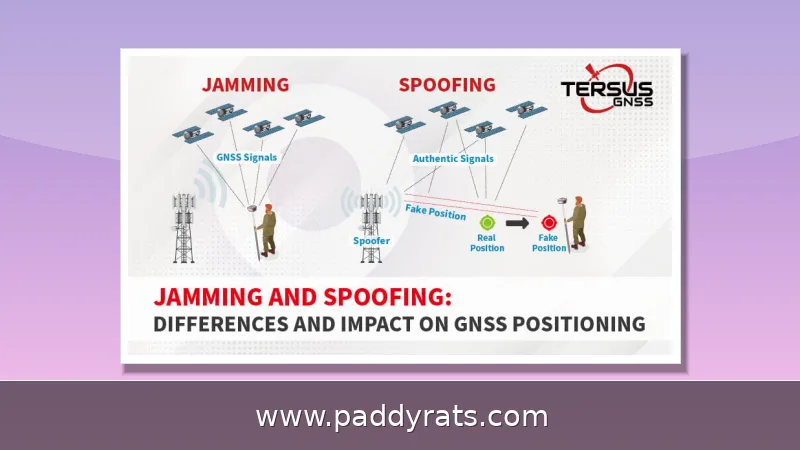
Jamming is what happens when someone deliberately interferes with or blocks wireless communications — and that intent is the key difference between jamming and the everyday interference we all deal with, like a microwave leaking RF energy or two routers fighting over the same channel. A jammer does its job by pushing interfering signals toward a receiver, basically drowning it in concentrated energy on the exact frequencies the target device depends on. The goal isn't to physically wreck the phone, drone, or GPS unit. It's to raise the ambient noise floor so high that the receiver can't complete a handshake or hold onto a link anymore, and the connection just falls apart.
There are really just two families of jamming techniques: noise jamming and repeater jamming. Noise jamming is the more straightforward one. You essentially flood a receiver with interfering energy until the signal it's trying to hear gets buried underneath. Within that family, three methods tend to come up again and again. Spot jamming aims every available watt at a single frequency. Against a target parked on one channel, that makes it brutally effective, but it falls apart against frequency-agile radar, which hops to a new frequency before the jammer can follow. Sweep jamming does the reverse, sliding full power across a range of frequencies in quick succession. That covers more spectrum, but because the jammer never settles anywhere, it only spends a fraction of a second on each frequency. Dwell time drops, and so do the odds of catching a fast-moving signal. Barrage jamming splits the difference by transmitting on many frequencies at once. It casts the widest net of the three, though spreading power across multiple frequencies means less punch on any single one. Repeater jamming operates on an entirely different principle. Rather than drowning a signal out with noise, it listens for incoming radar energy and retransmits a manipulated copy, which creates false targets. The most common repeater method today is DRFM, or digital radio frequency memory. It captures the original pulse, alters it, and sends it back.
| Noise jamming type | How it works | Strength | Weakness |
|---|---|---|---|
| Spot jamming | All power focused on one frequency | Devastating against fixed-frequency targets | Ineffective against frequency-agile radar |
| Sweep jamming | Full power shifts across frequencies in quick succession | Covers more spectrum | Reduced dwell time on each frequency |
| Barrage jamming | Transmits on multiple frequencies at once | Broad coverage | Less power per frequency |
Repeater jamming takes a fundamentally different approach from noise techniques. Instead of drowning out a signal with raw power, it listens first and then talks back. DRFM, or digital radio frequency memory, is the most common form of this: the system captures incoming radar energy, digitally stores and alters it, and re-transmits the modified pulse back toward the source. The result is a false target, a delayed echo, or a scrambled return that confuses the receiver's tracking logic and can pull it off the real object entirely. Because the jammer mimics the original waveform rather than smothering it, the targeted radar has a much harder time filtering the deception out. This is the technique behind many modern electronic warfare systems, and it is a big reason simple noise jammers are increasingly insufficient against sophisticated threats.
The real-world impact of a jammer depends heavily on how much power it puts out. A high-powered jammer can overwhelm an entire cell sector, cutting off every user connected to it at once. Lower-powered jammers are far subtler — instead of a clean cutoff, they introduce noise, fading, and data loss, or block devices from connecting in the first place. And this isn't limited to phone calls: any wireless network can be targeted, whether that's cellular, GPS/GNSS, land mobile radio (LMR), or Wi-Fi. Take Bluetooth, which operates in the 2.4 GHz ISM band (2.402–2.480 GHz). A Bluetooth jammer works by raising the ambient noise floor in that band, drowning out the legitimate signal. Modern Bluetooth 5.0+ fights back with Adaptive Frequency Hopping, which hops around congested channels. Even so, industry testing shows a clear gap between approaches: static jammers still achieve roughly 68% disruption, while AI-driven adaptive systems push that number up to 92%.
| Jamming Scenario | Typical Effect |
|---|---|
| High-powered jammer | Shuts down an entire cell; disconnects all users on it |
| Low-powered jammer | Noise, fading, data loss, or blocked connections |
| Static Bluetooth jammer | ~68% disruption of 2.4 GHz ISM band (2.402–2.480 GHz) |
| AI-driven adaptive system | ~92% disruption despite Bluetooth 5.0+ Adaptive Frequency Hopping |
Why are drone jammers a fast-growing segment?
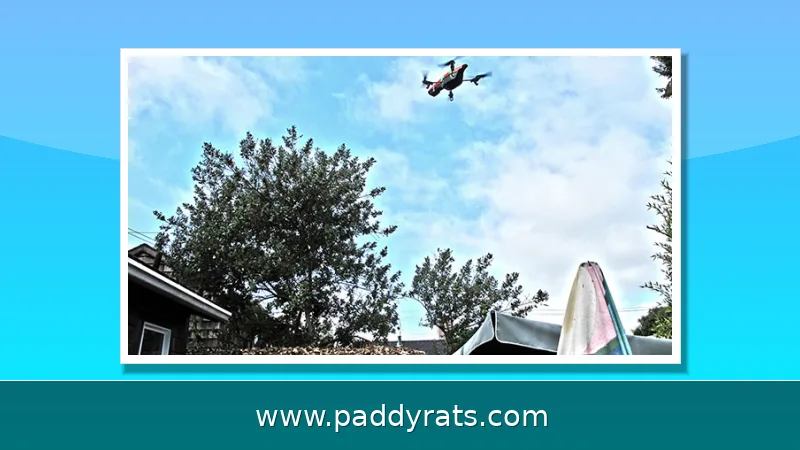
Drone jammers work by flooding the wireless link between a drone and its operator with interference, and once that link breaks down, the aircraft is designed to fall into a fail-safe mode: return to its launch point, hover in place, or descend. That sounds simple enough, but pulling it off means hitting several frequency bands at the same time, because different parts of a drone's operation ride on different signals. Commercial and DIY control links often run on 433 MHz or 900 MHz, while video and telemetry feeds frequently use 1.2 GHz or 1.5 GHz. The command-and-control links used by DJI and most commercial drones operate on 2.4 GHz and 5.8 GHz. On top of that, GNSS bands — GPS, GLONASS, Galileo, and BeiDou — are also targeted, since cutting off navigation keeps a drone from knowing where it is or where to go. Miss any one of these bands, and the drone may still find a way to keep flying.
Hardware has matured accordingly. The Airsight Smart and Autonomous Jammer offers full 360-degree coverage out to 1.9 miles, with manual and automatic activation, mounting options for fixed positions, tripods, or vehicles, and integration with the AirGuard detection platform. Systems like this are why C-UAS is the fastest-growing slice of the jammer market: it is a recurring, funded, government-driven need rather than a one-off consumer purchase.
Who can legally operate jamming equipment in the United States?
Federal law is blunt on this point. Under the Communications Act of 1934 (47 U.S.C. 301, 302a, 333), operating, marketing, or selling jamming devices is prohibited, and only authorized government entities may legally operate them. FCC Chairwoman Jessica Rosenworcel put it plainly: "You cannot make them, import them, sell them, ship them, or operate them." That covers the entire supply chain, not just the end user.
Authorized users under existing federal law include the Department of Defense and military installations under Title 10, with authority expanded by JIATF-401 guidance in January 2026. The Department of Homeland Security, including Customs and Border Protection and the Secret Service, is authorized. The Department of Justice, including the FBI, is authorized. The Department of Energy may use jamming for nuclear facility protection, and the Coast Guard may use it for maritime security.
The SAFER SKIES Act, passed as part of the FY2026 NDAA, newly authorizes state and local law enforcement after training at the FBI National Counter-UAS Training Center in Huntsville, Alabama. It also authorizes correctional facility security agencies that meet federal certification, plus agencies protecting National Special Security Events and SEAR-rated events such as the FIFA World Cup 2026.
Not authorized: private companies, including critical infrastructure operators, unless acting under direct federal authority; individual property owners; and private security firms unless contracted by an authorized agency. The FEMA C-UAS Grant Program prohibits purchasing weapons with grant funds, and mitigation equipment is only available to certified law enforcement personnel.
What penalties do unauthorized jammer users face?
The FCC can impose substantial civil penalties, seize illegal equipment, and refer cases for criminal sanctions. Fines reach up to $112,500 per incident. That is not theoretical. On January 28, 2022, the FCC upheld a $22,000 fine against Dallas-based Ravi's Import Warehouse, consisting of a $17,000 base fine plus $5,000 for egregious conduct after the owner offered to sell a jammer to an FCC agent.
Enforcement has accelerated sharply. A DHS warning dated June 18, 2025 noted that U.S. Customs and Border Protection saw roughly an 830% increase in seizures of signal jammers since 2021, with home invasions, burglaries, and bank robberies among the cited cases. ISCO International reported that seizures of jamming equipment jumped nine-fold between 2021 and 2025. In March 2024, an NBC News report found jammers for sale on vendor websites and online marketplaces, with Amazon among the retailers under FBI investigation.
Not every jurisdiction bans them outright. Canada allows jammer use in prisons, launching a pilot project in March 2025 to deploy and evaluate jamming technology in Canadian federal prisons. That contrast is worth watching, because it shows how correctional and counter-drone use cases are carving out exceptions even as consumer sales face a crackdown.
What technical specifications matter for jamming systems?
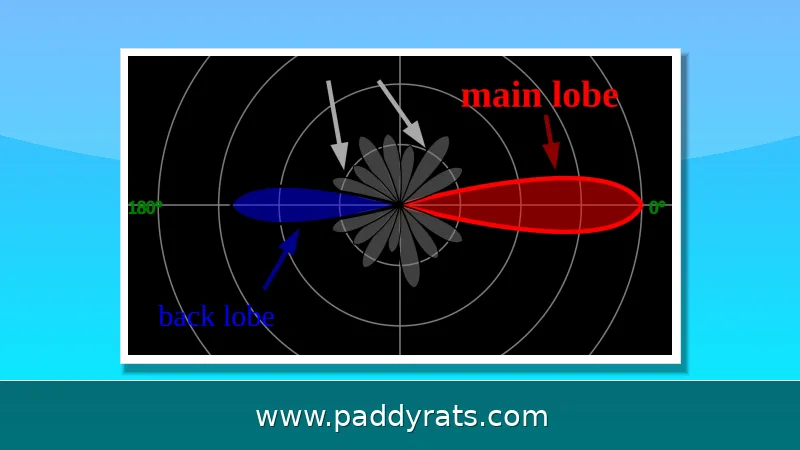
When evaluating a jamming system, buyers should look past headline wattage. Band coverage matters more than raw power, because a target that hops frequencies will simply move around a single-band jammer. Effective systems cover control, video, telemetry, and GNSS bands in one package. Coverage pattern is the next variable: 360-degree coverage is essential for drone defense, while directional antennas suit fixed installations protecting a specific approach corridor.
Activation logic and integration separate professional systems from consumer hardware. Manual activation is fine for a fixed site, but autonomous activation tied to a detection platform like AirGuard reduces response time to seconds. Mounting flexibility, power efficiency, and size also matter, since roughly 66% of stakeholders prioritize compact, energy-efficient models. Finally, verify the legal authority of the operator before deployment, because the most capable system in the world is worthless if using it exposes the agency to federal penalties.
Is it legal to use a signal jammer in the United States?
No. Under the Communications Act of 1934 (47 U.S.C. 301, 302a, 333), the FCC prohibits operating, marketing, or selling devices that block or interfere with authorized radio communications. Violations carry fines up to $112,500 per incident and potential criminal prosecution. Only authorized government entities, including the Department of Defense, DHS, DOJ, DOE, and the Coast Guard, may legally operate jamming equipment. Private companies and individuals are not authorized unless acting under direct federal authority.
Who can legally operate a drone jammer in the US?
Authorized entities include the Department of Defense and military installations, DHS including CBP and the Secret Service, DOJ and the FBI, the Department of Energy for nuclear facilities, and the Coast Guard for maritime security. The SAFER SKIES Act, part of the FY2026 NDAA, newly authorizes state and local law enforcement after training at the FBI National Counter-UAS Training Center in Huntsville, Alabama, plus correctional agencies meeting federal certification and agencies protecting National Special Security Events.
Frequently Asked Questions
Is it legal to use a signal jammer in the United States?
No. Under the Communications Act of 1934 (47 U.S.C. 301, 302a, 333), the FCC prohibits operating, marketing, or selling devices that block or interfere with authorized radio communications. Violations carry fines up to $112,500 per incident and potential criminal prosecution. Only authorized government entities may legally operate jamming equipment.
How much is the signal jammer market worth?
Estimates vary by research firm. Fortune Business Insights values the market at USD 4.61 billion in 2025, growing to USD 4.98 billion in 2026 and USD 9.27 billion by 2034 at 8.1% CAGR. Coherent Market Insights estimates USD 1.8 billion in 2026 reaching USD 3.6 billion by 2033 at 10.4% CAGR.
How do signal jammers work?
Jammers transmit high-powered RF signals on the same frequencies used by target devices, raising the ambient noise floor so receivers cannot complete handshakes or maintain links. Techniques include spot, sweep, and barrage noise jamming, plus repeater jamming such as DRFM that alters and re-transmits received radar energy.
Who can legally operate a drone jammer in the US?
Authorized entities include the Department of Defense, DHS including CBP and the Secret Service, DOJ and FBI, the Department of Energy for nuclear facilities, and the Coast Guard. The SAFER SKIES Act (FY2026 NDAA) newly authorizes state and local law enforcement after FBI National Counter-UAS Training Center training, plus correctional agencies and NSSE-protecting agencies.