Building a homemade signal jammer is not a gray area in the United States: federal law bans operating, marketing, or selling jamming gear that interferes with authorized radio communications. Here is how FCC enforcement, penalties, and the narrow legal exceptions actually work.
What Is a Homemade Signal Jammer and How Does It Work?
A homemade signal jammer is basically a DIY radio transmitter that drowns out the signals other devices depend on. It doesn't block a phone or a drone directly. What it actually does is blast RF noise on the same frequencies the target is using, so the real signal shows up too weak to be decoded. That's why a jammed phone drops to zero bars: the interference hits the downlink coming from the tower, and at that point the handset just can't hear the network anymore.
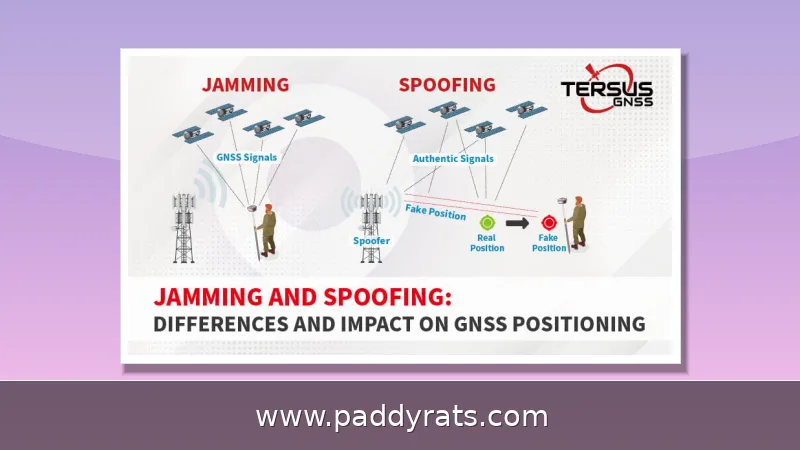
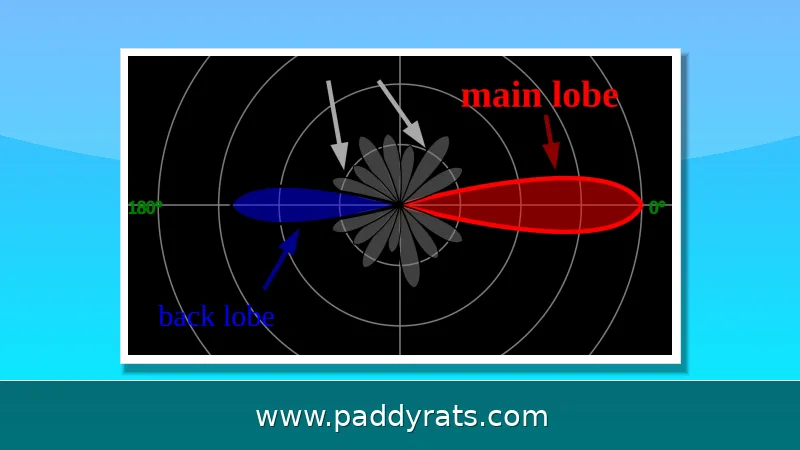
The parts list isn't anything fancy. A typical DIY cell phone jammer circuit comes down to three main components: an RF amplifier, a voltage controlled oscillator, and a tuning circuit. Most people set the oscillator somewhere around 450 MHz—a band tied to older cellular systems—and plenty of project write-ups claim it can block signals within roughly 100 meters. Sounds impressive, right? But here's the thing: all it's really doing is dumping noise across a chunk of spectrum. There's nothing precise or surgical about it. Commercial drone jammers, on the other hand, are built to go much broader. Instead of targeting a single band, they cover 433 MHz, 900 MHz, 1.2 GHz, 1.5 GHz, 2.4 GHz, and 5.8 GHz, plus GNSS bands like GPS, GLONASS, Galileo, and BeiDou. Drone jammer guns project a cone of about 15 to 30 degrees—narrow enough to aim at one aircraft, but wide enough that anything else caught in that cone gets knocked out too. The usual drone response is to return home or land.
Terminology matters when you start researching this stuff, because vendors and regulators almost never use the same words for the same hardware. A manufacturer chasing search traffic might call its product a "signal blocker," a "signal silencer," or something even friendlier like a "text stopper," while the FCC and Canadian regulators just call it a jammer — a device that interferes with authorized radio communications, which federal law prohibits operating, marketing, or selling. The vocabulary branches out depending on what's being targeted: GPS jammer, cell phone jammer, drone jammer, RF jammer. Then you get to the government side, where the exact same technology reappears as CUAS, short for counter uncrewed aerial systems, along with technical labels like noise jamming and protocol jamming. Two jammers may differ in frequency, power, and packaging, but the underlying physics never change: they transmit RF noise on the same frequencies a target device relies on, overpowering the original signal. Neither does the legal exposure. In fact, that marketing language is often the first clue that a seller is trying to distance an illegal product from its obvious purpose, which is why I treat every one of those friendly-sounding terms as a red flag the moment I see it aimed at ordinary consumers.
Is Building a Signal Jammer Legal Under Federal Law?
Federal law is pretty unforgiving on this one: operating, marketing, or selling any jamming equipment that interferes with authorized radio communications is illegal, full stop. The rule comes from the Communications Act of 1934 — specifically 47 U.S.C. 301, 302a, and 333 — and the FCC has been blunt that jamming devices can't be operated, marketed, or sold anywhere in the United States. But here's the part people usually gloss over: just owning one isn't automatically a crime in every situation. It's the use that crosses the line. That distinction tends to catch hobbyists off guard, because a lot of them figure that messing around with a homemade device in a private garage or out on some rural property keeps them safely out of reach of federal regulators. It doesn't. Building a jammer for your own experimentation might not trigger charges on its own, but the second it goes live and starts overpowering licensed signals — even for a moment, even on your own land — you're in violation territory.
The short answer: the law cares much less about what you do at your workbench than about what happens the moment you flip the power switch. Putting a jammer together for yourself might not get you in trouble as long as the thing stays off, but the second it starts transmitting, you've broken the law. Selling the plans, the kit, or a finished unit is a separate offense, and it's just as prohibited. The FCC treats that as marketing, which makes a homemade signal jammer illegal both to build for yourself and to sell in any form. And here's the part that's easy to miss: these devices can't tell an annoying robocall apart from a 911 call. A transmitter strong enough to silence a nuisance call will just as happily silence emergency traffic, which is exactly why the FCC's jammer enforcement page describes them as a public safety threat rather than some hobbyist curiosity.
I've spent my fair share of time lurking on DIY forums, so I understand the appeal. The Arduino and Instructables crowd is genuinely talented, and if you're just trying to get a handle on how RF circuits work, a jammer can look like any other soldering project. But here's the catch: the law doesn't care how skilled you are or what your reasons were. Under the Communications Act of 1934, the only thing that matters is whether your device interferes with authorized radio communications — and a homemade jammer that actually works does exactly that by definition, whether it's sitting on your workbench or running in your car. Intent, craftsmanship, curiosity — none of it carries any weight in that analysis. Even a low-power build that barely reaches across your living room counts as an interfering device the moment it transmits on protected frequencies. That's why "I was just experimenting" has never held up as a defense.
FCC Enforcement: Fines, Penalties, and Criminal Risk
Penalties for running a homemade jammer ramp up fast, and they don't stay in their own lane—they pile on top of each other. Under the Communications Act, one violation alone can cost you up to $112,500, and that's before the government even decides whether to bring criminal charges. Fines aren't the FCC's only tool, either: the agency can seize your equipment outright, so you can't just pay a ticket and keep your setup running. Consumer-facing sources like Cellbusters frame the typical U.S. penalty differently, pointing to fines of up to $11,000, confiscation of the illegal gear, and criminal penalties that can include jail time. Those two numbers aren't really in conflict—they just come from different enforcement tracks. The $112,500 figure is the statutory ceiling Congress wrote into law, while first-time administrative actions, which is what most individuals actually run into, usually land far lower. In other words, that max is what's legally on the table, not what every case ends up costing.
| Source | Stated U.S. Penalty | Enforcement Track |
|---|---|---|
| Communications Act (47 U.S.C. 301, 302a, 333) | Fines up to $112,500 per incident; potential criminal prosecution; equipment seizure | Statutory maximum |
| Cellbusters | Fines up to $11,000; seizure of unlawful equipment; criminal sanctions including imprisonment | Practical, first-time administrative actions |
Enforcement isn't just some abstract threat sitting in a statute book. The FCC has actually gone after people — firing off warning letters to retailers and hitting individuals with fines when they kept selling or operating jammers after being told to stop. And those numbers climb with every repeat offense. Here's the part that catches DIY builders off guard: every single transmission can be counted as its own incident. Leave a homemade device running for a few weeks and you're not looking at one violation — you're looking at thousands of them stacking up. That's how a $112,500-per-incident figure turns into something life-altering. And if you're sitting there weighing a homemade build against a store-bought unit, thinking the DIY route might somehow fly under the radar, understand that the penalty structure doesn't care which one you chose. A jammer is a jammer in the FCC's eyes, whether it came from a kit, a breadboard, or a box off a website.
People who build jammers get caught way more often than they expect. Usually the first clue is something subtle—a dropped call, a GPS that all of a sudden can't get a fix, or Wi-Fi dying the moment someone switches a device on. Once that happens, a spectrum analyzer can confirm the interference is deliberate rather than just a random outage, because it shows exactly where the RF energy is spiking. The catch is that these tools aren't plug-and-play. Reading a spectrum display properly takes real training, and misreading it can send an investigation off in the wrong direction. That gap helps explain why consumer apps claiming to detect jammers are still largely unproven—most of them are just guessing, not actually measuring anything. Cell phone detectors, on the other hand, are a different story. They're legal in the United States, and that legality has turned them into a familiar sight at venues, schools, and other facilities that want to catch unauthorized transmissions without breaking the law themselves.
Who Can Legally Operate Jammers in the United States?
In the United States, the list of who can legally run a jammer is short, and it's basically all federal. The Department of Defense is on it, along with the Department of Homeland Security — meaning agencies like CBP and the Secret Service. Then there's the Department of Justice, which operates through the FBI, plus the Department of Energy for nuclear facilities and the Coast Guard for maritime security. Their authority doesn't come from some general permission slip; it's rooted in statutes tied to national security, federal property, and critical infrastructure. In other words, this isn't a privilege that exists for anyone's everyday convenience.
Private companies, individual property owners, and private security firms are not authorized unless they are contracted by an authorized agency. That means a restaurant owner cannot jam diners' phones, a landlord cannot silence a tenant's cellular service, and a private event organizer cannot block drones over a venue on their own authority. The exception is narrow and flows from the agency, not from the property.
The table below summarizes who holds authority and under what conditions, based on FCC and SAFER SKIES Act material.
| Operator | Authorized? | Basis |
|---|---|---|
| Department of Defense | Yes | Federal national security authority |
| DHS (CBP, Secret Service) | Yes | Federal protective missions |
| DOJ (FBI) | Yes | Federal law enforcement |
| Department of Energy | Yes | Nuclear facility protection |
| Coast Guard | Yes | Maritime security |
| State and local police | Conditional | After FBI counter-UAS training |
| Private companies and individuals | No | No statutory authorization |
Correctional facility security agencies that meet federal certification also qualify, as do agencies protecting National Special Security Events and SEAR-rated events such as the FIFA World Cup 2026. Everyone else is on the wrong side of the line, regardless of how legitimate their security concern feels.
Drone Jammers and the SAFER SKIES Act
Drone jamming is where the legal landscape has moved fastest. The SAFER SKIES Act, enacted through the FY2026 NDAA, extends counter-drone authority to state and local law enforcement, but only after training at the FBI's National Counter-UAS Training Center in Huntsville, Alabama. Training is the gate, not a formality, and untrained departments remain unauthorized even for obvious drone threats over public events.
The same law covers agencies protecting National Special Security Events and SEAR-rated events, which is why major sporting and political gatherings now have a lawful path to counter-drone operations. Vendors have rushed into that space. Airsight's Smart and Autonomous Jammer advertises 360-degree coverage out to 1.9 miles with manual and automatic modes, mounting on fixed positions, tripods, or vehicles. Jammer Master sells a Drone UAV Signal Jammer JM004 for $2,399.99 alongside handheld units like the 4G Phone Jammer JM021 at $520.00, the Handheld WiFi Bluetooth Jammer JM012 at $569.99, and the Handheld Mobile Phone Jammer JM018 at $699.00.
Buying that hardware as a private citizen does not confer authority. The FEMA C-UAS Grant Program even prohibits purchasing weapons with grant funds, a reminder that federal money comes with federal constraints. The market itself is real and growing: Dataintelo values signal jammers at $2.8 billion in 2025 and projects $5.6 billion by 2034 at an 8.1% CAGR, driven largely by institutional and government demand rather than consumer sales.
Canada's Radiocommunication Act: Prohibitions and Penalties
Canada takes an equally firm stance. Jammers are prohibited under sections 4, 9, 10, and 15.1 of the Radiocommunication Act, and ISED's guidance as of January 2025 confirms that prohibition applies to possession, use, manufacture, distribution, and sale. There is no consumer exemption, and cross-border buyers should assume enforcement follows the device rather than the buyer's intent.
ISED penalties are steep and tiered. Individuals face administrative monetary penalties up to $25,000 for a first violation and $50,000 for subsequent violations, while businesses face up to $10 million for a first violation and $15 million for subsequent violations, plus device seizure. Ministerial exemptions under subsection 14(1) exist for national security and public safety, but they are reviewed case by case and are not available to private parties on request.
For comparison, the United Kingdom has allowed law enforcement, intelligence agencies, and prisons to use signal jammers since 2012 under strict regulation, and Brazil, New Zealand, and Sweden have considered exceptions for correctional facilities. The pattern is consistent: jamming is treated as a government capability, and private use is prohibited almost everywhere it has been litigated.
Why Cell Phone Jammers Are Illegal and What They Break
Cell phone jammers are illegal primarily because they block access to 911 emergency calls and interfere with public safety communications. That is not a side effect; it is the core harm regulators cite. When a jammer overpowers cellular downlink signals, everyone in range loses the ability to reach emergency services, including people who never chose to be part of the experiment.
The damage extends well beyond phones. Jammers can interfere with aviation navigation, ships, trains, Wi-Fi, and GPS, which is why aviation and maritime authorities treat them as safety hazards rather than mere nuisances. In the United States, use or marketing may lead to fines up to $11,000, equipment seizure, and imprisonment, and the FCC can pursue the higher statutory maximum of $112,500 per incident in serious cases.
I keep coming back to the same conclusion after reviewing the enforcement record: the technical challenge of building a jammer is trivial compared with the legal and safety consequences of turning it on. If your goal is privacy, quiet, or drone defense, there are lawful alternatives, and none of them involve radiating noise across licensed spectrum.
Risks, Limitations, and Lawful Alternatives
The risks of homemade jamming go beyond fines. Blocking 911 calls, disrupting public safety radio, and interfering with aviation or rail systems can create liability that no hobbyist budget can absorb. Detection is also improving, and a dropped signal is often the first clue that something is transmitting where it should not be. Spectrum analyzers remain the reliable tool, though they demand expertise; consumer detection apps are largely unproven.
If you have a legitimate problem, the lawful path runs through the FCC for interference complaints, through authorized agencies for counter-drone incidents, and through carriers for cellular coverage issues. Property owners can use legal tools such as cell phone detectors, which are permitted in the United States, and physical shielding in limited contexts, but not active jamming.
For anyone still tempted by the DIY route, the arithmetic is simple: a working homemade jammer is a federal violation the moment it transmits, and the exceptions belong to agencies, not individuals. This article is informational and does not constitute legal advice; consult a qualified attorney for your specific situation.
Frequently Asked Questions
Is it legal to build a homemade signal jammer in the United States?
Federal law prohibits the operation, marketing, or sale of any jamming equipment that interferes with authorized radio communications. Under the Communications Act of 1934 (47 U.S.C. 301, 302a, 333), violations carry fines up to $112,500 per incident and potential criminal prosecution. Possession alone is not always illegal, but use is, so building a working device puts you one transmission away from a violation.
Who can legally operate a drone jammer in the United States?
Authorized users include the Department of Defense, DHS, DOJ, Department of Energy, and Coast Guard. Under the SAFER SKIES Act (FY2026 NDAA), state and local law enforcement qualify only after training at the FBI's National Counter-UAS Training Center in Huntsville, Alabama. Private companies, property owners, and individuals are not authorized, even when they face a genuine drone problem.
What are the penalties for using a jammer in Canada?
Jammers are prohibited under sections 4, 9, 10, and 15.1 of the Radiocommunication Act. ISED can impose administrative monetary penalties up to $25,000 for a first individual violation and $50,000 for subsequent ones, and up to $10 million for businesses on a first violation, plus device seizure. Ministerial exemptions exist only for national security and public safety and are reviewed case by case.
Why are cell phone jammers illegal?
Jammers overpower cellular signals, blocking access to 911 emergency calls and interfering with public safety communications. They can also disrupt aviation navigation, Wi-Fi, and GPS, which turns a local nuisance into a safety hazard. In the U.S., use or marketing may lead to fines up to $11,000, equipment seizure, and imprisonment, with higher statutory maximums available to the FCC.