Signal jammers are illegal to operate, import, market, or sell in the US, and the FCC can impose six-figure forfeitures per violation. Here is a practical compliance checklist for retailers, importers, fleet operators, and buyers.
What Is a Signal Jammer and How Does It Work?
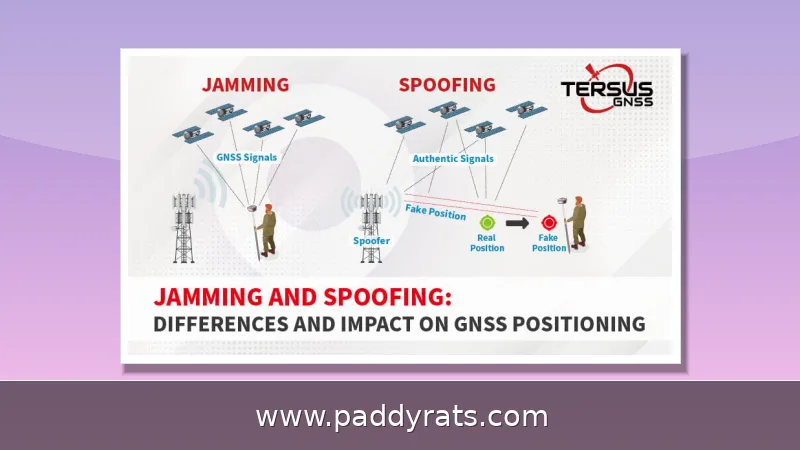
A signal jammer is a device that deliberately transmits RF energy on the same frequencies your phone, GPS receiver, Wi-Fi router, or drone relies on — basically a localized denial-of-service attack against those signals. GPS receivers are hit hardest here. They run on incredibly faint microwave signals from satellites about 12,000 miles up, so even a small jammer putting out stronger short-range RF noise can overwhelm them without much effort. And some models don't just sit on one frequency; they hop around or go after several GNSS constellations at once, like GPS, GLONASS, and Galileo.
The words you use to describe these products matter more than most sellers realize. Regulators don't just read spec sheets; they read listings, ads, and packaging, and they treat marketing language as evidence of intent. That's why the same underlying hardware shows up under so many labels: signal jammers, signal blockers, GPS jammers, GPS blockers, telematics jammers, cell phone jammers, mobile phone jammers, text stoppers, signal silencers, Starlink jammers, satellite signal blockers, drone jammers, drone jammer guns, counter-UAS (CUAS) devices, and even the softer-sounding "anti-jammer device." Each phrase signals a slightly different use case, but from an enforcement standpoint they all point to the same thing: a device built to interfere with licensed wireless services. One category sits apart, though. Spoofing doesn't block a signal at all. Instead, a spoofer imitates legitimate satellite transmissions and feeds false location data to the receiver, so the target device keeps working normally while quietly reporting the wrong position. That distinction changes how the device is regulated, how it's detected, and how investigators build a case, which is exactly why compliance teams should never treat these terms as interchangeable.
Why Are Signal Jammers Illegal in the US and Canada?
In the US, the FCC hasn't left any room for interpretation here: jamming devices are not authorized under any circumstances, and operating, marketing, importing, or selling them is illegal. That blanket prohibition matters for a pretty fundamental reason — these devices can't get FCC equipment certification at all, since the agency's equipment authorization process offers no path for them to pass. The legal foundation comes from a few statutes working together. Under 47 U.S.C. § 333, willfully or maliciously interfering with licensed radio communications is prohibited, which is exactly what a jammer does by design. Section 301 of the same title requires an FCC license to transmit radio signals, and jammers transmit without one. And 47 U.S.C. § 302a, along with 47 CFR Part 2, lays out the equipment authorization and marketing rules that any RF device sold in the US has to satisfy — rules that jammers, by their very nature, can never meet. | Statute / Rule | What It Covers | |---|---| | 47 U.S.C. § 333 | Prohibits willful or malicious interference with licensed radio communications | | 47 U.S.C. § 301 | Requires an FCC license to transmit radio signals | | 47 U.S.C. § 302a + 47 CFR Part 2 | Govern equipment authorization and marketing rules |
Canada is just as strict, and the rules up there are every bit as unforgiving. Under the Radiocommunication Act — as it stands in January 2025 — section 2 spells out the legal definition of a jammer, while subsection 4(4) bans pretty much every route you could take to circulate one: installation, use, possession, manufacture, importation, distribution, lease, offering for sale, or sale itself. Subsection 9(1)(b) goes further by prohibiting interference with licensed radio communications unless you're holding a Ministerial Exemption, and subsection 14(1) leaves room for those exemptions to be handed out case by case. ISED handles enforcement, and the penalties climb quickly. For an individual, a first violation can run up to $25,000, then jump to $50,000 for any violation after that. Businesses are looking at much bigger numbers: up to $10 million for a first violation and up to $15 million for subsequent ones. So in practice, the whole "just don't get caught" strategy doesn't really hold up north of the border either.
| Violation | Individual | Business |
|---|---|---|
| First violation | Up to $25,000 | Up to $10 million |
| Subsequent violation | Up to $50,000 | Up to $15 million |
Licensed spectrum holders get that protection for a reason: the FCC grants them exclusive use of specific frequencies, and if anyone could just drown those signals out, the whole system of authorized radio communications would fall apart. Starlink is a good example. Its user terminals rely on licensed Ku- and Ka-band spectrum, and SpaceX holds FCC authority to operate its non-geostationary satellite (NGSO) system. So every dish and terminal is transmitting and receiving under a formal license, not in some unregulated open band. Deliberately interfering with those links isn't a gray area or a technicality — it's a direct regulatory violation, and regulators treat it seriously, whether the disruption comes from a store-bought jammer or something someone built in their garage.
FCC Enforcement: Warnings, Fines, and Seizures
The FCC Enforcement Bureau is the part of the agency that actually goes after jamming. When interference complaints come in, it opens investigations, and its options range from warning letters to monetary forfeitures to simply seizing equipment. Those forfeitures can reach six figures per violation, and in serious cases, criminal penalties can come into play too—especially when jamming disrupts public safety or licensed commercial services. It's also worth understanding that enforcement doesn't stop at the person physically pressing the button. The FCC has gone after retailers, importers, and online platforms whose listings promise to jam licensed services, treating the sale and marketing of these devices as a violation in its own right. In other words, if you're selling, shipping, or advertising jammers, you're exposed—not just the end user.
| Enforcement Action | What It Means |
|---|---|
| Warning | Formal notice; often the first step before penalties escalate |
| Forfeiture | Monetary penalty that may reach six figures per violation |
| Seizure | Equipment can be confiscated by the agency |
| Criminal penalties | Possible in serious cases, particularly interference with public safety or licensed commercial services |
| Who's exposed | Not just users—retailers, importers, and platforms listing jammers |
That enforcement posture is exactly why the marketing copy on a product page can matter as much as the hardware itself. Under 47 U.S.C. § 302a and 47 CFR Part 2, jammers can't receive FCC certification, and the FCC has made it abundantly clear that these devices are not authorized under any circumstances — operating, marketing, importing, or selling them is illegal. So when a listing calls a device a "Starlink jammer" or "satellite signal blocker," the seller has basically advertised an unapproved RF product before a single unit even ships. In many cases, that alone is enough for the Enforcement Bureau to open a file. Canada takes a similarly hard line: the Radiocommunication Act prohibits installing, using, possessing, manufacturing, importing, distributing, leasing, offering for sale, or selling jammers, and the penalties climb steeply for repeat offenders. The table below summarizes the main penalty exposure by jurisdiction.
| Jurisdiction | Legal Basis | Penalty Exposure |
|---|---|---|
| United States (FCC) | 47 U.S.C. §§ 301, 302a, 333; 47 CFR Part 2 | Forfeitures may reach six figures per violation; criminal penalties can apply in serious cases |
| Canada (ISED) | Radiocommunication Act ss. 4, 9, 10, 15.1 (January 2025) | Individuals: up to $25,000 first violation, $50,000 subsequent; businesses: up to $10 million first, $15 million subsequent |
Signal Jammer Compliance Checklist for Retailers, Importers, and Platforms
What you're responsible for depends a lot on where you sit in the supply chain, so the checklist below breaks those duties down into the concrete steps each party should take before a product ever reaches a customer. Retailers have the most immediate exposure. They should avoid listing Starlink jammers, satellite signal blockers, or anything along those lines, since the FCC doesn't authorize or allow marketing of these devices under any circumstances—and the listing language alone can be enough to trigger an enforcement action. Importers have a related but separate obligation: they shouldn't ship unauthorized RF devices into the United States to begin with. Jammers fail equipment authorization under 47 CFR Part 2, which means they can't legally cross the border for sale. Platforms are one layer removed, but they're not off the hook. They need to actively monitor third-party listings and take down products that promise to jam licensed services—otherwise they risk becoming a distribution channel for prohibited gear.
Users should operate only authorized terminals and accessories — in practice, that means sticking with equipment that carries proper FCC certification and avoiding anything marketed as a "signal silencer" or similar workaround, since even possessing an unauthorized device can invite scrutiny. Satellite operators, meanwhile, need to treat interference as a documentation problem as much as a technical one: log each incident with timestamps and location data, preserve the raw spectrum readings before they're overwritten, and loop in the FCC's Enforcement Bureau rather than trying to resolve it quietly. Fleet operators have the most to lose financially, because a GPS blocker hidden in one vehicle can throw off dispatch, hours-of-service logging, and telematics for an entire region — so it pays to catch the disruption early, before missed deliveries and compliance fines pile up. Notice that all three steps share the same defensive logic. Nobody's asking you to hunt down jammers yourself; the point is to build a paper trail showing good-faith compliance, so that if an interference complaint ever lands on your organization's desk, you can demonstrate you took the rules seriously from day one.
GPS Jammers and Fleet Compliance Risks
GPS jammers overpower weak satellite signals with stronger short-range RF noise, so telematics hardware simply cannot process satellite data. Fleets lose location visibility, safety oversight, and compliance data in one stroke. That gap can lead to audits, fines, and unreliable closest-unit dispatch decisions, because dispatch software may route the nearest truck based on a stale or spoofed position. Resgrid estimates that signal jammers undermine 25% of commercial and public safety tracking systems in major US and EU markets, costing an estimated $2.5 billion annually.
Detection is often the hardest part. Common jamming indicators include an inability to transmit or receive in areas with otherwise good coverage, and a pattern where some devices are affected while others nearby are not. Moving 10 to 20 feet away frequently restores service, because jamming range is usually no more than about 30 square feet for a portable unit. Fleet operators should log these incidents with timestamps and locations so they can build an evidence trail.
Drone Jammers and Counter-UAS Rules
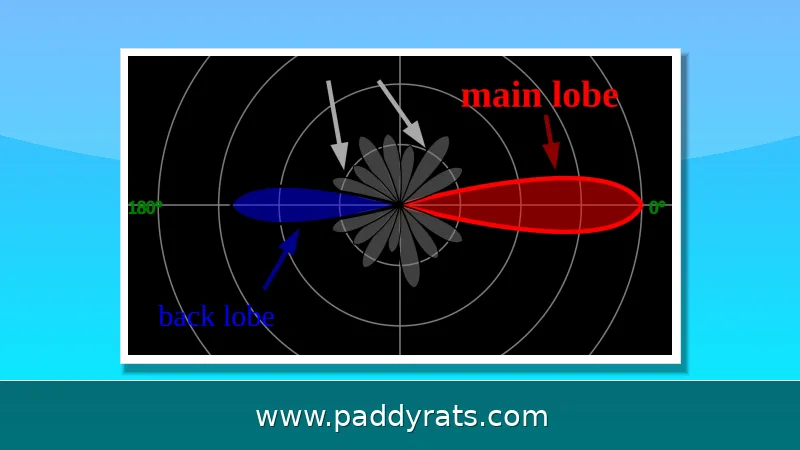
Drone jammers typically operate at 2.4GHz or 5.8GHz and project a cone of roughly 15 to 30 degrees, with heavy-duty models reaching almost a mile. They sit inside the broader counter-UAS (CUAS) category, which also includes detection radars, RF analyzers, and spoofing systems. The legality question is separate from the technical capability: in the United States, operating a drone jammer remains prohibited regardless of how the manufacturer markets it.
Prisons and critical infrastructure sites are the most common buyers evaluating these systems, and their requirements go well beyond raw power. They need weather-resistant designs with rainproof air intake vents, bottom-mounted exhaust vents and connectors, and 24/7 operation supported by aluminum heat sinks and fans. Independent switched-mode power supplies (SMPS) per RF module convert AC 210V-240V to DC 28V, and IoT control runs over RJ45 Ethernet or 433MHz magnetic antennas.
Technical Requirements and Testing Standards
Range depends on output power, operating frequency, antenna performance, and environmental conditions. Higher frequencies tend to have shorter propagation distances, while lower frequencies reach farther. Devices should limit output power, operate within specified frequency ranges, and demonstrate immunity to external interference. Testing methods include emission measurement with calibrated equipment, spectrum analysis, and immunity testing, and testing should be performed by authorized or regulatory bodies.
Relevant standards include MIL-STD-461, the IEC 61000 series, CISPR standards such as CISPR 11 and CISPR 22, and FCC rules. The table below maps the practical buying criteria that correspond to those technical parameters.
How Do You Choose a Signal Jammer?
Frequency range is the first filter: wider coverage handles phone, Wi-Fi, and GPS, and some models span 20 MHz to 6 GHz. Power output in watts drives realistic expectations. A 5-watt jammer can disrupt signals in a circle with a radius of about 50 meters, but in dense urban areas with many base stations, a 50W jammer typically covers only around 50 meters, while drone jamming can reach several hundred meters to 1 kilometer.
Portability, built-in rechargeable batteries, and ease of setup round out the checklist. Buyers should also verify that the device is authorized for their jurisdiction before purchase, because the technical specifications are meaningless if the product cannot legally be operated, imported, or sold where it will be used.
Market Context: Why Jamming Demand Keeps Rising
Market research firms consistently project growth in this category. Technavio estimated the signal jammer market would increase by USD 1.08 billion at a 5.66% CAGR between 2023 and 2028 in a 169-page report published in May 2024. Research and Markets valued the market at USD 2.37 billion in 2026, projecting USD 3.36 billion by 2030 at a 9.1% CAGR, up from $2.16 billion in 2025. Strategic Market Research put 2025 at USD 2.85 billion with a projected USD 4.64 billion by 2032 at a 7.2% CAGR.
Other estimates vary but point the same direction: Dataintelo reported $2.8 billion in 2025 with a projected $5.6 billion by 2034 at an 8.1% CAGR, Reanin cited USD 913.05 million in 2025 rising to USD 1209.32 million, and Fortune Business Insights sized the adjacent anti-jamming market at USD 5.43 billion in 2025 with a projected USD 12.97 billion by 2034. Resgrid also noted a 150% spike in search queries for cheap anti-jammer solutions since October 2025, which suggests demand is being driven as much by interference victims as by would-be jammers.
Key Takeaways for Compliance Teams
The practical takeaway is that jamming is a strict-liability area in both the United States and Canada. There is no FCC certification path for a jammer, no legitimate consumer use case that overrides 47 U.S.C. § 333, and no marketing wording that makes an unauthorized RF device legal. Retailers and platforms should audit listings now, importers should verify equipment authorization before shipping, and fleet operators should treat unexplained telematics outages as potential interference incidents worth documenting.
For organizations that genuinely need to protect against jamming rather than deploy it, the compliant path runs through detection, mitigation, and coordination with regulators, not through purchasing a blocker. Documenting incidents, preserving spectrum data, and reporting to the FCC or ISED creates a defensible record and helps enforcement target the actual source of interference.
Frequently Asked Questions
Are signal jammers legal in the United States?
No. The FCC states that jamming devices are not authorized under any circumstances, and it is illegal to operate, market, import, or sell them. Jammers cannot receive FCC equipment certification. Penalties may reach six figures per violation, and criminal penalties can apply in serious cases involving interference with licensed or public safety communications.
What should a signal jammer compliance checklist include for retailers?
Retailers should avoid listing terms like Starlink jammers or satellite signal blockers, since marketing language alone can attract FCC scrutiny. Importers should not ship unauthorized RF devices into the United States, and platforms should remove third-party listings that promise to jam licensed services. Documenting these review steps helps demonstrate good-faith compliance if an enforcement inquiry arrives.
How do GPS jammers affect commercial fleets?
GPS jammers overpower weak satellite signals with stronger short-range RF noise, so telematics hardware cannot process satellite data. Fleets lose location visibility, safety oversight, and compliance data, which can lead to audits, fines, and unreliable closest-unit dispatch decisions. Resgrid estimates jammers undermine 25% of commercial and public safety tracking systems in major US and EU markets, costing about $2.5 billion annually.
What frequencies should a jammer cover?
Coverage depends on the target. Commercial jammers commonly cover GSM, WiFi, and GPS, with wider models spanning roughly 20 MHz to 6 GHz. Prisons also need 2.4GHz, 5.8GHz, and GNSS bands for drones, and local 3G, 4G, and 5G bands vary by region. Remember that coverage capability does not equal legal authorization in your jurisdiction.