Building or using a homemade signal jammer is a federal crime in the US, and Canada bans jammers outright. Here is what the FCC and ISED actually enforce, what the fines run, and who is legally allowed to jam.
What Are DIY Signal Jammers and How Do They Work?
At its core, a signal jammer is just a radio transmitter that floods a target frequency with RF noise, which keeps any nearby device from picking out the real network. And honestly, putting one together yourself doesn't require anything exotic. The classic build comes down to three parts: a voltage controlled oscillator, an RF amplifier, and a tuning circuit that feeds an antenna. If you're curious how it's actually done, Instructables and ElectronicsForU both have hobby guides that walk through drone, Wi-Fi, and 4G builds step by step, and Arduino forums are packed with long threads on GSM versions.
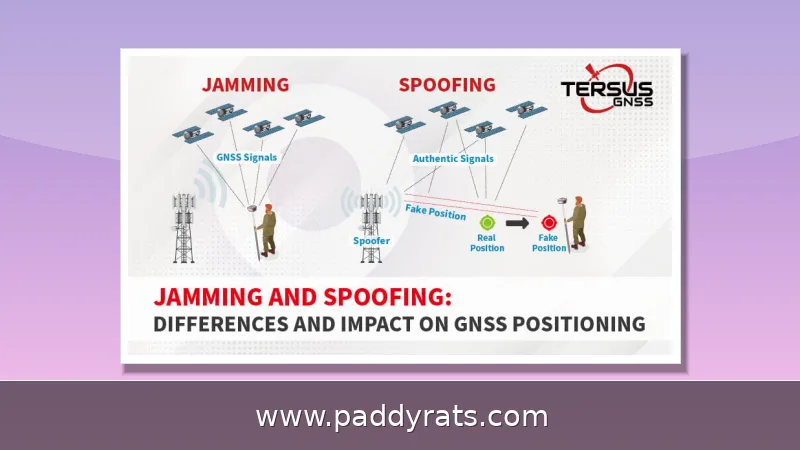
Jamming takes advantage of a pretty basic weakness in how your phone communicates with the network. A cell jammer goes after the downlink signal — that's the tower-to-phone direction — and floods the exact same frequencies your carrier uses, whether that's 700MHz, 800MHz, 900MHz, 1800MHz, 1900MHz, or 2100MHz, with raw RF noise. Since your phone can't distinguish a stronger interfering signal from a legitimate one, it just reads the noise as the network and loses bars. That flood of noise is what actually kills the connection: the downlink signal gets buried, and the handset gives up. GPS jammers operate the same way at 1575MHz, and Wi-Fi jammers do it across 2.4GHz and 5GHz. But here's the catch that makes regulators so nervous — a jammer isn't a precision tool. It broadcasts indiscriminately across entire bands, so the interference spills well beyond your one phone and into authorized radio communications more broadly. Think about a jammer inside a car: the second it powers up, it can also drown out a 911 call from a passenger, a neighbor's Wi-Fi, or GPS signals that feed aviation and public safety systems. Putting one together isn't complicated either — a basic circuit just needs an RF amplifier, a voltage-controlled oscillator, and a tuning circuit — which is exactly why federal regulators treat even homebrew devices as a serious threat.
None of this is top secret, either. The frequency bands jammers go after are listed on public spectrum charts, so anyone with a search engine can look up which ranges a homemade device would need to cover. Here in the US, cell traffic runs on 700MHz, 800MHz, 900MHz, 1800MHz, 1900MHz, and 2100MHz — a spread that carries everything from 2G up to 5G. GPS sits at 1575MHz, and Wi-Fi depends on 2.4GHz and 5GHz. Drone control and video links pile on even more: 433MHz, 900MHz, 1.2GHz, 1.5GHz, 2.4GHz, and 5.8GHz, plus GNSS bands like GPS, GLONASS, Galileo, and BeiDou. That overlap is exactly where the danger lies. A single broadband jammer built for one target can easily spill into police radar, aviation navigation, or 911 emergency calls riding on nearby frequencies — which is why regulators treat these devices as a public safety threat, not some harmless weekend project.
| System | Frequency bands |
|---|---|
| Cellular (2G–5G) | 700MHz, 800MHz, 900MHz, 1800MHz, 1900MHz, 2100MHz |
| GPS | 1575MHz |
| Wi-Fi | 2.4GHz, 5GHz |
| Drone control and video | 433MHz, 900MHz, 1.2GHz, 1.5GHz, 2.4GHz, 5.8GHz |
| GNSS | GPS, GLONASS, Galileo, BeiDou |
Why Are Signal Jammers Illegal Under Federal Law?
In the US, federal law flat-out bans operating, marketing, or selling any jamming equipment that messes with authorized radio communications—and that list covers more than most folks realize. Cellular and PCS signals, police radar, GPS, Wi-Fi: all of it gets the same protection. The FCC spells this out pretty clearly on its jammer enforcement page, which was updated just days ago. Here's the part that catches people off guard: there's no exception for a business trying to keep employees off their phones, a classroom, your own house, or your car. And yes, even building a jammer just for yourself is still illegal, because the violation is the interference itself, not how you got the device. Basically, the moment you transmit RF noise that drowns out licensed communications, you've triggered federal enforcement—doesn't matter who you are or where you flip the switch.
The federal ban here isn't just bureaucratic nitpicking—it's a safety issue. A jammer can't tell the difference between a target and everything else on the same frequency. Build something powerful enough to kill cell service in a single room, and you've also got a device that can block 911 calls, mess with aviation navigation, and knock out the radio channels police, fire, and EMS depend on when things go wrong. That's the logic behind the FCC treating jamming as three distinct violations—operation, marketing, and sale—instead of one blanket offense. It shuts down the obvious workarounds: you can't legally build one for yourself, advertise one, or ship one off to a buyer, and there's no carve-out for a business, a classroom, your house, or your car. Effectively, the rules cover the whole chain of conduct, not just the moment you hit the power switch. The rationale is pretty simple: the radio spectrum is a shared public resource. A jammer that blasts RF noise on the same frequencies as authorized devices doesn't only disrupt whatever it's aimed at—it can degrade any nearby receiver tuned to those bands, whether that's a neighbor's Wi-Fi or a hospital's paging system. Since that interference spreads in every direction, federal law bans the operation, marketing, and sale of any jamming equipment that interferes with authorized radio communications, covering cellular, PCS, police radar, GPS, and Wi-Fi. Where the device gets used, or who's using it, doesn't change anything.
This isn't just a paper warning. U.S. Customs and Border Protection has reported roughly an 830% jump in signal jammer seizures since 2021, and that kind of spike tells you this hardware is no longer just a niche hobbyist curiosity. DHS has also documented jamming devices used in Vermont bank robberies back in June, and jamming equipment showed up in an attempted jewelry store robbery in La Verne, California. These aren't hypotheticals. In each case, the jammer was a crime tool, deployed to knock out alarms, phones, or GPS tracking while the robbery played out. Put the seizure numbers next to the case reports and the takeaway is hard to miss: jammers keep turning up in criminal investigations, which is exactly why federal authorities treat them as more than a technical violation.
What Penalties Do Jammer Violations Carry?
The FCC is pretty blunt about unauthorized jamming: you're risking serious civil fines, having your equipment seized, and criminal charges that can land you in prison. That said, the punishment isn't the same across the board. How much you'll pay, and how hard the government comes after you, depends on the device you're using and the harm it causes. Drone jammers sit at the top of that scale, because interfering with aircraft navigation and control links is a direct threat to human safety. So drone-related violations can run as high as $112,500 per incident, on top of possible criminal prosecution, whereas cell phone jammer violations typically max out at around $11,000.
| Violation Type | Potential Penalty |
|---|---|
| Cell phone jammer | Fines up to $11,000 |
| Drone jammer | Fines up to $112,500 per incident, plus potential criminal prosecution |
| General unauthorized jammer use | Substantial civil penalties, seizure of illegal equipment, criminal sanctions including imprisonment |
| Violation type | Maximum penalty | Additional exposure |
|---|---|---|
| Drone jammer use | $112,500 per incident | Criminal prosecution |
| Cell jammer use | $11,000 | Equipment seizure |
| General jammer operation | Substantial civil penalty | Criminal sanctions, imprisonment |
| Marketing or selling jammers | Prohibited outright | Seizure, civil and criminal action |
There are two things in that table worth slowing down for. First, the drone penalty is counted per incident, not per device or per day. So if a single deployment keeps interfering with communications over and over, each one of those can be treated as its own violation, and the total adds up fast. Second, selling or marketing a jammer is illegal by itself, whether or not anyone ever powers it on. That means the retailer and the buyer can both find themselves in enforcement crosshairs, even if the thing never leaves the box. And don't overlook the hardware: the FCC seizes illegal equipment as part of its enforcement actions, so the financial damage isn't limited to the fine. You lose the device, you lose whatever you paid for it, and you could still owe a civil penalty on top of all that.
Canada is noticeably tougher on jammer violations, and the numbers make that pretty clear. Under the Radiocommunication Act, an individual faces fines of up to $25,000 for a first violation, and that jumps to $50,000 for anything after that. For businesses, the exposure gets a lot steeper: up to $10 million for a first offense and up to $15 million for subsequent ones. Those figures come straight from ISED Canada's compliance page, dated January 2025. What really sets the Canadian approach apart is how far it reaches. The penalties aren't limited to someone caught actually turning a jammer on. They cover a much broader range of acts, including possession, manufacture, importation, distribution, and even offering a jammer for sale. In other words, you can run afoul of the law without ever transmitting a signal.
Who Can Legally Operate a Drone Jammer in the US?
Only a narrow set of federal entities can legally operate drone jammers, and that authority comes from specific statutory missions rather than any kind of general permit. The Department of Defense, the Department of Homeland Security, the Department of Justice, the Department of Energy, and the Coast Guard all fall into this category — each one is a federal counter-UAS authority, meaning its jamming activities are tied to a defined legal purpose. A private company cannot borrow or piggyback on that status, no matter how strong its security concerns might be. The SAFER SKIES Act, folded into the FY2026 NDAA, pushes the pathway further: state and local law enforcement agencies may qualify too, but only after completing FBI training at the National Counter-UAS Training Center in Huntsville, Alabama. In other words, legal jamming in the US is a short, tightly guarded list — and getting on it takes federal authorization or federally supervised training, not a purchase order.
| Authorized Entity | Basis of Authority |
|---|---|
| Department of Defense | Federal counter-UAS authority under statutory mission |
| Department of Homeland Security | Federal counter-UAS authority under statutory mission |
| Department of Justice | Federal counter-UAS authority under statutory mission |
| Department of Energy | Federal counter-UAS authority under statutory mission |
| Coast Guard | Federal counter-UAS authority under statutory mission |
| State and local law enforcement | May qualify under the SAFER SKIES Act (FY2026 NDAA) after FBI training at the National Counter-UAS Training Center in Huntsville, Alabama |
Correctional agencies and the teams that protect National Special Security Events — think presidential inaugurations, State of the Union addresses, and major party conventions — fall under that same authorization umbrella. JIATF-401, the interagency task force coordinating counter-drone efforts, refreshed its guidance in January 2026, and DHS keeps a jamming and counter-UAS page that was last updated on September 3, 2025. Both signal that the rules are being actively tuned, not left to gather dust. Then there's the money: the FEMA C-UAS Grant Program was created specifically to help state and local agencies buy counter-drone capabilities. When the federal government starts writing checks for a technology, you can read it as a pretty clear bet that demand will keep climbing rather than fade.
Vendors don't just sell jammers to anyone off the street — they sell into the exemption space under contract, which is a much narrower lane than it sounds. Airsight's Smart and Autonomous Jammer, for example, delivers 360-degree coverage out to 1.9 miles, with manual and automatic activation, and it can be mounted on fixed positions, tripods, or vehicles. On the detection side, the AirGuard platform and Cellbusters round out the toolkit, giving authorized operators a way to spot interference rather than just create it. But here's the catch that trips people up: suppliers to exempted entities are only exempt in relation to their contractual obligations, and they must be supervised while doing that work. In plain terms, a purchase order sitting in your inbox does not make jamming lawful — the exemption follows the contract and the oversight, not the equipment itself.
Are Signal Jammers Legal in Canada?
No — and Canada’s approach is actually stricter than what most people assume. Jammers are prohibited under sections 4, 9, 10, and 15.1 of the Radiocommunication Act, and the wording casts a remarkably wide net. It doesn’t just ban flipping the switch: installation, use, possession, manufacture, importation, distribution, lease, offer for sale, and sale are all covered. In practice, that means simply having a jammer sit unpowered in a drawer could be enough to trigger liability, since possession itself is on the list. For readers used to the US framework, where the FCC focuses on operation, marketing, and sale, this is a meaningfully broader prohibition — one that reaches owners, sellers, and importers alike, even before any device interferes with a single signal.
| Prohibited Activity | Covered Under the Radiocommunication Act? |
|---|---|
| Installation | Yes |
| Use | Yes |
| Possession | Yes |
| Manufacture | Yes |
| Importation | Yes |
| Distribution | Yes |
| Lease | Yes |
| Offer for sale | Yes |
| Sale | Yes |
Canada’s jamming ban does come with a narrow escape hatch: ministerial exemptions. But these aren’t blanket waivers you can apply for because jamming is inconvenient in your building. Under the Radiocommunication Act, the Minister can authorize specific jamming activities, and in practice those exemptions are handed out case by case, reserved for national security and public safety operations. Think federal agencies, not a landlord trying to stop tenants from making calls, and not a retailer hoping to kill cell signals at checkout. There’s also a supply-side wrinkle: companies that sell or lease jamming gear to an exempted entity are only covered in relation to their contractual obligations, and their work has to be supervised. So if you import hardware that happens to jam—say, a cheap amplifier or antenna kit from overseas—the burden is on you to show an exemption actually applies to your situation. ISED Canada’s enforcement page is the reference point for that argument, and it’s worth reading before you assume anything.
For shoppers on either side of the border, the bottom line doesn’t really change. Call it a privacy protection device, a signal silencer, or a text stopper — it’s still a jammer, and regulators see right through the rebranding. That matters because the products themselves are identical: each one transmits RF noise on the same frequencies as the phones, GPS units, or Wi-Fi gear it’s meant to knock out, whether that’s 700 MHz to 2100 MHz for cellular, 1575 MHz for GPS, or 2.4 GHz and 5 GHz for Wi-Fi. Under US federal law, the FCC prohibits the operation, marketing, and sale of this entire category, and Canada bans jammers outright under sections 4, 9, 10, and 15.1 of the Radiocommunication Act. So a clever name on the box won’t shield a buyer from enforcement — Canadian penalties alone can reach $25,000 for a first individual violation and $50,000 for repeat offenses, while businesses face up to $10 million and $15 million respectively. Enforcement agencies treat the synonyms as one and the same product category.
How Can You Detect a Jammer in Your Home or Business?
Detection starts with symptoms, not gadgets. Signs of a Wi-Fi jammer include bad signal, disconnections, high latency, and packet loss, while wired connections keep working normally. Signs of a cell jammer include loss of service on multiple devices at once and signal fluctuations that do not match your usual coverage. If every phone in the room drops at the same moment, that pattern is the tell.
For confirmation, a spectrum analyzer can detect jammers by showing energy where it should not be. Consumer apps are largely unproven and should not be treated as evidence. If you suspect jamming, document the times, the affected devices, and the location, then report it to the FCC rather than trying to counter-jam, which would create a second violation.
Businesses have a legitimate alternative path. Wi-Fi problems are usually interference, not jamming, and can be solved with channel planning, wired backhaul, and better access point placement. Physical security incidents should go to law enforcement, since the DHS-documented cases in Vermont and La Verne show that jammers are increasingly a crime tool rather than a prank. Legal alternatives exist; counter-jamming is not one of them.
What Legal Alternatives Exist to Jamming?
For cell coverage problems, a carrier-approved signal booster is the lawful route. Boosters are licensed, registered with the carrier, and designed to amplify legitimate service rather than drown it out. For Wi-Fi, channel management and wired backhaul solve most complaints. For drones, FAA-registered counter-UAS services operated by authorized agencies are the only compliant answer, and private property owners should contact law enforcement.
For anyone tempted by a DIY build, the cost comparison is not close. Jammer Master lists the JM021 at $520.00, the JM004 at $2,399.99, the JM012 at $569.99, and the JM018 at $699.00, which is cheap next to a $112,500 drone jammer fine or an $11,000 cell jammer penalty. Add equipment seizure and the possibility of imprisonment, and the hardware is the least expensive part of the decision.
I would also flag the sourcing risk. Guides circulating on Reddit's r/hacking and r/Hacking_Tutorials, along with YouTube builds for 2.4GHz and multi-frequency units, describe the electronics accurately but not the consequences. The FCC's position is that operation, marketing, and sale are all prohibited, and Canada's ISED page says the same about possession. Reading the regulator's page before the build guide is the only order that makes sense.
Frequently Asked Questions
Is it illegal to build your own signal jammer in the United States?
Yes. Federal law prohibits operating, marketing, or selling any jamming equipment that interferes with authorized radio communications, including cell, GPS, and Wi-Fi. There are no exemptions for business, classroom, residence, or vehicle use, and building one for use still violates the law.
What penalties can you face for using a signal jammer?
The FCC says unauthorized jammer users may face substantial civil penalties, seizure of illegal equipment, and criminal sanctions including imprisonment. Drone jammer violations carry fines up to $112,500 per incident and potential criminal prosecution. Cell jammer fines can reach up to $11,000.
Who can legally operate a drone jammer in the United States?
Authorized entities include the Department of Defense, DHS, DOJ, Department of Energy, and Coast Guard. Under the SAFER SKIES Act, state and local law enforcement may qualify after FBI training in Huntsville, Alabama, plus correctional agencies and agencies protecting National Special Security Events.
Are signal jammers legal in Canada?
No. Jammers are prohibited in Canada under sections 4, 9, 10, and 15.1 of the Radiocommunication Act. Penalties for individuals reach $25,000 for a first violation and $50,000 for subsequent violations; businesses face up to $10 million and $15 million respectively.