Signal jammers cannot be certified or type-approved in the United States because their core function is to block authorized radio communications. South Africa's ICASA runs a separate type approval regime, and only a narrow set of government agencies may legally operate jammers.
What Are Signal Jammer Type Approval Requirements?
Type approval is the regulatory process that determines whether a piece of radio equipment can legally be imported, sold, or used in a given country. For most consumer electronics, it's pretty routine — a manufacturer sends in test reports, a regulator checks them against published standards, and a certificate gets issued. Signal jammers sit at the opposite end of that spectrum. Since their whole purpose is to block or interfere with authorized radio communications, they can't meet the technical standards that certification is built on.
In the US, the FCC is blunt about it: federal law bans the operation, marketing, or sale of any kind of jamming equipment, and that includes signal blockers and GPS jammers. So if you're wondering whether you can get a signal jammer approved, the short answer is no — at least not through the usual equipment authorization process. South Africa handles things differently, using ICASA type approval, but even there the gear still has to meet published standards, and how it's actually used makes a huge difference. Below, we break down both systems, the technical testing that's involved, and who really has the authority to operate a jammer.
Why Jammers Cannot Be Certified Under FCC Rules
The FCC's stance here isn't some policy preference that a new administration could just decide to relax. It's built into the way equipment authorization actually works. To get certified, a device has to show that it stays inside its assigned frequency bands, respects permitted power limits, and doesn't cause harmful interference. A jammer is built to do the opposite — its whole output is intentional interference. So there's no setting for power, bandwidth, or duty cycle that would let it slip past the standards it'd be measured against.
That's why the FCC treats jammers as uncertifiable rather than just unlicensed. The agency's reasoning is pretty straightforward: a jamming device can't be certified or authorized because its whole purpose is to block or interfere with authorized radio communications — so there's really no way for an ordinary user in the United States to operate one legally. Enforcement works the same way. The Commission doesn't have to prove someone misused a device; it only needs to show that the device was marketed, sold, or operated at all.
In general, state and local authorities don't have the authority to run RF jamming equipment on their own — they need oversight and sign-off from a federal agency first. The only ones who can actually deploy jammers are federal security agencies, and even then it's limited to very specific scenarios, like protecting the president or other dignitaries at large public events. That narrow exception really says it all: if jammers could go through a normal certification process, agencies wouldn't need to seek special federal authorization every time they wanted to use one.
How ICASA Type Approval Works in South Africa
In South Africa, electronic communications equipment is regulated by the Independent Communications Authority of South Africa, or ICASA for short. Section 35(1) of the Electronic Communications Act says that no one may use, supply, sell, offer for sale, lease, or hire electronic communications equipment unless ICASA has approved it. That approval comes through type approval, which is how the agency confirms a device meets the standards published in the Government Gazette.
Manufacturers, importers, distributors, and South African registered companies can all submit applications, but here's the catch: only South African registered companies actually get the certificate. That distinction matters a lot if you're a foreign vendor. A manufacturer overseas is welcome to file, yet the certificate itself has to be held by a locally registered entity. From there, the process moves through three phases: performance testing, EMC testing (which covers both emission and immunity), and safety testing. One more thing worth noting — conformance test reports have to come from internationally recognized accredited test facilities, verified against ISO 17025.
Special events can get an exemption, but it comes with a special permit and an ICASA sticker. Also worth noting: once type approval is issued, it doesn't expire. That said, getting the equipment approved isn't the same as getting a free pass to jam whatever you want. You still have to operate within the terms of that authorization, and if you end up interfering with licensed services, that's a whole separate issue — and a serious one. Basically, ICASA type approval acts as a compliance checkpoint for the hardware itself, not an open license to block signals wherever the operator feels like it.
Technical Requirements and Test Methods for Jamming Devices
How far a jammer's interference reaches really comes down to a handful of factors: output power, operating frequency, antenna performance, and the surrounding environment. As a general rule, higher frequencies don't travel as far, while lower ones can cover much greater distances—so the same transmitter can act completely differently at 433 MHz than it does at 5.8 GHz. Because of that variability, devices are expected to offer output power control, stick to their specified frequency ranges, and resist outside interference, all so their behavior stays predictable once they're actually out in the field.
When it comes to testing, there are a few methods that come into play: emission measurement using calibrated equipment, spectrum analysis with a spectrum analyzer or scanning receiver, and immunity testing. Ideally, these tests should be carried out by authorized or regulatory bodies, not by in-house labs that have a commercial stake in the outcome. As for the standards that apply, you're looking at MIL-STD-461, the IEC 61000 series, CISPR standards like CISPR 11 and CISPR 22, and FCC rules.
Here's a quick rundown of the main technical areas that regulators and testing labs tend to focus on.
| Parameter | What It Covers | Typical Test Approach |
|---|---|---|
| Output power | Effective radiated power and controllability | Calibrated power measurement |
| Operating frequency | Assigned bands and out-of-band emissions | Spectrum analyzer or scanning receiver |
| EMC emission | Unintended radiation from the device | CISPR 11, CISPR 22, IEC 61000 series |
| EMC immunity | Stability under external interference | IEC 61000 immunity testing |
| Safety | Electrical and thermal safety | Accredited facility safety testing |
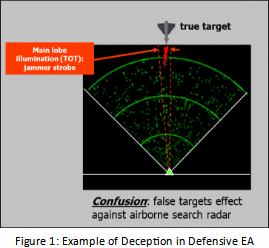
Frequency hopping and spread spectrum techniques are used in jammer circuit and software design, which complicates testing because the transmitted signal is not stationary. Detection follows a similar logic: trained technicians can locate jamming devices using spectrum analyzers and direction-finding equipment. Common indicators include an inability to transmit or receive cellular or other wireless service in areas known to have good coverage. Jammers may also interfere with public safety communications, leaving responders without vital communications during an emergency.
Who Is Authorized to Operate Jammers?
Authorized operators in the United States are almost entirely federal. They include the Department of Defense and military installations under Title 10, expanded by JIATF-401 guidance in January 2026; the Department of Homeland Security, including CBP and the Secret Service; the Department of Justice, including the FBI; the Department of Energy for nuclear facility protection; and the Coast Guard for maritime security. Private companies, individual property owners, and private security firms are not authorized unless acting under direct federal authority.
The SAFER SKIES Act, carried in the FY2026 NDAA, widened the pool in a controlled way. State and local law enforcement qualify after training at the FBI National Counter-UAS Training Center in Huntsville, Alabama. Correctional facility security agencies qualify if they meet federal certification requirements, and agencies protecting National Special Security Events and SEAR-rated events such as the FIFA World Cup 2026 also qualify.
India takes a procurement-based route rather than an operator-based one. Jammers are approved for procurement by the Defence Forces, CAPFs, State Police, Jail Authorities, and statutory examination conducting bodies, with signals of minimum 5 watts. Approval of the Secretary (Security) is sought in a prescribed proforma, and the jammer guidelines list the cell phone signal standards against which jamming is provided: 2G, 3G, 4G, and 5G.
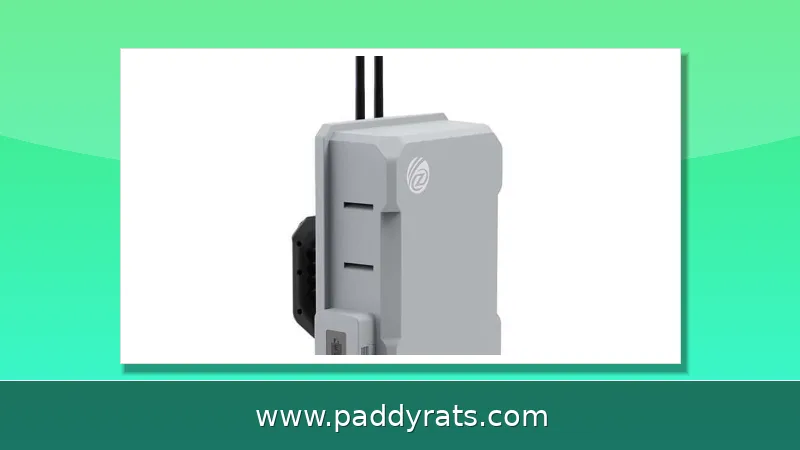
For drone jammers specifically, the device overwhelms the communication link between a drone and its operator, forcing a fail-safe mode such as return, hover, or land. Targeted bands include 433 MHz, 900 MHz, 1.2 GHz, 1.5 GHz, 2.4 GHz, 5.8 GHz, and GNSS bands covering GPS, GLONASS, Galileo, and BeiDou. Smart jamming systems use directional antennas and selective frequency targeting, and one system provides 360-degree coverage out to 1.9 miles.
Penalties and Enforcement Cases
The Communications Act of 1934, at 47 U.S.C. 301, 302a, and 333, prohibits the operation, marketing, or sale of devices that block or interfere with authorized radio communications. Violations carry fines up to $112,500 per incident and potential criminal prosecution. Federal penalties include a fine up to $10,000 or imprisonment up to one year, or both, depending on the charge.
The FCC has shown it will pursue relatively small operators, not just large manufacturers. The Commission upheld a $22,000 fine against Ravi's Import Warehouse in Dallas, Texas: $10,000 for operation without authorization, $7,000 for causing interference, and $5,000 for egregious conduct. The breakdown is instructive because it shows that operating, interfering, and aggravating factors are priced separately.
States have moved in parallel. California SB 701, from the 2025-2026 session and chaptered on October 7, 2025 as Chapter 458 of the Statutes of 2025, makes it a crime to manufacture, import, market, purchase, sell, or operate a signal jammer unless authorized by the FCC. A first offense is an infraction and a second is a misdemeanor, while operating a jammer during a misdemeanor or felony is punishable by a fine up to $1,000 or imprisonment, with device forfeiture on conviction.
Indiana Senate Bill 26 of 2025 makes knowing use of a jamming device a Level 6 felony, elevated to Level 5 if it disrupts critical infrastructure or public safety communications; possession with intent to use is a Class A misdemeanor. Exceptions apply to law enforcement, correctional authorities, and government entities. Commercially, the signal jammer market was valued at $2.8 billion in 2025 and is projected to reach $5.6 billion by 2034 at an 8.1% CAGR, while another estimate puts the global market at USD 1.8 billion in 2026 heading to USD 3.6 billion by 2033. Much of that demand sits in jurisdictions with far looser rules than the United States.
Frequently Asked Questions
Can a signal jammer receive FCC type approval or certification?
No. Jamming devices cannot be certified or authorized because their primary purpose is to block or interfere with authorized radio communications. They cannot comply with FCC technical standards and cannot be operated lawfully in the United States by ordinary users, which is why the FCC treats marketing or selling them as a violation in itself.
What does ICASA type approval require in South Africa?
ICASA type approval verifies that equipment complies with published technical standards. Applications come from manufacturers, importers, distributors, or South African registered companies, and require conformance test reports from accredited facilities covering performance, EMC, and safety. Certificates issue only to South African registered companies, and approved type approval does not expire once granted.
Who can legally operate a drone jammer in the United States?
Federal agencies such as the DoD, DHS, DOJ, DOE, and the Coast Guard may operate jammers. Under the SAFER SKIES Act, state and local law enforcement and correctional agencies qualify only after training at the FBI National Counter-UAS Training Center in Huntsville, Alabama. Private companies and individual property owners are not authorized unless acting under direct federal authority.
What penalties apply for illegal signal jammer use?
Federal law allows fines up to $10,000 or imprisonment up to one year, or both. The FCC upheld a $22,000 fine against a Texas warehouse, and drone jammer violations can carry fines up to $112,500 per incident. States add their own penalties, including felony charges in Indiana for disrupting critical infrastructure or public safety communications.