A drone jammer floods the radio link between a drone and its pilot with electromagnetic noise, forcing a fail-safe response. Here is how jamming and spoofing actually work, which frequencies they hit, and who is legally allowed to operate them.
What Is a Drone Jammer and How Does It Work?
A drone jammer is basically a radio frequency transmitter that overpowers the communication link between a drone and whoever's flying it. It doesn't hack the aircraft — it just shouts louder. The device blasts electromagnetic noise on the same frequencies the drone relies on for command, control, video, and navigation, drowning out the much weaker back-and-forth between the drone and the person holding the controller.
The physics here really matter. Jamming strength drops off with the square of the distance, so a jammer that works fine at 500 meters might barely do anything at 2 kilometers. Power output, antenna design, terrain, and how strong the drone's own signal is all play into whether it actually works. In practice, most anti-drone jammers have an average jamming radius somewhere between 200 and 3,000 meters, while heavy-duty systems can reach out to almost a mile when conditions are good.
Jamming is usually classified as a non-kinetic soft-kill technique, since it shuts down the mission without actually destroying the aircraft. That difference is a big deal for security teams — if you're trying to stop a drone over a crowded stadium, a busy highway, or a prison yard, the last thing you want is wreckage raining down on people below.
Which Radio Frequencies Do Drone Jammers Target?
Jammers aren't just blasting noise everywhere. They're tuned to the specific bands that consumer and commercial drones actually rely on, which is why one device can usually cover several of them at once. The table below breaks down the most common targets.
| Frequency band | Primary use | Typical drone examples |
|---|---|---|
| 2.4 GHz | Command and control | DJI and most commercial drones |
| 5.8 GHz | Command and control, video | DJI and most commercial drones |
| 433 MHz | Control link | DIY and long-range builds |
| 900 MHz | Control link | Commercial and DIY systems |
| 1.2 GHz / 1.5 GHz | Video transmission and telemetry | FPV and industrial platforms |
| GNSS bands | Navigation | GPS, GLONASS, Galileo, BeiDou receivers |
Inside those bands, jammers rely on a few different techniques. Broadband jamming spreads high-power noise across a wide range of frequencies. Spot jamming does the opposite—it focuses everything on one specific band. Barrage jamming goes after multiple frequencies at the same time, while protocol-aware jamming actually imitates the original signal and superimposes itself on top of it. Each method trades coverage for efficiency, so the choice usually comes down to whether the operator knows exactly which drone they're dealing with.
Jamming vs. Spoofing: What Is the Difference?
People tend to lump jamming and spoofing together, but they actually go after the link in opposite ways. A jammer blocks or disrupts the radio signals traveling between the drone and its pilot, which forces the drone into some kind of fail-safe response. A spoofer, on the other hand, sends out a counterfeit signal that mimics the real one, letting a third party hijack the drone, take over its flight, and potentially get into its data or camera feeds.
Spoofing is particularly effective against GPS. A spoofer broadcasts a counterfeit signal that's stronger than the real satellite signals, essentially taking over the drone's navigation solution—and once it has control, it can fly the aircraft wherever it wants. The tricky part is that GPS signals from satellites can't use encryption or certificates, so there's no cryptographic handshake to confirm a signal is genuine. That's what makes GPS spoofing so difficult to defend against.
The catch is precision. Jamming is crude and noisy — it just drowns everything out. Spoofing, on the other hand, is quiet and surgical, but it only works if the attacker knows the target's signal protocol well enough to mimic it. And here's the thing: in most countries, including the US, neither method is legal for private parties to use. On top of that, both tend to mess with nearby systems as an unintended side effect.
Types of Drone Jammers: Portable, Stationary, and High-Power
Counter-UAS hardware comes in all shapes and sizes, ranging from handheld units you can carry with one hand to heavy vehicle-mounted systems built for wartime use. The table below breaks down how the main categories compare.
| Type | Form factor | Typical use |
|---|---|---|
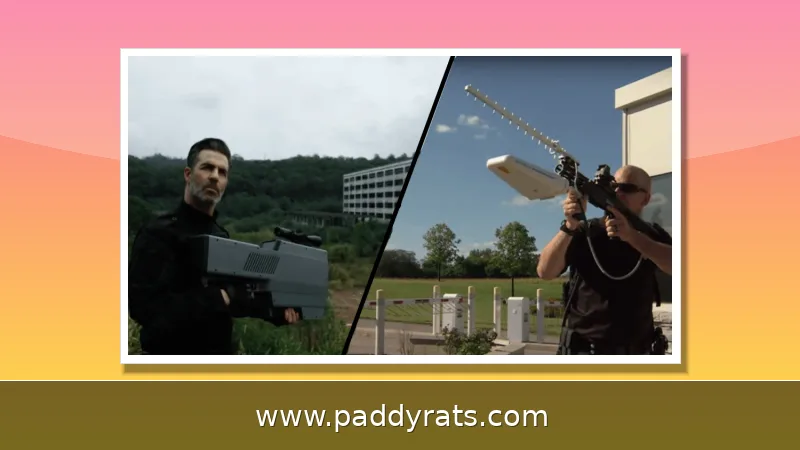
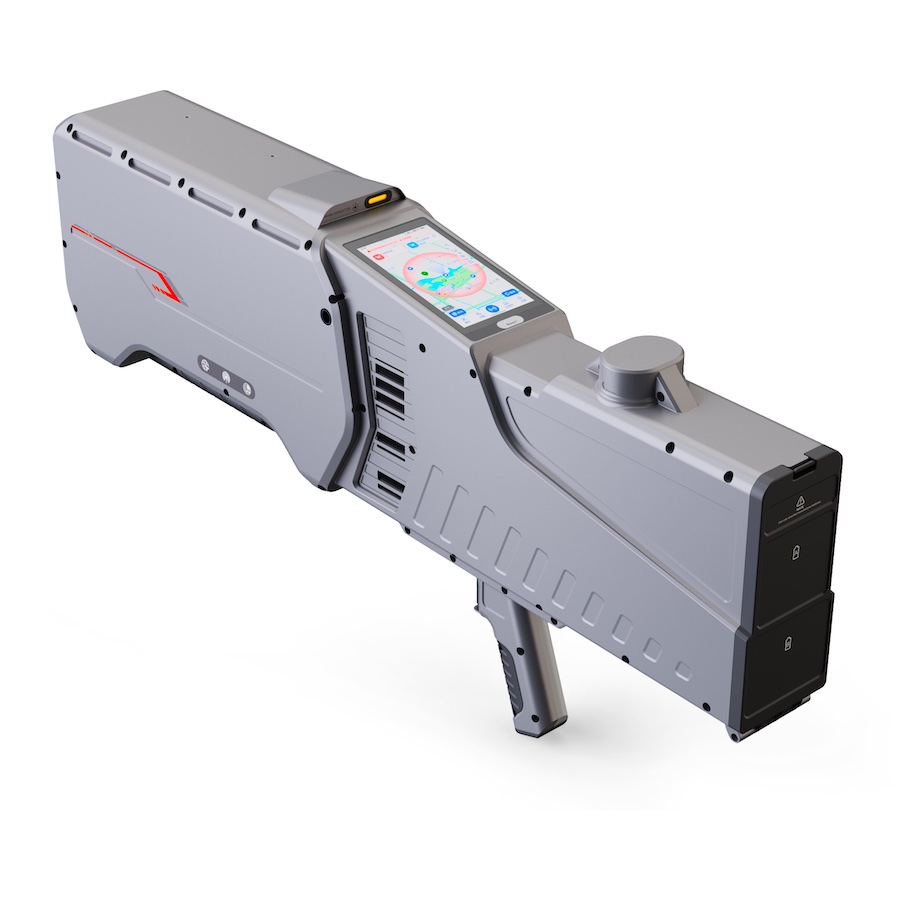
| Portable jammer | Handheld, gun-like | Short-range response, user-friendly |
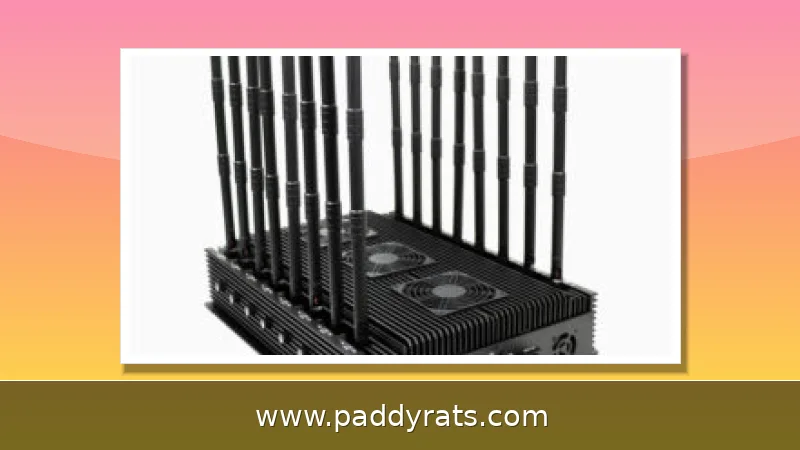
| Stationary jammer | Fixed installation | Government buildings, airports, prisons |
| High-power jammer | Large, multi-directional | Saturating wide frequency ranges in wartime |
| Ad-hoc jammer | Vehicle-mounted, e.g. RP-377 | Mobile military operations |
| Mobile electronic jammer | Backpack-sized, e.g. Volnorez | Infantry and rapid deployment |
| Fixed radar and jammer | Integrated site, e.g. Argus-5000, SkyHunter-4M/P | Perimeter and installation defense |
Handheld drone jammer guns project a cone of roughly 15 to 30 degrees, which means the operator has to aim. Stationary systems trade mobility for coverage and power. Russia's R-330ZH "Zhitel" is a high-power, vehicle-mounted jamming system that illustrates how far this category can scale. For most civilian security teams, though, the practical question is not which jammer is strongest but whether they are legally permitted to press the button at all.
What Happens to a Drone After It Is Jammed?
Once the control link collapses, most consumer drones fall into a pre-programmed fail-safe mode. Depending on the model and its settings, the aircraft may land on the spot, return to its home point, or simply hover until the battery depletes. That last outcome is the one security teams dread, because a hovering drone still carries whatever payload it was sent to deliver.
Jamming is also less effective against drones pre-programmed to fly a certain path without GPS. A fully autonomous aircraft following a stored route does not need a live command link, so blocking the radio spectrum may not change its behavior at all. This is one reason military planners increasingly treat jamming as an incomplete countermeasure rather than a solution.
The scale of the problem is visible in Ukraine. In May 2023, RUSI estimated that Ukrainian forces were losing as many as 10,000 drones per month, mainly due to Russian jamming, along a frontline roughly 1,000 kilometers (620 miles) long. That is a useful reality check for anyone who assumes a single jammer guarantees airspace control.
Are Drone Jammers Legal and Who Can Operate Them?
Drone jammers are illegal in most countries, including the United States. Under the Communications Act of 1934 (47 U.S.C. 301, 302a, 333), the FCC prohibits operating, marketing, or selling devices designed to block, jam, or interfere with authorized radio communications. Violations carry fines up to $112,500 per incident and potential criminal prosecution.
Some federal entities are authorized under existing law, including the Department of Defense and military installations (Title 10, expanded by JIATF-401 guidance in January 2026), the Department of Homeland Security (CBP and the Secret Service), the Department of Justice (FBI), the Department of Energy for nuclear facility protection, and the Coast Guard for maritime security.
The SAFER SKIES Act in the FY2026 NDAA newly authorizes state and local law enforcement after training at the FBI's National Counter-UAS Training Center in Huntsville, Alabama, along with correctional facility security agencies that meet federal certification requirements and agencies protecting National Special Security Events and SEAR-rated events such as the FIFA World Cup 2026. Private companies, individual property owners, and private security firms are not authorized unless they operate under direct federal authority. The FEMA C-UAS Grant Program also prohibits purchasing weapons with grant funds, and mitigation equipment is only available to certified law enforcement personnel.
What Are the Downsides of Jamming and Spoofing?
Both techniques come with serious operational and legal limitations. Jamming is illegal in most countries including the US, is less effective against drones flying a pre-programmed path without GPS, does not allow positive control over the target, and cannot locate the pilot or reconstruct the flight path. It also disrupts nearby communication signals such as cellphones, which could prevent a 9-1-1 call during an emergency.
Spoofing shares many of the same problems. It is illegal in most countries including the US, is less effective against drones that do not use GPS, does not locate the pilot or flight path, and can disrupt other nearby GPS signals. Neither method tells you the drone's intended flight path or whether it carries a sensitive payload, which is why both are best understood as partial tools rather than complete defenses.
What Countermeasures and Alternatives Exist?
On the defensive side, one practical countermeasure is to detect interference and switch to a different operational channel or band. Doodle Labs Sense is an LPI and anti-jam feature set on Mesh Rider Radios that scans for interference and automatically shifts to a better-performing channel or band, which keeps a legitimate link alive while a jammer is active.
Non-radio alternatives also exist. Drone netting uses larger drones carrying nets to physically capture a target. Shooting a drone down remains an option in some jurisdictions, and South Korean security for the 2018 Olympic Games reportedly had CUAS protocols to shoot rogue drones. Dutch authorities even explored trained bald eagles as an interception method.
Historical context is worth keeping in mind. In 2015, a drone flew onto the lawn of the White House, a strict no-drone zone, and an engineer and colleague were later arrested for illegally producing and selling anti-drone systems. The lesson is consistent: the technology is widely available, but the legal authority to use it is narrowly held.
Frequently Asked Questions
How does a drone jammer work?
A drone jammer is a radio frequency transmitter that broadcasts electromagnetic noise on the same frequencies a drone uses for command, control, video, and navigation. This powerful signal overwhelms the weaker link between drone and operator, forcing the drone into a fail-safe mode such as returning home, hovering, or landing.
What frequencies do drone jammers target?
Jammers commonly target 2.4 GHz and 5.8 GHz, the primary command-and-control bands for DJI and most commercial drones. Other bands include 433 MHz and 900 MHz for control systems, 1.2 GHz and 1.5 GHz for video and telemetry, and GNSS bands such as GPS, GLONASS, Galileo, and BeiDou.
Are drone jammers legal in the United States?
No. Under the Communications Act of 1934 (47 U.S.C. 301, 302a, 333), the FCC prohibits operating, marketing, or selling RF jamming equipment. Violations carry fines up to $112,500 per incident and potential criminal prosecution. Only authorized government entities may legally operate jammers.
What is the difference between jamming and spoofing a drone?
Jamming broadcasts noise to block or disrupt radio signals between drone and pilot, forcing a fail-safe response. Spoofing sends a counterfeit signal that mimics the legitimate one, allowing a third party to hijack the drone, take over its flight, and access data or camera feeds.