WiFi jammers are illegal to operate, market, sell, import, or ship under U.S. federal law, and Canada bans even possession. Here is what the FCC, CBP, and ISED actually enforce, plus how to spot and block jamming.
Are WiFi Jammers Illegal? The Short Answer
Yes, in the United States it's illegal to operate, market, sell, import, distribute, or ship radio frequency jammers, and the FCC says there are no exceptions for businesses, classrooms, homes, or vehicles. That applies across the board, covering WiFi jammers, cell jammers, GPS and GNSS jammers, and police radar jammers alike. Ownership is where things get murky, though. The FCC insists there are no exceptions, but an NBC News report from March 25, 2024 pointed out that jammers aren't actually illegal to own, only to market, sell, and use. Canada, by contrast, takes a stricter stance and bans possession outright.
Here's the bottom line I always give readers: buying a jammer overseas isn't a loophole. You can still be fined or prosecuted for using it, even if you never resell the thing. That said, what's on the books and what actually gets enforced are two very different things. The FCC's Enforcement Bureau has been shrinking for about twenty years now, while interference complaints keep going up. And we still don't have any real system in the U.S. for tracking down GPS or GNSS interference. So yes, the rules are strict. But whether you get caught? That depends a lot on where you're using the jammer and how.
How WiFi and Cell Jammers Actually Work
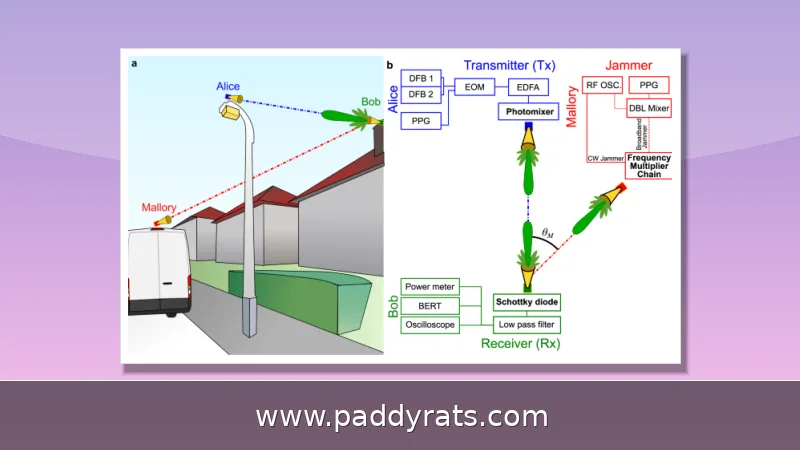
A cell jammer works by broadcasting RF signals on the same frequencies your phone uses, but at a power level stronger than the nearest cell tower. Since your phone always grabs the strongest signal it can find, it latches onto the jammer and the tower's weaker signal gets drowned out, which kills downlink reception. WiFi jammers do something similar: they flood the 2.4GHz or 5GHz band with so much high-power noise that connections get overwhelmed, and your devices simply can't send or receive data anymore. What makes jamming so disruptive is that it doesn't discriminate. Every device within range gets hit, whether that's a hospital's medical equipment, a police radio, or someone trying to make a 911 call. There's also a related trick called a de-authentication attack, where the attacker pretends to be a WiFi client and sends commands to the access point, essentially telling it to kick devices offline.
I've spent time testing consumer WiFi gear in environments with a lot of RF noise, and once you know what to look for, the way it fails is pretty unmistakable. The table below breaks down the main types of jammers alongside the frequencies and services they knock out, which goes a long way toward explaining why the FCC treats them as a public safety problem instead of just a nuisance.
| Jammer type | Target frequencies | What breaks |
|---|---|---|
| WiFi jammer | 2.4GHz and 5GHz bands | Wireless cameras, doorbells, smart home devices, laptops |
| Cell jammer | Cellular and PCS bands | Voice calls, texts, mobile data, 911 calls |
| GPS/GNSS jammer | L1 and related GNSS bands | Navigation, timing, fleet tracking, aviation and marine systems |
| Police radar jammer | Radar bands | Speed enforcement equipment |
| Spoofing device | GNSS and radiocommunications | Sends false signals; also treated as a jammer in Canada |
The 2022 GPS interference incident in Denver is probably the clearest example of how serious this problem can get. According to federal reporting, it went on for 33 hours before officials finally pinpointed the source and shut it down. That same year, a similar event in Dallas lasted 24 hours, and nobody ever figured out where it was coming from. Just these two cases show why regulators don't treat jamming as some minor annoyance for consumers.
FCC Rules and Enforcement: What U.S. Law Says
The FCC doesn't leave much room for interpretation here: operating, marketing, selling, importing, distributing, or shipping RF jammers is a violation of federal law. And that's true across the board—no exceptions for businesses, classrooms, homes, or vehicles. The agency singles out jamming equipment that interferes with cellular and PCS networks, police radar, GPS, and WiFi. As for local police, they can't just decide to deploy jammers on their own; that authority doesn't exist at the local level. Only federal agencies may be permitted to use them, and even then, only in limited situations.
Border enforcement has gotten a lot more visible, too. Since 2021, U.S. Customs and Border Protection has reported roughly an 830% jump in signal jammer seizures. Then in March 2024, the FCC went after Amazon and other retailers over allegedly marketing and selling unlawful jammers, GPS and GNSS devices included — and spoofing is illegal as well. Even with that pressure, though, you can still find jammers listed online for as little as $5 to $40, and if U.S. sellers eventually stop, plenty of offshore sources will happily fill the gap.
Most people get tripped up right here, in the space between what the rules say and what actually happens on the ground. The FCC's Enforcement Bureau has shrunk dramatically over the past two decades, even as interference complaints keep piling up, and the U.S. still has no real system in place to detect GPS or GNSS interference. In March 2025, ADT pressed lawmakers to do something about WiFi jamming, pointing out just how thin federal enforcement has become. Sure, ADT is a security company with its own bottom line to protect, but the complaint itself lines up with what officials in Los Angeles have been saying for a while now: burglars are increasingly using WiFi jammers to take out cameras and alarms right before they break in.
What Penalties Can You Face for Using a WiFi Jammer?
The FCC says that if you use or market a jammer, you could be hit with serious fines, have the equipment seized, and even face criminal charges that include jail time. Cellbusters puts the fines at up to $11,000, but the actual amount comes down to the specific violation and how the agency decides to handle it. And if the interference messes with public safety communications or protected federal systems, the penalties can escalate fast.
Canada's rules are a bit more straightforward about the actual dollar figures, which is why they're worth bringing up here. Under the Radiocommunication Act, ISED can hit you with a first-time penalty of up to $25,000 if you're an individual, or up to $10 million if you're a business. Get caught again, and those numbers climb to $50,000 and $15 million respectively. On top of the fines, they can also seize your equipment and take other enforcement measures.
| Jurisdiction | First violation | Repeat violation |
|---|---|---|
| United States (individual or business) | Monetary penalties, equipment seizure, possible imprisonment; Cellbusters cites fines up to $11,000 | Escalating fines and criminal exposure |
| Canada (individual) | Up to $25,000 | Up to $50,000 |
| Canada (business) | Up to $10 million | Up to $15 million |
Other countries have carved out narrow exceptions. Brazil, New Zealand, and Sweden have considered allowances for correctional facilities, and UK law enforcement, intelligence agencies, and prisons have used jammers since 2012 under strict regulation. One counterintuitive U.S. rule worth remembering: cell phone detectors are legal even though jamming is prohibited, because detecting a signal is not the same as blocking it.
Jammer Laws in Canada and Other Countries
Canada's rules are stricter than the U.S. on paper. Jammers are prohibited under sections 4, 9, 10, and 15.1 of the Radiocommunication Act, as reaffirmed by ISED in January 2025. Subsection 4(4) prohibits installation, use, possession, manufacture, importation, distribution, lease, offering for sale, or sale. Counter-drone and CUAS devices that emit RF and interfere with radiocommunications count as jammers, and spoofing devices count too.
The only escape hatch is a Ministerial Order under subsection 14(1), granted case by case for national security and public safety. That means a hospital, a stadium, or a private company cannot simply buy a jammer to silence nuisance calls or block drones. If you are considering a counter-drone purchase in Canada, verify the exemption path before the hardware crosses the border, because possession alone is enough to trigger liability.
How to Detect WiFi Jamming in Your Home or Business
Detection starts with recognizing the signature of interference. On WiFi, look for signal drops near the router, repeated disconnects and reconnects, high latency, packet loss, and reduced bandwidth. The tell that separates jamming from an ordinary outage is that wired Ethernet devices keep working while everything wireless fails. On cellular, you may lose service on multiple phones in an area with normally good reception, with erratic signal fluctuations.
Hardware can also hint at trouble: routers or devices that unexpectedly overheat may be working harder to hold a connection. Spectrum analyzers can detect jammers, but they are not commonly available and require real expertise to interpret. Jammer-detection apps are largely unproven, so I would not rely on one as evidence. If you suspect jamming, contact your wireless network provider, which has the tools and the reporting channel to escalate to the FCC.
How to Prevent WiFi Jamming and Protect Your Network
No consumer fix stops a determined jammer, but you can shrink your exposure. Use WPA3 encryption with strong, unique passwords, and move as many devices as possible to the 5GHz band, since most cheap jammers target 2.4GHz; combine that with automatic band-switching so devices migrate intelligently. Devices that rely solely on 2.4GHz WiFi, such as security cameras, video doorbells, and smart home gadgets, are the most vulnerable.
Build in redundancy. Smartphones can fall back to mobile data when WiFi fails, and Bluetooth devices can also be jammed on similar frequencies, so treat wireless-only security as a single point of failure. Wired Ethernet cameras and a cellular backup for your alarm panel are the practical mitigations. The marketplace reality is that jammers remain easy to buy online for $5 to $40, so assume the threat exists and design around it rather than expecting enforcement to remove it.
Frequently Asked Questions
Are WiFi jammers illegal to own or just to use?
Under U.S. federal law, operating, marketing, selling, importing, distributing, or shipping RF jammers is prohibited. Sources conflict on ownership: the FCC says there are no exceptions, while an NBC report notes jammers are not illegal to own. Canada prohibits possession outright under the Radiocommunication Act, so the answer depends heavily on jurisdiction.
What penalties can you face for using a WiFi jammer in the U.S.?
The FCC states that using or marketing a jammer may lead to significant monetary penalties, seizure of the unlawful equipment, and criminal sanctions including imprisonment. Cellbusters cites fines of up to $11,000. In Canada, ISED can impose penalties up to $25,000 for individuals and $10 million for businesses on a first violation, with higher amounts for repeat offenses.
How can you tell if a WiFi jammer is being used nearby?
Signs include sudden signal drops near your router, repeated disconnections, high latency, packet loss, reduced bandwidth, and multiple devices losing connection at once. Wired Ethernet devices keep working because jammers only affect wireless signals. Routers or devices unexpectedly overheating can also be a sign, though spectrum analyzers remain the only reliable confirmation tool.
How can you protect your home network from WiFi jamming?
Use WPA3 encryption and strong unique passwords, switch devices to the 5GHz band since most jammers target 2.4GHz, and enable automatic band-switching. Devices relying solely on 2.4GHz WiFi, such as security cameras and smart home gadgets, are the most vulnerable, so wired Ethernet backups and a cellular alarm path are worth adding.