A practical breakdown of multi-band signal jammer prices, from $118 portable 10-antenna units to $6,200 high-power 800W systems. I walk through band counts, wattage, range, and the compliance realities buyers need to know before spending a dollar.
What Is a Multi-Band Signal Jammer and How Does It Work?
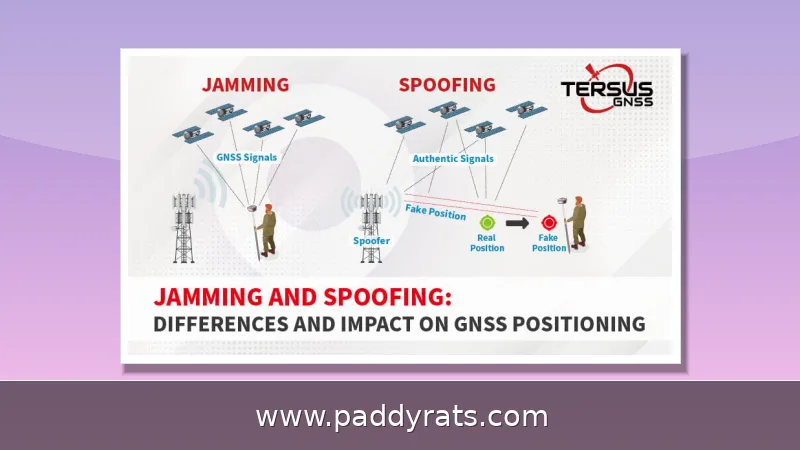
A multi-band signal jammer works on one simple principle: it floods several frequency ranges at once with strong RF energy, drowning out the weaker signals that phones, WiFi routers, GPS receivers, and remote controls rely on. Because it covers multiple bands in a single unit, you can shut down 2G, 3G, 4G, 5G, WiFi, and GPS traffic without swapping out any hardware. And regardless of what you pay, the internal setup is pretty much the same across the board — an RF generator, amplification stages, transmission modules, and one antenna per band.
Honestly, the biggest thing driving the price here is physics. A jammer has to broadcast on the exact same frequency the target device is using, and that signal has to be strong enough to drown out the original by the time it reaches the receiver. Think of it like two people yelling over each other in a crowded room — the louder one wins, but only if they're on the same channel. So adding a band is never as simple as flipping a software switch. Every single band needs its own RF generator, its own amplification stage, and in most cases its own antenna. Look at the DJ-065, a 6-band desktop unit: it squeezes six separate frequency modules into a 3.0 kg chassis. Now compare that to a 24-band rack system, which packs in four times as many components — that's why it ends up way bigger and way more expensive to build. The two sit in completely different price brackets because of it. One lives on your countertop; the other is basically a small server rack. And one more thing worth clearing up: no app can physically block a radio signal. If something is marketed as a software-only "jammer," it isn't a jammer at all — it's just a noise generator for your phone's speaker.
Multi-Band Signal Jammer Price Ranges: From Budget to High-Power
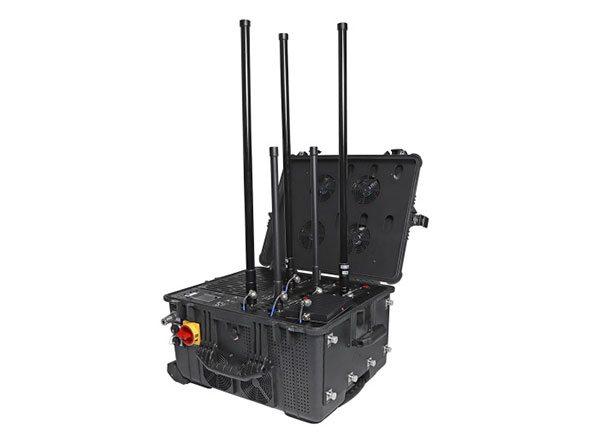
Prices in this category can swing by two orders of magnitude, and that range isn't arbitrary—it tracks pretty closely with the number of bands, the total output power, and how much of the unit is custom-built. At the bottom end, a portable 10-antenna model sells for US$118.00–126.70 per piece, and with a minimum order quantity of just one, it's the cheapest realistic way to find out whether multi-band coverage is even worth it for you. Step up to a mid-range desktop 6-band unit and you're looking at around $369.91—still not a lot, but now you're getting a plug-in device with adjustable output on each band rather than a battery-powered handheld. High-power setups are where things get expensive: an 8-band, 800W portable system in a Pelican 1620 case goes for $6,200–$6,800 depending on the configuration, and that premium pays for larger amplifiers, heavier cooling, and a case that can actually survive field conditions. Industrial suppliers on Made-in-China stretch the range even further, quoting anywhere from US$86 to US$50,000 per piece. That gap mostly comes down to customization—custom frequency sets, higher power ratings, and low-volume production runs all push the price up.
The table below collects representative price points from vendor listings and supplier directories. Think of it as a quick lay of the land before you start requesting quotes — these are ballpark figures, not fixed retail prices. A few things can swing the final number by hundreds of dollars: which frequency bands you need covered, the type of casing (plastic versus ruggedized metal or a Pelican-style case), and the quality of the connectors and antennas. A basic 10-band portable unit, for instance, might list for around $118 to $127, while a 10-band desktop model with higher output power can jump past $2,800 — and an 800W, 8-band portable built for a 1km range sits in project-quote territory entirely. Even two jammers with the same band count can differ sharply in cost once you factor in per-band wattage and whether the output is adjustable. Use these figures as a starting reference, then confirm specs directly with the seller.
| Model / Type | Bands | Total Power | Price (USD) |
|---|---|---|---|
| Portable 10-antenna (SRD-JN10FJ) | 10 | 10.0W | $118.00–$126.70 |
| Desktop 6-band (DJ-065) | 6 | 9.0–18.0W | $369.91 (was $669.91) |
| Shadow | 16 | — | $570 |
| 16 Antenna | 16 | 16W | $620 |
| 21 Antenna | 21 | 21W | $720 |
| 12 Antenna | 12 | 90W | $950 |
| 12 Bands | 12 | 75W | $970 |
| 16 Antenna | 16 | 124W | $1,050 |
| Heracles | 8 | 70W | $1,100 |
| 20 Antenna | 20 | 155W | $1,200 |
| 24 Bands | 24 | 160W | $1,950 |
| 10 Bands | 10 | 200W+ | $2,800 |
| 10 Bands | 10 | 90W | $2,900 |
| 10 Bands | 10 | 197W | $5,400 |
| Portable 8 Bands | 8 | 210W | $6,200 |
| 8-Band Portable (CT-6080) | 8 | 800W | Project quote ($0.00 listed) |
Key Specifications That Drive Multi-Band Jammer Cost
Band count and total output power are the two biggest drivers of price. A 6-band desktop unit pushing 15.0W total is a whole different animal from a 10-band 197W system that runs $5,400. Each additional band needs its own amplifier chain and antenna, and higher wattage means you're also paying for beefier heat sinks, bigger power supplies, and tougher RF shielding. That's why a 10-band 90W unit at $2,900 can cost several times more than a 12-antenna 90W unit at $950 — antenna count, overall build quality, and which frequencies are covered all factor in.
What really drives the price of a multi-band jammer, more than most buyers expect, is the frequency combination itself. Covering standard cellular and WiFi bands is relatively cheap, because the components behind them are mass-produced at scale — that's what keeps those versions affordable. The math changes once you move into custom or less common frequencies. Add GPS L2–L5, LoJack at 173MHz, satellite phone ranges at 1520–1670MHz, or remote-control bands at 315MHz, 433MHz, and 868MHz, and you're paying for extra engineering work, separate RF modules, and a lot more testing before the unit ever ships. And that's before you even get to the hardware: military-grade casings, extended operating temps from -20C to +60C, and adjustable per-band output power all push the bill higher too. Bottom line — the more specialized the frequency set and the tougher the build, the more you should expect to pay.
| Cost Factor | Price Impact |
|---|---|
| Standard cellular and WiFi bands | Lower — mass-produced components |
| Custom or uncommon frequencies (GPS L2–L5, LoJack 173MHz, satellite phone 1520–1670MHz, remote-control 315/433/868MHz) | Higher — added engineering cost |
| Military-grade casing | Higher |
| Extended operating temperature range (-20C to +60C) | Higher |
| Adjustable per-band output power | Higher |
Form factor matters more than most people realize, and it’s one of the easiest cost drivers to overlook. A 1.2kg handheld with an 8000mAh Ni-Mh battery and 2.0 hours of runtime doesn’t demand much—the chassis, cooling, and power electronics are all fairly modest, so manufacturing stays cheap. Compare that to a 45kg rack-mounted 800W system shipped in a hard transit case with a 2-year warranty, and the numbers jump fast. Just the metalwork, plus the thermal design needed to keep eight 100W bands from cooking themselves, adds serious money. There’s also a practical trade-off built right into the price. Pay for portability, and you’re accepting lower wattage and shorter range, since a battery that size simply can’t feed high-power amplifiers for long. Pay for range, and you’re accepting the weight, the heat, and a fixed installation—plus the fact that a 45kg unit isn’t something you relocate on a whim. Bottom line: you’re not just buying more bands or more watts. You’re buying a different physical class of device.
Portable vs Desktop Multi-Band Jammers: Price and Performance Comparison
When you're comparing multi-band jammer prices, form factor is one of the biggest forks in the road — it shapes both what you'll pay and what the unit can actually do. Portable jammers trade raw output for mobility. Take the 10-antenna model (SRD-JN10FJ): it weighs just 1.2kg, measures 145*95*45mm, and spreads 10.0W total across ten bands at 1.0W each, giving you a 10–30m radius you can carry from room to room or vehicle to vehicle. Desktop units sit at the opposite end of the spectrum. The 6-band SKU DJ-065 weighs 3.0kg, measures 305*140*51mm, and pushes 9.0–18.0W depending on which version you pick, covering 10–40m. So the desktop option gets you roughly 1.5 to 1.8 times the output and a wider coverage area, while the portable option gets you something you can actually hold in one hand — a trade-off that shows up directly in how each one is priced and where it gets deployed.
| Spec | Portable 10-Antenna (SRD-JN10FJ) | Desktop 6-Band (SKU DJ-065) |
|---|---|---|
| Weight | 1.2kg | 3.0kg |
| Size | 145*95*45mm | 305*140*51mm |
| Total power | 10.0W (1.0W per band) | 9.0–18.0W (varies by version) |
| Range | 10–30m | 10–40m |
| Bands | 10 | 6 |
At the very top of the range, the 8-band 800W portable jammer (CT-6080) shows just how far multi-band hardware can go. Each of its eight bands pushes 100W, for 800W total, and it covers a massive 500–1000m radius. It weighs 45kg and ships in a Pelican 1620 case, with a 2-year warranty backing it up. You won't find a sticker price on this one; it's quoted per project instead, which is standard practice for high-power tactical gear sold to government, military, and security buyers. That quote-based model makes sense when you consider the customization involved, from frequency bands to deployment setup. The table below lines up all three tiers—budget, mid-range, and high-power—so you can see how price, power, and portability scale together.
| Tier | Example Model | Bands | Total Power | Range | Weight | Price | Warranty |
|---|---|---|---|---|---|---|---|
| Budget portable | SRD-JN10FJ | 10 | 10.0W | 10–30m | 1.2kg | $118.00–$126.70 | 1 year |
| Mid-range desktop | DJ-065 (6-band) | 6 | 9.0–18.0W | 10–40m | 3.0kg | $369.91 (was $669.91) | 1 year |
| High-power portable | CT-6080 | 8 | 800W | 500–1000m | 45kg | Project quote | 2 years |
How to Choose the Right Multi-Band Signal Jammer for Your Needs
Start with the signal you actually need to block, not the biggest number on a spec sheet. If the goal is stopping cellular and WiFi traffic in a single room, a 6-band desktop unit at roughly $370 or a 10-antenna portable at roughly $120 covers the job. If the requirement is perimeter coverage or convoy protection, the wattage and antenna count climb, and so does the budget. Distance, obstacles, and local signal strength all change real-world range, so vendor figures should be treated as ideal-condition estimates.
Budget planning should include more than the unit price. Free worldwide shipping and a 1-year warranty are common at the consumer tier, and price matching is widely offered. Frequency and power plug configuration are typically set per regional standards, and some sellers advertise no hidden fees under current US tariff policies. One operational rule I always repeat: install the antenna before powering up, because running a jammer without a load can burn out the amplifier stage.
For tactical buyers, demand is surging for multi-band handheld units across military, law enforcement, and critical infrastructure sectors — and that surge is easy to understand once you look at how these teams actually work. A soldier on foot, a SWAT operator clearing a building, or a security crew guarding a substation can't drag a desktop jammer along; they need something that fits in a hand, runs on battery, and covers several frequency bands at once. That's exactly the gap handheld multi-band models fill, which is why procurement interest keeps climbing in these fields. On the commercial side, a different pressure is at work. As reports of jammer-based burglaries pile up — criminals using off-the-shelf devices to knock out alarms, Wi-Fi cameras, and smart locks before breaking in — some buyers are rethinking the standalone unit altogether. Instead of a single box that can be neutralized or bypassed, they're moving toward hardwired PoE systems. A wired installation is harder to defeat, since there's no wireless link to jam in the first place, and it's easier to monitor centrally, with every camera and sensor reporting back over the same cabling. The choice, in short, comes down to mobility versus resilience — and the two buyer groups are pulling in opposite directions.
Legal and Compliance Considerations for Multi-Band Jammers
Civilian ownership of signal jammers is illegal in the United States, the United Kingdom, and Australia. The FCC classifies RF jammers as transmitters designed to block signals, and the agency's enforcement guidance notes that symptoms include an inability to transmit or receive cellular service in areas that otherwise have good coverage. Marketing, selling, or operating these devices in those jurisdictions can trigger substantial penalties, so the price guide above is informational rather than a purchase recommendation.
Legitimate deployment happens in controlled environments: government and military facilities, anti-terror units, bomb squads, VIP and convoy protection, SWAT teams, police forces, anti-drug units, riot-control units, healthcare facilities where wireless silence is required, and some workplaces and classrooms with strict device policies. Buyers in those categories typically work through certified sourcing channels with documented compliance requirements rather than consumer storefronts. If you are evaluating this hardware for a regulated organization, confirm the legal basis and authorization path before requesting quotes.
Market Statistics: How Big Is the Signal Jammer Industry?
Analyst estimates for the global signal jammer market vary by methodology, but they all point in the same direction. Fortune Business Insights values the market at $4.61B in 2025, projects $4.98B in 2026, and forecasts $9.27B by 2034 at an 8.1% CAGR. Strategic Market Research puts 2025 at $2.85B and projects $4.64B by 2032 at a 7.2% CAGR. Coherent Market Insights sizes 2026 at $1.8B and expects $3.6B by 2033.
Research and Markets reports $2.37B in 2026 rising to $3.36B by 2030 at a 9.1% CAGR. Dataintelo estimates $2.8B in 2025 growing to $5.6B by 2034 at an 8.1% CAGR. Technavio projected an increase of USD 1.08B at a 5.66% CAGR between 2023 and 2028, while Market.us tracks $4.04B in 2025 expanding to $8.70B by 2035. The spread between these figures reflects different definitions of what counts as a jammer, but the growth trend is consistent across every source.
Reference Price List: Multi-Band Jammer Models and Costs
The tables below consolidate listed prices from Jammers4u, Jammer Master, Signaljammerphone, and Made-in-China supplier directories. They are useful for benchmarking a quote, not for locking in a purchase price, since configurations and regional compliance requirements change the final number.
Jammers4u and Jammer Master listings cover the mid-to-high end, while Signaljammerphone concentrates in the $399-$599 band and Made-in-China shows the wholesale spread. If a quote lands far outside these ranges, ask specifically which bands, wattage, antennas, and warranty terms are included.
Frequently Asked Questions About Multi-Band Jammer Pricing
The questions below are the ones buyers ask most often when comparing multi-band jammer quotes. Each answer reflects the pricing and specification data covered above, and the legal position in major markets is stated plainly so no one mistakes this guide for a purchase recommendation.
Frequently Asked Questions
How much does a multi-band signal jammer cost?
Prices vary widely by band count and power. Mid-range desktop 6-band units sell around $369.91, while portable 10-antenna models list at US$118.00-126.70. Higher-power 8-band 800W jammers reach $6,200-$6,800, and industrial multi-band suppliers quote US$2,500-50,000 per piece depending on configuration.
What affects multi-band signal jammer price?
Key factors include the number of frequency bands, total output power in watts, jamming range, antenna count, and build quality. A 6-band 15W desktop unit costs far less than a 10-band 197W model at $5,400-$5,800. Custom frequency combinations and military-grade casings also raise the price.
Are multi-band signal jammers legal to buy?
Civilian ownership remains illegal in major markets like the US, UK, and Australia, according to the FCC and buyer guides. Demand is surging for tactical multi-band handheld units in military, law enforcement, and critical infrastructure sectors, where certified sourcing and compliance requirements apply.
What is the jamming range of a multi-band signal jammer?
Range depends on power and antenna type. Portable 10-antenna models block signals at a radius of 10-30 meters, desktop 6-band units reach 10-40 meters, and high-power 8-band 800W jammers cover 500-1000 meters. Distance varies with signal strength, antennas, and location.