A multi band frequency jammer blocks phones, Wi-Fi, GPS, and drone links by flooding several frequency ranges with noise at once. Here is how the technology works, what real specs look like, and how to compare portable and high-power models.
What Is a Multi Band Frequency Jammer?
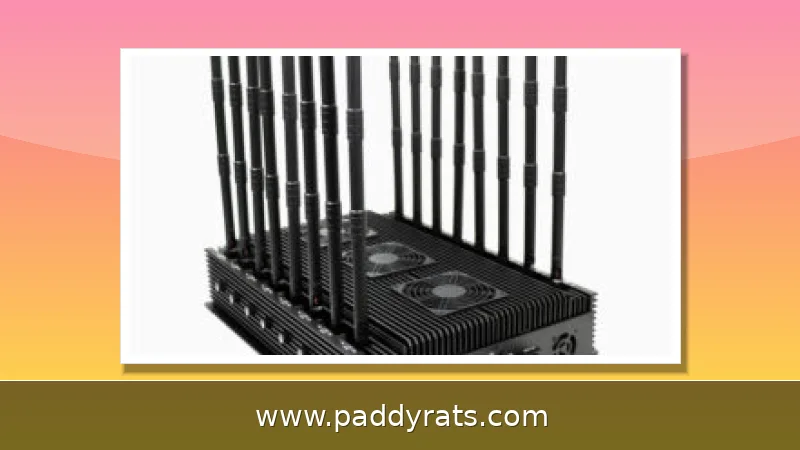
A multi band frequency jammer is a device that sends out radio interference across several frequency ranges at once, deliberately dragging down the signal-to-noise ratio at any receiver tuned to those bands. Rather than blocking just one narrow channel, it covers GSM, 3G, 4G, 5G, Wi-Fi, Bluetooth, GPS, and sometimes car-remote or drone-control links, all in a single enclosure. From what I've seen comparing spec sheets and real-world setups, the biggest practical gap between a single-band blocker and a multi-band unit comes down to coverage: one box can shut down phones, Wi-Fi, and GPS at the same time, instead of forcing you to chain a bunch of separate devices together.
At its core, a multi band frequency jammer is really just physics in action. The device transmits on the same frequency its target is using, but at a higher power than the legitimate signal, so the receiver ends up locking onto the jammer's noise instead of the data it was supposed to hear. That's why engineers say jamming lowers the signal-to-noise ratio — you're not so much blocking the transmission as drowning it out. What makes multi-band units different is that they split their output across several channels at once. This means raw total wattage can be misleading: a 65W eight-channel model and a 360W twelve-band system aren't directly comparable until you know how many watts each band actually gets. A 10-antenna handheld spreading 10W across ten bands delivers roughly 1W per band, while a rack-mounted unit might push 30W into each of its twelve channels. That one trade-off — coverage versus power per frequency — shapes everything from pocket-sized portables to heavy fixed installations, and it's the first thing worth checking when two products make similar marketing claims.
| Model | Total Output | Bands / Channels | Approx. Watts per Band | Form Factor |
|---|---|---|---|---|
| SRD-JN10FJ (RDSignal) | 10W | 10 antennas | ~1.0W | Portable, 1.2kg |
| ATJ8-78-28 (Shenzhen Action) | 65W | 8 channels | ~8W average | Fixed/transportable, 10kg |
| PKI 6985 (PKI Electronic Intelligence) | 360W | 12 bands | 30W | Rack system, 25kg |
How Does RF Jamming Work: Noise, Deceptive, and Repeater Techniques?
RF jamming techniques generally come down to two big families: noise techniques and repeater techniques. Noise jamming is pretty straightforward — it buries a target frequency under random or structured interference, dragging the signal-to-noise ratio down until the receiver can't tell the real transmission apart from the noise anymore. Repeater jamming is the cleverer cousin. It listens to the victim signal first, messes with it, then retransmits it to confuse the receiver. That category includes advanced DRFM (digital radio frequency memory) designs, which are capable of creating false targets. The noise family itself breaks into three sub-types — spot, sweep, and barrage jamming — and each one trades off power and coverage in its own way. Spot jamming pours every bit of available power onto a single frequency, so it's highly effective there but does nothing anywhere else. Sweep jamming moves that full power from one frequency to the next in rapid succession, covering more ground but never lingering long enough on any one point. Barrage jamming hits multiple frequencies at once, though since the power gets spread across all of them, the punch delivered to each individual frequency drops.
Spot jamming dumps every watt the device has into one narrow slice of spectrum. Against a single fixed channel, that's brutal — nothing gets through. But the second the target hops to another frequency, the jammer might as well be shouting into an empty room. Sweep jamming fixes that by racing full power from one frequency to the next, which lets it chase frequency-hopping targets, though it only sits on each channel for a split second. Barrage jamming goes the other way: it covers a bunch of frequencies at once, but because the same power gets split across that whole span, the strength at any single frequency drops off noticeably. And then there's DRFM — digital radio frequency memory jamming — which falls under the repeater family, not the noise family. Rather than drowning a signal in static, it grabs incoming radar energy, alters it, and sends it back out to create false targets. That's precisely why you'll find it in military electronic warfare systems and not in anything you'd buy off the shelf.
Patent US7697885B2 tells an interesting story. Filed back in 2006 and granted to inventor Robert Eugene Stoddard in 2010, it covers a tone comb generator that repeats jamming signals with a dwell time much shorter than a burst period, and it does this concurrently for both transmit and receive bands, GSM 1710-1880MHz being one example. Reading through it, you realize that modern multi-band jamming isn't just about how much power you can throw at a target. It's just as much about timing the signal correctly.
Which Frequency Bands Can a Multi Band Jammer Block?
Coverage depends on the specific model, though the band map most jammers follow stays pretty consistent across the market. You'll typically see GSM900 (920–965MHz), DCS/GSM1800 (1800–1920MHz), 3G/UMTS (2100–2170MHz), 4G LTE (2570–2690MHz), 5G (3400–3800MHz), Wi-Fi and Bluetooth (2400–2500MHz), GPS L1 (1570–1620MHz), and car-remote bands like 433MHz or 868MHz. That range isn't random, either—it mirrors the devices people actually carry around every day. Phones, wireless earbuds, key fobs, and navigation receivers all fall somewhere inside those frequencies. Step up to higher-end units and you'll also get SAT 1525–1616MHz, CDMA 1700/1900, and 5GHz Wi-Fi sub-bands, which extends coverage to satellite links and newer dual-band routers. The table below lays out how three representative models divide up their bands, starting with a compact 10-antenna portable and going up to a 12-band high-power system.
| Band / Use | Portable 10-Antenna (SRD-JN10FJ) | High-Power 8-Channel (ATJ8-78-28) | PKI 6985 (12 Bands) |
|---|---|---|---|
| GSM900 | 920–965MHz | 925–960MHz | 925–960MHz |
| DCS/GSM1800 | 1800–1920MHz | 1805–1920MHz | 1805–1880MHz |
| 3G/UMTS | 2100–2170MHz | 2110–2170MHz | 2110–2170MHz |
| 4G LTE | 2570–2690MHz | 2500–2570MHz / 2620–2690MHz | 2620–2690MHz |
| 5G | 3400–3800MHz | — | 3400–3600MHz |
| Wi-Fi / Bluetooth | 2400–2500MHz | 2400–2500MHz | 2400–2500MHz |
| GPS L1 | 1570–1620MHz | — | SAT 1525–1616MHz |
| 5GHz Wi-Fi | 5.1–5.9GHz (optional) | — | 5170–5330MHz / 5735–5850MHz |
| Car remote | 433MHz / 868MHz (optional) | — | — |
| CDMA | CDMA1900 (within 1800–1920MHz) | — | CDMA 1700 / CDMA 1900 |
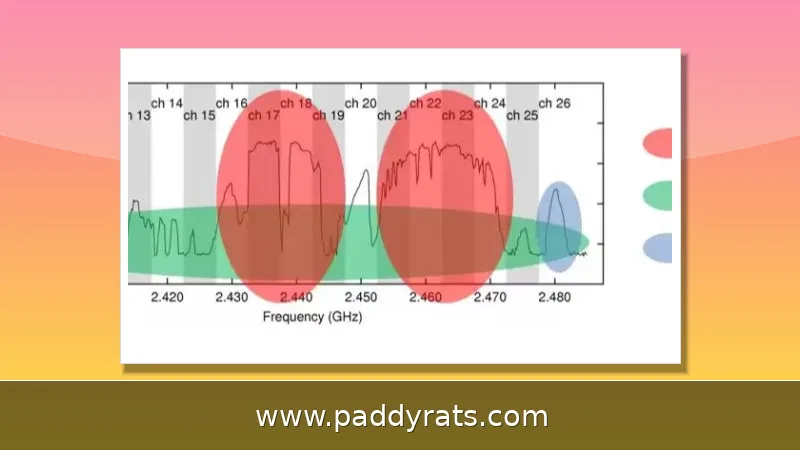
Vendor spec sheets love to throw a dozen band numbers at you, and it's tempting to think more bands automatically means better coverage. But in reality, the bands that actually matter tend to fall into a few familiar groups: cellular voice and data (GSM 900, DCS/GSM 1800, UMTS/3G, and the various 4G LTE ranges around 790–830 MHz and 2500–2690 MHz), Wi-Fi and Bluetooth at 2400–2500 MHz, GPS and GLONASS around 1570–1620 MHz, and the newer 5G slices at 3400–3800 MHz. Certain models also reach LoJack at 164 MHz, car remote frequencies at 433 or 868 MHz, and 5 GHz Wi-Fi between 5100 and 5900 MHz. The table below lays out the bands I come across most often in vendor documentation, along with the services they affect. That said, before you start comparing prices, take a hard look at your actual threat model. A prison or a conference room rarely needs GPS or car-remote coverage, whereas an anti-drone deployment may care about those links far more than cellular. Paying for bands you'll never use just adds cost, weight, and antenna bulk without giving you any extra protection, so match the list to the environment you're securing instead of chasing the longest spec sheet.
| Frequency Band | Common Services Affected |
|---|---|
| 164 MHz | LoJack vehicle recovery |
| 433 / 868 MHz | Car remotes, ISM devices |
| 758–830 MHz | 5G / 4G LTE Low band |
| 851–894 MHz | CDMA 850 cellular |
| 920–965 MHz | GSM 900 voice and data |
| 1450–1500 MHz | 5G (lower mid-band) |
| 1570–1620 MHz | GPS L1, GLONASS L1 |
| 1700 / 1900 MHz | CDMA 1700 / CDMA 1900 |
| 1800–1920 MHz | DCS, GSM 1800, PHS, PCS |
| 2100–2170 MHz | UMTS/3G, WCDMA, TD-SCDMA, CDMA2000 |
| 2400–2500 MHz | Wi-Fi, Bluetooth |
| 2500–2690 MHz | 4G LTE (high band) |
| 3400–3800 MHz | 5G / 4G LTE (C-band) |
| 5100–5900 MHz | 5 GHz Wi-Fi |
Portable vs High-Power Fixed Jammers: Specs and Power Output
Portable and fixed jammers are built to solve completely different problems, and if you actually sit down and compare their spec sheets, that trade-off jumps out pretty fast. Take the SRD-JN10FJ: it's a handheld unit with 10 antennas that covers roughly a 10–30m radius, and it does that on just 10W of total output. But to stay handheld, it has to squeeze into 1.2kg and run off an 8000mAh battery for about two hours. A fixed install like the ATJ8-78-28 goes the other way — 65W spread across 8 channels, reaching up to 150m, but it weighs 10kg and needs to be plugged into AC power. The PKI 6985 pushes that same logic even further, splitting 360W evenly across 12 bands at 30W each, which is exactly why it comes in at 25kg. So when you're actually choosing between these, what usually decides it isn't the wattage on the box — it's whether the deployment is mobile or permanent. And that pattern isn't arbitrary; it's just physics. More range and more per-channel power mean bigger amplifiers, heavier cooling, and a stable power source, none of which are things you want to carry around. It's also why you'll often see manufacturers offer the same high-power platform in customizable 4-, 5-, or 6-band versions — that way, buyers who don't need every channel can cut down on both weight and cost.
| Model | Type | Channels / Bands | Total Power | Range | Weight |
|---|---|---|---|---|---|
| SRD-JN10FJ | Portable | 10 | 10W | 10–30m | 1.2kg |
| ATJ8-78-28 | Fixed | 8 | 65W | Up to 150m | 10kg |
| PKI 6985 | Fixed | 12 | 360W | Not specified | 25kg |
To make the portable-versus-fixed trade-off concrete, it helps to look at three documented products side by side. The Shenzhen Ruicen (RDSignal) SRD-JN10FJ is the lightest of the group: a portable 10-antenna unit that packs 10 watts total, or roughly 1 watt per band, into a 1.2 kg body measuring 145 × 95 × 45 mm. At the other end sits the Shenzhen Action Technologies ATJ8-78-28, an eight-channel high-power jammer rated at 65 watts total RF output, with individual channels running about 38 to 42 dBm. It covers an area up to 150 meters but weighs 10 kg. The PKI Electronic Intelligence PKI 6985 goes further still, dividing 360 watts across 12 bands at 30 watts each and tipping the scale at 25 kg. In short, as output power and range climb, so do size, weight, and cooling demands.
| Model | Type | Bands | Total Power | Range | Weight |
|---|---|---|---|---|---|
| SRD-JN10FJ | Portable | 10 | 10W (1.0W each) | 10–30m | 1.2kg |
| ATJ8-78-28 | High-power | 8 | 65W | Up to 150m | 10kg |
| PKI 6985 | High-power digital | 12 | 360W (30W each) | Not specified | 25kg |
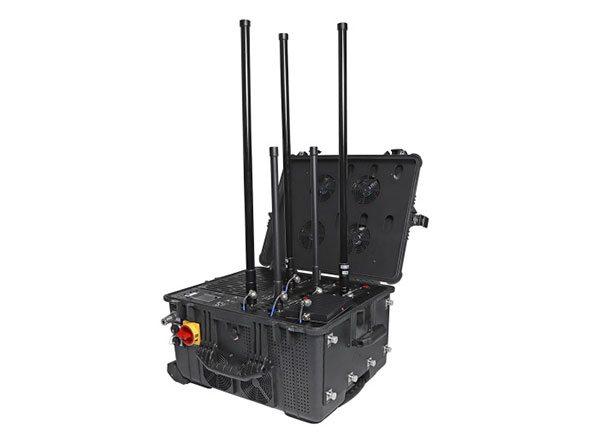
Portable handheld models are built for grab-and-go flexibility, and they usually cover a radius of 10–30 meters at -75dBm with omnidirectional antennas — enough for a single room, a vehicle, or a small perimeter. High-power fixed systems play a different game: they can reach up to 150 meters, though the real-world range swings with local signal density and the type of antenna you pair them with. The PKI 6985 pushes well past that class, delivering 360W spread across 12 bands, GaN amplifiers, internal directive antennas, and Li-ion batteries for operation without a fixed power feed. In short, the trade-off is straightforward — you gain coverage and raw output as you move up in power, but you give up the weight, size, and quick deployment that make handheld units convenient.
| Model | Type | Total Power | Bands | Typical Range | Antennas | Power Source | Weight |
|---|---|---|---|---|---|---|---|
| SRD-JN10FJ | Portable handheld | 10W (1.0W per band) | 10 | 10–30m | Omnidirectional | AC100–240V or 12V car charger; Ni-Mh 8000mAh battery (2.0h) | 1.2kg |
| ATJ8-78-28 | High-power fixed | 65W max RF output | 8 (customizable to 4, 5, or 6) | Up to 150m | — | AC220V, 200W consumption | 10kg |
| PKI 6985 | High-power fixed | 360W (30W per band) | 12 | — | Internal directive | Li-ion batteries | 25kg |
One detail I always flag to buyers: larger interference range means stronger performance but a heavier device and less portability. A 25kg rack unit is not something you relocate casually, and a 1.2kg handheld will not cover a prison yard.
Key Features to Compare: Output Power, Cooling, Band Control
Output power is the headline number, but it is a poor standalone metric. What matters is watts per band, effective isotropic radiated power after antenna gain, and whether the unit can switch individual channels on and off. The SRD-JN10FJ delivers 1.0W per band for 10.0W total and lets each band be toggled independently; the ATJ8-78-28 runs 38-42dBm per channel for 65W total; the PKI 6985 splits 360W into 12 bands of 30W each.
Cooling and power supply are the next filters. Strong jammers can require additional cooling, and the PKI 6985 integrates active cooling to handle 360W continuously. The ATJ8-78-28 draws 200W from AC220V, while the portable unit runs on AC100-240V or a 12V car charger with a Ni-Mh 8000mAh battery rated for about 2.0 hours. VSWR protection, as found on the ATJ8-78-28, prevents damage when antennas are mismatched.
A rule I follow: switching on is not allowed before all antennas are linked, otherwise equipment is easily damaged. Band control, cooling, and antenna discipline separate a working deployment from an expensive paperweight.
Real-World Applications: Prisons, Military, Conferences, and Anti-Drone
Jamming deployments cluster around places where wireless communication is either a security risk or a nuisance. Documented applications include prisons, military areas, government buildings, meeting rooms, conference rooms, museums, galleries, theaters, concert halls, churches, temples, restaurants, classrooms, training centers, factories, banks, and trains. The common thread is controlled space where unauthorized transmissions need to be denied.
Anti-drone systems are the fastest-growing category. Stratign's drone jammer detects, locates, identifies, and disrupts UAV navigation and data links up to 1000m, and law enforcement uses jammers to prevent unauthorized drone flights over sensitive areas. Airports use jamming to block signals from remote-controlled explosive devices, a use case where the cost of failure is measured in lives.
Prison systems show a more nuanced approach. The Stratign STN-ICJ3000 selectively blocks unauthorized 2G/3G/4G traffic while allowing authorized users to stay connected, which is a very different design goal from blanket denial. Mesh networking vendors such as Doodle Labs, whose Mesh Rider radios with Sense Technology monitor up to six frequency ranges, illustrate the defensive side of the same spectrum fight.
What Are the Risks and Limitations of RF Jamming?
A radio frequency jammer could cause you to miss a call; at worst, it could facilitate a crime or put lives at risk. That sentence is not marketing hedging, it is the core ethical and legal problem with the technology. Jamming is used defensively in electronic warfare and physical security, and illegally to disable consumer devices, and the same hardware serves both purposes.
There are also hard engineering limits. Frequency hopping is effective against narrowband jamming, but wideband and adaptive jamming can target the entire band. Power amplification increases signal strength but does not overcome operating in a contested band. Multi-band radios switch frequencies in real time and provide fallback when one band is denied, while single-band systems have no fallback at all.
Thermal management is the quiet failure mode. High-power amplifiers generate serious heat, and units without integrated cooling derate or shut down under sustained load. Buyers comparing spec sheets should treat cooling design, VSWR protection, and antenna quality as equal to wattage.
How Do You Choose the Right Multi Band Jammer for Your Needs?
Start with the mission, then work backward to specs. If you need to move through a building or convoy, a portable multi band jammer in the 1-2kg class with per-band switches and a 10-30m radius is the realistic choice. If you are protecting a fixed perimeter, a 65W eight-channel or 360W twelve-channel system with directional antennas and active cooling will deliver the 100-150m coverage that handhelds cannot.
Then verify the boring details: band list versus your actual targets, power per band rather than total, power supply compatibility, battery runtime, operating temperature range, and warranty. The SRD-JN10FJ ships with a 1-year warranty and customizable band options, while the ATJ8-78-28 can be customized to 4, 5, or 6 bands and operates from -20 to +55 Celsius. Those numbers matter more in the field than any single wattage figure.
Finally, confirm legality before purchase. Jamming is tightly regulated in most jurisdictions, and the market's growth, estimated at USD 1.8 billion in 2026 and projected to reach USD 3.6 billion by 2033 by Coherent Market Insights, with Fortune Business Insights projecting growth from $4.98 billion in 2026 to $9.27 billion by 2034 at 8.1% CAGR, reflects both legitimate security demand and gray-market activity. This article is not investment advice.
Frequently Asked Questions
How does a multi band frequency jammer work?
It transmits interference on the same frequencies used by wireless devices at higher power than the legitimate signal, so receivers pick up noise instead of data. Multi-band units cover several frequency ranges at once, blocking phones, GPS, Wi-Fi, and Bluetooth simultaneously. The practical effect is a reduced signal-to-noise ratio across every targeted band.
What frequencies can a multi band jammer block?
Common bands include GSM900 (920-965MHz), DCS/GSM1800 (1800-1920MHz), 3G/UMTS (2100-2170MHz), 4G LTE (2570-2690MHz), 5G (3400-3800MHz), Wi-Fi and Bluetooth (2400-2500MHz), GPS L1 (1570-1620MHz), and car remote bands such as 433MHz or 868MHz. Higher-end models add SAT 1525-1616MHz, CDMA 1700 and 1900, and 5GHz Wi-Fi sub-bands.
What is the difference between spot, sweep, and barrage jamming?
Spot jamming focuses all power on one frequency. Sweep jamming shifts full power across frequencies in quick succession. Barrage jamming hits multiple frequencies at once but spreads power, making it less powerful at any single frequency. DRFM is a repeater technique that alters and retransmits received radar energy to create false targets.
How far can a multi band jammer reach?
Portable handheld models typically cover a radius of 10-30 meters at -75dBm with omnidirectional antennas. High-power fixed systems can reach up to 150 meters depending on local signal density and antenna type. Anti-drone systems are documented disrupting UAV navigation and data links up to 1000 meters under favorable conditions.