Signal jammer prices typically land between $200 and $2,000, but power level, chip design and frequency coverage can push costs far higher. Here is what actually drives the number on the quote.
how Much Is a Signal Jammer? Typical Price Ranges
If you've ever gone looking for a jammer, you probably already know the sticker shock is real. From the retail listings I've gone through, cell phone signal jammer prices usually land somewhere between $200 and $2,000, and that spread comes down almost entirely to output power and how many frequency bands a unit covers. Low-power jammers tend to run about $200 to $800, medium-power units fall between $800 and $2,000, and high-power models can push past $2,000. Civilian GPS jammers are the cheap exception, sitting at around $400.
If you want a quick gut check on whether a quote is reasonable, the table below is honestly the fastest place to start—before you go digging through individual listings one by one.
| Jammer Class | Typical Price Range | Best Fit |
|---|---|---|
| Low power | $200 - $800 | Small rooms, single-band use, portable carry |
| Medium power | $800 - $2,000 | Offices, shops, mid-size coverage areas |
| High power | $2,000+ | Large facilities, wide-band and multi-band coverage |
| Civilian GPS jammer | Around $400 | Basic GPS signal blocking |
Here's something a lot of first-time buyers don't realize: the price you see on the product page is almost never the full cost of actually getting a jammer up and running. Antennas, mounting brackets, coaxial cables, and installation labor usually aren't included in that number, and the gap gets especially wide with desktop and suitcase-style units, which often show up as bare boxes with nothing else in the carton. So a $750 desktop model that arrives without antennas can end up costing more than a $1,000 unit that ships complete and ready to go. That's why I always tell buyers to ask the vendor for a full bill of materials before comparing two quotes side by side — otherwise you're not really comparing prices, just headline numbers.
What Determines Signal Jammer Cost: Power Levels and Chip Design
The price depends on a few things: the host chip type, the specific signal you're trying to jam, and how the module is designed. Integrated module jammers usually come out cheaper, since all the radio components sit on a single board—that cuts down on assembly time and the total number of parts. On the flip side, units built from discrete components, with large antenna gain, high shielding effectiveness, stable performance, and efficient heat dissipation, cost noticeably more. And honestly, there's a good reason for that.
External cell phone signal jammers show you pretty clearly where your money actually goes. A bare-bones handheld unit is one thing, but an outdoor or desktop model is built around a set of components that each tack on cost: big antenna gain, strong shielding effectiveness, stable performance, and efficient heat dissipation. Those design choices are what let the thing run 24 hours straight without overheating or drifting off frequency. You can see the difference with budget hardware pretty fast. A cheap handheld jammer can get hot within an hour, and once the internal parts heat up, the output signal starts to wander, which weakens the jamming effect or kills it altogether. So when you pay more for an external unit, you're really buying better heat management and antenna quality, the stuff that keeps performance steady over long duty cycles. That reliability is a big reason prices jump from a couple hundred bucks into the thousands.
Here is how I think about the trade-offs when comparing tiers.
| Cost Driver | Budget Build | Premium Build |
|---|---|---|
| Chip design | Integrated module | Discrete, higher-grade components |
| Antenna gain | Small, built-in | Large, external |
| Heat management | Passive, short duty cycles | Active cooling, 24-hour operation |
| Shielding | Basic | High shielding effectiveness |
Here's the practical takeaway: a wider frequency range always requires more power, and more power requires better thermal design. That chain of consequences is the main reason two jammers with almost identical spec sheets can be priced $500 or more apart. Think about what's actually happening inside the case. A wide-band unit covering cellular bands alongside GPS and WiFi has to push RF energy across several frequency ranges at once, and the amplifier stages that make this possible throw off serious heat. Keeping those components cool means bigger heatsinks, fans, or both, plus shielding that prevents the jammer's own emissions from interfering with its internal circuitry. None of that comes cheap. So when you see an unusually low price on a wide-band unit, the savings almost always come out of the cooling and shielding budget. The thing might work fine for a few minutes, then drift, overheat, or fail early. External cell phone signal jammers show the opposite approach: large antenna gain, high shielding effectiveness, stable performance, and efficient heat dissipation let them run continuously for 24 hours, which is exactly what you're paying for at the higher end of the price range.
How Does a Signal Jammer Work? Frequencies and Jamming Methods
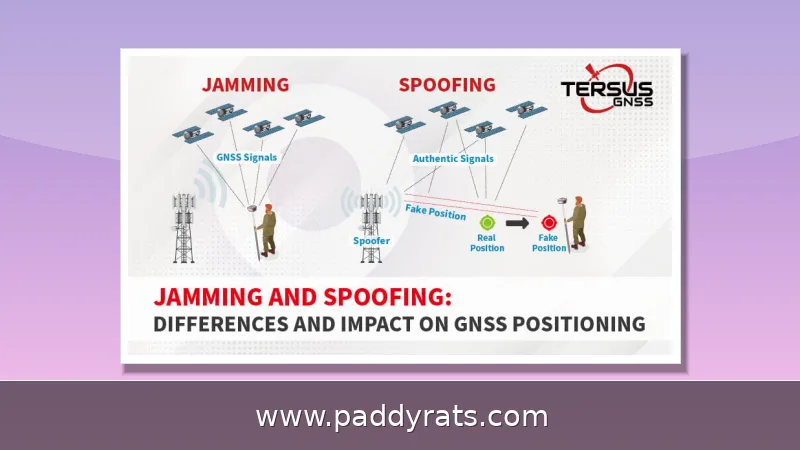
A signal jammer doesn't hack into anything or crack any codes. What it actually does is broadcast radio signals on the very same frequencies that everyday devices depend on—your phone, a GPS tracker, a drone, you name it. Once those frequencies get flooded with the jammer's own transmission, the devices can't send or receive information anymore. There's nothing clever about it; it's pure brute force. The jammer just talks louder than the cell tower or satellite on the same channel, so all the target device picks up is noise. Think of two people trying to have a conversation while someone else stands right next to them shouting—the original voices are still there, but you can't make them out anymore. That's basically what goes on across cellular bands like 700MHz, 800MHz, 900MHz, 1800MHz, 1900MHz, and 2100MHz, plus the GPS 1575MHz band and WiFi's 2.4GHz and 5GHz bands. Whether you're trying to block a call, a text, a GPS lock, or a drone's control link, the outcome is the same.
A signal jammer doesn't invent new frequencies—it fights on the same turf your phone already uses. It floods cellular bands like 700MHz, 800MHz, 900MHz, 1800MHz, 1900MHz, and 2100MHz, the GPS 1575MHz band, and the WiFi 2.4GHz and 5GHz bands with RF noise. Picture two people talking in a small room while a third shouts over them: the original signals from cell towers and satellites are still there, but the device can no longer pick them out, so a wall of interference forms between the phone and its network. The approach varies by model. Wide-band full spectrum jammers blanket several frequency bands at once, which is convenient but demands more power. More advanced units turn to protocol jamming, targeting the control channels that manage a connection instead of relying on raw noise alone—cleaner and often more efficient.
How far a jammer actually reaches isn't some fixed number you can just pull off a spec sheet. It depends on a bunch of things: output power, the operating frequency, antenna gain, how strong the target signal is, and whatever else is happening in the surrounding environment. Higher frequencies tend to lose energy faster over distance, while a bigger, better-tuned antenna can push the same transmitter noticeably farther. That's why the same unit that wipes out a small conference room can be nearly useless inside a concrete warehouse — thick walls, metal shelving, and other dense materials soak up RF energy, and a strong cell signal from a nearby tower only forces the jammer to fight harder for the same airspace. Out in open areas with weak ambient signals, though, even a modest device can cover far more ground than its rating would suggest.
| Factor | Effect on Jamming Distance |
|---|---|
| Output power | More power generally means more range, but returns diminish quickly |
| Operating frequency | Higher bands lose energy faster; lower bands travel further |
| Antenna gain | Higher gain focuses the signal and extends reach |
| Target signal strength | A strong nearby tower signal is harder to overpower |
| Surrounding conditions | Concrete, metal, and dense materials absorb RF and shrink coverage |
| Target | Frequency Bands | Typical Effect |
|---|---|---|
| Cell phones | 700MHz - 2100MHz | Blocks voice, SMS and mobile data |
| GPS | 1575MHz | Disrupts positioning and tracking |
| WiFi | 2.4GHz and 5GHz | Prevents wireless network connections |
| Drones | Control and video links | Breaks command link, triggers hover or return |
Types of Signal Jammers: Portable, Drone, WiFi and Cell Phone
Portable signal jammers are small handheld devices powered by internal batteries. They are cordless, carry built-in antennas, and are ideal for small rooms, vehicles or outdoor use where you need to move around. The trade-off is coverage: a handheld unit will not punch through a large open floor plan the way a desktop model will.
Drone signal jammers go after the communication frequencies that drones and UAVs rely on, severing the command link between the operator and the aircraft. Once that connection drops, most drones either hover in place or automatically return to their launch point, which is exactly why these devices show up around airports, prisons and other no-fly zones. WiFi jammers work differently: they block the 2.4GHz and 5GHz bands, so laptops, cameras and smart devices simply can't connect to a wireless network. Cell phone jammers cast an even wider net, targeting the 700MHz up to 2100MHz bands that carry 2G, 3G, 4G and 5G traffic. That means voice calls, SMS and mobile internet all go dark within range. The band coverage matters here, since a jammer built for one frequency range won't touch devices running on another.
Desktop jammers are the workhorse option for anyone who needs consistent, around-the-clock coverage in a fixed location. Instead of relying on a battery, they plug into a standard outlet and are built for permanent installation, which makes them a natural fit for offices, shops, classrooms, and other spaces where you want a wide jamming footprint without constantly recharging or repositioning a handheld unit. The trade-off is obvious: you give up portability, since these units are meant to stay put once they are set up. In exchange, they typically deliver the best value per square foot of coverage, spreading their output across a larger area at a price that often undercuts comparable portable models. For buyers who care more about steady, wide-area performance than the freedom to move the device from room to room, a desktop jammer is usually the most practical and cost-effective way to go.
| Type | Power Source | Best Use Case |
|---|---|---|
| Portable handheld | Internal battery | Small rooms, vehicles, outdoor carry |
| Drone jammer | Battery or fixed | Counter-UAV, forcing return-to-launch |
| WiFi jammer | Battery or fixed | Blocking 2.4GHz and 5GHz connections |
| Cell phone jammer | Battery or fixed | Blocking 2G through 5G cellular service |
| Desktop unit | Fixed power | Permanent office, shop or classroom install |
Real Product Price Examples From Jammer Retailers
Retail listings are the most honest benchmark you will find, because they show what people actually pay rather than what a spec sheet implies. Jammer Master lists a 12 Antennas Desktop Signal Jammer JM001 at $749.99, a 5G Mobile Phone Jammer JM023 at $980.00, a Full Band Desktop Signal Jammer JM005 at $1,365.99, a Portable Jamming Device JM009 at $739.99, and a Suitcase Style Signal Jammer JM007 at $2,659.99. The same retailer also lists a 4G Phone Jammer JM021 at $520.00, a Drone UAV Signal Jammer JM004 at $2,399.99, a Handheld WiFi Bluetooth Signal Jammer JM012 at $569.99, and a Handheld Mobile Phone Jammer with 16 antennas and 25 meters of range, model JM018, at $699.00.
Jammer-store takes a similar approach with a Colibri Y3 portable 2.4/5.8 WiFi and Bluetooth mini jammer at $250.00, a GP5000 Car Anti-Tracking GPS Blocker at $119.99, and an HPJ1000-5G desktop jammer at $999.00. Telejammer skews cheaper across its catalog: a G9 PRO USB Car GPS Jammer covering L1 L2 L3 L4 at $36.00, a W9 WiFi 2.4G 5.2G 5.8G Signal Blocker at $65.00, a P6S USB OBD Anti Car GPS Jammer at $40.00, an M6S Car GPS Jammer at $40.00, a Hidden 4 Antennas GPS Jammer SN4-G at $45.00, and a USB WiFi 2.4G 5.2G 5.8G Signal Blocker at $33.00.
The upper end of that same catalog shows where real capability starts: a Full Band Drone Detector covering 700-6300MHz at $650.00, an EMP jammer aimed at fishing games and slot machines at $135.00, a Portable 2.4G 5.2G 5.8G WiFi Jammer at $95.00, a Portable F9 WiFi Signal Jammer at $69.00, a Portable W9 2.4GHz 5GHz WiFi Jammer at $85.00, a Handheld Drone FPV Signal Detector covering 100MHz-8GHz at $1,200.00, a Handheld 32 Bands Cell Phone Signal Jammer at $800.00, and a 2.4G/5.2G/5.8G 4W WiFi Signal Booster Amplifier for drones at $1,200.00.
Jammersignal rounds out the picture with a 4G Jammer 8 Antenna Portable Handheld Cell Phone Signal Blocker at $219.99, a Portable 24 Antenna Full Frequency Jammer at $829.88, a Handheld 4G 5G Jammer with VHF, LOJACK, WiFi and GPS plus a 16 Antenna Interceptor at $839.99, and a 6 Antennas Cell Phone Signal Jamming Device at $199.99. A YouTube review also tested a cheap $20 Chinese mobile signal jammer, which is worth mentioning only as a caution: at that price point you are buying a toy, not a tool.
| Product | Retailer | Price |
|---|---|---|
| 12 Antennas Desktop Signal Jammer JM001 | Jammer Master | $749.99 |
| Full Band Desktop Signal Jammer JM005 | Jammer Master | $1,365.99 |
| Suitcase Style Signal Jammer JM007 | Jammer Master | $2,659.99 |
| HPJ1000-5G desktop jammer | Jammer-store | $999.00 |
| Handheld 32 Bands Cell Phone Jammer | Telejammer | $800.00 |
| Portable 24 Antenna Full Frequency Jammer | Jammersignal | $829.88 |
| G9 PRO USB Car GPS Jammer L1 L2 L3 L4 | Telejammer | $36.00 |
Signal Jammer Market Size and Growth Figures
Market research firms disagree wildly on the size of this category, which tells you something about how loosely defined it is. Fortune Business Insights values the global signal jammer market at USD 4.61 billion in 2025, projected to grow from USD 4.98 billion in 2026 to USD 9.27 billion. Dataintelo puts the market at $2.8 billion in 2025, projected to reach $5.6 billion by 2034 at an 8.1% CAGR. Coherent Market Insights estimates USD 1.8 billion in 2026, expected to reach USD 3.6 billion by 2033.
Reanin values the market at USD 913.05 million in 2025, expected to increase to USD 1,209.32 million by 2032. Research and Markets values the market at USD 2.37 billion in 2026, projected to reach USD 3.36 billion by 2030 at a 9.1% CAGR, growing from $2.16 billion in 2025. Strategic Market Research puts it at USD 2.85 billion in 2025, projected to reach USD 4.64 billion by 2032 at a 7.2% CAGR. Technavio forecasts an increase of USD 1.08 billion at a 5.66% CAGR between 2023 and 2028.
Precision Reports narrows the lens to one segment, valuing the global portable RF signal jammer market at USD 169.01 million in 2026, expected to reach USD 222.45 million. That gap between the broadest and narrowest estimates is not a rounding error; it reflects different definitions of what counts as a jammer, from $36 car GPS blockers to $2,600 suitcase systems.
| Source | Base Value | Projection |
|---|---|---|
| Fortune Business Insights | USD 4.61B (2025) | USD 9.27B |
| Dataintelo | $2.8B (2025) | $5.6B by 2034, 8.1% CAGR |
| Coherent Market Insights | USD 1.8B (2026) | USD 3.6B by 2033 |
| Reanin | USD 913.05M (2025) | USD 1,209.32M by 2032 |
| Research and Markets | USD 2.37B (2026) | USD 3.36B by 2030, 9.1% CAGR |
| Strategic Market Research | USD 2.85B (2025) | USD 4.64B by 2032, 7.2% CAGR |
| Precision Reports (portable RF only) | USD 169.01M (2026) | USD 222.45M |
Are Signal Jammers Legal? What the FCC Says
This is the part of the buying guide that matters more than price. The FCC maintains a Jammer Enforcement page describing RF jammers, also known as signal blockers, as RF transmitters designed to block, jam or otherwise willfully or maliciously interfere with communications. That definition is deliberately broad, and it is the basis for enforcement action against sellers and users alike.
In practice, that means consumer use of jammers in the United States is not a gray area. Telejammer publishes articles on whether you can buy a signal jammer for personal use, whether cell phone jammers are legal in the workplace, why cell phone scramblers are used in prisons, and how to choose a jammer for conference rooms, but those articles describe a landscape where legal deployment is narrow and typically limited to specific government or authorized institutional contexts.
If you are researching jammers for a legitimate security or facility-management purpose, the responsible first step is to confirm your authorization in writing before you spend a dollar. Price comparison is easy; unwinding an enforcement action is not.
| Question | Practical Answer |
|---|---|
| Can consumers buy jammers for personal use? | Generally not lawful in the US |
| Are jammers legal in workplaces? | Only in narrow authorized contexts |
| Why are scramblers used in prisons? | Controlled institutional deployment |
| Who regulates them? | The FCC, via its Jammer Enforcement page |
Frequently Asked Questions
How much does a cell phone signal jammer cost?
Prices generally run between $200 and $2,000 depending on use. Low-power jammers cost $200 to $800, medium-power units $800 to $2,000, and high-power jammers more than $2,000. Civilian GPS jammers are relatively cheap at around $400, while suitcase-style wide-band systems can exceed $2,600.
Why do signal jammer prices vary so much?
Cost depends on the host chip type, the specific signal being jammed, and module design. Integrated module jammers are more affordable, while units with large antenna gain, high shielding effectiveness, stable performance and efficient heat dissipation cost more. Wider frequency coverage also requires more power, which drives up the thermal and component budget.
How does a signal jammer work?
A jammer transmits radio frequency noise on the same frequencies used by phones, GPS or WiFi, such as 700MHz to 2100MHz cellular bands, the 1575MHz GPS band, and 2.4GHz and 5GHz WiFi bands. This noise overpowers the original signals from towers and satellites, creating a barrier. Actual jamming distance depends on output power, antenna gain and surrounding conditions.
Are signal jammers legal?
The FCC states that RF jammers, also known as signal blockers, are transmitters designed to block, jam or otherwise willfully or maliciously interfere with communications. The FCC maintains a jammer enforcement page covering these devices. In practice, consumer use in the United States is not a gray area, and legal deployment is narrow.