Directional anti-drone jammers focus RF energy into a narrow beam, extending effective range to 2-3 km or more while cutting collateral interference. Here is how the hardware, specs, deployment options and U.S. legal limits actually work.
What Is an Anti Drone Jammer with a Directional Antenna?
An anti-drone jammer with a directional antenna is a counter-UAV system that transmits RF energy on the same frequencies a drone relies on for control, video, and telemetry — except it focuses that energy into a tight beam rather than scattering it in all directions. The drone's receiver gets flooded, its fail-safe kicks in, and it either returns to its launch point, hovers in place, or comes down. Think of directional designs as the surgical tool in a counter-drone kit: one threat axis, one beam, and far less RF noise bleeding into everything around it.
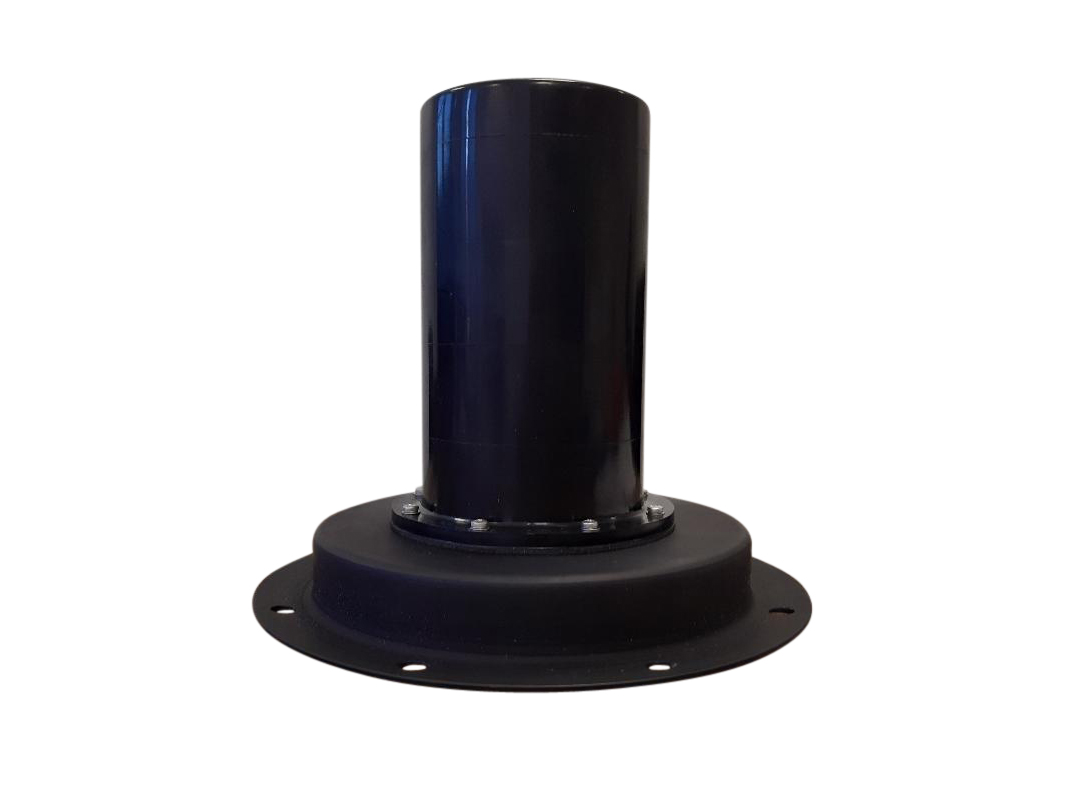
The hardware in this category covers a pretty wide spread. Take purpose-built antennas like the Antenom HPLPDA-4006000: it runs from 400 MHz all the way up to 6000 MHz, delivers roughly 7 dBi of typical gain, and weighs just 0.5 kg. Then you've got the CT-4001P, a four-band directional antenna that combines 1575–1620 MHz, 2400–2500 MHz, and 5150–5875 MHz coverage with 8 dBi of gain. Around those antennas, manpack and vehicle units add the rest of the package—amplifiers, batteries, and aiming optics.
When you're shopping for this kind of gear, the terminology can trip you up. Vendors and integrators throw around terms like anti-drone jammer, drone jammer, counter-drone antenna, counter-UAV antenna, directional antenna, Yagi, helical, log-periodic, RF jammer, UAV radio blocker, jammer gun, and manpack jammer — often using them as if they all mean the same thing. But here's what actually sets a directional product apart from an omni one: it's not the name on the box, it's the radiation pattern. A directional unit puts out a defined beamwidth, while an omni unit spreads its signal across a full 360 degrees.
How Does a Directional Drone Jammer Work?
A directional antenna works by shaping electromagnetic waves through element spacing and phase relationships, which concentrates the radiated power into a specific angular range. Beam angles usually fall somewhere between 15 and 90 degrees, and the tightest designs can get horizontal beamwidths down to around 10 degrees. Since the same amplifier output is being squeezed into a smaller solid angle, effective radiated power typically climbs 6 to 20 dB compared to an omnidirectional setup, and gain can go past 15 dBi. That's really the whole trick: same watts, way more watts per degree.
Adaptive beam-steering pushes this even further. The radiation pattern gets adjusted in real time to follow a moving target while keeping the interference footprint as small as possible. That's exactly why modern counter-drone systems feed the jammer target data — speed, distance, direction, and pitch — pulled from radar or an RF detector. With that information in hand, the jammer can rapidly re-aim its antennas at the invading drone instead of just blanketing the whole sky.
Frequency-sweeping jamming is what really completes the picture. Instead of parking on a single frequency, the system sweeps across the drone's control and video channels, which lets it break the link with a high success rate while leaving unrelated communication systems alone. Think of beamforming as the difference between a focused flashlight and a wide lantern — same battery, but the reach and the spill look nothing alike.
Directional vs Omnidirectional Drone Jamming: Specs Compared
The real trade-off here comes down to coverage versus reach. An omni jammer blasts RF in every direction at once, so you get full 360-degree coverage—but the effective range is shorter, usually topping out somewhere around 500 to 1500 meters before the signal spreads too thin to do any real work. A directional jammer flips that: you can push out to 2-3 km or even farther, but only along the narrow axis you're actually pointing at, and it won't do a thing for you unless you aim and align it properly.
Almost every security architect I've talked to ends up layering the two: they'll use wide-area detection and omni jamming first to slow an approach, then switch to targeted directional jamming once sensors pin down where the threat is actually coming from. That way the perimeter stays covered the whole time, and the long-range reach is saved for the drone that really matters.
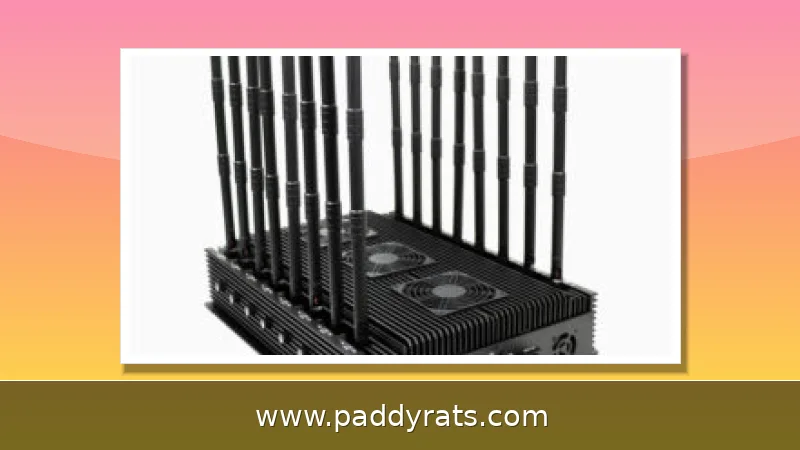
A concrete example makes the trade-off clearer. Take the ND-BO004 omnidirectional jammer: it's rated for a 1.5 km effective range, with up to 30 W per band across 410–440 MHz, 840–930 MHz, GPS L1 at 1.57 GHz, GPS L2 at 1.22 GHz, 2.40–2.50 GHz, and 5.70–5.90 GHz. It also covers a full 360-degree protective angle, runs at a 10:1 suppression rate, supports Ethernet control, and measures 480 x 280 mm while weighing 12 kg. On top of that, it's built to keep working from -25C to 60C and carries an IP67 rating. Now compare that to a directional manpack: what you give up is the 360-degree blanket, and what you get back is range concentrated on a single bearing.
Key Specifications: Frequency Bands, Power and Range
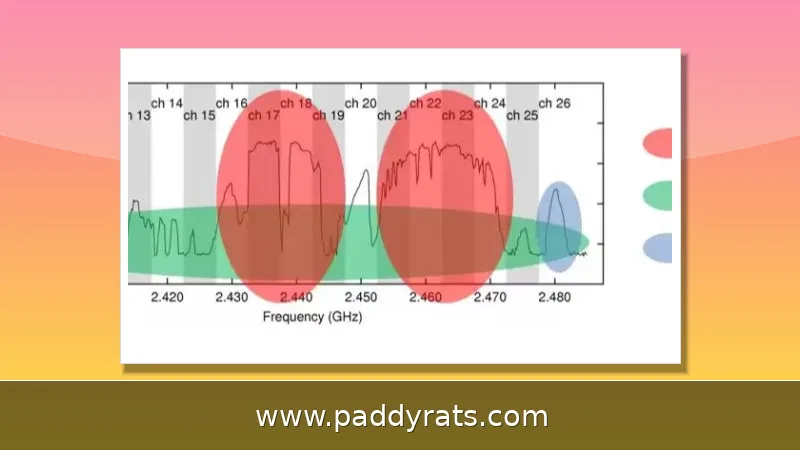
Most counter-drone antennas and jammers tune across 400 MHz to 6000 MHz. That wide span isn't arbitrary — it has to catch the UHF control links, the very crowded 2.4 GHz and 5.8 GHz bands, and GNSS frequencies all at once. The usual targets are 433 MHz, 900 MHz, 1.2 GHz, 1.4 GHz, 1.5 GHz, 2.4 GHz and 5.8 GHz, which carry control, video and telemetry traffic. And if GNSS denial is part of the job, you'll also need to cover GPS L1 at 1.57 GHz and L2 at 1.22 GHz.
Power and range specs swing wildly depending on what class of product you're looking at, so I've learned to check the output wattage for each band instead of trusting one big headline number. Take the AARONIA 9 Manpack: it gets over 1 km in directional mode, but only about a 500 m radius in omni mode, and it runs for over 2.5 hours in omni operation or more than 180 directional jamming triggers, with aiming handled through an optical lens and laser pointer. Then there's the Anti Drone System Smart Jammer, which lists over 200 W of total output spread across eight bands (433 MHz, 900 MHz, 1.2G, 1.4G, 1.5G, 2.4G, 5.2G, 5.8G) and still weighs just 5.4 kg.
At the high end, the Unistring RF Drone Jammer covers 433 MHz, 915 MHz, 2.45 GHz, 5.8 GHz and a wideband 400 MHz to 6 GHz span with a directional architecture and jamming range up to 10 km. Birdview's jammer covers ISM bands plus GNSS L1 and L2 and is positioned to neutralize single or multiple drones approaching from a direction at 5 km. Hinaray's HN-171018 uses a directional antenna with a 1500 m interference range across 1.5G, 2.4G and 5.8G at 30 W each.
Price points matter for budgeting. Public listings from Jammer Store include the Drone Killer 8 at 150 W and up to 1000 m for $2,700, the Drone Killer 6 at 433-5800 MHz and 120 W for $2,100, the PDJ-4075 backpack at five bands and up to 1000 m for $7,600, the DJ-3017 at four bands and 82 W for $2,185, the Altron-4 at 35 W for $840, and a spectrum handheld at $2,250. Treat those as vendor-listed figures, not independently benchmarked results.
The market context is worth noting: the anti-jamming industry has been valued around USD 5.0 billion, with expectations of more than doubling to USD 11.4 billion by 2033. That growth is being driven by drone proliferation across commercial, military and critical-infrastructure settings, not by consumer demand.
Deployment: Fixed, Vehicle and Manpack Configurations
Deployment choices follow the mission. Fixed installations protect defined perimeters, prisons, substations and airfields, where the threat axis is predictable and a narrow beam can be pre-aimed or steered by a sensor feed. Vehicle-mounted systems add mobility for patrols and convoy escort. Manpacks put the jammer in an operator's hands for rapid response, which is where ergonomics and aiming aids become decisive.
The AARONIA 9 Manpack sequence is a good template for manpack operation: switch on the jammer, point the jammer gun at the suspected drone, and aim the directional antenna using the optical lens and laser pointer for day and night operation. Pre-operation checks include confirming the battery is charged and the components function, reviewed through test results on the display screen. The operator then selects between directional and omni-directional jamming modes to disable drone control signals, telemetry and video.
The broader counter-drone workflow is a chain, not a single device: detection via radar, RF scanners, acoustic sensors and AI; tracking; identification; decision-making; neutralization; then recording and reporting. Directional jamming sits in the neutralization step, and it only performs as well as the detection and tracking data feeding it. Fixed sites usually pair wide-area detection with omni jamming as a first layer, then hand off to directional jamming for the specific intruder.
Is Drone Jamming Legal in the United States?
No, not for private parties. Under the Communications Act of 1934, the FCC prohibits operating, marketing or selling jamming equipment except for authorized government entities. That means a business cannot legally buy a jammer to protect a warehouse roof, and a homeowner certainly cannot switch one on over their property, regardless of what a vendor's product page implies.
Authorized users include the Department of Defense, DHS, DOJ, DOE and the Coast Guard, plus state and local law enforcement and correctional agencies newly authorized under the SAFER SKIES Act. Everyone else operates outside the law, and enforcement has included substantial fines. Importation and even advertising of jamming devices have drawn FCC action, so the compliance risk starts well before the device is powered on.
If you are evaluating counter-drone coverage for a site in the U.S., the practical path is detection and mitigation technologies that do not transmit jamming signals, plus coordination with federal authorities who hold the authority to jam. Outside the U.S., rules vary widely by country, and some jurisdictions permit limited law-enforcement or military use under licensing. Always confirm the local framework before procurement, because the hardware is identical and the legal exposure is not.
How Do You Choose Between Directional and Omni Jamming?
Start with the geometry of the site and the likely threat axis. If drones will approach across a known corridor, a fence line, or a single approach vector, a directional system delivers more range per watt and less collateral interference. If the site is open on all sides and you cannot predict the bearing, omni coverage prevents gaps, at the cost of shorter reach and more RF spill.
Then check the numbers that actually constrain you: beamwidth, gain, per-band output, weight, power source and aiming method. A 10-degree beam is excellent for a corridor and painful for a moving target without beam-steering. A 12 kg fixed omni unit with IP67 sealing is fine on a mast and useless in a backpack. The AARONIA 9's split of over 1 km directional versus a 500 m omni radius illustrates how much the same platform gives up when it goes 360 degrees.
Finally, layer the system. Detection feeds targeting, omni jamming buys time, and directional jamming finishes the job. Budget for the sensor layer, not just the jammer, because a directional beam pointed at the wrong place is simply an expensive flashlight.
Frequently Asked Questions
How does a directional antenna improve drone jamming?
A directional antenna concentrates RF energy into a narrow beam instead of spreading it in all directions. Sources cite 6 to 20 dB higher effective radiated power, gain above 15 dBi, beamwidths as narrow as 10 degrees, and effective jamming ranges of 2 to 3 km or more, with less collateral interference.
What is the difference between omni and directional drone jamming?
Omni jammers flood all directions at once, giving 360-degree coverage but shorter reach, typically around 500 to 1500 m. Directional jammers focus energy into a beam, extending range to 2 to 3 km or more and reducing interference outside the target direction, but they require aiming and alignment.
Which frequency bands do anti-drone jammers target?
Common bands include 433 MHz, 900 MHz, 1.2 GHz, 1.4 GHz, 1.5 GHz, 2.4 GHz and 5.8 GHz for control, video and telemetry, plus GNSS bands such as GPS L1 at 1.57 GHz and L2 at 1.22 GHz. Some antennas span 400 MHz to 6000 MHz.
Who can legally operate a drone jammer in the United States?
Under the Communications Act of 1934, the FCC prohibits operating, marketing or selling jamming equipment except for authorized government entities. Authorized users include the Department of Defense, DHS, DOJ, DOE and Coast Guard, plus state and local law enforcement and correctional agencies newly authorized under the SAFER SKIES Act.