Specialty online stores sell cell phone, GPS, WiFi and drone jammers, but US federal law bans marketing and selling them. Here is what retailers list, what the hardware costs, and where the legal line sits.
Where Can I Buy a Signal Jammer Online?
If you're genuinely in the market for jamming hardware, specialty online shops are where it actually shows up. A few names come up again and again: Jammer Master (JammerMaster.com), Jammer Store (Jammer-Store.com), JammerMFG, JammerX, Telejammer, Security Pro USA, Endoacustica, and Digitpol. These sites don't hold back on the details, either — you'll find full spec sheets, band counts, and prices listed right there, and some of them will ship pretty much anywhere. The big marketplaces are a different story. Search Amazon, eBay, Walmart, or Etsy and what you'll mostly turn up is signal blocking pouches, faraday bags, bug detectors, and RF scanners — stuff that shields you from signals or hunts them down, not stuff that actually transmits interference.
That distinction ends up mattering a lot once you start browsing. Take a Faraday pouch: it's really just a passive, metal-lined bag that stops a phone from talking to the network, and buying or owning one is completely legal. A jammer is a different animal—it's an active radio transmitter. The FCC doesn't mince words on its Jammer Enforcement page: federal law bans the operation, marketing, or sale of any kind of jamming equipment, and selling, importing, or distributing jammers in the US is generally against the law. So sure, those online storefronts exist, but the legal exposure isn't one-sided—it hits the seller and the buyer alike.
Dataintelo put the global signal jammer market at $2.8 billion in 2025, with projections reaching $5.6 billion by 2034 — that's an 8.1% compound annual growth rate. Looking at those numbers, you might assume everyday shoppers are casually adding jammers to their carts. Not quite. Most of that revenue comes from government agencies, military programs, and enterprise buyers who operate under some form of authorization. That's the reason the market keeps climbing even while consumer sales sit in a legal gray zone. So if you're just a regular person Googling "where can I buy a signal jammer," the real answer is much narrower: a handful of specialty shops online are where these devices actually change hands, and every one of those transactions carries genuine legal risk.
What Types of Signal Jammers Are Sold?
Most vendors organize their catalogs by the frequency band a device targets, and honestly, the naming conventions are pretty consistent from one store to the next. That's actually helpful — it means you can pull up a listing on JammerX, set it next to one from Jammer Master or Telejammer, and compare specs without getting buried in marketing fluff. The main categories you'll run into are cell phone jammers covering GSM, 3G, 4G and 5G bands, GPS jammers going after the L1 through L5 satellite navigation frequencies, WiFi blockers for 2.4 GHz, 5.2 GHz and 5.8 GHz, walkie-talkie or general RF blockers, and drone jammers built to cut both the control link and the video feed. Plenty of models bundle several of these bands into a single unit, which is why a "16 antennas" or "12 bands" label typically means one box that handles multiple targets rather than something dedicated to a single job. JammerX is a solid example — its lineup covers cell phone jammers, 3G/4G/5G signal jammers, GPS jamming devices, WiFi blockers, portable jammers, high-power models, car jammer devices, desktop jammers and RF/audio blockers, which more or less mirrors how the rest of the market breaks down.
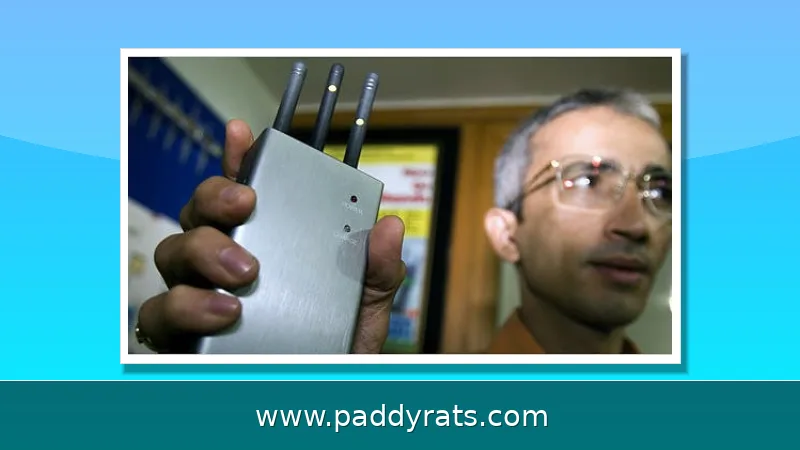
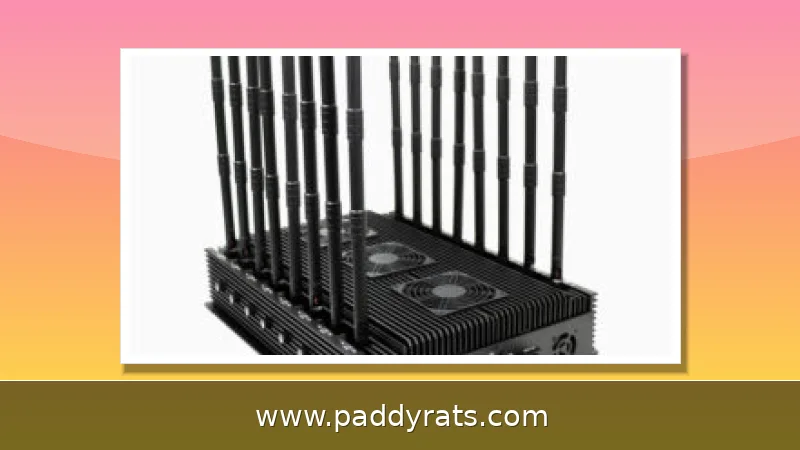
Form factor is usually the easiest way to figure out what you're actually looking at, because it tends to match the job. Handheld units are small and battery-powered, built for short-range work — a few minutes of coverage in a single room or a car. Portable or briefcase-style models sit somewhere in the middle: more bands, higher wattage, often with individual band control, and some can run an hour or more on battery while still working off a 220V outlet or a car adapter. Desktop units skip the battery entirely and run on mains power for continuous operation, which is exactly why they're the bulkiest and priciest of the three. Vehicle-oriented devices take a different approach, plugging into a 12V socket or an OBD port and staying out of sight. Then you've got the oddballs that blur every category — Telejammer's EMP jammer, marketed for fishing games and slot machines at $135.00, is the classic example. That listing says a lot: this market has a gray-zone fringe sitting right next to its professional tier, so the same storefront selling a $1,839.99 desktop jammer might also list something with no legitimate security purpose whatsoever.
Security Pro USA takes a different approach. Rather than going after walk-in shoppers, it points its catalog squarely at institutional buyers, with drone, GSM, GPS and WiFi blockers on offer. And the company clearly understands how agencies actually purchase things: it accepts purchase orders and offers Net-30 terms through a dedicated desk line, 1-800-264-8273. That split between consumer storefronts and government-facing suppliers tells you a lot about how this industry really breaks down. On one side, you have sites that will happily sell a handheld unit to anyone with a credit card. On the other, you have vendors built around procurement paperwork, invoicing and agency relationships. The products themselves might overlap, but the sales channels, payment terms and buyer expectations really don't.
| Buyer Type | Typical Vendors | Purchase Method |
|---|---|---|
| Individual consumers | Jammer Master, JammerMFG, Telejammer, JammerX; marketplaces like Amazon, eBay, Walmart, Etsy | Direct online checkout, credit card |
| Government, military and private enterprise | Security Pro USA, Digitpol, Endoacustica | Purchase orders, Net-30 terms, dedicated agency desk |
How Does a Signal Jammer Work?
A jammer doesn't really "block" anything in some magical sense — it just wins a shouting match. The device blasts a strong radio signal on the exact same frequency the target device is using, and that surge of raw power drowns out the weaker original signal before the receiver can make sense of it. So instead of a clean data packet, the receiver just gets a wall of noise, and the link falls apart. Inside the unit, four main components handle the job: an RF generator that creates the interfering signal, amplification stages that push it up to usable power, transmission modules that route it to the right bands, and antennas that send it out into the air. How far that interference actually reaches comes down to three things — power output, antenna gain, and band coverage. Bump up the wattage or switch to a higher-gain antenna and you widen the radius; cover more bands and you take out more kinds of devices at once. That's also why battery life varies so much: jamming every band at the same time drains a portable unit in about an hour, while targeting just one band stretches the same battery a lot further.
This is exactly why a phone app can't pull it off. A smartphone just doesn't have the parts jamming requires — there's no RF generator inside, no power amplifier, and no transmit antenna tuned to cellular or GPS bands. Jamming is a physical act, not some software trick. A real jammer pushes out a strong signal on the same frequency as the target device, drowning out the weaker original signal before it ever reaches the receiver. An app has nothing to push with, so anything claiming to block signals is either a placebo or a straight-up scam. That same hardware reality explains two other things buyers tend to notice. Effective range collapses indoors, since walls, floors, and metal studs soak up and reflect RF energy, eating into the distance a jammer can actually cover. And battery life drops off sharply when every band runs at once — the unit is feeding power to multiple transmitters and antennas at the same time instead of just one.
There are technical side effects worth thinking about too. A 2018 study by Shojaeifard examined electromagnetic field exposure from mobile phone jammers, measuring the radiation levels these devices give off. That matters for two groups: the people standing near a jammer, and the equipment it's designed to interfere with. On top of that, jammer detector modules are pretty easy to get these days. They keep an eye out for GSM or GPS interference and notify response teams the moment something unusual shows up on the spectrum. So the bottom line is this: a jammer isn't stealthy hardware, no matter how small it is or how well you hide it. The second you turn it on, it gives itself away to anyone watching the airwaves — a cell provider, a government agency, or just a technician with the right scanning gear.
Signal Jammer Specifications and Prices Compared
Pricing on these things really comes down to a few basics: how many bands they cover, how much power they put out, and how well they're built. The gap between the cheap end and the expensive end is honestly pretty wild. Just glance at the list prices from a few different vendors and you'll see what I mean — a single-band car GPS blocker costs about as much as a takeout dinner, while a multi-band desktop unit can easily climb into the four-figure range.
| Product | Vendor | Bands / Coverage | Price |
|---|---|---|---|
| Handheld Signal Blocker JM024 | Jammer Master | 5G cellular, UAV, GPS | $825.00 |
| Portable Jamming Device JM009 | Jammer Master | Cellular, GPS, WiFi, RF | $739.99 |
| Portable Cell Phone Jammer JM008 | Jammer Master | Cellular, WiFi, GPS, walkie talkie | $659.99 |
| 16-Antenna Signal Jammer JM002 | Jammer Master | Multiple frequencies | $1,088.99 |
| Desktop 5G JM006 | Jammer Master | 5G, multi-band | $1,839.99 |
| CT-12H portable jammer | JammerMFG | 12 bands incl. 5G, GPS, WiFi | $336.98 |
| G9 PRO USB Car GPS Jammer | Telejammer | GPS L1, L2, L3, L4 | $36.00 |
| Handheld 32-Band Cell Phone Jammer | Telejammer | 32 cellular bands | $800.00 |
When you're comparing listings, the extras each retailer throws in can matter almost as much as the hardware itself. Jammer Master keeps things simple: free worldwide shipping, a one-year warranty, and a 5% discount if you use the code BLOCKER at checkout. Telejammer leans harder on buyer confidence, advertising free shipping on orders over $200, a 100% money-back guarantee, and round-the-clock support. Its catalog also spans some pricier detection gear, including a Full Band Drone Detector that covers 700–6300 MHz with an 800–1000 m range for $650.00, marked down from $900.00, and a handheld drone FPV signal detector tuned for 100 MHz to 8 GHz at $1,200.00. JammerMFG takes a different angle, positioning its CT-12H as military-grade with individual band control and up to 500 m of jamming range. Its 8-antenna unit is listed at $336.98, reduced from $536.98, and runs up to two hours on battery while still charging from 220V or a car adapter during operation.
| Retailer | Notable Offer / Perk | Highlighted Product | Key Specs | Price |
|---|---|---|---|---|
| Jammer Master | Free worldwide shipping, 1-year warranty, 5% off with code BLOCKER | — | — | — |
| Telejammer | Free shipping over $200, 100% money-back guarantee, 24/7 support | Full Band Drone Detector | 700–6300 MHz, 800–1000 m range | $650.00 (was $900.00) |
| Telejammer | Free shipping over $200, 100% money-back guarantee, 24/7 support | Handheld Drone FPV Signal Detector | 100 MHz–8 GHz | $1,200.00 |
| JammerMFG | — | CT-12H (military-grade) | Individual band control, up to 500 m jamming range | — |
| JammerMFG | — | 8-antenna unit | Up to 2 hours on battery, charges via 220V or car adapter while operating | $336.98 (was $536.98) |
Battery life is the spec buyers underestimate most. Vendors generally quote around one hour of runtime when every band is active simultaneously, with longer endurance when only one band runs. If you are comparing two units at similar prices, check the band list, the rated output in watts and whether bands can be switched individually; a 12-band unit with per-band control is far more useful than a fixed all-band device at the same wattage.
Is Buying a Signal Jammer Legal?
In the United States, the answer is essentially no for private buyers. The FCC states that federal law prohibits the operation, marketing or sale of any type of jamming equipment, and that it is generally illegal to sell, import or distribute jammers. That covers the storefronts above, the shipping agent and the end user. Enforcement actions have targeted both sellers and operators, and the agency's Jammer Enforcement page is kept current as a public warning rather than an archive.
Authorized use is narrow. Government agencies, military units and certain private enterprises can obtain equipment through compliant channels, which is why Security Pro USA and similar suppliers ask for purchase orders and agency credentials. Healthcare facilities, for instance, may need to prevent interference with medical equipment, and some secure workplaces handle sensitive information where radio silence is a requirement. Those are institutional scenarios with legal cover, not consumer use cases.
If you suspect someone has placed a jammer in or near your home, the practical response is to document the symptom, such as dropped calls in one room at the same time each day, and then report it. The FCC accepts complaints about suspected jamming, local ham radio clubs often have the spectrum-monitoring skills to help identify a source, and your cell provider's technical support can confirm whether a tower issue is involved. Buying your own jammer to fight back is not a legal remedy.
Who Uses Signal Jammers and Why?
The legitimate demand comes from a handful of sectors. Anti-eavesdropping teams use them to protect sensitive rooms. Government and military units use them for communications security and to disrupt remote-controlled threats. Healthcare facilities use them to stop interference with medical equipment. Workplaces handling confidential information use them to close off audio and data leaks, and some classrooms use them to reduce smartphone distraction. Home privacy is the consumer-facing pitch, and it is also where most of the legal trouble originates.
The industry's own framing has shifted toward detection rather than blocking. Jammer detector modules can identify GSM or GPS jamming and notify response teams, and drone detectors such as Telejammer's 700-6300 MHz unit serve the same defensive purpose. As WiFi, cellular and sensor jamming become more prevalent, monitoring tools are the compliant half of this market, and they are the products a normal buyer can actually purchase without running afoul of federal rules.
There is also a pop-culture layer that pulls search traffic toward this topic: GTA Online features 50 Signal Jammers as collectibles. Destroying each one awards GTA$2,000 and 1,000 RP, and clearing all 50 adds a GTA$50,000 bonus, for a total of GTA$150,000 and 50,000 RP, plus Avi Schwartzman as an unlocked hacker. Players typically fly an aircraft with homing missiles such as the Buzzard Attack Chopper or use the Oppressor MK2, and many jammers can be sniped from the ground with an interactive map. Avi takes a 10% cut and gives 3 minutes 30 seconds in the vault, versus Paige Harris at 9% and 3 minutes 15 seconds.
What Should You Check Before You Buy?
Start with the legal question, not the spec sheet. If you are a private individual in the US, no vendor listing makes a jammer legal to operate, and importing one can create customs and enforcement problems. If you represent an agency or enterprise, work through a supplier that handles compliance paperwork and can document authorized use. Ask for the band list, output power, antenna count, per-band switching and warranty terms in writing before paying.
Then match the hardware to the actual problem. A single-band GPS blocker is cheap but narrow. A 12-band portable unit with individual band control covers more scenarios. A desktop unit with 16 antennas is built for fixed installation and continuous power. Battery runtime, shipping terms and support hours matter as much as the headline price, and vendors differ sharply on all three.
Finally, consider whether a passive or detection product solves the problem instead. Faraday pouches, signal blocking bags and RF scanners are legal to buy, and jammer detectors give you evidence to act on. In most real-world situations, detecting interference and reporting it to the FCC or your carrier is both cheaper and safer than buying a transmitter you cannot legally switch on. This article is not legal advice, and regulations vary by country.
Frequently Asked Questions
Where can I buy a signal jammer?
Specialty online stores such as Jammer Master, Jammer Store, JammerMFG, JammerX, Telejammer, Security Pro USA and Endoacustica sell cell phone, GPS, WiFi and drone jammers. General marketplaces like Amazon, eBay, Walmart and Etsy mainly list signal blocking pouches, detectors and shielding accessories rather than active jamming hardware. Note that US federal law prohibits marketing and selling jamming equipment, so these listings carry real legal risk.
Is it legal to buy a signal jammer in the United States?
No, not for private buyers. The FCC states that federal law prohibits the operation, marketing or sale of any type of jamming equipment, and that it is generally illegal to sell, import or distribute jammers. Authorized use is limited to specific government, military and enterprise sectors, so check local regulations and confirm you qualify before purchasing anything.
How does a signal jammer work?
A jammer transmits a strong radio signal on the same frequency as the target device, overwhelming the weaker original signal so the device cannot send or receive. Key components include an RF generator, signal amplification, transmission modules and antennas. Phone apps cannot replicate this because smartphones lack the transmitter hardware and tuned antennas required.
How much does a signal jammer cost?
Prices vary widely by power and band count. Jammer Master lists handheld and portable models from about $659.99 to $1,839.99, while Telejammer lists car GPS jammers from $36 and a handheld 32-band cell phone jammer at $800. JammerMFG lists an 8-antenna unit at $336.98. Higher band counts and output wattage drive the price up quickly.