Directional drone anti-jamming defense systems focus RF energy at a target to sever the command-and-control link between a UAV and its operator, forcing fail-safe behavior. Here is how the technology, the countermeasures, and the legal limits actually work.
What Are Directional Drone Anti-Jamming Defense Systems?
Directional drone anti-jamming defense systems are counter-UAS tools that aim RF energy in one tight direction rather than blasting it across the whole sky. They're not designed to destroy a drone — the point is to sever the command-and-control link between the aircraft and its operator, so the UAV drops into a fail-safe state: landing, hovering, or returning to its home point. And because the beam stays focused, a directional system can go after one specific target while leaving the surrounding spectrum far cleaner than an omnidirectional broadcast ever could.
In practice, these systems are the last link in a detection chain. Radar, RF analyzers, optical sensors, and acoustic arrays do the work of finding and classifying the drone first, and only then do they cue the directional jammer to the correct bearing and frequency bands. That order—detection before mitigation—really matters. A jammer that fires blind burns through power for nothing, raises the risk of collateral interference, and leaves the operator with no evidence of what was actually flying.
The term also takes in the defensive side of the same fight. Anti-jamming hardware — think Controlled Reception Pattern Antennas (CRPA), digital signal processing filters, and inertial navigation sensor fusion — helps friendly drones stay in the air even when somebody else is trying to jam them. So really, the phrase covers both the sword and the shield in one electronic battle.
How Directional Jamming Disrupts the UAV Command-and-Control Link
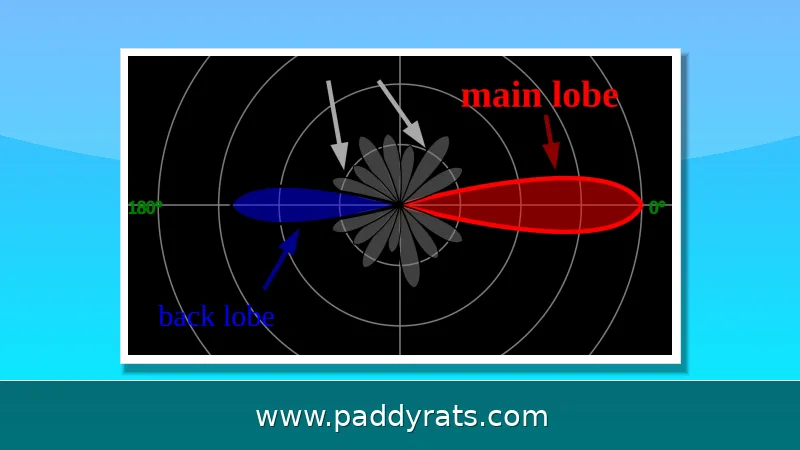
A directional jammer doesn't spray RF energy everywhere—it aims it at the target, hitting the command-and-control link between the drone and its operator hard enough to drown it out. Once that link is severed, the drone can't receive commands anymore, so it falls back on its fail-safe mode: landing, hovering in place, or flying back to its home point. The reason this works is the antenna itself. Instead of broadcasting in every direction, a directional antenna concentrates its energy on one spot, which means a focused beam can do the job at far lower power than a wide-area blast ever could.
At its core, this comes down to the jam-to-signal ratio. If the jammer's energy at the drone's receiver outweighs the legitimate control signal, the receiver simply can't decode the command stream anymore. That's the whole game. Top-tier anti-jamming devices are built to withstand a J/S ratio of +40 dB or higher, which means the jammer has to be about ten thousand times stronger than the signal at the antenna just to come out on top. For compact systems, hitting that kind of margin against a well-protected link is a tall order, and most of them just can't get there.
Okay, but here's the thing about jamming that tends to get buried under all the vendor hype: it's an incomplete countermeasure. Sure, you cut the link, but that tells you almost nothing about where the drone was actually headed, whether it was programmed to keep going to its target no matter what, or what it was carrying. A jammer won't find the pilot, trace the flightpath, or tell you what's in the payload. What it really does is buy you time and force a decision — it doesn't close out the investigation.
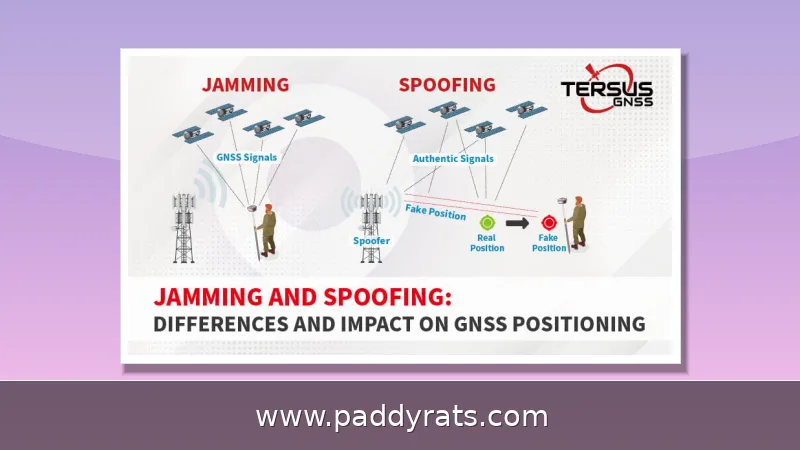
Spoofing is the nastier version. Instead of blocking the signal, a spoofer pretends to be the remote control—it sends out a signal that the drone accepts as the real thing. That opens the door for someone else to take over the drone, steer where it flies, or pull data and camera feeds off it. Jamming denies control; spoofing steals it. But both approaches depend on one thing first: knowing how the target behaves on its frequencies.
Frequency Bands and Jamming Techniques Used Against UAVs
Most modern drone jammers go after several bands at once, since no single frequency covers everything out there. Hobbyist and commercial control links tend to sit at 433 MHz and 900 MHz, while video and telemetry traffic usually shows up around 1.2 GHz and 1.5 GHz. Then there's the busy part of the spectrum: DJI and most commercial command-and-control signals run on 2.4 GHz and 5.8 GHz. Many systems also reach into the GNSS bands—GPS, GLONASS, Galileo, and BeiDou—so the drone can't get a position fix at all.
The table below breaks down the bands and what each one usually carries. Think of it as a planning reference rather than a menu — which bands a given system can actually touch comes down to its antennas, amplifiers, and licensing.
| Band | Typical Use | Why It Gets Jammed |
|---|---|---|
| 433 MHz | DIY and low-cost RC control | Cheap link, easy to overwhelm |
| 900 MHz | Commercial control, telemetry | Long-range command traffic |
| 1.2 / 1.5 GHz | Video and telemetry | Cuts the operator's situational feed |
| 2.4 / 5.8 GHz | DJI and mainstream C2 links | Primary command-and-control path |
| GNSS L1/L2/L5 | GPS, GLONASS, Galileo, BeiDou | Denies position and return-to-home |
Broadband jamming, or barrage jamming as it's often called, throws noise across a wide chunk of the spectrum. It gets the job done, but it's a blunt instrument—wasteful and messy. Spot jamming, by contrast, zeros in on a single narrow frequency. Then there's smart jamming, which goes after only the specific bands the detected drone is actually using. That last method is exactly where directional antennas prove their worth. Because the jamming energy is focused into a tight beam instead of sprayed in every direction, there's far less collateral interference—something that really counts in cities, where hospital equipment, Wi-Fi networks, and public safety radios are all competing for the same airspace.
Detection-to-Mitigation Workflow: Cueing Directional Jammers
Detection must come before mitigation in any responsible deployment. The workflow follows a Perception-Decision-Action loop: sensors perceive the airspace, software decides whether a contact is a genuine threat and which band it uses, and only then does the effector act. Skipping the perception step turns a counter-UAS system into a transmitter that interferes with everything and proves nothing.
On the sensing side, networked systems such as Dedrone Holdings Inc. combine RF, radar, and optical inputs, and Robin Radar's IRIS micro-doppler radar offers 360-degree azimuth and 60-degree elevation coverage that can classify birds versus multirotors. RF analyzers fingerprint the control protocol, which is what lets a directional jammer know whether to fire at 2.4 GHz, 5.8 GHz, or both.
Once a track is confirmed, the cue goes to the effector. Airsight's Smart and Autonomous Jammer provides 360-degree defense coverage out to 1.9 miles across key drone frequency bands, with manual and automatic activation, and it can mount on fixed positions, tripods, or vehicles. AirGuard handles the detection platform side of that pairing. The 1.9-mile figure is a vendor specification, so real-world range will vary with terrain, antenna height, and local noise floor.
Hardware from NQDefense such as the ND-BU002, ND-BU005, and ND-BU008 shows how the market segments by mission size, while systems like Argus-5000 and SkyHunter-4M/P represent static CUAV equipment. Portable options such as the Volnorez jammer and vehicle-mounted units like the RP-377 exist on the other side of the conflict, which is exactly why defensive anti-jamming matters for anyone flying legitimately.
Anti-Jamming Countermeasures: CRPA, INS, and Frequency Agility
On the defensive side, CRPA technology steers nulls toward jammers while maintaining satellite gain, which is the core trick of modern GNSS protection. A compact CRPA typically mitigates only one to three nulls, so it handles a limited number of interferers rather than an unlimited barrage. Digital signal processing filters clean up what remains, and multi-constellation, multi-band operation across L1, L2, and L5 gives the receiver more chances to hold a fix.
Inertial navigation sensor fusion fills the gaps when GNSS drops out, but INS drifts over time without GPS corrections, so the two systems need each other. infiniDome's GPSdome and GPSdome2 packages combine CRPA, DSP filtering, INS fusion, adaptive nulling, and multi-constellation support in a small form factor. Doodle Labs builds a Sense LPI and anti-jam feature set into its Mesh Rider Radios for the datalink side of the same problem.
Size, weight, and power are the hard constraints. Small UAV modules usually come in under 200 g and 3 W, with interfaces such as UART, CAN, and Ethernet, plus compatibility with flight controllers and existing GNSS receivers. That SWaP budget is why you cannot simply bolt a top-tier +40 dB J/S protection package onto a 250-gram airframe.
Agent-based anti-jamming pushes further, using a Perception-Decision-Action closed loop with game theory and reinforcement learning to adapt in real time. The trade-offs are real: CRPA solutions can be bulky and expensive, sensor fusion adds complexity and cost, and multi-constellation receivers still fail under powerful jammers. Frequency agility and adaptive nulling buy resilience, not immunity.
Legal Framework and Authorized Operators of Drone Jammers
Under the Communications Act of 1934, specifically 47 U.S.C. 301, 302a, and 333, the FCC prohibits operating, marketing, or selling RF jamming equipment in the United States. Violations carry fines up to $112,500 per incident and potential criminal prosecution. That means the directional jammer you can buy overseas is not legal to switch on here, no matter how good the spec sheet looks.
Authorized users are a narrow set: the Department of Defense, DHS, DOJ, DOE, and the Coast Guard, plus state and local law enforcement under the SAFER SKIES Act after FBI training. The SAFER SKIES Act, attached to the FY2026 NDAA, authorizes state and local law enforcement following the FBI National Counter-UAS Training Center in Huntsville, Alabama, along with correctional facility security agencies meeting federal certification and agencies protecting National Special Security Events and SEAR-rated events such as the FIFA World Cup 2026.
Military authority has widened too. JIATF-401 updated its guidance in January 2026, expanding Title 10 authority for the DoD and military installations. For everyone else, the practical takeaway is that detection, reporting, and coordination with federal authorities are the legal paths, while transmitting interference is not.
The enforcement record shows why this matters. Over 300 drones flying near World Cup stadiums in the U.S. were seized by federal authorities, and RUSI estimated in May 2023 that Ukrainian forces were losing as many as 10,000 drones per month mainly due to Russian jamming. Jamming is a real, high-volume battlefield tool, and its legal status in peacetime America is a flat prohibition for civilians.
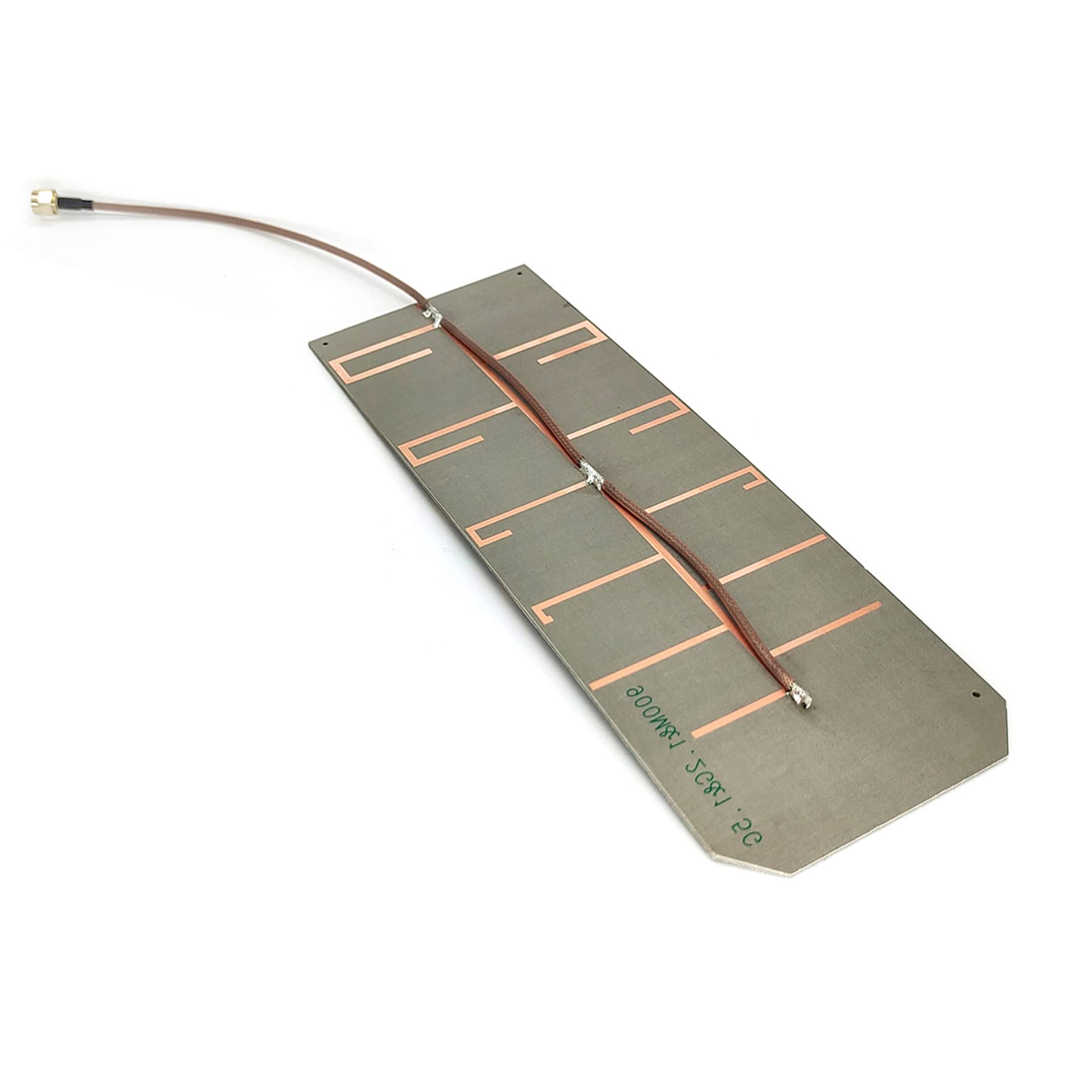
For defenders who cannot jam, the playbook is layered: equip drones with tested anti-jamming systems, train teams to recognize interference, plan flights with awareness of high-risk zones, keep firmware updated, and run regular jamming simulation exercises. If a link degrades in flight, switching to Attitude (ATTI) mode and dropping to lower altitude can help escape strong jamming signals, and upgrading to high-gain or directional antennas improves the odds. GPS jamming blocks satellite navigation signals and makes drones lose position; protecting against it is the only lawful option most operators have.
Frequently Asked Questions
How does a directional drone jammer disrupt UAV flight controls?
A directional jammer focuses RF energy toward the target, overwhelming the command-and-control link between the drone and its operator. Because the drone cannot receive commands, it enters a fail-safe mode: landing, hovering, or returning to its home point. Directional antennas concentrate energy on the target instead of broadcasting in all directions, so a narrow beam can beat a wide-area blast at the same power.
What frequency bands do drone jammers target?
Modern drone jammers target multiple bands simultaneously: 433 MHz and 900 MHz for commercial and DIY control systems, 1.2 GHz and 1.5 GHz for video and telemetry, 2.4 GHz and 5.8 GHz for DJI and most commercial command-and-control links, plus GNSS bands such as GPS, GLONASS, Galileo, and BeiDou to deny position fixes.
Is it legal to operate a drone jammer in the United States?
Under the Communications Act of 1934, specifically 47 U.S.C. 301, 302a, and 333, the FCC prohibits operating, marketing, or selling RF jamming equipment. Violations carry fines up to $112,500 per incident and potential criminal prosecution. Authorized users include the Department of Defense, DHS, DOJ, DOE, and Coast Guard, plus state and local law enforcement under the SAFER SKIES Act after FBI training.
What is the difference between jamming and spoofing a drone?
Jamming uses a transmission-blocking signal to disrupt communications between a drone and its pilot, forcing fail-safe behavior. Spoofing impersonates the remote control by emitting a signal the drone mistakes as legitimate, allowing a third party to take over the drone, direct its flight, or download data and camera feeds. Jamming denies control; spoofing seizes it.
What anti-jamming countermeasures protect drones from jamming?
Defensive anti-jamming includes Controlled Reception Pattern Antennas (CRPA) that steer nulls toward jammers, digital signal processing filters, inertial navigation sensor fusion to bridge GNSS outages, and frequency agility. Multi-constellation, multi-band GNSS receivers improve resilience. These measures buy time and reduce disruption, but they cannot guarantee immunity against a powerful, well-aimed jammer.