Company-owned vehicles can legally be tracked in all 50 U.S. states, but a growing number of states now require written notice, consent, or both before monitoring starts. Here is how employees can push back the right way, and how fleet managers can build a policy that survives a legal challenge.
Why GPS Tracking on Company Vehicles Is a Legal Gray Area
Tracking a company vehicle is legal in all 50 U.S. states, which surprises most employees who make the biggest error: assuming privacy rights settle the question. The trickiest bit is not that tracking can or cannot be done, but rather if the employer properly notified and got consent to turn it on. A tracker on the car works for most vehicles; a tracker that silently tracks the driver outside of working hours is where lawsuits, labor complaints and insurance disputes arise.
Here's the thing: the compliance landscape is changing quickly, and it's catching a lot of employers off guard. Take New York — Civil Rights Law 52-c has required written notice at hire since it took effect in May 2022. Connecticut is similar: Gen. Stat. 31-48d mandates written notice before any electronic monitoring starts. Delaware goes a step further with Code tit. 19 705, which requires electronic notice at least one day ahead of monitoring. Then there's Texas, where Penal Code 16.06 requires consent to install a tracking device — though if the employer owns the vehicle, that consent is generally implied. California layers on even more: Penal Code 637.7, plus CCPA and CPRA, which add a whole set of data privacy rights. Minnesota (Stat. 626A.35) also requires consent before a tracking device goes in, and Virginia Code 18.2-60.5 flat-out prohibits tracking someone via GPS without their consent.
But the rules are much stricter outside America. In Australia, under thePrivacy Act 1988 and New South Wales' Workplace Surveillance Act 2005 any surveillance must be announced a minimum of 14 days before commencement with full explicit consent. For people in a multinational fleet, the policy governing your vehicle may not be what your local manager gave you—it might very well be that chain's most-disciplined policy.
How GPS Trackers Work and Where They Are Installed
A GPS tracker never sends your location to a satellite. Satellites transmit timing signals and the tracker trilaterates itself from at least three satellites to determine a location, which it sends over a cellular network into an app or fleet dashboard. That distinction is important when you are trying to determine what a device does and if it is live, versus simply logging.
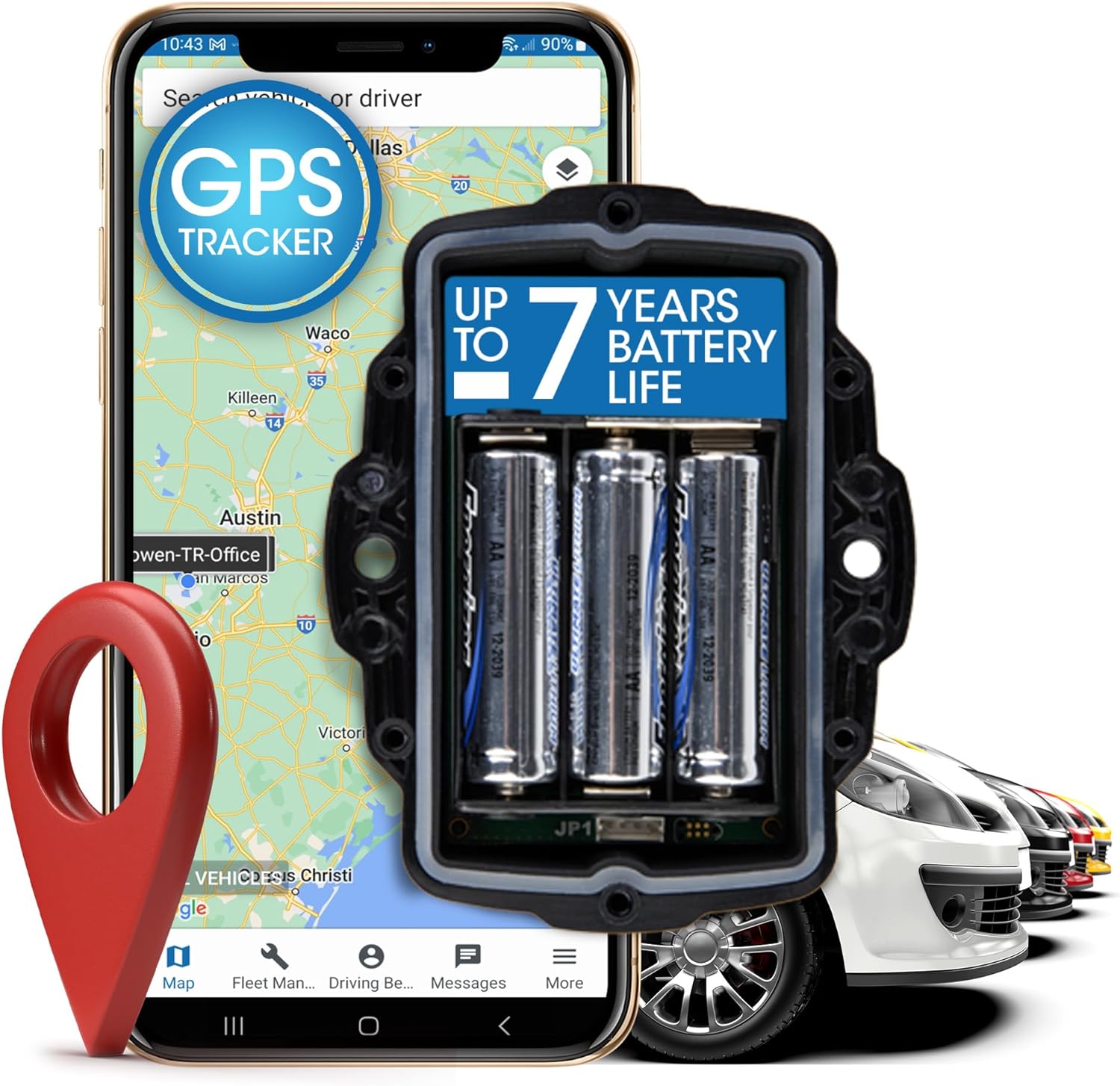
There are three general types of power and installation styles. Easy to conceal, battery powered units that often fasten magnetically. Hardwired units connect to your vehicle's electrical system and are generally hidden behind panels. OBD plug-and-play units are located in the diagnostic port under the dash and install within seconds. Loggers save to internal storage for post-download, live trackers transmit in real time. General-purpose trackers allow them to move from car to car, and vehicle-specific systems are designed for a single model.
If you go looking for fleet trackers, a few names come up again and again: Zonar, AVLView, Spytec GPS, BrickHouse Security, Tracker Systems, AllRide Apps, GPS Insight, Vitalglow GPS, and Radius. Pricing is all over the map, though most of it sits in the same general range. On the cheap end, you've got the TrackPort OBD Vehicle GPS Tracker and the Livewire Dash GPS Vehicle Tracker, both at $9.95 a month. Step up a tier and you're looking at the TrackPort Pro OBD Diagnostic GPS Tracker at $19.95 a month, or the MotoTrack Realtime 4G GPS Tracker, also $19.95 a month. The Livewire Pro GPS Vehicle Tracker is a one-time $69.95, and if you want something you can hide and forget about, there's a 140-Day Magnetic GPS Tracker for $49.95. Spytec, for its part, starts at $8.95 per vehicle per month if you pay annually, or $14.95 a month if you'd rather not commit.
| Tracker type | Installation | Typical use | Detection difficulty |
|---|---|---|---|
| Magnetic battery unit | Attaches to metal surface | Temporary or covert tracking | Easy to spot if you look |
| Hardwired unit | Tapped into vehicle wiring | Permanent fleet install | Hard, needs a mechanic |
| OBD plug-and-play | Plugs into diagnostic port | Fast rollout across a fleet | Very easy to find |
| Logger | Any of the above | Route history, no live feed | Same as its install type |
Below is some data up to October 2023. According to estimates by New York-based Grand View Research, the global GPS tracker market was about $4.04 billion in 2024 and is expected to grow more than double over that period until 2030. That growth is fed by promises of fleet efficiencies: real-time location, geofencing, speed monitoring, route optimization fuel management; maintenance scheduling and driver behavior tracking or asset-tracking. All of those functions are useful business tools, and all generate the data that employees go to war over.
Can I Legally Block GPS Tracking on a Company Vehicle?
Generally, no. While disabling the vehicle may violate your employment contract or the terms of insurance between you and your employer, it can also lead to civil liability if it turns out that either cannot prove ownership over a given tracker. In the US, GPS jammers are illegal and banned outright by the FCC. Deploying one is not an ingenious workaround; it violates federal law and carries steep penalties.
The better course of action is to ask questions in writing. Ask for the tracking policy, advance notice you received about it and the specific state employee monitoring law that governs your workplace. In places like New York, Connecticut, Delaware, Texas California Minnesota and Virginia employers are required to have written policies or indemnification plans Louis freebee train the shop through which In most cases this requires a simple polite request for one of many key types that usually didn't actually exist before. Even if the answer is not specific, it can be helpful to note that vagueness itself.
Note it down if you think they monitor your activities even after work hours. Record down (a) the times, and (b) routes taken by the vehicle as well. Also record whether any personal errands were carried in that unless this was pre-approved use permit would be losing its green card. Where monitoring starts to take place and bleed into off-work time, then privacy expectations can still present a reasonable case where they would apply even when it comes through a company vehicle, while in unionized workplaces there might be an obligation for the employer to negotiate before introducing new surveillance.
9 Common Tricks Drivers Use to Block GPS Trackers
Fleet managers see the same tampering playbook over and over. Drivers plug in GPS jammers, wrap the device or its antenna in aluminum foil, pull the fuse or cut power, unplug OBD trackers, damage the antenna, or park in dead zones where cellular coverage disappears. Some simply disconnect the device and reconnect it later. Each trick leaves a data signature, and modern fleet platforms are built to catch them.
| Trick | What the data shows | Fleet response |
|---|---|---|
| GPS jammer | Device online, no valid GPS fix, engine running | Jamming alert, escalate to manager |
| Aluminum foil wrap | Same signature as jamming | Physical inspection |
| Power cut or fuse pull | Power-cut alert plus odometer jump | Maintenance check, driver interview |
| OBD unplug | OBD disconnect event | Automatic alert to fleet admin |
| Antenna damage | Clustered damage pattern on one vehicle | Repair review, pattern report |
| Dead zone hiding | Repeated coverage gaps at the same spot | Geofence and route-history review |
The financial stakes explain why fleets invest in detection. A single employee adding five miles per day equals 1,300 miles per year, roughly $200 in wasted fuel. Five vehicles idling two hours daily costs more than $5,000 per year. Employee misuse costs U.S. small businesses an estimated $10 billion annually. For a five-vehicle fleet, Spytec misuse cost runs approximately $12,725 per year, while tracking at $8.95 per vehicle per month on annual billing costs $5,370 per year, a net savings of $6,855 annually and $34,275 over five years.
None of these tricks are worth the risk for an employee. Disabling a tracker on a company vehicle can lead to termination, contract violations, or lost insurance coverage. If you believe the tracking is unlawful or excessive, the correct move is a written complaint, a labor board inquiry, or a conversation with an employment attorney, not a jammer from an online marketplace.
How Fleet Managers Detect Tampering and Signal Loss
Detection starts with device-health monitoring, not with accusations. A jamming alert fires when the device is online, the engine is running, and no valid GPS fix is available. A foil wrap produces the same signature. A power-cut alert paired with an odometer jump tells you the vehicle moved while the tracker was dark. An OBD disconnect event is unambiguous. Antenna damage shows up as a clustering pattern on the same vehicle over time, and dead-zone gaps repeat at the same coordinates.
Layered review catches what a single alert misses. Route-history review reveals impossible speeds and unexplained stops. Geofencing flags entries and exits from unauthorized areas. Maintenance checks catch physical tampering during routine service. Video telematics adds a visual record when a dispute escalates. Escalation steps should be written down before the first incident, so managers respond consistently instead of improvising under pressure.
Documentation is the difference between a defensible termination and a lawsuit. Show the GPS data factually, give the employee a chance to respond, and document the conversation. If an employee refuses to accept tracking as a condition of a vehicle-based role, that refusal belongs in the personnel file alongside the policy they were given. Transparency reduces resentment, and resentment is what drives most tampering in the first place.
Employee GPS Tracking Laws by State in 2026
State law is where most compliance failures happen, because a policy that works in one state may be illegal in the next. The table below summarizes the requirements that matter most for company vehicle tracking in 2026. This is a practical overview, not legal advice, and multistate fleets should apply the strictest rule that covers any driver in the fleet.
| State | Key rule | Notice or consent required |
|---|---|---|
| New York | Civil Rights Law 52-c | Written notice at hire |
| Connecticut | Gen. Stat. 31-48d | Written notice before monitoring |
| Delaware | Code tit. 19 705 | Electronic notice at least 1 day prior |
| Texas | Penal Code 16.06 | Consent to install; ownership implies consent |
| California | Penal Code 637.7, CCPA/CPRA | Privacy rights plus disclosure duties |
| Minnesota | Stat. 626A.35 | Consent before installing a device |
| Virginia | Code 18.2-60.5 | No GPS tracking of a person without consent |
Two federal layers sit underneath the state rules. The Electronic Communications Privacy Act and state wiretapping laws make it almost always illegal to track a personal vehicle without consent, and the reasonable expectation of privacy standard can extend into company vehicles when monitoring continues into non-work hours. Unionized workplaces may also require negotiation before new surveillance is introduced.
Data protection obligations are part of the same picture. Encrypted storage, role-based access controls, and regular security audits are baseline expectations under California's privacy framework and increasingly under other state laws. If a fleet collects driver behavior data, that data is a regulated asset, not just an operational byproduct.
Building a Compliant Company Vehicle GPS Tracking Policy
A written policy is the single highest-value investment a fleet can make. It should state the business purpose, the covered vehicles, what data is collected, when monitoring is active, who can access the account, retention periods, alert handling, and off-hours rules. Start with a one-page policy and a 30-day pilot, then expand once the notice process and alert responses are proven.
| Policy element | What to specify |
|---|---|
| Business purpose | Safety, routing, maintenance, fuel, or customer service |
| Covered vehicles | Which units and which driver roles |
| Driver notice | Written notice timing and acknowledgment signature |
| Account access | Named administrators and role-based permissions |
| Retention | How long location and behavior data is stored |
| Alerts | Which events trigger review and who responds |
| Off-hours use | Whether personal use is permitted and how it is monitored |
For employees, the practical checklist is simple. Confirm who owns the tracker and why, review your contract and any monitoring notice, and look for small devices on metal surfaces or wired into the electrical system. Never use jammers, never cut unfamiliar wires, and involve a professional mechanic or law enforcement if you find something that does not belong. For fleet managers, document the policy, notify drivers in writing, restrict account access, define alert responses, and review device health on a fixed schedule.
The legal risks run in both directions. Jamming devices may violate federal law and create safety hazards. Disabling a company tracker can trigger legal consequences, contract violations, or lost insurance coverage. Tracking personal vehicles without consent is almost always illegal. A policy that is written down, acknowledged, and applied consistently protects the company and gives employees a clear process to raise concerns without resorting to foil and fuse pullers.
Frequently Asked Questions
Can I legally block GPS tracking on a company vehicle?
Generally no. If the company owns the vehicle and the tracker, disabling it can breach your contract or insurance terms, and GPS jammers are illegal in many countries. Instead, ask your employer in writing about the tracking policy, the notice you received, and your state's employee monitoring law.
Do employers have to tell employees about GPS tracking?
Tracking a company-owned vehicle is legal in all 50 U.S. states, but a growing number require written notice, consent, or both. New York, Connecticut, Delaware, Texas, California, Minnesota, and Virginia have specific rules. The practical answer is to notify employees in writing every time, in every state.
How do drivers try to cheat GPS trackers?
Common tricks include plug-in GPS jammers, wrapping the device or antenna in aluminum foil, pulling the fuse or cutting power, unplugging OBD trackers, damaging the antenna, and hiding in dead zones. Each leaves a data signature such as a gap, flatline, or alert that fleet software can flag.
What should a company vehicle GPS tracking policy include?
A written policy should state the business purpose, covered vehicles, what data is collected, when monitoring is active, who can access the account, retention periods, alert handling, and off-hours rules. Start with a one-page policy and a 30-day pilot before rolling it out fleet-wide.