GPS jammers can hide a vehicle from black box telematics, but using one is insurance fraud and a federal offense. Here is how the devices work, how insurers catch them, and what the penalties and real cases look like.
What Is a GPS Jammer and How Does It Block a Black Box?
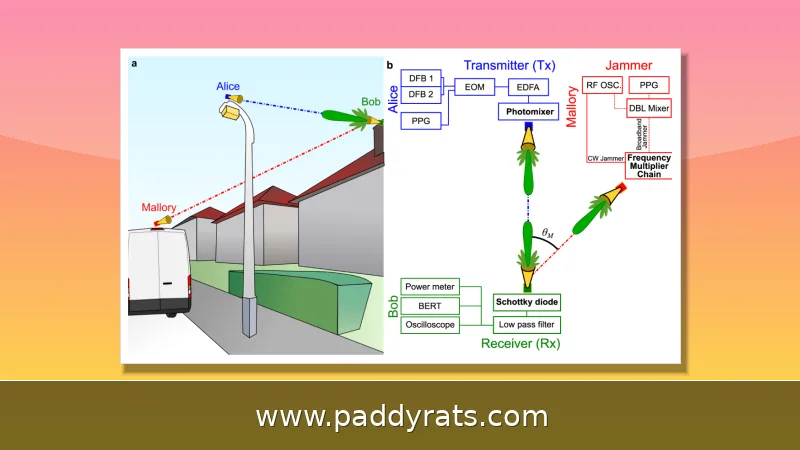
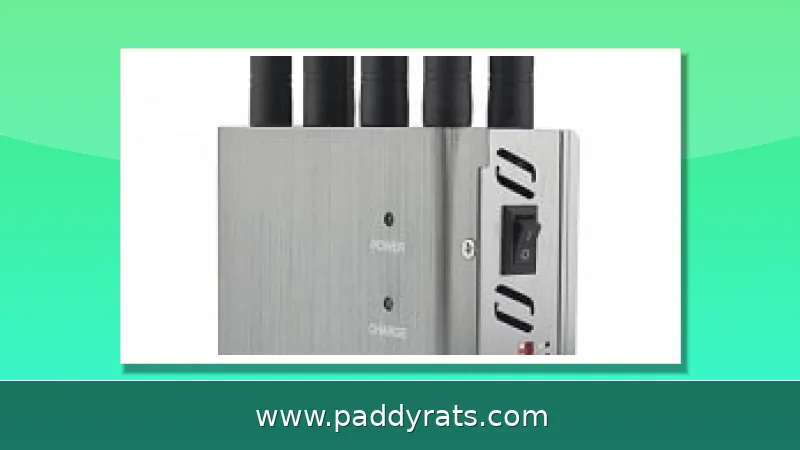
GPS jammers are small radio-frequency transmitters that flood the very weak microwave band to which a receiver listens for signals in order to determine its position. Because satellite signals come in at about -130 dBm, it doesn't take much: even a 10-to-20 milliwatt jammer is enough to beat them out over this distance of between 250 and 300 meters GPSPATRON explains. It's plugged into a 12V auxiliary outlet or an OBD-II port, and it plays white noise at GPS L1 and L2 levels for up to half-a-kilometer away where you can see the interference bubble.
In a black box telematics environment, the insurer effectively ceases seeing it altogether. The impact is stark says ticker, a UK telematics insurer: the driver seems invisible to the insurer and as such trips/ miles /driving behaviour are never sent through pricing engine. According to the company, most jammers (the kind you need for your machine) have effective ranges of between 16 and 33 feet — more than enough juice to fill the dashboard space a tracker occupies. The signal from the jammer far overshadows that of a satellite just a few inches away from where it is located, Transpoco notes.
| Device / Parameter | Detail | Source |
|---|---|---|
| Typical jammer interference radius | 16 to 33 feet | Geotab |
| Jammer power needed to defeat GNSS | 10 to 20 milliwatts | GPSPATRON |
| Effective jamming distance | 250 to 300 meters | GPSPATRON |
| Detectable RF bubble | Up to 500 meters | GPSPATRON |
| Typical online price | Under EUR 30, sometimes as little as $5 | GPSPATRON |
Simple jammers simply flood satellite signals with just white noise, but the more advanced models on sale are designed to keep ahead of detection. Verizon Connect cautions that jammers at the upper end of their potency hop frequencies or target multiple GNSS constellations in parallel — GPS, GLONASS and Galileo « to a receiver configured for fallback on network two will still become blind. An associated but separate menace is spoofing: rather than jamming the signal, a spoofer fakes real satellite signals and drives false position information to receiver; simply put, the black box keeps reporting as it should while showing its location in a way that has no linkage with actual movement. In practice it could make a fleet look like it's parked at the depot in one state but that truck is hundreds of miles away. These two tricks destroy the chain of evidence a black box insurer relies on, and both are considered intentional interference in law.
Why Using a Signal Jammer Counts as Insurance Fraud
Running a jammer to hide from even the biggest black box? Not an ingenious loophole, but fraud designed. According to Ticker, blocking the GPS signal from a black box with a signal jammer is both insurance fraud and illegal under the UK's Wireless Telegraphy Act 2006. The rationale is simple: the policyholder intentionally conceals accurate usage data in exchange for a lower premium or to avoid scrutiny on where and how he or she drove.
The fallout doesn’t stop at your premium. According to a Ticker, as soon jamming is detected it cancels the policy for intentional fraud and posts the incident in all databases of insurers across the country that are shared with other members They will not pay any claims pending. And that is not a stain that washes with time, or sticks with one single policy—it follows the driver and fleet to ensure one jammer can surreptitiously corrode an entire book of business. For this reason, insurers communicate to one another and underwriters consult those databases before providing quotes. What can begin as one driver tipping off a route or a break, ends up with the entire operation labelled high-risk when it comes to shopping around for premiums and non-renewals – even flat-out declines.
The size of the fraud issue is one reason why insurers, regulators and law enforcement are so aggressive about trying to jam· The Coalition Against Insurance Fraud estimates that fraud costs Americans about $308.6 billion a year, and in April 2025 Deloitte estimated aroundwhere property and casualty claims are fraudulent — $122 billion loss each years While jamming accounts for just a fraction of that total, it is among the most deliberate forms of fraud. The device is not automatically actively engaged by the driver; a driver has to search for it, purchase the item, and then intentionally power it on (often many times). This is not the kind of behavior that happens by accident. A manipulated quote for repair work or an inflated injury claim is, of course, not the same as jamming: even frist step requires intent and hence that is why insurers treat both things so differently between a black line and gray area.
Legal Penalties: FCC Fines, Criminal Charges, and Policy Cancellation
The legal exposure operates on two fronts: telecom regulators and insurers. Under the Communications Act of 1934, marketing, sale or use of GPS jammers is illegal in all locations within the United States and enforcement action will be taken by FCC against violators. The Radiocommunication Act in Canada prohibits the importing, manufacturing, distribution, sale and use of jamming devices. United Kingdom[edit] The UK uses the Wireless Telegraphy Act 2006. Verizon Connect is blunt that GPS jammers are illegal in the US and Canada, saying it not only prevents tracking but also 9-1-1 and emergency calls, while interfering with police networks along with fire departments & EMS.
The penalties here are not some scare merchants compliance slide. Geotab estimates that cost of each jammer used in the U.S. at $100,000 or more, and it can bring prison time with it—plus loss of the equipment itself. The FCC has already demonstrated that it will investigate these matters even down to the individual level: its enforcement bureau proposed a $31,875 forfeiture against Gary P. Bojczak for operating a GPS jammer in violation of Sections 301 and 302(b) of Communications Act on July 12, while this story was being prepared.) The financial impact suffered from an insurer might be more painful however. If a carrier can establish intentional fraud, it may cancel the policy altogether, disclaim coverage for payment of on-going claims and note its finding in databases that insurers share with one another. In practice that record travels with the driver or fleet, making affordable coverage difficult — and at times impossible — to secure again.
| Jurisdiction | Governing Law | Enforcement Body |
|---|---|---|
| United States | Communications Act of 1934, Sections 301 and 302(b) | FCC |
| Canada | Radiocommunication Act | Canadian regulators |
| United Kingdom | Wireless Telegraphy Act 2006 | UK authorities |
| Mexico | Jammer-use statute (January 2020) | Mexican courts |
Mexico is often where the other side of crime can be found at its steepest. Signed into law and effective since January of 2020, GPS jammers are now punishable with prison sentences ranging from 12 to 15 years — a consequence clearly targeted at cargo-theft gangs that disable tracking systems on commercial trucks so they can be intercepted without detection. That is not a mere slap on the wrist, it regards the jamming device as an effective weapon rather than a technical infringement. And now something apparently even approximating a practical takeaway for fleet operators: less than $30 worth of hardware may be the trigger that spawns six-figure penalties, potential incarceration and forfeiture of affected vehicles and equipment. The disadvantage is that it is a cheap gadget but can make heavy money.
How Insurers and Telematics Systems Detect Jamming
Jamming might silence the location feed, but it rarely erases every trace. That's the thing about GPS interference—it leaves a specific kind of void in the data, and telematics platforms are built to spot it. Geotab, for example, says its systems detect GPS jamming and alert fleet managers in real time, turning what would otherwise be a silent attack into a logged event with a timestamp attached. The patterns investigators watch for are fairly consistent. A sudden loss of GPS lock while the vehicle is obviously still moving is one red flag. Another is when ignition and engine data keep streaming in normally—proof the vehicle is running and on the road—while position data simply vanishes. Repeated dropouts clustered along the same routes or at the same times of day also point to deliberate interference rather than a random satellite hiccup. Put together, these anomalies create a sort of signature that insurers and telematics providers can cross-reference, which is exactly why jamming tends to backfire on the people who try it.
Software-based detection is only half the story, though. A second layer comes from dedicated hardware that senses interference on the spot. Take the GP-Probe Nano L1 from GPSPATRON: it's a wearable GNSS interference detector roughly the size of a USB flash drive, at 113 x 31 x 15 mm, so it can ride in a pocket or clip onto a uniform without getting in the way. The device gives drivers and fleet managers three ways to be alerted—a vibration motor, an audible speaker, and a 36-LED power scale that visually shows how strong the interference is. Battery life depends on how you use it: up to 30 days in Detector Mode for active monitoring, or up to three months in Logger Mode for passively recording incidents. It links over USB Type-C to Android devices running the GPSPATRON Connect app, and for the most common threat—a cigarette-lighter jammer plugged into a 12V outlet—it can pick up the signal from up to about 500 meters away, well before the tracker itself goes dark.
| GP-Probe Nano L1 spec | Detail |
|---|---|
| Type | Wearable GNSS interference detector |
| Size | 113 x 31 x 15 mm (about the size of a USB flash drive) |
| Alert methods | Vibration motor, audible speaker, 36-LED power scale |
| Battery life | Up to 30 days (Detector Mode); up to 3 months (Logger Mode) |
| Connectivity | USB Type-C to Android with GPSPATRON Connect app |
| Detection range | Up to about 500 meters for cigarette-lighter jammers |
The scale of interference makes detection worth the investment. GPSPATRON reports that GNSS interference incidents rose 220% between 2021 and 2024, while spoofing attacks surged 500% in 2024. The UK's Sentinel project detected between 50 and 450 GPS jamming incidents per day on British roads. For a fleet, those numbers mean jamming is no longer a rare edge case but a routine operational risk that shows up in the same dashboards used for fuel and maintenance.
GPS Jamming in Staged Crashes and Cargo Theft Cases
The most dramatic cases involve armed crews and organized theft. In May 2017 in Switzerland, six armed men ambushed a Loomis armored vehicle on the Geneva-Lausanne motorway and escaped with about 40 million Swiss francs; GPS tracking stopped at 2:50 a.m., and a GPS jammer was later recovered among the seized equipment. South Africa recorded 35 cash-in-transit attacks in January 2020 alone. In July 2022, five robbers in Botswana were found with an AK47, three pistols, and a communications jammer, and in May 2023 a hijack on the Port Elizabeth to Cape Town route produced losses of 2.09 million euros.
Cargo theft follows the same playbook. GPSPATRON reports that 80 to 85% of organized vehicle thefts now involve GPS jammers, and recovery rates fall from 90 to 95% with a working tracker to about 23 to 25% without one. Mexico is a hotspot: about 85% of freight truck thefts involve GPS jammers, and in Italy's Puglia region, 100% of documented truck diversions involved GPS jamming. In a 2024-2025 case, 24,000 bottles of tequila disappeared after GPS spoofing redirected tracking data from trucks near Laredo, Texas.
Jamming doesn't just disrupt fleet operations — it turns up in insurance-specific schemes where erasing location data is the whole point. In the UK, an organized crime network stole premium vehicles, loaded them into shipping containers fitted with GPS jammers, and exported them through France to Uganda, hiding the cars' movements from insurers and police alike. In Toronto, a police officer allegedly helped attach a GPS tracker to a woman's vehicle to follow her movements, conduct tied to an attempted insurance fraud. And on New York's Belt Parkway, viral dashcam footage sparked a broader investigation into staged crashes and fraudulent claims, ending with a man sentenced to 18 months in prison by U.S. District Judge Henry E. Autrey. Different countries, different schemes — but the same playbook: jam or spoof the signal to wipe out location evidence, and let investigators piece the fraud together from other data.
Fleet Impact: TCO, Liability, and Insurance Coverage Gaps
For a fleet, the first cost of jamming is the blind spot it creates. When telematics data disappears, there is no record to prove a driver was not at fault after an accident, which turns a routine claim into a disputed liability. Drivers use jammers for their own reasons too: concealing side jobs, falsifying timesheets, avoiding speeding alerts, or enabling asset theft. Every one of those behaviors shifts cost and risk back onto the operator.
The operational damage compounds quietly. Missing telematics data means fuel waste goes unnoticed, preventative maintenance gets missed, payroll based on mileage or hours becomes inaccurate, and compliance reporting is compromised. Add the inflated total cost of ownership from unrecovered vehicles and higher insurance premiums, and a $30 jammer can produce losses that dwarf its price.
Marine and specialty coverage adds another layer of uncertainty. An Association of Average Adjusters discussion paper warns that the LMA5403 cyber exclusion clause requires proving both the use of an electronic system and malicious intent, which can leave coverage gaps that favor policyholders, while cyber buy-back clauses may restore coverage. The practical lesson for fleets is to treat jamming as both a security incident and a coverage question, and to document detection attempts before a claim is ever filed.
What Should Fleets Do to Detect and Mitigate Jamming?
Mitigation starts with monitoring the data you already collect. Telematics platforms can flag the tell-tale patterns of a signal jammer, and Geotab's real-time alerts give managers a chance to respond while the vehicle is still moving. Pairing that with a portable detector such as the GP-Probe Nano L1, which picks up a jammer's RF signature at ranges up to about 500 meters, gives fleets both a network-level and a physical-level view of interference.
Policy and training matter just as much. Drivers should know that using a jammer is insurance fraud, illegal under laws such as the Wireless Telegraphy Act 2006, the Communications Act of 1934, and Canada's Radiocommunication Act, and that detection leads to cancellation, unpaid claims, and industry database records. Documenting every alert, retaining the raw telematics logs, and reporting suspected jamming to insurers and regulators turns a silent attack into evidence that supports the claim instead of undermining it.
Is using a GPS jammer to hide from a black box insurance fraud?
Yes. Ticker states that using a signal jammer to block a black box GPS signal counts as insurance fraud and is also illegal under the Wireless Telegraphy Act 2006. Detection can lead to policy cancellation for deliberate fraud, with the finding logged on industry databases and shared with other insurers, and claims would not be paid out.
How do GPS jammers actually work?
A GPS jammer is a small RF transmitter that broadcasts noise on the same frequency as GPS satellites. Because satellite signals arrive very weak, the jammer overpowers them, so the receiver cannot calculate position. Geotab notes a typical jammer creates interference over a 16-to-33-feet radius, and GPSPATRON finds a 10-to-20 milliwatt device can jam signals across 250 to 300 meters.
What penalties can fleets or drivers face for GPS jamming?
GPS jammers are illegal in the U.S., Canada, and the U.K. Geotab cites fines up to $100,000 or more in the U.S., plus imprisonment and loss of equipment. The FCC proposed a $31,875 forfeiture against Gary P. Bojczak for operating a GPS jammer, and Mexico prescribes 12 to 15 years imprisonment for jammer use under a January 2020 law.
How can fleets detect GPS jamming?
Telematics platforms can flag tell-tale data patterns when signals are altered, and Geotab says it detects GPS jamming and alerts managers in real time. Portable detectors such as the GP-Probe Nano L1 pick up the jammer's RF signature at ranges up to about 500 meters, giving fleets a second layer of defense beyond network monitoring.
Frequently Asked Questions
Is using a GPS jammer to hide from a black box insurance fraud?
Yes. Ticker states that using a signal jammer to block a black box GPS signal counts as insurance fraud and is also illegal under the Wireless Telegraphy Act 2006. Detection can lead to policy cancellation for deliberate fraud, with the finding logged on industry databases and shared with other insurers, and claims would not be paid out.
How do GPS jammers actually work?
A GPS jammer is a small RF transmitter that broadcasts noise on the same frequency as GPS satellites. Because satellite signals arrive very weak, the jammer overpowers them, so the receiver cannot calculate position. Geotab notes a typical jammer creates interference over a 16-to-33-feet radius, and GPSPATRON finds a 10-to-20 milliwatt device can jam signals across 250 to 300 meters.
What penalties can fleets or drivers face for GPS jamming?
GPS jammers are illegal in the U.S., Canada, and the U.K. Geotab cites fines up to $100,000 or more in the U.S., plus imprisonment and loss of equipment. The FCC proposed a $31,875 forfeiture against Gary P. Bojczak for operating a GPS jammer, and Mexico prescribes 12 to 15 years imprisonment for jammer use under a January 2020 law.
How can fleets detect GPS jamming?
Telematics platforms can flag tell-tale data patterns when signals are altered, and Geotab says it detects GPS jamming and alerts managers in real time. Portable detectors such as the GP-Probe Nano L1 pick up the jammer's RF signature at ranges up to about 500 meters, giving fleets a second layer of defense beyond network monitoring.