Fleet GPS jammer detection software tools watch GPS status, connectivity, timestamps and location together to flag signal loss, non-reporting units and jamming alerts. Here is how the detection works, where hardware detectors still win, and what the law says.
What Is a GPS Jammer and How Does It Disrupt Fleet Tracking?
A GPS jammer is a small but powerful RF transmitter that blocks or interferes with GPS satellite signals — and often takes out cellular networks, Wi-Fi, and even toll readers at the same time. From what I've seen reviewing telematics deployments, drivers almost never notice them: a typical unit is just a plastic box about 60mm x 45mm x 20mm with a 12V power plug and one or two short antennas, and it requires no setup or software whatsoever. You plug it into a 12V auxiliary outlet, USB charger, cigarette lighter, or OBD-II port, then place it near the tracker.
The physics here explains why such a cheap device can do so much damage. GPS satellites sit roughly 20,000 to 20,200 km above Earth, so by the time their signals reach a receiver, they're incredibly faint—around -130 dBm. A jammer simply broadcasts noise on those same frequencies, and the receiver has no way to tell the real satellite signals apart from the noise. Even 10 milliwatts of interference at close range is enough to drown the satellite signal out. Vendors don't fully agree on how far the disruption reaches: Geotab puts a jammer's interference radius at 16 to 33 feet, Azuga cites 5 to 10 meters, and Airpinpoint describes a dead zone of 10 to 50 meters. As for cost, Airpinpoint prices jammers at $25 to $50, aimed at the GPS L1 band at 1575.42 MHz, while pricier units also hit L2 at 1227.60 MHz. And if that sounds cheap already, GPSPATRON reports that basic jammers sell online for as little as $5.
How Fleet GPS Jammer Detection Software Tools Work
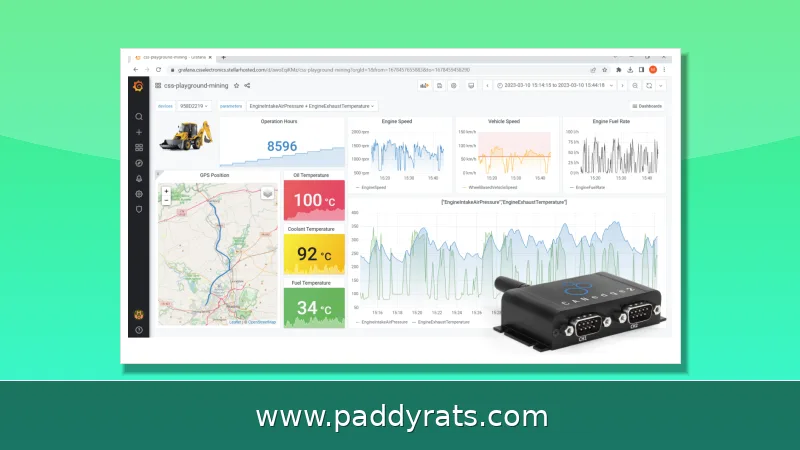
The software never actually has to see the jammer. What it does instead is watch the stream of data coming off the vehicle and look for the fingerprints interference leaves behind. Fleet platforms pull GPS status, connectivity, timestamps, and location into one view, then flag the usual suspects: a growing trend of non-reporting units, sudden signal-loss alerts, or dedicated jamming detection alerts. A few tools go a step further and monitor signal integrity, which lets them catch suspicious patterns before a location gap ever turns up in the log. The logic here is pretty straightforward: a jammer creates an anomaly in the data, and the software is built to notice when the numbers stop behaving the way they should. Geotab, Verizon Connect, Azuga, Motive, and Intangles all describe detection features along these lines.
Geotab's platform picks up signal interference as it happens and sends alerts to managers right away. Verizon Connect claims its system can help you figure out when a device might be getting blocked by a jammer, and it suggests keeping an eye on Non-Reporting Unit (NRU) trends and watching for GPS data that doesn't line up with what the driver is actually doing. Over at Azuga, the fleet tracking software detects GPS signal jamming and can fire off alerts when GPS signal errors pop up. Motive provides Jamming Detection Alerts that cover both cellular and GPS jamming. Intangles takes a different angle, saying its software tools monitor signal integrity and can spot patterns without having to wait for a location gap to appear. GPSTab says its fleet tracking software flags unusual tracking behavior by pulling together GPS status, connectivity info, timestamps, and location data. Transpoco, meanwhile, says advanced telematics systems can catch deliberate signal loss and notify management in real time, and it recommends pairing real-time dashboard monitoring with HR policies and routine vehicle inspections.
GPS Jamming vs Spoofing: Why the Distinction Matters
On a dashboard, a jammed truck and a spoofed truck can look nearly the same: the map icon stalls, jumps, or disappears altogether. But these two attacks work in fundamentally different ways, and that distinction should shape how your team responds. Jamming is blunt. It floods the GPS frequency with RF noise, so the receiver can't pick out the faint satellite signals underneath and just gives up — reporting no fix or freezing on its last known position. Spoofing is surgical. It broadcasts fake signals that mimic real satellites, so the receiver stays locked on and confidently calculates a position that's wrong. Put simply, jamming disrupts the signal completely, while spoofing deceives the receiver with fabricated data. That gives dispatchers a handy rule of thumb: a frozen or missing position usually means jamming, while a position that keeps moving in a plausible but incorrect way points to spoofing.
Both problems are getting worse fast, and the numbers are hard to ignore. GPSPATRON reports that GNSS interference incidents rose 220% between 2021 and 2024, while spoofing attacks alone jumped 500% in 2024 — a clear sign that interference has gone from a rare annoyance to a routine risk. The financial damage is just as grim. According to the same source, cargo theft costs the European logistics industry an estimated 8.2 billion euros a year. TAPA EMEA logged 103,529 supply chain theft incidents across the EMEA region in 2023, with losses of 724 million euros — up 163% from 2022. In some hotspots, jamming and theft go hand in hand. In Puglia, every documented truck diversion involved GPS jamming, and an estimated 85% of freight truck thefts in Mexico involved GPS signal jammers. And it's not just freight: the UK's Sentinel project detected 50 to 450 GPS jamming incidents per day on British roads.
Which Jammer Types Do Fleets Actually Encounter?
Jammers aren't all built the same, and the physical design of a unit has a lot to do with how easily it can be spotted and removed. Looking at vendor documentation and field reports together, four types tend to come up again and again in commercial fleets.
| Jammer type | Power source | Typical range | Bands affected |
|---|---|---|---|
| Portable battery unit | Internal battery | A few meters | GPS L1 |
| Cigarette-lighter plug-in | Vehicle 12V socket | 10-50 meters | GPS L1, sometimes L2 |
| Hard-wired multi-band unit | Wired to vehicle power | Tens of meters | GPS L1/L2 plus cellular and Wi-Fi |
| Chirp jammer | 12V or battery | Varies with power | GPS L1 swept across the band |
One practical detail matters when it comes to recovery: none of these jammers touch Bluetooth at 2.4 GHz, so Find My trackers keep reporting even after GPS goes dark. That's exactly why a hidden Bluetooth tag often ends up being the last signal a fleet gets during a theft. As for stationary jammers, these are higher-power fixed systems, and they're more common outside the United States. So if a truck loses GPS only in one particular yard or along one particular corridor, it's worth suspecting a fixed installation before pointing the finger at the driver.
Hardware Detectors and Locators for Pinpointing Jamming Sources
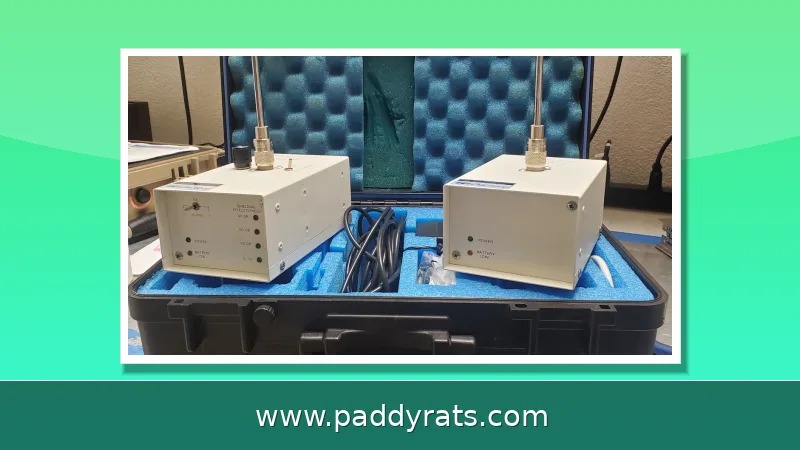
Software can tell you that a GPS signal has gone bad, but it usually can't tell you which car, which parking spot, or which roadside transmitter is causing the problem. That's the gap hardware fills: a detector or locator closes the loop by pointing an investigator toward the physical source. The Chronos CTL3520 is a good example — it's a battery-operated, directional handheld jamming detector and locator built for the GPS L1 band, so a user can walk or drive around while watching signal strength rise in a given direction. NavtechGPS, which distributes Chronos CTL detectors across North America, says its own CTO used one to track down an interference source roughly 30 feet away, hidden behind a wall. For longer investigations, the CTL3510LOG does the same detection job but records months of data, and the included software lets users filter searches, sort jamming events by duration and timestamp, and measure jamming strength. That last capability matters in practice: brief, low-strength jamming often points to an outside source passing by, while strong, steady, long-lasting jamming usually means the jammer is riding inside the vehicle being tracked.
| Device | Type | Band | Notable capability |
|---|---|---|---|
| Chronos CTL3520 | Battery-operated directional handheld detector and locator | GPS L1 | Used by NavtechGPS's CTO to locate a source about 30 feet away behind a wall |
| Chronos CTL3510LOG | Detector with logging | GPS L1 | Logs months of data; software filters searches, filters jamming duration by timestamp, measures jamming strength |
Reading those logs is where experience pays off. Brief low-gain jamming suggests an outside source, while strong consistent long-duration jamming suggests a jammer inside the target vehicle. GPSPATRON's GP-Probe Nano L1 is a pocket-sized GNSS interference detector measuring 113 x 31 x 15 mm, with GNSS L1 band interference detection, real-time alerts and long-term logging; GPSPATRON says detection range up to 200 meters gives 15 to 60 seconds of early warning before a jammer fully disrupts GPS. Safran's IDM suite covers GPS/GNSS spoofing and jamming monitoring, detection, suppression and countermeasures, and BroadShield is a software suite for interference detection. KrakenSDR, a low-cost multi-channel software-defined radio, is also used in jammer and spoofer localization research, including work presented at ION Navigation 2026.
Legality, Penalties and Public-Safety Risks
Are GPS jammers illegal? In the United States, yes—and it is not a close call. The Communications Act of 1934 outlawed the marketing, sale, or use of GPS jammers, and 47 USC 333 specifically makes transmitting them illegal. Canada takes a similarly hard line: the Radiocommunication Act bans importing, manufacturing, distributing, selling, possessing, and using these devices. The penalties are not symbolic. Violators can face fines of $100,000 or more, imprisonment, and forfeiture of the equipment itself—a steep price for a device that sells online for just $25 to $50. Enforcement agencies treat jamming as interference with protected radio spectrum, not as a minor consumer gadget issue, which is why the consequences escalate so quickly beyond the cost of the hardware.
The public-safety angle is one that fleet managers tend to underestimate, and it deserves more attention than it usually gets. A jammer is not a surgical tool — it does not discriminate between targets. The same blanket of RF noise that hides a truck from its telematics platform can also disrupt cellular networks, Wi-Fi, and toll readers, and in the worst case it can bleed into aviation or emergency infrastructure operating nearby. That spillover matters because jamming is a federal offense in the US, and enforcement does not stop at the person holding the device. If a company knowingly permits jamming equipment in its vehicles — or looks the other way when a driver keeps one in the cab — it can face regulatory action, fines, and even criminal exposure. There is a quieter cost, too: once jamming is suspected, the location history an insurer or cargo-theft investigator relies on becomes contestable, and a claim can stall or collapse without a clean evidence chain. The cheapest protection available is also the simplest: log every detection event, note what was done in response, and keep that record.
Detection Limits, False Positives and Response Steps
No software detector is perfect, and I would be skeptical of anyone claiming otherwise. Urban canyons, tunnels, parking garages, dense foliage and even some in-cab electronics create short GPS dropouts that look like jamming. The difference is usually duration and repeatability: a jammer produces consistent, repeatable loss in a specific place or with a specific driver, while environmental dropouts move around with the route. Pairing GPS status with connectivity, timestamps and location, as GPSTab and Verizon Connect describe, is what separates a real alert from noise.
When an alert fires, a calm, step-by-step response keeps false positives from burning up your team's time. Start by cross-checking the alert against Non-Reporting Unit (NRU) trends and what the driver was actually doing — a truck sitting in a dead zone can look like a jamming event on paper. Next, ask whether the signal loss repeats at the same location or on the same vehicle. A one-off gap is usually just terrain or a tunnel; a pattern is a red flag. If the pattern holds, inspect the vehicle for a plugged-in device near the tracker — remember, these units are small, cheap, and often powered from a 12V outlet, USB charger, or OBD-II port. Then confirm and locate the source with a handheld detector such as the Chronos CTL3520 or a GP-Probe Nano L1. Finally, document the event, preserve the logs, and bring in counsel and law enforcement where required. Pairing real-time dashboard monitoring with HR policies and regular vehicle inspections, as Transpoco recommends, closes the loop between detection and deterrence.
Do Fleets Need Software, Hardware, or Both?
The honest answer is both, but not at the same budget level. Software detection is already inside most modern telematics platforms, so the marginal cost is close to zero and the coverage is fleet-wide. It answers the question "is something happening?" across hundreds of vehicles at once. Hardware detectors answer "where exactly is it happening?" but only on the one vehicle you point them at.
In my view, the sensible build order is software first, hardware second — and there is a practical reason for that sequence. Jamming and signal-loss alerts are usually already baked into the telematics platform you pay for, so switching them on costs nothing but a phone call or a settings change. Give those alerts a few weeks to run against normal operating data, and you start to see what "unusual" actually looks like for your fleet: which corridors drop GPS for a few seconds every afternoon, which yards lose signal only on certain shifts. Tune the thresholds against that baseline so you are not chasing phantom alerts. Then, and only then, consider buying handheld detectors — and point them at the routes, terminals or customer lots where the alerts genuinely cluster. That order keeps your spending tied to evidence rather than fear, and it leaves you with a documented log history. If a theft claim, an insurance dispute or a regulator's question ever lands on your desk, that timeline is worth more than any single gadget.
Frequently Asked Questions
How do fleet software tools detect GPS jamming?
Fleet platforms watch GPS status, connectivity, timestamps and location together. They flag non-reporting unit trends, signal loss alerts and jamming detection alerts, and some track signal integrity to catch patterns before a location gap appears. Geotab, Verizon Connect, Azuga, Motive and Intangles all describe such detection features.
What is the difference between GPS jamming and spoofing?
Jamming emits radio frequency noise on the same frequency as GPS, so the receiver cannot determine its location and reports no fix or freezes. Spoofing mimics real satellite signals, tricking the device into calculating a false position. Jamming disrupts the signal completely; spoofing deceives the receiver with fake data.
Are GPS jammers legal in the United States?
No. In the U.S., the Communications Act of 1934 outlawed marketing, sale or use of GPS jammers, and 47 USC 333 makes transmitting them illegal. Canada's Radiocommunication Act also bans importing, manufacturing, distributing, selling, possessing and using them. Penalties include fines up to $100,000 or more, imprisonment and equipment loss.
What hardware tools detect and locate GPS jammers?
Chronos Technology's CTL3520 is a battery-operated directional handheld jamming detector and locator for the GPS L1 band, while the CTL3510LOG adds built-in logging and software to filter jamming duration and measure strength. GPSPATRON's GP-Probe Nano L1 is a pocket-sized GNSS interference detector with real-time alerts and long-term logging.