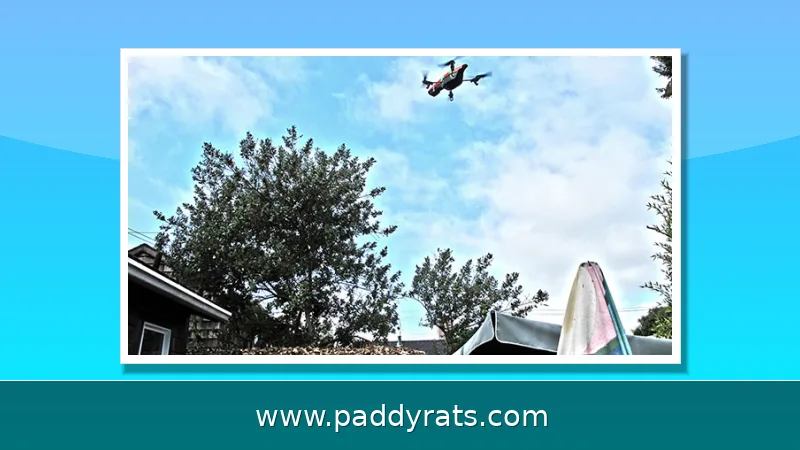
A drone hovering over your backyard feels like a trespass, but the law treats it very differently than you might expect. Here is what homeowners can legally do, and what will land you in federal court.
Is It Legal for a Drone to Fly Over Your House?
The short answer is usually yes — and that catches just about every homeowner off guard. The FAA has exclusive authority over navigable airspace, so the space above your roof is governed by federal law, not by your property deed. If an operator is following FAA rules — typically staying under 400 feet above ground level in uncontrolled airspace — that drone can legally pass over your land. Bottom line: your property rights don't reach up high enough to let you shoo away an aircraft you never invited.
That said, drones aren't free to do whatever they please. The FAA caps flights at 400 feet above ground level and bans flying near airports, stadiums, and military bases. Night flights require authorization, flying over people or moving vehicles is off-limits, and the drone has to stay within the operator's visual line of sight at all times. Commercial flights fall under Part 107, while recreational flyers are covered by Section 44809. If someone breaks those rules, you've got a legitimate complaint on your hands. If they're following them, what you're dealing with is mostly just a nuisance.
Here's where it actually gets relevant to your privacy. Under 14 CFR 91.119, crewed aircraft have to stay at least 500 feet above the ground in most areas — but drones don't fall under that rule. So you end up with this gap that regulators and lawyers like to call the low-altitude gray zone, usually the first 100 to 200 feet above ground level. That's the band where privacy complaints and civil disputes actually play out. If you're looking for legal leverage, it's down there, not somewhere up in the sky above it.
Why You Cannot Shoot Down, Jam, or Net a Drone
I get the instinct. There's a camera hovering outside your kid's bedroom window, and your first thought is to grab a shotgun. Don't. Under federal law, a drone counts as an aircraft, and willfully damaging or disabling one gets prosecuted under the Aircraft Sabotage Act, 18 U.S.C. 32 — which carries a statutory maximum of up to 20 years in prison. A Florida man who shot down a sheriff's office drone was looking at up to 10 years in federal prison. That's the reality you're dealing with here.
Jamming and spoofing are no better — equally dangerous, and equally illegal if you're a private citizen. A jammer cuts the radio link between the drone and whoever's flying it, while a spoofer feeds it false signals to throw it off course. Both count as unlawful interference, which is why active mitigation is limited to a handful of federal agencies operating under tight restrictions. The FAA has made it clear it won't back any mitigation system unless Congress gives it explicit authority. Detection, on the other hand, is perfectly legal for homeowners. Mitigation is not. Keep that one distinction in mind, because it should shape every move you make from here.
Physical deterrents are worth a word of caution as well. Nets, noise devices, and other countermeasures may look harmless enough, but they can land you in legal trouble or run afoul of local rules. Take the eagles used by the Dutch National Police, the net-carrying drones Tokyo police deploy, or the net cannon from Michigan Tech's Human-Interactive Robotics Lab that can grab another drone from up to 40 feet away — these are professional-grade systems, not something you pick up for home use. Then there's Battelle's DroneDefender, which emits an electromagnetic field to jam GPS and ISM radio frequencies; it isn't sold to consumers and is still waiting on FCC authorization. If the pros have to get permission first, so do you.
Legal Steps: Detect, Document, Ask, and File an FAA Complaint
The legal route really does come down to paperwork — and honestly, it tends to work better than people give it credit for. Your first move is to start keeping track of when a drone shows up over your property, where it's hovering, and how frequently it happens. Write down the date and time, take a stab at the altitude if you can, and describe what the drone seemed to be doing. Nothing sways an investigator quite like a documented pattern: the same window, the same hour, again and again. One vague complaint won't get you far, but a consistent log will. Put it all in writing, and back it up with photos or video of the aircraft itself whenever you get the chance.
Then there's the simplest option: just ask the operator to stop. Since pilots are required to keep the drone within visual line of sight, whoever's flying it is usually close by — in a park, a parking lot, or maybe a neighbor's yard. In my experience, hobbyists tend to pack up and move on once someone politely asks them to, and a calm conversation solves more of these situations than any formal enforcement ever will. If the flights keep happening, though, that's when you escalate and file an FAA complaint for rule violations — things like flying above 400 feet or operating at night without authorization. The FAA does take reports of unsafe or illegal flight seriously, especially when you give them concrete details.
If the drone keeps coming back, get local law enforcement involved and file an official complaint. Privacy violations usually aren't criminal matters—they're civil ones—but the evidence you collect can still back up a restraining order or a lawsuit against someone who won't stop. And if you managed to pull registration data through Remote ID, send it to the FAA or the police. That way they can track down the pilot even after the drone is long gone. The table below lays out the sequence I'd recommend to any homeowner dealing with this.
| Step | Action | Why It Matters |
|---|---|---|
| 1 | Detect and document date, time, location, frequency | Builds a pattern investigators can act on |
| 2 | Ask the nearby operator to stop | Most hobbyists comply immediately |
| 3 | File an FAA complaint for rule violations | Triggers federal review of unsafe flight |
| 4 | Report ongoing nuisance to local police | Creates an official record for civil action |
| 5 | Submit Remote ID data to FAA or police | Identifies the pilot after the drone leaves |
How Remote ID and Drone Detection Systems Work
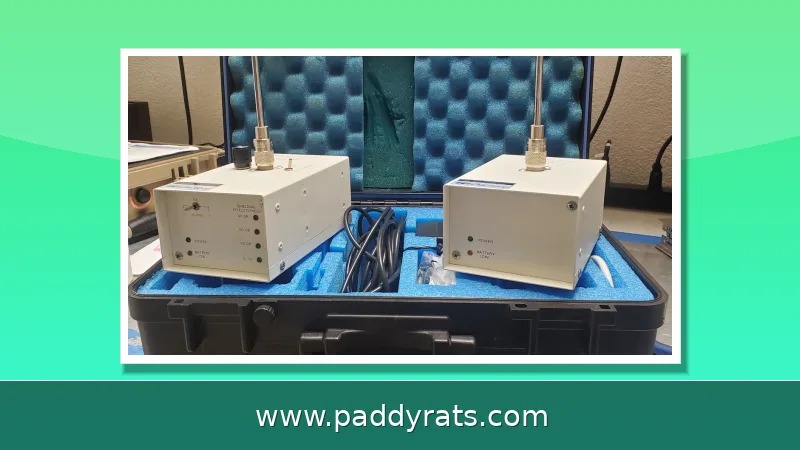
Here's the thing about Remote ID that frustrates me: it's genuinely the most useful tool a homeowner has in this situation, and almost nobody knows it exists. Any drone over 0.55 pounds is required to broadcast a Remote ID, which works like a digital license plate, sending out identification and location data the whole time it's in the air. Systems like Spotter Global's RDID pick up UAS in real time, follow their flight paths, pinpoint where the pilot is standing, and log registration numbers. So even if the operator lands the drone, hops in their car, and takes off, the FAA or local police still have a data trail to work with.
Consumer detection apps such as Drone Scanner let you see what is flying nearby by reading those broadcast signals, and RF scanners can pick up the control link between a drone and its operator. Combined with a phone camera and a written log, these tools turn a vague feeling of being watched into a documented record. The FAA, DOJ, DHS, and FCC issued a joint advisory confirming that detection and tracking are broadly permissible while active interference remains tightly restricted. In other words, watching the watcher is legal.
It helps to understand what a drone camera can actually see. Consumer drones flying at legal altitudes generally cannot resolve detail inside a house. Glass, curtains, and reflections defeat the camera, and a 1440x1440 sensor with a 120-degree field of view, like the Ring Always Home Cam used indoors, is designed for interior coverage rather than peering through your window from 300 feet up. The fear is real, but the surveillance capability is usually exaggerated.
State Privacy Laws and Local Ordinances to Know
Federal airspace rules set the floor, but state privacy laws often give homeowners more room to act. California's AB 856 prohibits drone images that invade personal privacy without consent. Florida's SB 766 bans capturing images of people on private property where they have a reasonable expectation of privacy. Indiana's HB 1009 makes drone-based electronic surveillance without permission a criminal matter, and Michigan's SB 992 restricts stalking, harassment, and privacy violations. These statutes matter because they create causes of action that federal aviation law does not.
Other states take different approaches. North Carolina's Gen. Stat. 15A-300.1 limits flying over private property and prohibits surveillance without permission. Ohio Rule 3341-6-50 directs operators to avoid recording where individuals expect privacy, Oklahoma's HB 3171 prohibits unauthorized surveillance or trespassing, and Pennsylvania's Title 18 Sec. 3505 covers illegal surveillance, harassment, and smuggling. South Carolina's SB 498 restricts camera drone flights over private property without prior consent, Tennessee's SB 1892 outlaws intentional surveillance without a warrant or consent, and Texas HB 912 prohibits capturing or sharing images without consent. Virginia restricts flying within 50 feet of a home without consent.
The practical takeaway is that your strongest legal arguments are usually state privacy claims, not federal airspace claims. Check your state statute before you escalate, and note that local ordinances may add restrictions on takeoff and landing sites even where overflight is permitted. A short consultation with a local attorney who handles privacy or property disputes can tell you in an hour what a forum argument will never settle.
Common Mistakes and Risks for Homeowners
The most expensive mistake is taking the law into your own hands. Shooting down, jamming, spoofing, netting, or lasing a drone is illegal and dangerous, and it exposes you to federal criminal charges rather than the pilot. A second common mistake is assuming that any drone over your roof is automatically breaking the law. In most cases it is not, and a complaint built on that assumption gets dismissed quickly. Precision beats outrage.
Another risk is overestimating what the camera can capture. Consumer drones at legal altitudes generally cannot resolve detail inside a home, and window glass, curtains, and reflections further degrade the image. That does not excuse harassment, but it changes the remedies available to you. Finally, remember that mitigation is off the table for private citizens. The legal path runs through detection and documentation, then through the FAA, local police, and if necessary, civil court. Patience and paperwork are unglamorous, but they are the only tools that actually work.
One more caution about altitude and safety: in January 2025, a drone flying above the legal limit nearly collided with a firefighting aircraft during the California wildfires, and nearly half of all near-miss incidents with aircraft involve drones. Reporting genuinely unsafe flight is a public service, not just a personal grievance. If you see a drone operating near an active emergency, airports, or stadiums, report it immediately to the FAA and local authorities rather than handling it yourself.
Frequently Asked Questions
Can I legally shoot down or jam a drone flying over my house?
No. Under federal law drones are aircraft, and disabling one can be prosecuted under the Aircraft Sabotage Act, 18 U.S.C. 32, with a statutory maximum of up to 20 years in prison. Jamming, spoofing, netting, or lasing a drone is also unlawful interference for private citizens, and active mitigation is reserved for specific federal agencies.
Is it legal for a drone to fly over my house?
In most cases yes. The FAA holds exclusive authority over navigable airspace, and operators flying within its rules, generally below 400 feet, may lawfully cross above your property. Your land rights do not extend upward in a way that lets you remove an aircraft, though state privacy laws may give you separate civil remedies.
What are the legal steps to stop a drone over my house?
Detect and document the activity with date, time, and location; ask the nearby operator to stop; file an FAA complaint for rule violations such as flying above 400 feet or at night without authorization; and report ongoing nuisance to local law enforcement with your evidence. Remote ID data can help identify the pilot.
What is Remote ID and how does it help identify a drone?
Drones over 0.55 lbs must broadcast a Remote ID. Systems such as Spotter Global's RDID detect UAS in real time, track flight paths and pilot locations, and log registration numbers, giving FAA officials or police data to follow up even after the pilot leaves. Consumer apps like Drone Scanner can read the same signals.