GPS jammers are cheap, illegal plug-in devices that can blind any fleet tracker in seconds. Here is how they work, what they cost, what the law says, and how fleets detect and defeat them in 2026.
What Is a GPS Jammer and How Does It Work?
A GPS jammer (also sold as a GPS blocker, and/or GPS signal block) is simply a little radio frequency transmitter that obfuscates satellite signals with noise. GPS satellites circle the Earth at approximately 20,200 km and when their signals travel through space towards a vehicle antenna enter into it with just ~-130 dBm of received power. And since that is such a weak signal this why it can be easily over powered. A jammer that transmits white noise on the GPS L1 band at 1575.42 MHz can cancel out that signal with only 10 milliwatts from mere inches away, and pricier devices also cover the L2 band operating at 1227.60 MHz as well.
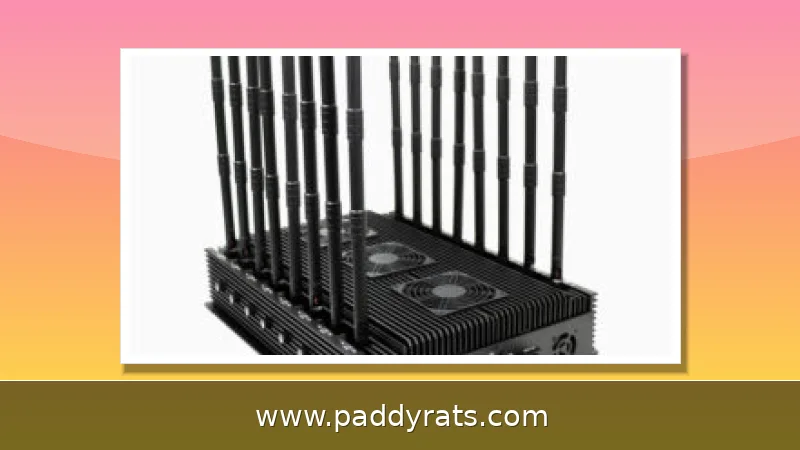
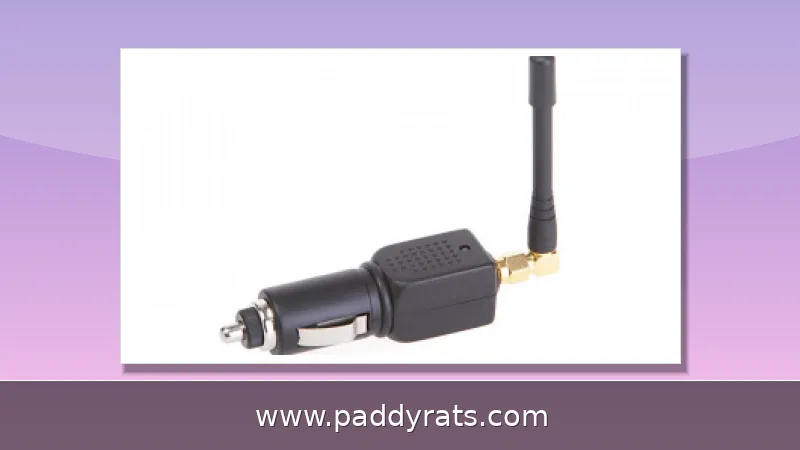
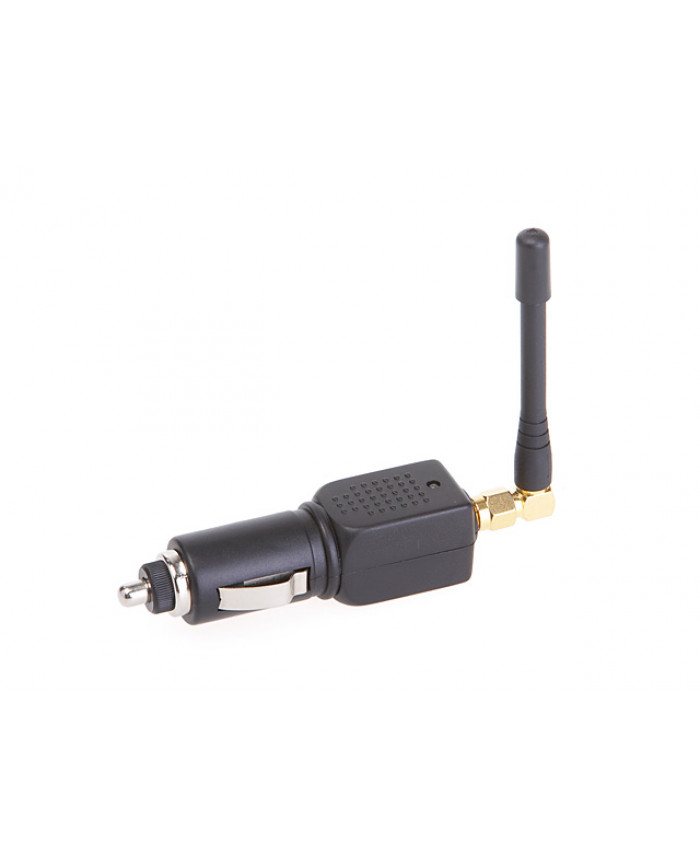
Honestly, a GPS jammer is a pretty unimpressive piece of hardware. We're talking about a little plastic box — around 60mm by 45mm by 20mm — with a 12V plug and a couple of stubby antennas sticking out. Plug it into an auxiliary outlet or an OBD-II port, set it down a few inches from the telematics tracker, and the tracker just goes blind. No setup, no app, no technical skill whatsoever. That's the scary part: if you can plug in a phone charger, you can run one of these things. And the hardware doesn't have to be fancy, because the signal it's up against is already incredibly weak. GPS satellites sit roughly 20,000 km above us, and by the time their transmissions reach a vehicle's antenna, the received power is only about -130 dBm — fainter than just about any other radio signal a car picks up. Overpowering something that delicate doesn't take a sledgehammer. A whisper of noise will do it.
How Much Do GPS Jammers Cost and What Range Do They Cover?
Price and range explain a lot about why jamming keeps showing up in commercial fleets. The hardware is almost insultingly cheap. Airpinpoint notes that a jammer going for about $30 is enough to take down Samsara, Geotab, Verizon Connect, and pretty much every GPS-based fleet tracker out there. That's not because those platforms are poorly made. It's because they all rely on the same L1 signal, and that signal is weak by nature. As for coverage, Geotab puts the interference radius at roughly 16 to 33 feet, while other sources describe a real-world dead zone of 10 to 50 meters once you account for power output and antenna placement. Either way, the math is rough for fleet managers: a device the size of a deck of cards, costing less than a tank of gas, can wipe out tracking for a whole vehicle and then some.
The table below lays out the key specs worth knowing when you're sizing up the risk.
| Specification | Typical Value |
|---|---|
| Street price | $25 to $50 |
| Primary frequency | GPS L1 at 1575.42 MHz |
| Secondary frequency | GPS L2 at 1227.60 MHz on pricier units |
| Dead zone | 10 to 50 meters; Geotab cites 16 to 33 feet |
| Form factor | 60mm x 45mm x 20mm plastic box, 12V plug, one or two antennas |
| Installation | 12V auxiliary outlet or OBD-II port |
| Skill required | None |
The price-to-impact ratio is what makes these devices so disruptive in the first place. New types of plug-in GPS jammers (also sold under the names "GPS blocker" and "GPS signal blocker") cost between $25 to $50, clearly cheaper than a single tank of diesel on even the most inefficient fleet vehicles. With that pocket change, a driver can use the impersonating device to blind tens of thousands of dollars worth of telematics deployments — such as Samsara, Geotab or Verizon Connect systems (or even any cheap GPS-based tracker). Coverage area barely matters here. The antenna for the tracker is inside the vehicle as well, often a foot or two from where you plug in your 12V auxiliary jam jammer into so all it needs to do is create an interference radius that goes far enough out of reach to silence whatever device it's intended to. According to Geotab, that efficient distance of interference is between 16 and 33 feet—which should easily cover the inside cab area.
Are GPS Jammers Legal for Fleet Vehicles?
Nope. Under 47 USC 333, running a GPS jammer is illegal in the United States, and the FCC bans the sale, marketing, and use of any device that deliberately interferes with authorized radio communications. This isn't a new rule, either — the Communications Act of 1934 already made marketing, selling, or using this kind of equipment unlawful. Canada takes it a step further with its Radiocommunication Act, which separately prohibits importing, manufacturing, distributing, selling, possessing, and using jamming devices. Bottom line: there's no fleet exemption, no commercial license, and no legitimate business justification that makes a jammer legal.
Jammer fines aren't hypothetical — and they can hurt
U.S. fines go up to $100,000 or more and can be served consecutively with prison time and forfeiture of the gear itself. Another example that continues to come up is a New Jersey man who was fined $32,000 by the FCC back in August 2013 for operating a GPS jammer under his desk while working as part of company supplied car. It is an old ruling now − over a decade ago, to be sure − but its message has endured: enforcement pursues the device more than it does the excuse. Agents typically do not care if a driver claimed to be unaware of the jamming, whether it was expensive gear or cheap fare and whose car that is. The violation is recorded if the hardware was left on in the cab. That makes the compliance question pretty easy for fleet managers. Discovering a jammer in company property makes liability of the operator not just federal — it can pull the fleet into insurance litigation, contract violations and exposure to suits that may linger longer than any one penalty assessment.Why Do Drivers Use GPS Jammers in Company Vehicles?
The reasons for GPS jamming are typically much more mundane than the spy-movie scenarios implied by the tech. For instance, a driver has a 45-minute personal errand they want to squeeze in during paid working hours and, clothes-up the jammer goes into the 12V outlet, tracker shuts down motor way of vehicle is stopped — that car washes up again outside after getting back from work task leaving behind what looks like completely normal signal gap not a distinctive act destruction. Delivery and service workers, the people who do all that work driving around for us like contractors etc. Use jammers to conceal side gigs they run on their time clock in many cases with same vehicle company thinks is following it's route assigned direction.. Some oppose surveillance in principle and object to every step they take being monitored all shift long, treating the jamming device as a mini-totalitarian power hack that might not be illegal but certainly is bad form. Others take company assets out for weekend moonlighting, and still more are just hiding policy violations: speeding, excessive idling time away from work assignments or driving well outside an assigned geofence. None are aimed at defeating GPS technology purely for the sake of it; they seek to conceal a particular behavior that tracking data from across a fleet would reveal otherwise.
Transpoco counts among those dangerous practices timesheet fraud and concealment of reckless driving. Geofence alarms are a threat to established organized criminals who employ jammers in the most severe cases to move value. The commonality between these cases is that the jammer is not a security feature for the driver. It is meant to ensure that the record is never wholly, and also a flawed record requires precisely no fleet be able through reconstructing what occurred amid any particular incident.
How Prevalent Is GPS Jamming in Commercial Fleets?
Prevalence data is imperfect but consistent enough to be alarming. The UK Sentinel project found GPS jamming events on major UK roads at a rate suggesting that 5 to 10 percent of commercial vehicles carry jammers at any given time. A 2012 Sentinel Project study found between 50 and 450 instances of GPS tracker jamming across the United Kingdom every day, with fleet drivers and truckers responsible for 90 percent of those instances. A 2014 Rohde & Schwarz study found that around every third truck on a major U.S. highway was broadcasting at the same frequency as GPS.
That data is dated, and the hardware behind it has only gotten cheaper and easier to buy since. A 2014 Rohde & Schwarz study is best understood as a snapshot of one U.S. highway during one specific time window, not as a national average that still holds today. But the direction of travel is unmistakable: the barrier to entry keeps falling. When a jammer costs $25 to $50, plugs into a 12V outlet with no setup, and gives the driver instant confirmation on a phone app, you don't need mass adoption to create a lasting data integrity problem. Even a handful of units in a fleet can punch holes in location history, mileage logs and hours-of-service records that take months to unwind, which is why the prevalence question matters less than how quickly a single device can corrupt the numbers fleets rely on.
GPS Jamming vs GPS Spoofing: What's the Difference?
A jammer and a spoofer both corrupt location data, but they go about it in opposite ways. A jammer is the blunt instrument: it emits radio frequency noise on the same frequency GPS uses, so the receiver simply cannot hear the satellites at all and loses its position fix. A spoofer is the con artist. Instead of drowning out the real signal, it imitates legitimate satellite transmissions, feeding the receiver false signals that lead it to calculate a wrong position or even an impossible route. That difference shapes what you see on the dashboard. Jamming produces absence of data — a tracker that reports zero satellites, a gap in the log, a vehicle that looks parked in an underground garage. Spoofing produces confident, wrong data: the device reports a clean fix, just not the right one. That is what makes spoofing so much harder to catch, since nothing looks broken until someone compares the reported location against reality.
There's also a practical difference in cost and complexity that separates these two threats. Jammers are cheap commodity hardware — the same $25 to $50 plug-in boxes sold openly online — while spoofers demand more sophisticated equipment and a solid understanding of how the target receiver processes satellite signals, which puts them out of reach for the average driver. A related category, mobile phone jammers, blocks real-time location exchange rather than GPS itself and tends to cost more than a basic GPS blocker. Azuga also points to lower-tech blocking methods worth knowing about: a metal box or a simple wrap of aluminum foil can reflect and absorb GPS signals just as effectively as electronic interference. The catch is that foil or a box requires physical access to the tracker, which makes it a clumsier option for a driver trying to avoid detection — you have to reach the device, cover it, and hope nobody notices the missing data.
What GPS Jammers Cannot Block
GPS jammers are frequency-specific, and that specificity is a weakness fleets can exploit. Bluetooth Find My tracking runs on a 2.4 GHz signal, which is entirely separate from the GPS L1 band at 1575.42 MHz. A GPS jammer does not touch Bluetooth, so a Find My tracker keeps reporting through the jammed zone. That is why layering a Bluetooth-based tag alongside a GPS telematics unit gives fleet managers a second, independent location trail that survives the exact moment the primary tracker goes dark.
The same logic applies to any sensor or communication path that does not depend on satellite positioning. The practical takeaway is not that one technology replaces another, but that redundancy changes the economics of jamming. A driver who silences GPS may still be visible through Bluetooth, cellular-based reporting, or engine and odometer data that the vehicle generates independently of the satellite fix.
The Real Cost of Jamming to a Fleet
The damage goes well beyond a missing dot on a map. Fleets lose location visibility, mileage tracking becomes inaccurate, fuel is wasted, payroll gets distorted, and preventative maintenance scheduled off odometer and engine hours gets missed. Compliance risk rises, insurance liability gets murkier, and the return on the entire telematics investment collapses. Transpoco notes that a vehicle secretly used for an extra 50 miles a week adds substantial unauthorized fuel costs over the course of a year, and Matrack cites ATRI's 2025 Operational Expenses of Trucking report showing the average cost of operating a truck reached $2.260 per mile.
Multiply a small weekly detour by a fleet of vehicles and a full calendar year, and the unauthorized cost becomes a line item that shows up in fuel, maintenance, and insurance rather than in a single obvious place. That is what makes jamming so corrosive. It does not announce itself as theft. It shows up as slightly worse numbers across several categories, which is exactly the kind of problem that gets ignored until an incident forces a review.
How Fleets Detect GPS Jamming and Fight Back
Detection starts with telematics platforms that treat signal loss as an event rather than a glitch. Geotab detects GPS jamming and alerts managers, and advanced systems with anti-jamming technology and signal loss alerts identify deliberate signal loss in real time. Azuga notes that high-tech tracking devices contain signal jamming detection, and recommends authorizing privacy mode for drivers who are permitted personal use, so that legitimate off-duty time does not look like tampering. Transpoco recommends transparent communication about the safety benefits of tracking alongside strict enforcement of company vehicle policies.
A workable fleet defense combines technology, policy, and culture. Use trackers with jamming detection and alerting, layer a Bluetooth tag for redundancy, audit signal gaps against fuel and mileage records, and make the consequences of interference explicit in the vehicle policy. None of that requires new hardware categories. It requires treating a 30-dollar device as a serious operational risk, because that is what it is.
| Defense Layer | What It Does |
|---|---|
| Anti-jamming telematics | Detects deliberate signal loss and alerts management in real time |
| Bluetooth Find My tag | Keeps reporting on 2.4 GHz when GPS is jammed |
| Fuel and mileage audits | Surfaces unauthorized use that a data gap would otherwise hide |
| Written vehicle policy | Sets clear consequences for interference and unauthorized use |
| Driver privacy mode | Separates legitimate personal use from tampering |
Frequently Asked Questions
How much does a GPS jammer cost and what range does it have?
A GPS jammer is typically a $25 to $50 plug-in device that broadcasts noise on the GPS L1 band at 1575.42 MHz. Depending on power and placement, it creates a 10 to 50 meter dead zone, and Geotab describes an interference radius of roughly 16 to 33 feet.
Are GPS jammers legal in the United States?
No. Operating a GPS jammer is illegal in the U.S. under 47 USC 333, and the FCC prohibits selling, marketing, or using devices that intentionally interfere with authorized radio communications. Penalties can include fines of up to $100,000 or more, imprisonment, and loss of equipment.
What is the difference between GPS jamming and GPS spoofing?
A jammer emits radio frequency noise on the same frequency as GPS, so the device cannot receive satellite data and loses its position fix. A spoofer instead mimics real satellite signals, tricking the receiver into calculating a false position or an impossible route.
Can a GPS jammer block a Bluetooth tracker like Apple Find My?
No. GPS jammers target GPS frequencies such as the L1 band at 1575.42 MHz. Bluetooth Find My tracking runs on an entirely different 2.4 GHz signal, so a Find My tracker keeps reporting through the jammed zone.