Drone takeover, also called RF cyber-takeover or cyber takedown, seizes a rogue drone by impersonating its control station instead of jamming or destroying it. Here is how the technology works, what it can and cannot do, and where the anti-drone market is heading.
What Is Drone Takeover and Why It Matters
Drone takeover is a counter-drone technique that takes control of a rogue drone by impersonating its control station, instead of jamming it or shooting it down. You'll also see it called cyber takeover, cyber takedown, RF cyber-takeover, or Cyber Over RF (CoRF). It belongs to the wider counter-UAS (C-UAS) family, which also includes radar, RF detection, and kinetic defeat tools. The basic idea is easy to describe but tough to pull off: you have to speak the drone's own language well enough that it accepts you as its real operator.
The real issue here is collateral damage. A jammer basically shouts over every radio link within range, while a takeover system whispers to a single aircraft and leaves authorized drones, aviation, and first responders alone. That's the difference that makes this approach so appealing for airports, stadiums, prisons, and government facilities, where a wide-spectrum denial tool would end up creating just as many problems as it solves.
The market numbers explain why this topic keeps coming up. Mordor Intelligence projects the anti-drone market will grow at a 27.83% CAGR, reaching USD 8.42 billion by 2031. Meanwhile, global drone market revenue rose from USD 26.3 billion in 2021 to USD 33.8 billion in 2023. And in 2025, commercial drone investment hit a record USD 3.86 billion—with 77% of that going to dual-use drone companies, according to published market data.
The FAA expects the commercial drone fleet to hit 955,000 aircraft, and Dedrone's published count of 2026 year-to-date drone violations sits at 1067112123487112883141288314, at least as reported. That number is obviously hard to take at face value, but the underlying trend doesn't really change: the more drones fill the sky, the more we'll need ways to take down the dangerous ones without knocking everything else offline in the process.
How RF Cyber-Takeover Works: From Spectrum Scanning to Controlled Landing
Sentrycs lays out a five-step CoRF process, and it's probably the clearest public breakdown of how this mechanism actually works. Step one: spectrum scanning passively picks up active drone signals and pulls out the drone type, altitude, camera direction, and operator location. Step two: protocol analysis digs into the drone-controller language, adapting to new or custom protocols in real time. Step three: vulnerability assessment decodes the data links and hunts for weaknesses. Step four: a mitigation strategy gets chosen based on the threat level. And step five: execution.
There are more mitigation options than you'd think. A system can cut off video-based navigation, take the drone over and land it safely, redirect it somewhere else, freeze it in midair, or send it back to a new "home" location. D-Fend Solutions splits this same ground into two categories of electronic mitigation: denial and takeover. Denial means broad-spectrum jamming that triggers the drone's fail-safe programming, so it either returns home, hovers, or lands. Takeover means the system seizes command instead and brings the drone down in a controlled landing inside a designated zone — often without the operator ever catching on.
DefenSync takes a somewhat different approach with its SkyDefender and Interception systems. Here, a brief, highly targeted signal grabs control of the drone and steers it along a preset safe path until it lands — all done automatically, with no human in the loop. The system also separates authorized drones from rogue ones, so friendly aircraft aren't pulled into the response. According to DefenSync, it can even pick off individual drones within a swarm by zeroing in on each one's unique frequency and transmission signature. And rather than destroying the target, it keeps the captured drone intact, which means any data or hardware on board can later be mined for intelligence.
Dedrone's take is that this is essentially a hacking problem: you fire off exploit tools that override the drone's signal, and whether you actually gain control depends on the model you're dealing with. They're upfront that it doesn't work every time. But they also give Remote ID a lot of credit here, arguing it's what allows takeover to happen without running afoul of federal law. The broadcast standard, in their view, hands defenders both a legal justification and a technical foothold, since it exposes the aircraft's identity layer to anyone listening.
The Aerospace Corporation showed off an early version of drone takeover roughly a decade ago, which is a good reminder that the idea itself isn't new. What's actually changed since then is the protocol coverage, the level of automation, and the fact that buyers are now willing to pay for surgical effects instead of blunt ones.
Drone Takeover vs Jamming, Spoofing, and Kinetic Defeat
Every defeat technique has to balance precision against reach, and those trade-offs are exactly why takeover is gaining traction. Jamming gets the job done, but it's indiscriminate—it overrides the radio link and can just as easily disrupt aviation, law enforcement, or first responders. On top of that, it's often illegal in urban areas or at public events. GNSS spoofing isn't much better. It's unreliable, since plenty of drones rely on internal navigation or frequency-hopping, and it risks misleading civilian aircraft or friendly drones along the way.
Sensor-only tools like radar, EO/IR, and acoustic detection are great for watching a wide area, but that's where they stop—detection alone doesn't bring a drone down. Acoustic sensing in particular struggles, since noisy city environments drown out signals and newer drones are built to run quieter. Kinetic options such as nets, lasers, and interceptor drones, meanwhile, are made for military battlefields, not stadiums, airports, or city streets, where the risk of collateral damage is simply too high.
Cyber takeover is the most precise option on that spectrum. It's surgical, it keeps operations running, and it lets authorized drones stay in the air while everything else carries on. The catch is that it depends on knowing the drone's protocol inside and out, and that knowledge has to keep pace as drones evolve. The table below breaks down how the approaches compare.
Key Features and Specifications of Takeover Systems
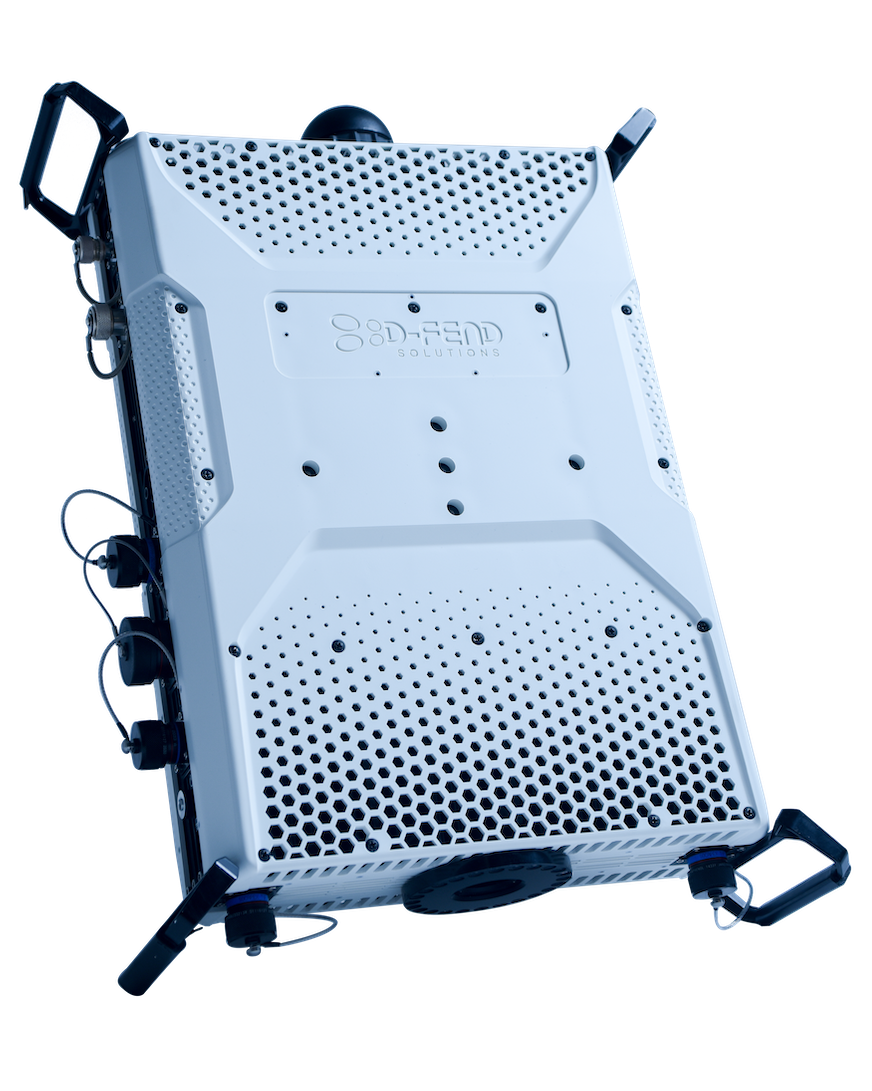
Hardware specs matter because takeover systems have to live on rooftops, vehicles, and portable kits. D-Fend's EnforceAir handles swarms and multiple drones simultaneously, provides 360-degree perimeter security with a long and wide radius using omni-antennas, and can be configured to operate autonomously based on pre-defined rules and policies. EnforceAir2 extends those C-UAS capabilities with more power, performance, portability, and range.
Singapore Technologies Engineering's AGIL counter-drone module weighs 375g with 10W power consumption in a compact design. Battelle's DroneDefender runs for 2 continuous hours, weighs 15 pounds, and combines multiple antennas with disruption electronics in a battery-operated package. Robin Radar's IRIS offers 360-degree azimuth and 60-degree elevation coverage with full 3D micro-doppler radar that distinguishes drones from birds, detects autonomous and hovering drones, and tracks multiple targets.
Indrajaal's Ranger integrates cyber takeover, GNSS spoofing, RF jamming, and a spring-loaded kill switch in one system, which shows how vendors are bundling multiple effects. The table below collects the headline parameters.
Limits, Risks, and Legal Considerations
DefenSync lists three challenges that apply across the category. Signal interference is the first: urban or high-frequency environments produce heavy RF noise that can degrade detection and injection. Drone adaptability is the second: operators evolve drones to counter detection and interception, which means protocol libraries need continuous updates. Ethical concerns are the third, covering privacy, intrusion, and potential harm to innocent bystanders if a takeover goes wrong.
Legality varies by jurisdiction and by UAS component. Dedrone notes that US legislation applies separately to the controller, the communication link, and the vehicle, and that many active countermeasures require legal permission or are reserved for government agencies. That is why passive detection and Remote ID-based identification are often the only tools a private site can deploy without a waiver.
Validation scenarios for RF cyber-takeover C-UAS help buyers test claims before deployment: Downlink Only, Bring Your Own Drones (BYOD), and No Prior Exposure. Each scenario stresses a different assumption, from limited signal access to unseen drone models, and vendors that publish results across all three are easier to evaluate.
The practical takeaway is that takeover is not a silver bullet. It works best as one layer in a stack that includes detection, identification, policy, and trained operators who know when to escalate to a different effect.
Market Signals: Anti-Drone Growth and Investment
The money is moving. Beyond the anti-drone market's 27.83% CAGR to USD 8.42 billion by 2031, the drone market overall is expected to grow at 16.77% CAGR from 2026 to 2035, reaching $209.91 billion, while drone data services and analytics are projected to grow from $27.56 billion in 2025 to $204.50 billion by 2035, according to published market research.
Investment composition matters as much as totals. With 77% of 2025 commercial drone investment flowing into dual-use companies, the same platforms that serve agriculture and inspection also serve security buyers, which shortens procurement cycles and normalizes counter-drone spending.
For security teams, the signal is that RF cyber-takeover is moving from demo to deployment. The vendors with published specs, validation scenarios, and protocol coverage are the ones worth shortlisting, and the ones that only promise jamming-style effects are increasingly a harder sell. This article is not investment advice.
How Do Passive and Active Countermeasures Fit Together?
Dedrone separates countermeasures into passive and active layers, and the split is a good planning framework. Passive countermeasures include triggering alerts, securing the Wi-Fi network, leading people and sensitive information out of line of sight, blocking the view, deploying fog bombs or strobe lights, and automatically triggered window treatments. None of these require transmitting a signal, so they carry far less legal and safety risk.
Active defense includes jammers, spoofers, hacking, net guns, DroneCatcher, lasers, electromagnetic pulse (EMP), and high-energy microwave. These are the tools that require authorization in most jurisdictions, and they are the ones most likely to cause interference if used carelessly.
The sensible architecture runs passive first: detect, identify, and protect. Only when a drone is confirmed hostile and the legal basis exists should an operator escalate to an active effect, and RF cyber-takeover is usually the least disruptive active option available.
That layered view also explains why vendors keep adding modules. Indrajaal's Ranger, for example, combines cyber takeover, GNSS spoofing, RF jamming, and a kill switch so an operator can match the response to the threat rather than defaulting to the loudest tool in the box.
Frequently Asked Questions
What is drone takeover technology?
Drone takeover, also called cyber takeover or cyber takedown, is a counter-drone method that impersonates the control station to seize a rogue drone remotely. It passively detects RF transmissions, analyzes the protocol, then injects targeted low-power signals so an authorized operator can redirect, land, or freeze the aircraft.
How does RF cyber-takeover work step by step?
Sentrycs describes five steps: spectrum scanning to detect drone signals, protocol analysis of the drone-controller language, vulnerability assessment of data links, a mitigation strategy, and execution. Mitigation can disrupt video navigation, take over and land the drone safely, redirect it, freeze it midair, or return it to a new home location.
Is drone takeover legal?
Legality varies by jurisdiction and by UAS component. Dedrone notes that US legislation applies separately to the controller, the communication link, and the vehicle, and that many active countermeasures require legal permission or are reserved for government agencies. Remote ID is described as what made drone takeover possible without violating federal law.
How is cyber takeover different from jamming?
Jamming is indiscriminate: it overrides the radio link and can disrupt aviation, law enforcement, and first responders, and is often illegal in civilian settings. Cyber takeover is surgical, using short precise signals to assume command and land the drone safely while authorized drones keep operating.