Signal jammer specs and features come down to output power, frequency bands, antenna gain and the jamming radius those numbers actually produce. Here is how the math, the hardware and the law shape real-world performance.
What Is a Signal Jammer and How Does It Work?
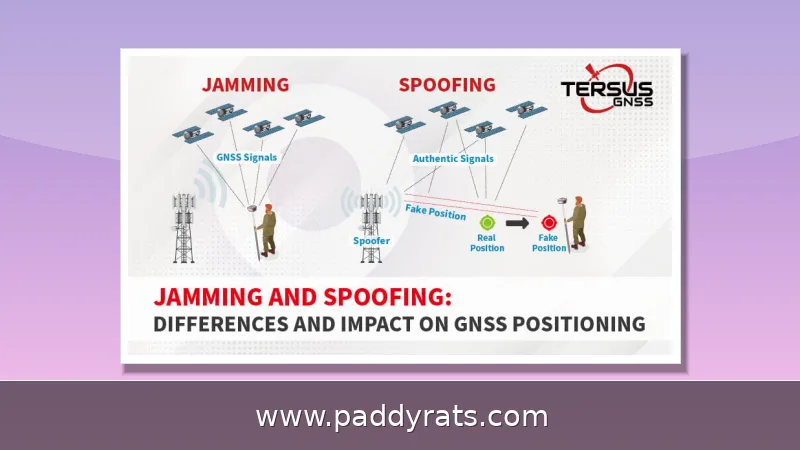
A signal jammer is, at its core, an RF transmitter that floods specific frequency bands with noise—think of it as a denial-of-service attack aimed at a cell tower or any other receiver nearby. It broadcasts on the same radio frequencies your phone relies on, just at a much higher power, so the conversation between your phone and the base station gets buried. When that happens, the phone can't finish its handshake with the network. You'll see "No Signal" or "Limited Service" pop up, and the phone keeps hunting for a connection nonstop, which drains the battery fast.
The interference signal itself is just chaotic white noise. There's no data stream, no header, no modulation scheme tucked inside that a receiver could lock onto or decode. Picture a person shouting in a room: your phone can tell that *something* is out there, but it can't pull a single clear word out of the noise. When I ran jammers on my own bench, the giveaway wasn't a dead screen at all. It was a handset that kept cycling through bands, hunting for a tower that had basically gone silent, with the battery draining faster than usual because the radio was stuck in constant search mode. Kill the jammer and the phone bounces back to normal within seconds. DIY circuits work off the same logic, and they need three subcircuits to function: an RF amplifier, a voltage controlled oscillator, and a tuning circuit.
The market data makes one thing pretty obvious: this isn't some niche curiosity. Signal jammers were a USD 4.61 billion market in 2025, and that number is expected to rise from USD 4.98 billion in 2026 to USD 9.27 billion. A 2023 Tech Insights report put demand growth at over 40 percent, too. There's a bit of tension here, though, and we'll dig into it later — almost all of those sales land in jurisdictions where actually using a jammer is restricted or flat-out illegal.
Key Specs: Output Power, Frequency Bands and Antenna Gain
When people start digging into signal jammer specs, they're usually after the same handful of numbers: output power, frequency bands, jamming radius, antenna count, power adjustability, weight, and price. That's a reasonable instinct — those are exactly the figures manufacturers print on the box. The problem is that a spec sheet only tells you so much when you read each number in isolation. Put them side by side, though, and the picture changes fast. A wideband unit rated at 300W can end up producing less usable interference than a 20W unit focused on one narrow band. It all comes down to energy density. Spread a fixed amount of transmit power across hundreds of megahertz, and each megahertz only gets a thin slice of it — meaning the noise floor it raises at the target receiver might be too low to actually matter. That's why two modules both rated at 100W can behave completely differently. Run 100W across 2400–2500MHz and you get roughly 1W per MHz. Stretch that same 100W across 2000–2700MHz and it falls to about 0.14W per MHz — a sevenfold drop in concentration. The wattage on the label doesn't change. What changes is how hard the signal actually hits any given frequency.
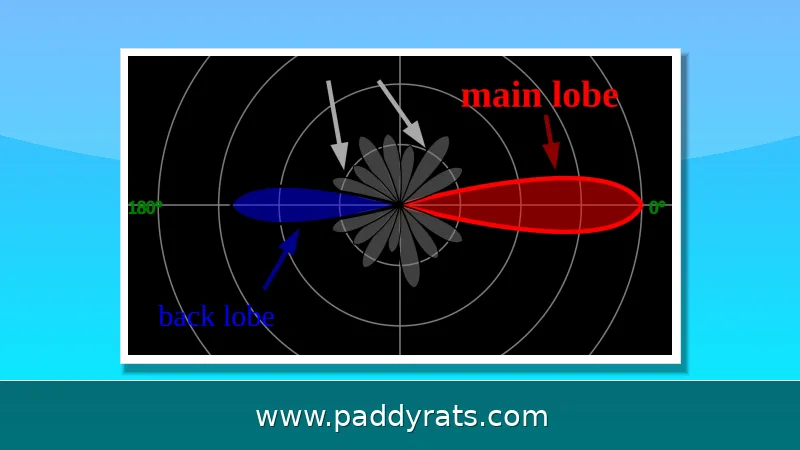
A good reference point is the Action Telecom mobile signal jammer, which is rated for 300W of total RF output and lets you adjust power across five levels, set independently on each band. That kind of control matters when you're trying to fine-tune interference without blasting every frequency at once. Its stated jamming radius goes up to 100 meters. Individual jammer modules, by contrast, usually put out 50W (47dBm) or 100W (50dBm) total across the band, so a multi-band unit like this one is basically stacking several modules to reach that 300W ceiling. But raw wattage doesn't tell the whole story. Antenna gain is what decides how much of that power actually makes it to the target, and a more directional antenna pattern will push the interference distance further. That's why two jammers with the same power rating can end up performing very differently in real-world conditions.
Frequency coverage is the other half of the spec sheet, and it's where a lot of buyers get tripped up. Most commercial jammers cover the bands you'd expect — GSM, WiFi, and GPS — and a span of roughly 800 to 2500 MHz will catch the wireless standards you're most likely to run into day to day. That said, "800 to 2500 MHz" is a broad neighborhood, not a guarantee; two units can quote the same range yet behave very differently once you look at how their channels are divided. Multi-channel units are where the real detail lives. You might see as many as 28 channels covering GSM, CDMA, LTE, WiFi, GPS, and remote control transmissions, with each channel handling its own slice of spectrum. Indoor models can push further still, supporting 12 bands across 2G, 3G, 4G, and 5G, and they can sync up with 5G, TDD-LTE, and TD-SCDMA time slots. That synchronization matters: these are time-division systems, so a jammer that ignores their slot timing wastes power and may leave gaps in coverage. In short, count channels and check which bands they actually target before assuming a wider number means better coverage.
| Spec | Typical Value | What It Means |
|---|---|---|
| Total RF output power | 5W to 300W | Raw transmit power, not effective range |
| Module power | 50W (47dBm) or 100W (50dBm) | Per-band amplifier rating |
| Frequency coverage | 800-2500 MHz optimal | Covers most consumer wireless standards |
| Channel count | Up to 28 channels | Separate bands blocked at once |
| Indoor band support | 12 bands (2G/3G/4G/5G) | Slot-synchronized with TDD-LTE |
| Power adjustability | 5-class per band | Lets you dial down to avoid overshoot |
That table is honestly the only sane way to read a spec sheet, because one big wattage number on the front tells you almost nothing about what’s going to happen in the field. I’ve seen buyers put a 100W desktop unit next to a 20W handheld, figure the desktop would crush it, and then watch the handheld block the target device at twice the distance, all because its energy was focused exactly where it needed to be.
Why Average Power per MHz Beats Total Power
Total power looks good on a spec sheet, but it gets spread across the whole band, so what really matters in practice is average power per MHz. The math is pretty simple: just divide total power by bandwidth. Take a 100W jammer running on 2400–2500 MHz — that comes out to 1W/MHz. Now spread that same 100W across 2000–2700 MHz, and you're down to just 0.14W/MHz. When the energy is concentrated, it travels farther on the band you're actually targeting, which means that second unit ends up roughly seven times weaker at any given frequency within its coverage.
This is exactly where the spec sheet and reality stop agreeing with each other. Take a 100W wideband box spreading its output across 2000–2700 MHz — that works out to only about 0.14W per MHz. Now confine the same 100W to 2400–2500 MHz and you're putting a full 1W into every MHz. That's roughly seven times the concentration, aimed right where the target actually lives. And that density is what matters most against frequency-hopping and direct-sequence spread-spectrum systems, or any proprietary digital protocol built to shrug off interference. A wideband blast just hands those radios more clean channels to hop into; a narrow, dense signal denies them the room they need. So when I'm sizing a unit for a specific threat, I don't bother with the wattage plastered on the box. I figure out which band the target actually operates on, then work backward to the watts per MHz it takes to hold that band down.
Here's the flip side of that: a higher band count or channel count doesn't automatically make a jammer better. Every extra band draws from the same amplifier power, so a 28-channel unit with a modest total rating can actually come out weaker on any single channel than a 5-band unit rated the same overall. So if you only need to block one protocol, you're usually better off going with fewer bands, since each one gets more power density.
Jamming Range: Internal and External Factors
Range isn’t a fixed number you can read straight off a spec sheet. It comes down to a handful of moving parts: output power, operating frequency, antenna gain, the strength of the signal you’re trying to drown out, physical obstacles, and how the unit is installed. Higher frequencies tend to fade out over shorter distances, while lower frequencies carry farther and punch through walls more easily. Add in thick concrete, metal framing, or a strong nearby cell tower, and the effective interference area shrinks fast. That’s why a lab rating of 100 meters often turns into something closer to 20 meters inside a concrete building. In practice, treat every published range as a best-case estimate, not a promise.
| Factor | Type | Effect on Range |
|---|---|---|
| Output power | Internal | Higher power generally extends reach, but only within limits set by other factors |
| Operating frequency | External | Higher frequencies travel shorter distances; lower frequencies reach farther |
| Antenna gain | External | Higher gain and more directional antennas extend interference distance |
| Target signal strength | External | Stronger competing signals reduce the effective interference area |
| Obstacles and installation | External | Building attenuation and poor placement cut real-world range |
How far a jammer actually reaches is never a single fixed number you can read off a spec sheet. Internally, two things set the ceiling: the average output power of the jammer module, and the type of jamming signal along with its modulation strategy. Externally, the range depends on the operating frequency, antenna gain, the strength of the target signal you are trying to overpower, nearby obstacles, and how the unit is installed. Frequency alone can shift results noticeably, since higher bands fade faster over distance while lower bands travel farther. Antennas matter just as much: more gain and a tighter directional pattern stretch the interference footprint, while a cheap omnidirectional whip spreads the same power thinly in every direction. The environment then takes its cut. Building attenuation, walls, and a strong nearby tower all work against you, because the jammer has to overcome the received signal, not merely transmit into empty space. That is why two units with identical wattage can behave completely differently in a basement versus an open field.
Real-world numbers back up that spread, and they vary wildly depending on the class of device. A low-power jammer aimed at everyday cell traffic will typically kill calls within roughly 30 feet (9 meters), and low-power signal jammers as a category usually cover a radius of about 1 to 20 meters—enough for a single room or a small office. Step up to high-power hardware and the picture changes fast: those units may reach 200 to 500 meters. At the conservative end, one consumer source caps jamming range at no more than 30 square feet. Testing data fills in the middle of the curve. A study jammer (model MB06) blocked mobile communications up to 40 meters, which sits well beyond the typical low-power ceiling. GPS jamming, meanwhile, tells a different story, because satellite signals arrive at the receiver extremely weak. Even the weakest GPS jammer tested still affected tracking at about 300 meters and acquisition at about 600 meters—a reminder that the effective range depends as much on the target signal as on the jammer itself.
| Class | Typical Radius | Example Use |
|---|---|---|
| Low-power handheld | 1-20 m (about 30 ft for calls) | Single room, single protocol |
| Mid-power portable | 20-40 m | Small office, vehicle |
| High-power desktop | 200-500 m | Open area, line of sight |
| GPS L1 cigarette-lighter type | About 10 mW output | Short-range tracking denial |
| GPS hedgehog type | Around 10W on L1 or L2 | Wider GPS denial footprint |
Those GPS numbers deserve a caveat. A chirp jammer sweeping 1565-1585 MHz behaves differently from a fixed-tone unit, because the sweep forces the receiver to reacquire continuously rather than simply losing lock. In practice that means tracking degrades at a shorter distance than acquisition, which matches the 300-meter and 600-meter figures above.
Portable vs Desktop vs Full-Band Jammer Features
Form factor drives most of the buyer-facing features. Jammer Master portable jammers average 1.5 kg versus desktop models around 6 kg, and the portables typically ship with a one-year warranty and free worldwide shipping plus DIP switches for per-channel control. Those switches matter more than they sound, because they let you disable bands you are not targeting and preserve power for the ones you are.
Desktop and full-band units trade weight for coverage. A full-band desktop signal jammer like the JM005 lists at $1,365.99, while the HPJ1000-5G desktop jammer sits at $999. Both are aimed at fixed installation where the antenna can be positioned for line of sight, which is where the high-power radius numbers actually become achievable.
Price scales with antennas and bands rather than raw watts. A 4-antenna WiFi and remote control jammer lists at $920, an 8-antenna portable cell phone jammer (JM017) at $899, and a handheld GPS jammer at $777.89. None of those figures include the legal exposure of operating them in a prohibited jurisdiction, which is a cost that never appears on the invoice.
Portable Jammer Models and Prices Compared
The portable segment is where spec sheets get most directly comparable, because the models cluster around similar power and range claims. The table below collects the listings I could verify, with range, output and price side by side. Note that the WiFi and Bluetooth units reach farther on less power than the cellular units, which reflects how much easier it is to overwhelm a short-range 2.4 GHz link than a licensed cellular uplink.
| Model | Bands | Range | Power | Price |
|---|---|---|---|---|
| JM021 | 2G/3G/4G | 20 m | 5.6W | $520 |
| JM019 | 5G, 24 antennas | 25 m | 24W | $1,150 |
| JM008 | WiFi 2.4/5 GHz | 20 m | 7W | Not listed |
| JM012 | WiFi/Bluetooth 2.4/5.2/5.8 GHz | 40 m | 6W | $569.99 |
| JM015 | GPS/GLONASS/GSM/CDMA plus power bank | 10 m | 1.2W | $599 |
| JM025 | 2G/3G/4G, WiFi, LoJack | 5 m | 1.6W | $420 |
The pattern in that table is consistent with the physics: the mini GPS jammer and power bank (JM015) blocks GPS, GLONASS, GSM and CDMA within 10 meters at just 1.2W, while the mini cell phone jammer with hidden antennas (JM025) manages only 5 meters at 1.6W. Weight climbs with capability, from the 1.7 kg JM021 to desktop-class units, and the JM019 carries 24 antennas to cover 5G at 25 meters.
Jamming Signal Types and Modulation Strategies
Not all interference is the same waveform. A barrage jammer floods a band with noise, a chirp jammer sweeps across a range such as 1565-1585 MHz to defeat GPS receivers, and a hedgehog jammer broadcasts on L1 or L2 at around 10W. The cigarette-lighter GPS type is the simplest, broadcasting on L1 at about 10 mW, which is enough to disrupt a receiver a few meters away but nothing more.
The choice of strategy interacts directly with the target's own modulation. Systems using FHSS, DSSS or proprietary digital protocols resist interference, so a high-power wideband jammer may underperform versus a lower-power targeted strategy that matches the hopping pattern or concentrates on the acquisition channel. That is the single most important lesson from the specs: match the waveform to the target rather than maximizing watts.
Detection and countermeasures follow from the same physics. The common symptom of jammer interference is dropped service, and consumer apps claiming detection are largely unproven because they need a working signal to analyze. Jammers look like a walkie-talkie, cell phone or wireless router, so physical inspection still matters. Switching phone frequency may work around less sophisticated jammers, relocating may restore reception, and jammers also block signal boosters because a booster can only amplify a signal that still exists.
Are Signal Jammers Legal to Buy or Use?
In the United States it is illegal to sell, advertise, distribute or operate cell signal jammers, and the FCC cites risks to public safety and 9-1-1 calls plus interference with law enforcement communications. The Communications Act of 1934 outlaws interference with authorized radio broadcasts, and US penalties can reach a fine of up to $112,000 and prison time. Suspected illegal jamming should be reported to law enforcement or filed as an FCC complaint.
Other jurisdictions are similarly strict. EU rules prohibit mobile signal jammers under commission directives, and France briefly allowed them in cinemas and theaters before banning them completely in 2012. Australia makes it illegal to operate or possess a jammer without a specialized carrier license, India permits them only for security agencies or the military, and Malaysia imposes fines up to RM500,000 or five years in jail.
The United Kingdom occupies an odd middle ground: owning a unit is technically legal but using it is a criminal offense, and authorities can track radio signatures via triangulation. Prisons in New Zealand and the UK have specific legal exceptions. Testing standards referenced in the industry include MIL-STD-461, the IEC 61000 series, CISPR 11, CISPR 22 and FCC rules, which is a reminder that lawful deployment exists mainly inside controlled government and correctional environments.
Spec Sheet Checklist Before You Compare Models
A spec sheet is only useful if you read it in the right order. Start with the target's actual operating band, then check average power per MHz on that band, then confirm antenna gain and adjustability, and only then look at the headline radius. A detector like the PKI 6825 Jammer Detector, measuring 130 x 68 x 26 mm and about 195 g with 9V-24VDC input, a detecting frequency of 50 MHz-6 GHz, 10 LEDs, a 1A relay normally open output and fuzzy scanning with sensitivity tuning to eliminate background noise, is the tool that tells you what is actually present in the air.
The CAST-Jammer reference of a jammer signal range of 173dB and signal level from -203dBW to -30dBW shows how wide the legitimate measurement vocabulary is. If a listing gives you only watts and a distance, treat the distance as marketing until the band, gain and environment are specified. That habit will save you from the most common purchasing mistake in this category.
Frequently Asked Questions
What determines a signal jammer's effective range?
Range is not set by output power alone. It depends on output power, operating frequency, antenna gain, target signal strength, obstacles and installation conditions. Higher frequencies tend to travel shorter distances, while lower frequencies reach farther. More obstacles and stronger competing signals reduce the effective interference area, which is why lab ratings often shrink dramatically indoors.
What frequency bands do commercial signal jammers cover?
Most commercial jammers cover GSM, WiFi and GPS frequencies, with an optimal range of 800 to 2500 MHz addressing most common wireless standards. Multi-channel models may offer 28 channels blocking GSM, CDMA, LTE, WiFi, GPS and remote control transmissions, while some indoor units support 12 bands across 2G, 3G, 4G and 5G.
Why is average power per MHz more useful than total power?
Total power is spread across the whole band. A 100W jammer covering 2400-2500 MHz delivers 1W/MHz, while 100W across 2000-2700 MHz delivers only 0.14W/MHz. Concentrated energy gives longer range on the target band, so average power per MHz is the practical performance metric when comparing units.
Are signal jammers legal to buy or use?
In the United States it is illegal to sell, advertise, distribute or operate cell signal jammers, and the FCC cites risks to public safety and 9-1-1 calls. Many other jurisdictions also prohibit them. Penalties include fines up to $112,000 in the US and up to RM500,000 or five years in jail in Malaysia.