A GPS signal jammer is a small, high-power radio transmitter that drowns out satellite signals so receivers cannot calculate position or time. Here is how jamming works, how it differs from spoofing, who uses these devices, and why they are illegal in the U.S., Canada, and the U.K.
What Is a GPS Signal Jammer?
A GPS signal jammer is a small but powerful radio frequency transmitter that blocks or interferes with legal communication signals — and GPS satellite signals are its main target. It puts out RF noise on the same frequency the satellites use, so the receiver never picks up the legitimate data it needs to calculate a position. You'll often see the same hardware sold as a GPS blocker or telematics jammer, and plenty of these devices also take out cellular, Wi-Fi, and toll-reader traffic all at once.
Civilian GPS runs mainly on the L1 frequency at 1575.42 MHz — a narrow sliver of the radio spectrum that consumer devices have depended on for decades. Now here's the part that catches most people off guard: the satellites themselves aren't all that powerful. They broadcast at just 20 to 50 watts, and they're doing it from about 12,000 miles up. By the time those signals cross that distance and hit a receiver on the ground, they're incredibly faint — often weaker than the ambient radio noise around them. That imbalance is where the whole vulnerability lies. A 1-watt jammer sitting on a dashboard can overwhelm the satellite signal within its immediate range, simply because the jammer is close and the satellite is far away. Portable units usually create an interference bubble with a radius of about 5 to 30 feet, though Geotab cites a tighter 16-to-33-foot radius in vehicle settings, where metal bodywork and placement near the tracker shape the outcome.
How Does GPS Jamming Work?
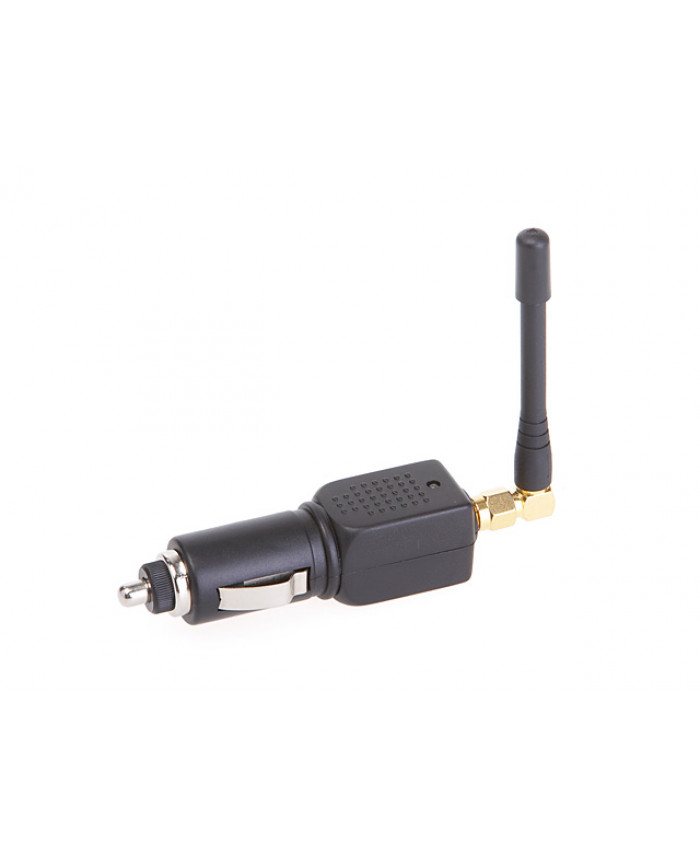
The mechanics really aren't complicated, and that's exactly why jamming works so well. Someone just plugs the jammer into a 12V port or auxiliary power outlet and sets it near the GPS tracker. Once it's on, it puts out an interference signal that drowns out the much weaker satellite signal, and the receiver has no way to tell the real data apart from the noise. With no valid fix, the tracker either goes silent or spits out junk.
How much the jammer actually messes things up comes down to three things: how close it is, what's physically around it, and its RF characteristics. From there, you land in one of three outcomes — nothing happens at all, the signal degrades just enough to throw off navigation, or you lose GPS entirely. I've watched a cheap plug-in unit knock a fleet tracker from a clean fix down to zero satellites in under a minute, while a better-shielded receiver sitting twenty feet away hardly registered a thing. That kind of inconsistency is exactly why field testing tells you more than any spec sheet ever will.
What Signal Characteristics Do Jammers Use?
Most jammers you'll run into out there are chirp jammers. Instead of sitting on one frequency, a chirp jammer keeps hopping and sweeping across a range—typically somewhere in the 1565 to 1585 MHz neighborhood—so a GPS receiver never gets a clean moment to lock on. Picture a floodlight rather than a laser pointer: it doesn't block just one narrow channel, it drowns out a whole band of signals at once, which makes filtering it out much harder for the receiver. The table below lays out the main commercial categories identified by the Radionavigation Lab at the University of Texas at Austin, which sorted 18 commercially available jammers by morphology.
| Category | Frequency bands |
|---|---|
| Cigarette-outlet jammers | L1 band only |
| Rechargeable battery / external antenna jammers | L1 and L2 bands |
| Cell phone jammers | L1 and L2 bands |
| Jammer Type | Bands Targeted | Typical Power | Notes |
|---|---|---|---|
| Cigarette-outlet jammer | L1 only | About 10 mW | Simple, plug-in, most common in vehicles |
| Rechargeable battery / external antenna | L1 and L2 | Higher, varies | Portable with better range |
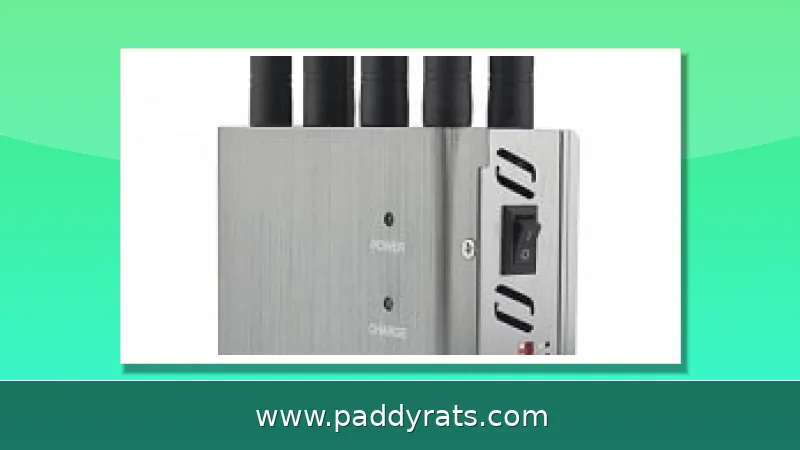
| Hedgehog jammer | L1 or L2, plus Wi-Fi and cellular | About 10 W | Many antennas, jams multiple services at once |
| Cell phone jammer | L1 and L2 | Varies | Sold as phone blockers, also hits GPS |
The hedgehog design is the one that keeps security teams up at night. A basic cigarette-lighter jammer broadcasts on a single band, but a hedgehog unit carries multiple antennas and puts out around 10 watts, which is enough to take down Wi-Fi, GPS, and cellular signals all at once. That's a real problem, because modern vehicles depend on several of those channels simultaneously — one for satellite positioning, another for the telematics uplink. Knock them all out together, and a stolen vehicle goes dark on every tracking channel at the same time, leaving fleet managers or police with nothing to follow. And that level of capability isn't something a legitimate buyer can just order online. Military-grade jammers are tightly controlled and aren't sold to the general public, so anything advertised as military-grade on a consumer site should raise a red flag — a genuine military unit would never show up on a regular retail page.
GPS Jamming vs GPS Spoofing: What Is the Difference?
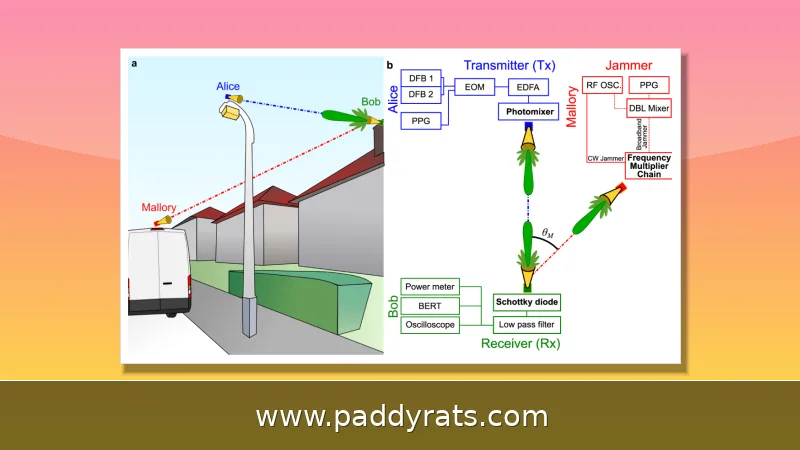
Jamming and spoofing tend to get lumped together, but they're actually two very different attacks, and they leave very different fingerprints. Jamming is the sledgehammer approach: it floods the frequency with radio noise and wipes out the signal entirely, so the receiver has nothing to work with and can't figure out where it is at all. Spoofing is more like a con job. A GPS spoofer imitates real satellite transmissions and feeds the receiver false position data, tricking the device into calculating a location or route that looks completely normal on the screen. That practical difference really matters. When a jammer is running, you'll usually notice something's off, since the signal just drops. With spoofing, the device keeps reporting a position — it's simply the wrong one — which makes it much harder to catch and much more dangerous for anyone trusting that data.
That distinction really changes how you'd go about investigating a suspected incident. When someone fires up a GPS jammer, the receiver gets buried under RF noise, so the tracker usually ends up reporting a lost signal, a dropped fix, or a noticeable gap in its data history. A spoofed tracker is a different story—it never goes quiet. It keeps reporting positions, except those positions were made up by a device imitating real satellite transmissions. That's exactly what makes spoofing the more dangerous of the two: dispatchers, routing software, and compliance systems see a full, uninterrupted track and have no obvious reason to question it. For fleet operators, the practical takeaway is pretty simple. A clean-looking track isn't automatically a truthful one. It's worth the extra effort to compare reported locations against engine data, fuel use, or cellular timestamps, since those independent sources often expose a route that looks perfectly normal on the GPS map but never actually happened.
What Types of GPS Jammers Exist?
Portable jammers are the most common category you'll run into, and for good reason: they're small, cheap, and easy to hide. Most are plug-in or battery-powered units that fit in the palm of a hand or slip into a glovebox, so someone can switch one on and stash it in seconds. Vehicle jammers step up from there. These are hard-wired or mounted in a car or truck, and they tend to be less selective about what they block, often taking out GPS, cellular, and Wi-Fi at the same time. That broad reach is exactly what makes them attractive to anyone trying to hide a vehicle's movements, since the tracker loses its bearings while the phone signal goes quiet too. Stationary jammers operate on a different scale altogether. Running at higher power from a fixed location, they can blanket a much larger area and interfere with multiple GNSS constellations at once. You won't find these in a consumer's trunk; they belong to state-level interference campaigns, where the goal is wide geographic disruption rather than concealing a single vehicle.
Then there is the spoofer, which isn’t a jammer at all. Where a jammer drowns the signal in noise, a spoofer quietly impersonates it: it transmits fake signals that mimic legitimate satellite transmissions, so the receiver locks onto them and calculates a position that looks perfectly valid but is simply wrong. That distinction matters in practice, because a jammed device typically reports no fix at all, while a spoofed one keeps reporting confidently — just not where it really is. Military-grade jammers sit in a separate tier entirely. These are strictly controlled systems, unavailable to the general public, and well outside anything a civilian buyer could legitimately obtain.
Who Uses GPS Jammers and Why?
GPS jammers started out as government technology built for military use, designed to conceal vehicle movements and throw off enemy navigation systems. The consumer market that grew out of that same technology tells a very different story. Speeding drivers use jammers to avoid police detection, criminals use them to cover up vehicle thefts, and trucking fleet drivers use them to hide their location from employers. In London, taxi and HGV drivers have turned to jamming to evade maximum driving hours rules. What all of these users have in common is a desire to break the link between a vehicle and the people tracking it — whether that's law enforcement, a fleet manager or a regulator. And because the hardware is cheap and easy to plug in, the barrier to entry is low, even though the consequences can reach far beyond the person doing the jamming.
Each of those use cases carries real consequences beyond the individual. A driver hiding a route from an employer is also hiding it from safety systems that dispatch help after a crash. A thief running a jammer is disabling the very telematics that would trigger recovery. The device is small, but the blast radius of its use is not.
Are GPS Jammers Legal?
GPS jamming is illegal in many countries, including the United States, Canada, and the United Kingdom. In the U.S., the Communications Act of 1934 outlawed the marketing, sale, or use of GPS jammers. In Canada, the Radiocommunication Act prohibits importing, manufacturing, distributing, selling, possessing, and using GPS jamming devices. Penalties include fines of up to $100,000 or more in the U.S., imprisonment, and loss of equipment.
There are no exemptions for use within a business, classroom, residence, or vehicle. Local law enforcement agencies do not have independent authority to use jamming equipment, and only limited exceptions exist for federal law enforcement agencies. If a vendor tells you a device is legal for fleet use or personal privacy, that claim does not survive contact with the statute.
How Is GPS Jamming Enforced?
Enforcement has teeth, and the FCC has used them repeatedly. In May 2016, the FCC imposed a $34,912,500 fine on a Chinese electronics manufacturer and online retailer for marketing 285 models of signal jamming devices to U.S. customers for more than two years. In August 2013, the FCC proposed a fine of nearly $32,000 for an individual whose illegal use of a GPS jamming device on the highway outside Newark Airport interfered with an aviation safety system in 2012.
Earlier actions followed the same pattern. In April 2013, the FCC fined two companies $144,000 and $125,000 for using illegal signal jammers at their worksites. In October 2012, enforcement actions targeted individuals selling jammers on craigslist.org. And in October 2011, the agency brought 20 enforcement actions against online retailers in 12 states for illegally marketing more than 200 models of jamming devices. The message across a decade of cases is consistent: selling and using these devices carries financial and criminal exposure.
What Is the Impact on Fleets and Critical Infrastructure?
Fleet operations depend on accurate GPS data for routing, safety monitoring, compliance, and maintenance. Jamming interrupts that visibility, causing loss of location visibility, navigation and routing problems, and compromised safety features such as automatic collision notifications and emergency response services. When a dispatcher cannot see a truck, they also cannot send help to it, which turns a compliance problem into a safety problem.
The collateral damage extends well beyond any single vehicle, because jammers do not discriminate. Air traffic control, search and rescue operations, the electric grid, and mobile phone services are all vulnerable to GPS jamming fallout. The London Stock Exchange has been subject to repeated GPS outages affecting the timestamping of financial transactions. In 2007, a navy exercise involving loss of GPS communications in San Diego harbor meant residents could not withdraw cash from ATMs and doctors' emergency pagers stopped working; it took three days to identify the ships as the cause. South Korea was subject to a major campaign of GPS jamming from North Korea in 2016, affecting ship and aircraft navigation. During an L1 and L2 GPS band monitoring campaign over a few weeks in London, CRFS detected significant jamming activity.
How Can You Detect and Combat GPS Jamming?
Detection starts with monitoring, not with guessing. If a tracker drops out at the same spot on the same route every day, that pattern is a signal. Fleet teams can compare GPS gaps against engine hours, fuel data, and cellular timestamps; a truck that is clearly moving while its GPS shows nothing is a strong indicator of interference. Dedicated RF monitoring, like the band monitoring CRFS ran in London, can confirm jamming activity in an area rather than on a single vehicle.
Combating it is mostly about redundancy and awareness. Multi-constellation receivers, inertial backup, and cellular-based location fallbacks all reduce the impact of a single jammed band. Training drivers and dispatchers to flag unexplained signal loss matters just as much, because the fastest way to catch a jammer is a human who knows what normal looks like. And if you find one, report it: possession and use are illegal in the U.S., Canada, and the U.K., and enforcement agencies have shown they will act.
The Bottom Line on GPS Signal Jammers
A GPS signal jammer is a cheap, small, and surprisingly effective way to break a technology that most modern logistics, navigation, and safety systems quietly depend on. The physics favor the jammer, the law does not, and the collateral damage reaches far past the person holding the device. For fleet operators, the practical response is layered: monitor for gaps, build redundancy, and treat unexplained signal loss as a security event rather than a technical glitch.
Frequently Asked Questions
What is a GPS signal jammer?
A GPS signal jammer is a small, high-power radio frequency transmitter that blocks or interferes with GPS and other GNSS signals. It broadcasts noise on the same frequency as GPS satellites, preventing receivers from determining location or time. Devices are often called GPS blockers or telematics jammers.
How does GPS jamming work?
GPS satellites transmit very weak microwave signals, and civilian GPS uses the L1 frequency at 1575.42 MHz. A jammer transmits radio noise on that same frequency at higher power, drowning out the satellite signal so the receiver cannot calculate position.
Are GPS jammers illegal?
Yes. GPS jamming is illegal in many countries including the United States, Canada and the United Kingdom. In the U.S., the Communications Act of 1934 prohibits operating, marketing or selling jammers, with fines up to $100,000 or more, equipment seizure and possible imprisonment.
What is the difference between GPS jamming and spoofing?
Jamming emits radio frequency noise on the GPS frequency to block satellite data completely, so the device cannot determine location. Spoofing mimics real satellite signals to feed false position data, tricking the receiver into showing an incorrect location or route.