Jamming a drone video signal at home is illegal in the US, so the real answer is detection, documentation, and FAA complaints. Here is what actually works in 2026, and what can send you to federal prison.
Why Blocking a Drone Video Signal at Home Is Legally Restricted
So every couple of months a reader will send me an email saying there is some drone over their backyard and the first question I always get from them can they just buy a jammer and stop that thing? The honest answer is no. However, it is against FCC regulations to operate a drone jammer in the US. Section 301 of the Communications Act is Licensing Requirement for Radio Transmitters (47 U.S.C. § 301) and Section 333 prohibits willful interference with authorized radio communications (47 U.S.C. That's the wall homeowners slam into with these two provisions.
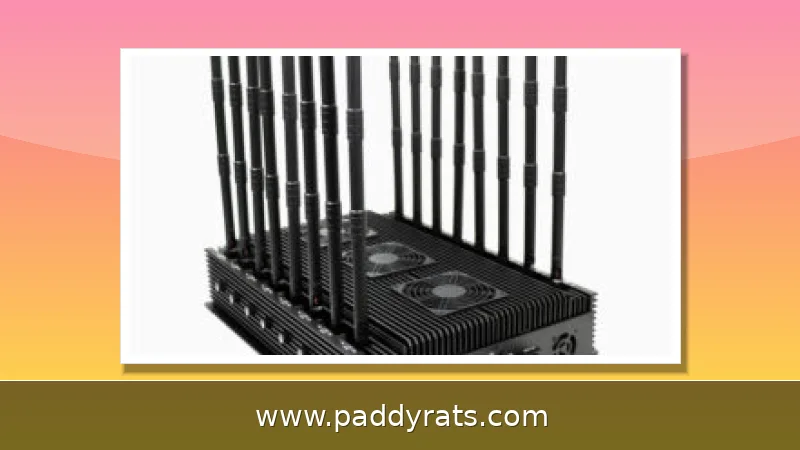
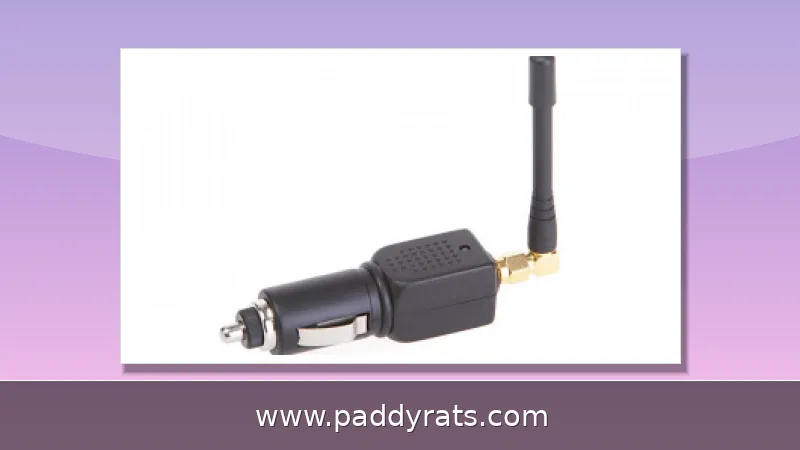
The penalties are not theoretical. This makes running a jammer punishable by large fines, the confiscation of your equipment, and jail time as well. I have seen hobbyists treat a $200 device on Amazon as though it were in some sort of gray area, but that is not the case. Jamming is rude and does not discriminate, it takes radio waves around the target with a shotgun effect that clobbers everything nearby (including cellphones and 9-1-1 calls), so active interference gets treated by the FCC like a gun: as an enforcement priority.
There is a second legal layer that most people miss — drones are aircraft under federal law. The Aircraft Sabotage Act, 18 U.S.C. 32 provides that willfully damaging, destroying or disabling an aircraft is a federal crime punishable by parole maximum No more than twenty years in prison. SHOOTING DOWN DRONE A Florida man was sentenced to serve 33 months in a federal prison for shooting down an unmanned aerial vehicle piloted by the sheriff's office. But that case is the best warning I can offer: if you're tempted to take a drone down, it might cost you ten years of your life.
How Drone Video and Control Signals Work
Jamming is illegal and also doesn't work, but first we need to know what you would be jamming. Some common frequencies used for drone control and video link are also unlicensed public frequencies at 2.4GHz or 5.8GHz (unlike aviation bands which require expensive radios). Video links are typically FM modulated composite video signals occupying a minimum of five to six radio bands between 1.3GHz and bat5+GHZ (and more often digital as technology advances). That differential is important: a single radio jammer won't cover every band of each modern drone.
A jammer basically bombards radio noise on those frequencies to drown out communication between the drone and its operator. Theoretically, the drone would then land or return home. Spoofers are doing the opposite, feeding fake signals to a device that appear as if they just came from GPS satellites and taking over this communication link. The spoofer releases a fictitious signal that it is able to strengthen, takes control of the drone or even fly away and then gain access to all its data as well as taking over its camera feed.
The weakness in both plans is the aftermath of the broken link. A drone can stay put and land on the-spot or return to its home position with an operator losing signal, but one cannot guess what is added in a set flight path by his operator for it before flying away. Fiber — for example, fiber-optic cable between the drone and operator can completely jam proof a jamming free system. Which is why the practical homeowner strategy is detection and tracking, not interference.
What Counter-Drone Technologies Exist and How They Work
The commercial counter-drone market actually sees a lot of activity, but mostly none end up in consumer hands. The DroneDefender by Battelle releases an electromagnetic field to interfere with GPS and ISM radio frequencies; it is not available for consumer use, and still required FCC approval in 2016. IRIS is a micro-doppler radar system from Robin Radar with 360-degree azimuth and 60 degree elevation, which can separate drone echoes from those of birds. Spotter Global’s RDID, for example, automatically detects UAS in real time with flight path and pilot location detection as well registration logging.
Monitoring Equipment There are four families of monitoring equipment: RF analyzers, acoustic sensors, optical sensors and radars. Radar transmits radio energy that reflects from a target (the surface, the part of interest) and it measures time-of-flight to identify direction. Micro-doppler radar identifies differences of speed within moving bodies, like a drone's rotor (and this is how it can tell the difference between drones and birds). Dedrone offers drone defense solutions, along with Airsight for its critical AirGuard Software and AirSight X Skydio ✌🎤. This is Doodle Labs patented Sense technology which monitors in-band interference and switches autonomously/channels/switched frequency.
Some methods are more theatre than tool. Dutch police teamed with Guard From Above on the eagles as anti-drone systems, and Tokyo Police worked net-carrying drones. From a range of as much as fourthy feet, the net cannon that can simply be mounted to drone. This machine is sweet for organizing your little pest problems– developed by Michigan Tech's Human-Interactive Robotics Lab All of them are cool, but none provides a legitimate and cost-effective solution to the homeowner.
Specifications and Range Limits of Anti-Drone Systems
Every time I get the question about "counter-drone technology for homes," people envision a machine on a spec sheet. In reality the range numbers vary all over the place, and ultimately it's not as much about marketing but instead those variables. The average jamming radius of an anti-drone jammer varies from 200 to 3000 meters, largely influenced by power and environment (e.g., urban vs. open), compatibility with other devices and the coherence distance of a signal. That spread is a factor of 15, which indicates that the spec means virtually nothing without context.
The table below pulls together the comparable specs and limits from the systems and rules we just covered.
Jamming vs. Spoofing vs. Radar: Pros and Cons
If you compare the options honestly, the tradeoffs are stark. Jamming can force a drone to land or return home, but it is illegal in most countries including the US, less effective against pre-programmed drones, offers no positive control, does not locate the pilot or flight path, and disrupts nearby communications including cellphones and 9-1-1 calls. Spoofing can take over a drone and access its data, but it is also illegal in most countries, less effective against drones not using GPS, does not locate the pilot or flight path, and disrupts nearby GPS signals.
Radar has the strongest technical profile: long range, constant tracking, accurate localization, handles hundreds of targets, and works day, night, and in fog. Its limits are that range depends on drone size, most systems do not distinguish birds from drones, and it requires a transmission license. Legal detection, by contrast, is broadly permissible for non-federal entities and builds evidence for FAA complaints. For a homeowner, that last column is the only one that matters.
I would frame it this way: the technologies that actually stop a drone are the ones you cannot legally operate, and the technologies you can legally operate are the ones that document the drone rather than stop it. That is not a satisfying answer, but it is the accurate one.
Risks and Penalties of DIY Drone Jamming
I want to be blunt about the downside risk, because I have seen people rationalize it. Buying a drone video signal jammer online and pointing it at the sky is not a privacy defense; it is a federal violation with a paper trail. The device itself is evidence, the interference is detectable, and the FCC has both the authority and the incentive to pursue it. Monetary penalties, equipment seizure, and imprisonment are all on the table.
There is also a practical failure mode. Jamming is an incomplete countermeasure because the operator's intended flight path is unknown. You might knock one drone offline and never learn who was flying it, where it came from, or whether it captured footage of your home. Meanwhile, your jammer is interfering with your neighbors' Wi-Fi, garage doors, and emergency calls. If a 9-1-1 call fails because of your device, you have created a far bigger legal problem than the drone.
The Aircraft Sabotage Act raises the stakes further. Willfully damaging, destroying, or disabling an aircraft is a federal offense with a statutory maximum of up to 20 years in prison. The Florida man who shot down a sheriff's office drone faced up to 10 years in federal prison. Whether you jam, net, or shoot, the legal exposure is severe, and the drone is usually the least of your problems.
FAA Rules and Remote ID for Drone Privacy Cases
The FAA rulebook is your best tool, because violations are the lever that actually gets enforcement. Maximum altitude is 400 feet above ground level; no flying near airports, stadiums, or military bases; no night flying without authorization; drones over 0.55 lbs must broadcast Remote ID; no flying over people or moving vehicles; and no flying beyond visual line of sight. When a drone is hovering over your property at 200 feet at midnight, it is probably breaking at least one of these.
The safety stakes are not abstract. In January 2025, a drone flying above the legal limit nearly collided with a firefighting aircraft during the California wildfires. Nearly half of all near-miss incidents with aircraft involve drones. That context is why regulators take reports seriously, and why a well-documented complaint carries weight.
Remote ID is the piece homeowners underuse. It broadcasts identification data that can be logged and matched to a registration number, and systems like Spotter Global's RDID track flight paths and pilot locations. If you capture Remote ID data, you give law enforcement and the FAA something actionable. That is a far stronger position than standing in your yard with a jammer.
Legal Alternatives to Jamming for Homeowners
Here is the sequence I recommend, and it mirrors the legal homeowner steps that actually produce results. First, document the incident with date, time, and location. Second, capture video or photos of the drone and, if possible, its flight path. Third, ask the operator to stop if you can identify them. Fourth, contact local law enforcement and file an official complaint. Fifth, submit Remote ID registration data to the FAA or police.
Filing an FAA complaint is the step most people skip. It applies to rule violations such as flying above 400 feet or flying at night without authorization. Detection and tracking are broadly permissible for non-federal entities, while active interference such as jamming, seizing, or disabling is tightly restricted to specific federal agencies. That line is the whole game: watch and record freely, interfere never.
If you want a technology layer, look at passive detection rather than active denial. RF analyzers, acoustic sensors, optical sensors, and radar all gather information without transmitting interference. Some home setups pair a camera with an RF analyzer to log 2.4GHz and 5.8GHz activity. That evidence, combined with a timestamped log, is what turns a frustrating evening into an enforceable complaint.
What Should Homeowners Realistically Expect in 2026?
Realistically, you cannot legally block a drone video signal at your home in 2026, and any product that claims otherwise is either illegal to operate or misleading. What you can do is build a record that regulators and police can act on, and lean on FAA rules that the operator is probably violating. That is slower than jamming, but it does not end with your equipment in a federal evidence locker.
The counter-drone industry will keep advancing, and professional systems like DroneDefender, IRIS, and Dedrone will keep improving. Those tools remain in the hands of authorized agencies, not homeowners. For the rest of us, the practical toolkit is a phone, a timestamped log, Remote ID data, and a filed complaint. It is unglamorous, and it is the only approach that survives contact with the law.
One more note for anyone weighing a purchase: this article is about technology and regulation, not investment advice. If you are evaluating counter-drone stocks or products, do your own research and treat marketing claims about "home jamming" as a red flag, not a feature.
Frequently Asked Questions
Can I legally jam a drone video signal at my home in the US?
No. Drone jammers are illegal in the US under FCC regulations. The Communications Act of 1934, Section 301 and Section 333, prohibit blocking or interfering with authorized radio communications. Operating a jammer can lead to monetary penalties, equipment seizure, and criminal sanctions including imprisonment.
What frequencies do drone video signals use?
Drone control and video links commonly use 2.4GHz or 5.8GHz, which are unassigned public frequencies. Video links are mostly FM-modulated composite video signals across at least five to six radio bands ranging from 1.3GHz to 6GHz, and sometimes they are digital.
What happens to a drone after its signal is jammed?
A jammed drone will either land on the spot or return to its home location. Jamming is an incomplete countermeasure because the operator's intended flight path is unknown, and the drone may have been pre-programmed to continue regardless of signal loss.
What legal steps can a homeowner take against a drone over their property?
Document the incident with date, time, and location; capture video or photos as evidence; ask the operator to stop; and file an FAA complaint for rule violations. Detection and tracking are broadly permissible, while active interference such as jamming or disabling is tightly restricted.