Private citizens in the US cannot legally jam, spoof, net, or shoot down a drone, because federal law treats drones as aircraft. The workable path is detect, document, ask the operator to stop, and file an FAA complaint.
Is It Legal for a Drone to Fly Over Your House?
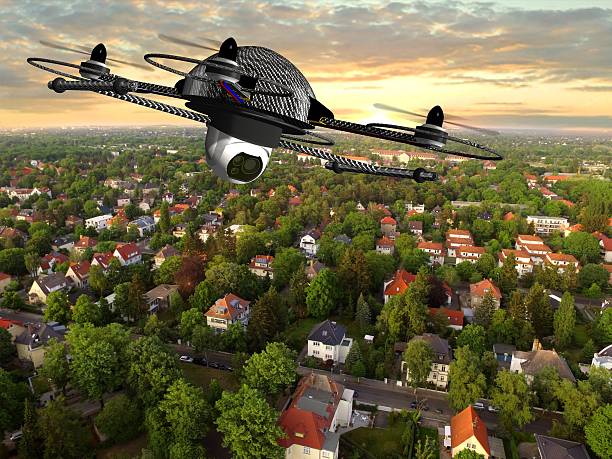
Generally speaking, unexpectedly for some homeowners yes. The FAA maintains sole jurisdiction over the airspace above the United States, and you don't own your property high enough to keep an airplane wing from passing just inches above your roofline. If the operator is following all rules for Unmanned Aircraft Systems, then it can legally fly over your home as long as they do not go above 400 ft. agl in uncontrolled airspace.
The regulations that are applicable to that flight and the operators who conduct it, whether they be a hobbyist or modern-day aviation company. Drones must avoid airspace around airports, stadiums and military bases — no nighttime flying either, without authorization. Another rule means pilots must always keep the aircraft within visual line of sight — no flying by camera feed alone. All drones over 0.55 pounds must transmit Remote ID, effectively a digital license plate that identifies the aircraft and its operator to authorities. You do not fly over people or moving cars, and 400 feet above ground level is a hard ceiling (not an option!). Put another way, when you have a drone hovering over your backyard and are making decisions about how to respond, that already may be violating one or more of these rules.
That legal reality is what puts a whole new spin on the question. I immediately thought that, if you flew a drone at low altitude over my yard it was in trespass all day long — end of story. It is not — which surprised me. Just because the drone is overhead, doesn't mean it trespasses in the eyes of law. What you really care about is probably whether the operator violated an FAA rule — flying above 400 feet, buzzing an airport, or omitting Remote ID — or if this flight gives rise to a separate state-law claim such as private nuisance. You can only act on the violation, not flying over. There are two things that could have occurred: so before you pick up your jammer or draft some sort of complaint, figure out which one it really is. If both did not, then you might be annoyed but have no case yet.
The rules may seem like bureaucratic fine print, but they are necessary for situations exactly the one in January 2025 where a drone just above the legal ceiling at over 400 feet came dangerously close to a firefighting aircraft shadowing wildfires across California. That close call was not an isolated incident. Narrow escapes involving drones and piloted aircrafts are now a chronic issue, with nearly 50% of near-misses between an aircraft and a drone being due to this same routine rule-breaking behavior — operating too high, flying in airspace where manned craft also operate or losing sight of the UAV completely. That is exactly the type of behavior that federal reporting channels were designed to capture, and why FAA views altitude limits as a safety line instead of an optional limit. The key takeaway for a property owner annoyed by that drone -- the operator who operates outside of those boundaries is most likely to be on the FAA's radar, and it's hard proof of a specific (and rule-breaking) flight that's more impactful than simply complaining about drones being in your area.
Can You Legally Jam or Block a Drone Signal Over Your Property?
No — and this is where many homeowners get into deep trouble. By US law, a drone is aircraft—not a toy—so jamming its control signal or spoofing its GPS; netting it, landing pad first in some busy place; spotlighting it (or pointing lasers at them) all count as illegal interference with an aircraft. The FAA takes a jobs chart approach to active mitigation for designated Federal agencies under narrow parameters, and there's no homeowner exemption queened out; private property is still largely private. Not even a drone disruptor, like Battelle's DroneDefender (which jams GPS and ISM radio frequencies) is currently legal for consumers to use — it hasn't been approved by the FCC yet. This means, in other words, that just because a drone is hovering over your land does not give you the legal basis to shoot it down.
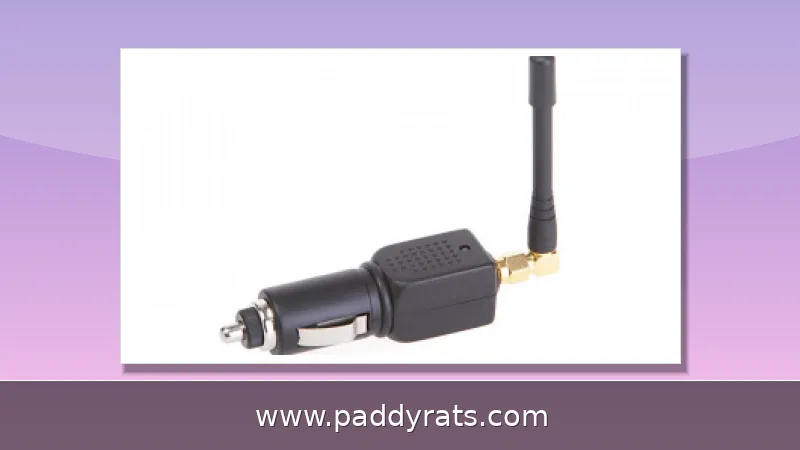
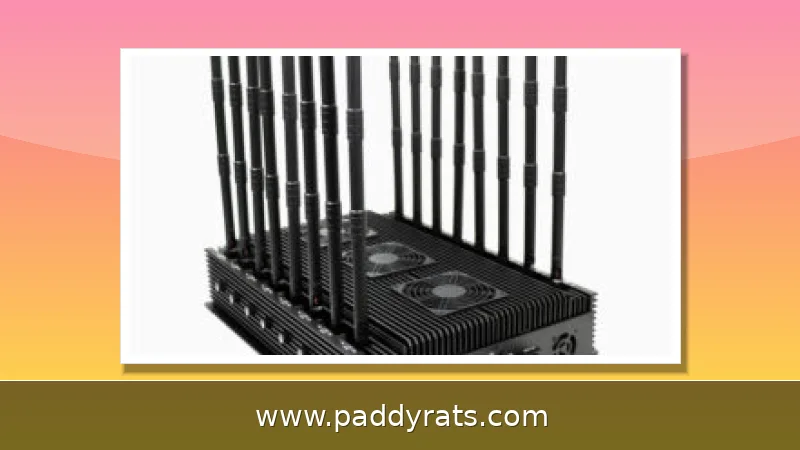
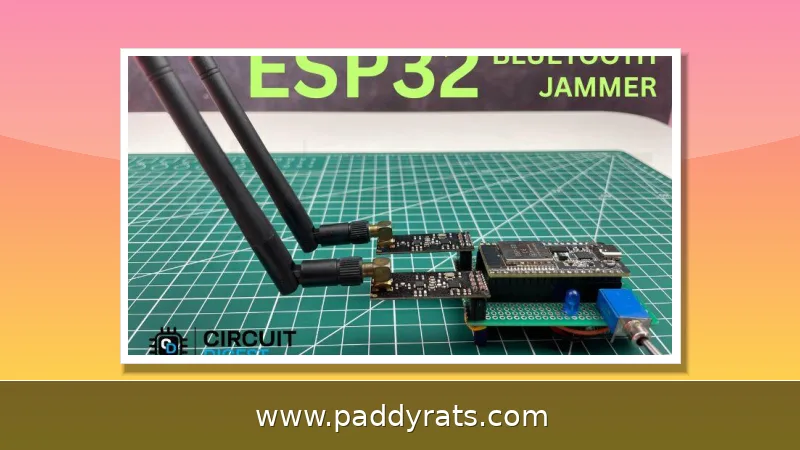
Well, the technology is real, and that very much indeed leads to the trap. If you search online, there are plenty of devices sold to homeowners: a drone signal jammer — also sometimes referred to as an RF (radio frequency) jammer that emits high-energy electromagnetic signals in order to interfere and cover the controller signal. A GPS spoofer, on the other hand, takes a different path. It provides an artificial signal to the drone that drives it into believing where its true point is located; They are two separate methods with completely different mechanisms, neither of which is actually a loophole. For US consumers, anyone using either is doing so illegally—regardless of the size your property or how irritating (or scary) that drone overhead might feel.
The Department of Justice, FAA, DHS and FCC made that clear in a joint advisory directed specifically at non-federal public and private actors. In their message, detection and monitoring was allowed freely, while disruption — jamming or capture of the drone would be controlled under tight conditions. To watch, log and spot — you can't go and touch the signal. The FAA went even further asserting that it does not support the use of mitigation systems by anyone without clear authority from Congress. And this last point is the most important: it can be well-funded security teams, campus police and corporate campuses who are like a homeowner with a busy neighbour – they observe around them but cannot take down that drone legally.
I keep seeing forum posts where people insist a jammer is fine as long as the signal stays inside your own property line. That argument doesn't hold up, and it fails on two fronts. Start with physics: radio waves don't politely stop at a fence or a survey marker. RF energy radiates outward, so any device strong enough to sever the control link on a drone overhead is going to spill into the surrounding neighborhood, where it can disrupt phones, Wi-Fi, and whatever else is running on those frequencies. Then there's the legal side, which doesn't care about your property line any more than the physics does. Federal rules classify drones as aircraft, and interfering with an aircraft in the national airspace is a federal matter, not something a homeowner gets to decide. That's exactly why jamming and spoofing remain off-limits for private citizens, no matter how local the intent may be.
What Are the Legal Ways to Stop a Drone Over Your House?
The legal route is quick and unglamorous — which is exactly why so many property owners avoid it: Identify, document then request the operator to cease flying followed by filing an FAA complaint. Consider it a paper trail level of data that you are constructing as opposed to doing something yourself. Each entry you make — date, time, location of a sighting or where drone flew at its lowest point and frequency — morphs vague feelings of being watched into an actionable item for the FAA. Now here's a concrete thing that will help you out even more: Because drone rules require the pilots to maintain visual line of sight with their drones, they'll typically be standing somewhere relatively near where they're flying -- usually within the same block or park. For the majority of hobbyists it is simply not realizing they are causing distress, and a relaxed straightforward request is usually what you need to help them pack their things. Still, keep your expectations realistic. They're not obligated to cease and desist just because you ask them to, which is why the documentation matters — it's your groundwork if the behavior persists into a situation in front of the FAA.
Documentation transforms abstract complaints into concrete actions. By recording when, where and how often a drone flies into your airspace you are providing the FAA with something tangible to examine. Record the dates and times, approximate height along with flight heading in addition to what rule you believe was violated — flying over people or violating 400 feet.
Here's the order I'd actually go through before things escalate.
| Step | Action | Why It Matters |
|---|---|---|
| 1 | Detect the drone and note its flight path | Establishes that a real, repeatable pattern exists |
| 2 | Document date, time, altitude, and location | Converts a complaint into evidence the FAA can act on |
| 3 | Ask the operator to stop | Most pilots are nearby and often unaware of the disturbance |
| 4 | File an FAA complaint for rule violations | Routes the issue to the agency with actual enforcement authority |
| 5 | Consider a private nuisance claim | State-law option for persistent, unreasonable interference |
If the behavior continues, a private nuisance claim against the operator is a separate civil route. Law firm Chugh, LLP explains that nuisance claims focus on unreasonable interference with the use and enjoyment of your property, which is a different legal theory from federal aviation enforcement. It is slow and fact-heavy, but it is available.
One practical note from experience: keep a simple log rather than a folder of scattered phone clips. A one-page timeline with consistent fields is far more useful to an investigator than twenty unlabeled videos, and it forces you to distinguish a genuine rule violation from a drone that was simply passing over.
How Does Remote ID Help You Identify and Report Drones?
Remote ID, often shortened to RDID, is the closest thing to a license plate that a drone carries. It detects UAS in real time, tracks drone flying paths and pilot locations, and logs registration numbers for future reporting. For a homeowner, that last part is the important one: it gives an enforcement agency something to trace.
The requirement is tied to weight. Drones over 0.55 pounds must broadcast Remote ID, which means the majority of consumer quadcopters in the air today are transmitting. Systems built around this standard, such as Spotter Global's RDID offering, are designed to detect UAS and log registration numbers so a report can name a specific aircraft rather than describe a blurry shape.
This is where detection and mitigation split cleanly. Detection is passive and broadly permissible for private parties. Jamming, seizing, or disabling is active interference and tightly restricted. Remote ID sits firmly on the legal side of that line, which is why it is the tool I would invest in first if drone traffic over my property became a recurring problem.
The practical benefit is evidentiary quality. Instead of telling the FAA that a drone flew over your yard, you can report a registration number, a timestamp, and a flight path. That is the difference between a complaint that gets filed and one that gets acted on, and it costs you nothing in legal exposure.
What Counter-Drone Technologies Exist and Who Can Use Them?
Counter-drone technology, also called counter-UAS or C-UAS, splits into two families: monitoring equipment and countermeasures. Monitoring equipment includes radar, RF analyzers, optical sensors such as cameras, and acoustic sensors such as microphones. Countermeasures include RF jammers, GPS spoofers, high power microwave devices, nets and net guns, high-energy lasers, and cyber takeover systems.
Drone monitoring equipment can be passive, meaning it looks or listens, or active, meaning it emits a signal and analyzes what comes back. Either way, it can perform detection, classification or identification, locating and tracking, and alerting. That full chain is what makes a report credible, because it captures not just that a drone was there but which drone it was and where it went.
Radar deserves its own explanation. It sends out a signal and uses the reflection to measure direction and distance. Most radars are designed not to pick up small targets, but specialist counter-UAS radar tracks small objects like drones. Micro-doppler radar goes further, detecting speed differences within moving objects, such as a drone's rotor, to distinguish drones from birds.
| Technology | Function | Legal for Private Citizens |
|---|---|---|
| Radar | Detects and tracks small targets, day or night | Yes, as monitoring |
| RF analyzer | Detects control-link radio traffic | Yes, as monitoring |
| Optical and acoustic sensors | Cameras and microphones for identification | Yes, as monitoring |
| Remote ID receiver | Logs registration numbers and pilot location | Yes, as monitoring |
| RF jammer | Masks the controller signal | No |
| GPS spoofer | Feeds false positioning data | No |
| Net gun or laser | Physically captures or disables the drone | No |
Named systems illustrate the range. Battelle's DroneDefender emits an electromagnetic field to disrupt GPS and ISM radio frequencies, and it is not yet available for consumer use while awaiting FCC authorization. Robin Radar Systems makes IRIS, a counter-UAS micro-doppler radar with 360-degree azimuth and 60-degree elevation coverage. Sentrycs publishes a counter-drone blog on legally taking down a rogue drone, and Airsight, maker of AirGuard and AirSight X, publishes a legal guide on preventing drones over property.
What Are the Penalties for Shooting Down or Jamming a Drone?
This is the part that ends the debate. Under federal law, drones are aircraft. Willfully damaging, destroying, or disabling an aircraft is a federal offense under the Aircraft Sabotage Act, 18 U.S.C. 32, with a statutory maximum of up to 20 years in prison. A Florida man who shot down a sheriff's office drone faced up to 10 years in federal prison.
Guns are sometimes pitched as the simple answer, and they are the worst one. Shooting a drone may be effective, but it is extremely dangerous, and the consequences vary by state. They can include reckless endangerment charges, prosecution under firearms discharge laws, and civil damages owed to the drone owner. A falling drone is also a falling hazard to anyone below.
Jamming carries its own exposure. Because a jammer interferes with radio communications in the national airspace, it falls under the same unlawful interference framework as physical sabotage, and the FCC has its own enforcement interest in unauthorized transmitters. Buying a device online does not create a legal right to use it.
Other approaches carry quieter risks. Nets are a safer alternative to guns for capturing drones, and Tokyo police have worked to implement net-carrying drones, while the Human-Interactive Robotics Lab at Michigan Tech developed a drone-mounted net cannon that can capture another drone in flight from up to 40 feet. A ground-based drone net gun is essentially a plastic slingshot that releases a net. Even so, deploying one against someone else's aircraft is not a homeowner right.
Hacking is another route people ask about. Drones are flying computers, and it has been proven possible to hack into their software via Wi-Fi through an unsecured network port. That does not make it lawful; unauthorized access to a computer system is its own federal crime. The Dutch National Police even worked with Guard From Above, a raptor training company, to test eagles as anti-drone systems, with the Dutch Organization for Applied Research studying the possible impact on the birds' claws. Every one of these options belongs to institutions with legal authority, not to individuals.
What Should Property Owners Do Instead?
The realistic strategy is layered and boring, which is exactly why it works. Start with detection. A Remote ID receiver or a passive RF analyzer tells you whether the traffic is a one-time flyover or a repeating pattern. If it repeats, you now have data instead of a feeling, and data is what every later step depends on.
Then document and ask. Log the flights, then speak to the operator if you can identify them, because visual line of sight means they are usually close by. Many people flying a drone over a neighborhood genuinely do not know they are frightening anyone, and a polite request resolves more cases than any complaint.
If the flights continue, file an FAA complaint for the specific rule you believe was broken, and keep the log updated. For persistent, unreasonable interference, consult an attorney about a private nuisance claim under state law. Detection and documentation are broadly permissible; jamming, spoofing, netting, and shooting are not, and the penalties for getting that wrong are measured in years, not dollars.
None of this is as satisfying as knocking a drone out of the sky, and I understand the impulse. But the legal system draws a hard line between watching and interfering, and the homeowners who get results are the ones who stay on the watching side and let federal enforcement do the rest.
Frequently Asked Questions
Can I legally jam a drone signal over my property?
No. For private citizens in the US, jamming a drone's control signal, spoofing its GPS, netting it, or aiming a laser at it are treated as unlawful interference with an aircraft. The FAA considers drones aircraft, and active mitigation is reserved for specific federal agencies under strict limits.
Is it legal for a drone to fly over my house?
In most cases, yes. A drone may fly over your home if the operator follows FAA rules for Unmanned Aircraft Systems, typically below 400 feet in uncontrolled airspace. The FAA holds exclusive authority over national airspace, and your land rights do not extend upward to control aircraft.
What is the legal way to stop a drone over my house?
Detect and document the activity, ask the operator to stop, and file an FAA complaint for rule violations. Because pilots must keep drones within visual line of sight, the operator is usually nearby. Evidence of when, where, and how often a drone enters your airspace makes a complaint actionable.
What happens if I shoot down a drone over my property?
Under federal law, drones are aircraft, and willfully damaging or disabling one is a federal offense under the Aircraft Sabotage Act, 18 U.S.C. 32, carrying a statutory maximum of up to 20 years in prison. A Florida man who shot down a sheriff's office drone faced up to 10 years in federal prison.