Ofcom enforces the UK's spectrum rules against jammers and deliberate interference using investigation powers under the Wireless Telegraphy Act 2006, backed by police support and criminal penalties. A live government call for evidence is now examining whether possession of radiofrequency jammers should be restricted too.
What Is Ofcom's Role in Spectrum Enforcement?
Ofcom, the UK communications regulator and its Spectrum Compliance team is the unit responsible for turning spectrum regulations into real enforcement. The UK rules are non-negotiable for operators of spectrum, and Ofcom has a new page dedicated to compliance and enforcement in the context of technical specification obligations/contractual commitments. The regulator also has guidance in plain language about matters including the interference to radio apparatus and using radio apparatus licence conditions. Translating this into practice means that Ofcom does not just issue licences and move on, it monitors, investigates and prosecutes where necessary.
The team is overseen by head of spectrum compliance within Ofcom's spectrum group Iain O'Brien. The way he publicly frames the job is this: enforcement exists because of our shared resource that both radio, GPS systems and emergency communications — not to mention many consumer electronics devices – rely upon. The enforcement powers that Ofcom has to enforce the ban on jammers are in sections 35, 39 and more recently section 41 of the relevant legislation and it is those however combined into a single power namely 'spectrum compliance' used by so called Spectrum Compliance team at work/investigations /stop selling cells back. Importantly, Ofcom has no authority to grant exemptions or permits for the use of jammers at all; which means there isn't even an avenue in UK law for a "permitted" jammer.
How Do Jammers Work and Why Are They Illegal?
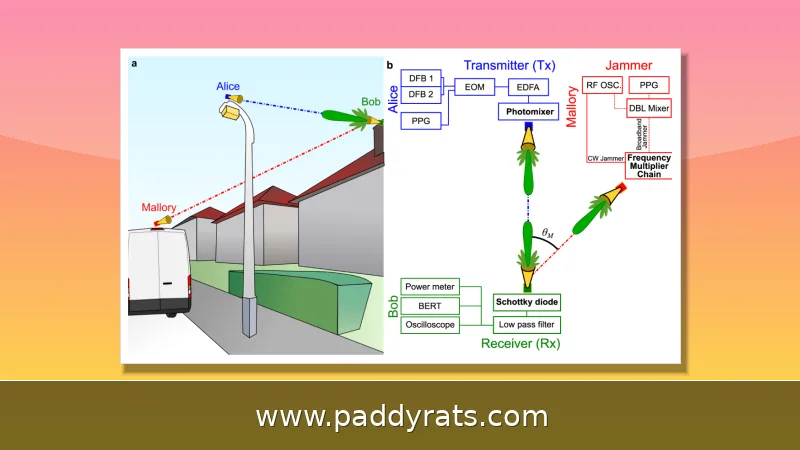
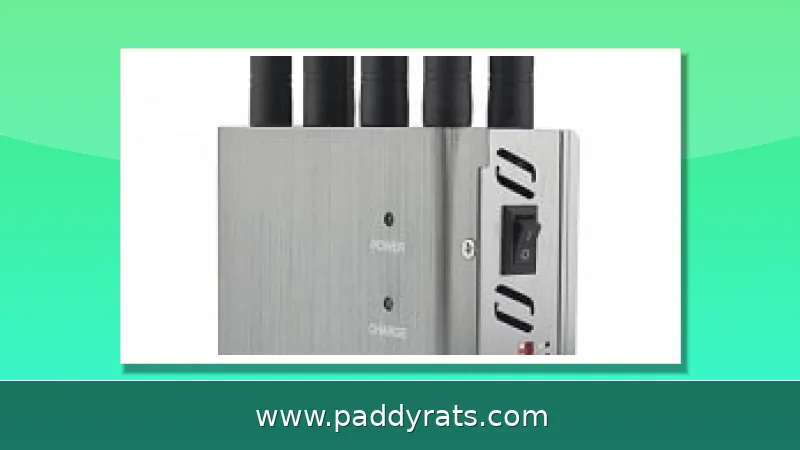
A jammer operates by radiating electromagnetic energy on a frequency, at an output strength and distance that floods a receiver to the point where it will be either hindered or blocked. Radiofrequency jamming sends transmissions on the target frequency stronger than that of an authorized transmission, causing the receiver to receive signals from jammers instead. Which makes the effect so disruptive: because it doesn't need to compromise or decrypt anything, but drown out everything being said in that conversation.
There are several types of jamming methods, and they vary in the extent to which spectrum is destroyed. Noise jamming is the bombardment with permanent noise, deceptive jamming sends signals that are not real or false, barrage one gives a wide coverage of frequency and many channels at once while spot acts on only an ordered frequency chain. Jamming has a capacity to neutralize GPS and other position, navigation & timing (PNT) services in the physical radio layer so there is no escape from even most modern receiving device/tech devices will not be able to evade jamming; that covering cell networks, Wi-Fi plus public safety communications.
< p > Interfering with other radio equipment, or installing and using unlicenced items (and licensable but non- exempt devices) contravenes in post Wireless Telegraphy Act 2006 legislation which renders doing so a criminal offence. It is obvious that the page on GPS jamming exercises simply states, Operating a jammer is an offence under Section 68 of the Act and Ofcom has enforcement responsibility in this area. Put another way: It is not illegal to possess a nefarious black box; it IS illegal what the device does on shared spectrum.
What Powers Does Ofcom Have Against Jammers and Interference?
Ofcom's functions are investigative and enforcement-oriented, rather than permissive.
Ofcom cannot approve or license the use of a jammer but, as spectrum regulator, may in certain circumstances take enforcement action. It has powers of enforcement through sections 35,39 and 41 that will assist in going after both operators or sellers as well its Spectrum Compliance team specifically looks to combat the sale of jammers themselves for this reason. Because jamming cases frequently span into typical crime, this is important news as both the police and Ofcom have powers to act.It is important to have an understanding of the practical division of labour. Ofcom have the spectrum know-how, ongoing monitoring and legal framework; local police bring entry powers and a willingness to attend over back-up for any subsequent search or arrest. That thinking — of complaints about interference growing into search warrant, seize and prosecute the same tabloids without charge. The table below summarizes the most important enforcement levers as well as their holder.
| Lever | Holder | What it covers |
|---|---|---|
| Sections 35, 39 and 41 enforcement powers | Ofcom | Investigating and acting on spectrum non-compliance, including jammer sales |
| Licensing and authorisation of jammer use | None | Ofcom has no power to license or authorise jammers |
| Search warrants, entry and arrest | Local police | Executing searches and supporting seizures in interference cases |
| Criminal prosecution | Courts | Unlicensed use, illegal possession of radio apparatus, deliberate interference |
Earlier this year radio recorded a playful jab at an industry regulator - and one nuance readers often miss: Ofcom is free to investigate interference using commercial charging terms, but if the problem turns out to be within the complainant's own equipment then those uncommercial terms apply. Ofcom deals with complaints about wireless interference through its make-a-complaint route and there is a specific Report of Interference to Domestic form for domestic cases. That structure keeps the regulator's investigatory assets centered on real external interference and not user error.
How Does an Ofcom Interference Investigation Actually Work?
The Hull amateur radio interference case is probably the most obvious public example of Ofcom's approach. In February 2021, radio amateurs in and around Hull complained about deliberate interference with their transmissions, as well as "zero hour" abusive messages from the culprit who was also operating illegally on unlicensed radio bands. So Ofcom deployed both automatic monitoring equipment and engineers on the ground surveilling live broadcasts, closely coordinating with local police. The remote monitoring and physical presence is what separates a serious spectrum investigation.
The defendant was uncooperative yet the evidence stood up in court. He was convicted of unlicensed use of radio equipment, illegal possession of radiocommunications apparatus and causing intentional interference to wireless telegraphy. The parole resulted in a 26-week prison sentence suspended for 12 months. Since the beginning of September 2021, there had been no further incidents of interference, jamming or abuse on those amateur radio frequencies after the end case.
That case shows why the enforcement model is built around evidence rather than suspicion. Monitoring equipment can log transmissions over time, engineers can verify live activity, and police powers convert a confirmed source into a lawful search. For anyone tempted to jam a frequency as a prank or a shortcut, the sequence from complaint to conviction is well documented, and the courts have shown they will treat deliberate interference as a criminal matter rather than a technical dispute.
What Penalties and Court Outcomes Have Followed?
Penalties in UK jammer and interference cases flow from the offences themselves: unlicensed use of radio equipment, illegal possession of radio apparatus, and causing deliberate interference to wireless telegraphy. In the Hull case, the sentence was 26 weeks' imprisonment, suspended for 12 months. A suspended sentence is still a criminal conviction, and it leaves the defendant subject to recall if they reoffend during the suspension period. The case also produced a measurable public benefit, with the interference stopping entirely from early September 2021.
It is worth separating the two sides of enforcement: use and supply. Ofcom's Spectrum Compliance team pursues the selling of jammers as well as their operation, because a market for the devices fuels the interference problem. The regulator has been clear that it has no power to authorise jammer use, so any commercial claim that a device is "legal for business" or "licensed" in the UK should be treated with heavy skepticism. For comparison, in May 2016 the FCC fined a Chinese electronics manufacturer and online retailer $34,912,500 for marketing 285 models of signal jamming devices to US customers for more than two years.
That US penalty is a useful benchmark for how seriously regulators treat jammer marketing, even though the legal frameworks differ. In the US, federal law prohibits operation, marketing or sale of jamming equipment that interferes with authorised radio communications including cellular, PCS, police radar and GPS, with no exemptions for business, classroom, residence or vehicle use. Local law enforcement lacks independent authority in this area, and federal agency spectrum use is not regulated by the FCC, so jammer prohibitions do not apply to federal agencies. Signal jamming can also prevent 9-1-1 and emergency calls, which is why the penalties are structured to deter sellers, not just users.
What Is the UK Legal Framework for Possessing Radiofrequency Jammers?
This is the live question in UK spectrum policy. Under current law, it is in most cases illegal to use equipment that deliberately interferes with wireless communications, and to supply non-compliant equipment. However, the law does not currently prohibit possession of a radiofrequency jammer specifically, which is why the government ran a call for evidence on the issue. The GOV.UK call for evidence on possession of radiofrequency jammers was issued on 10 April 2026, with responses due by 11:59pm on Friday 8 May 2026.
The call for evidence asked for views on radiofrequency jammers and the UK legal framework, including evidence on the harms of illegal use and possession, the effectiveness of current laws for deterrence and enforcement, whether changes including around possession may be needed, and what legitimate uses exist. In scope were impacts on communications, PNT services, businesses and individuals; the effectiveness of legislation and enforcement by Ofcom and the police; legitimate uses and existing exemptions; views on whether and how possession should be addressed; and views on proportionate penalties. It was an information-gathering exercise, not a consultation on firm proposals.
The policy pressure comes from real-world harm. Jammers are increasingly reported as being used to support criminal activity including burglary, vehicle theft and other organised crime, and jamming can disrupt PNT services that support aviation, maritime transport, emergency services and financial systems. The Department for Science, Innovation and Technology (DSIT) Spectrum Team, within the Digital Infrastructure Directorate at 22 Whitehall, London SW1A 2EG, handled the evidence-gathering, and the address [email protected] was the contact point. For now, the legal position remains that use and supply are the primary targets, while possession sits at the center of the reform debate.
How Do You Report Jamming or Interference in the UK?
If you suspect jamming or deliberate interference, the route to action runs through Ofcom. Complaints about wireless interference are handled via Ofcom's make-a-complaint route, and there is a Report of Interference to Domestic form for household cases. Ofcom can investigate interference to a radio system under commercial charging terms, and if the problem is found within the complainant's own equipment, those terms apply. That last point is practical: checking your own setup first can save time and cost.
Good reports share common features. They describe the frequency or service affected, the times and locations where the problem occurs, and whether the interference is continuous or intermittent. Because Ofcom's investigations rely on monitoring equipment and engineers on the ground, a clear pattern of reports helps the Spectrum Compliance team decide where to deploy resources. Where the evidence points to a specific source, the case can escalate to a search warrant executed with local police, followed by seizure and prosecution under the Wireless Telegraphy Act 2006.
For businesses, the stakes go beyond annoyance. Jamming that disrupts PNT services can affect logistics, maritime and aviation operations, and financial systems that depend on accurate timing. That is why the government's evidence-gathering looked at impacts on businesses and individuals alongside enforcement effectiveness. The consistent message from Ofcom's public materials is that spectrum is a shared national resource, and deliberate interference with it is treated as a criminal offence rather than a private dispute between neighbors or competitors.
What Should You Take Away From Ofcom's Enforcement Record?
The UK model combines a regulator with technical monitoring capability, a criminal statute in the Wireless Telegraphy Act 2006, and police powers to execute warrants and seize equipment. Ofcom cannot license a jammer, but it can investigate, act against sellers, and support prosecutions. The Hull case demonstrated the full chain: complaints in February 2021, monitoring and on-the-ground engineering, a confirmed source address, a search warrant, seized equipment, a conviction and a 26-week suspended sentence, followed by an end to the interference from September 2021.
The open question is possession. The call for evidence that closed on 8 May 2026 will inform whether the UK moves toward restricting possession itself, alongside use and supply. Until any change takes effect, the safest reading of the rules is that using a jammer, importing or selling non-compliant jamming equipment, and causing deliberate interference are all unlawful, while mere possession is the gap under review. Anyone weighing a purchase should assume enforcement risk is real and that regulators on both sides of the Atlantic treat jammer marketing as a serious offense.
Frequently Asked Questions
Is it illegal to possess a radiofrequency jammer in the UK?
Under current law, it is in most cases illegal to use equipment that deliberately interferes with wireless communications, and to supply non-compliant equipment. However, the law does not currently prohibit possession of a radiofrequency jammer specifically, which is why the government ran a call for evidence on the issue, with responses due by 8 May 2026.
What powers does Ofcom have over jammers?
Ofcom, as spectrum regulator, has no power to authorise or license jammer use, but it may in some circumstances issue enforcement action. Its enforcement powers sit in sections 35, 39 and 41, and its Spectrum Compliance team investigates interference and works to stop the selling of jammers, often alongside local police.
How does Ofcom investigate deliberate radio interference?
Ofcom uses automatic monitoring equipment plus engineers on the ground monitoring live transmissions, often in close collaboration with local police. In the Hull case, this confirmed a single source address, enabling a search warrant, seizure of radio equipment, and prosecution under the Wireless Telegraphy Act 2006.
What penalties can follow a jammer or interference conviction?
In the Hull amateur radio interference case, the defendant was found guilty of unlicensed use of radio equipment, illegal possession of radio apparatus, and causing deliberate interference to wireless telegraphy. He was sentenced to 26 weeks' imprisonment, suspended for 12 months, and the interference stopped from early September 2021.