Multi-UAV anti-jamming systems let a swarm share electromagnetic awareness and jointly dodge interference instead of fighting it alone. Here is how the architectures, algorithms, and hardware specs actually fit together.
What Is a UAV Cooperative Anti-Jamming System?
A UAV cooperative anti-jamming system is a networked method in which several drones together resist interference on two fronts simultaneously; the command-and-control (C2) radio links that keep them talking with operators, and then from being navigated somewhere unwanted by GNSS/GPS receivers. Instead of each airframe tottering along with a solitary filter and wishing for the best, the swarm aggregates what every node knows about the electromagnetic environment and collectively decides how to pick channels, utter transmit power levels if so desired as well as where to fly. The 2025 arXiv survey on agent-based anti-jamming techniques (arXiv2508.11687v1) characterizes this as a transition from static protection to an adaptive, distributed defense.
GNSS signals arrived at the surface of Earth more often than you would think, sitting below a noise floor. That vulnerability is part of why jamming, and spoofing with an open antenna are easy to accomplish steps for a single drone on its own. Cooperative designs provide risk amelioration: if a link degrades somewhere in the node cloud, neighbors can take over that mission role by relaying and/or re-routing. In practice I have seen teams treat the swarm as a single sensor — you just need one good enough slice.
How the Perception-Decision-Action Loop Drives Anti-Jamming Agents
Agent-based anti-jamming is based on a closed-loop Perception-Decision–Action (P-D-A) paradigm. Perception layer samples the spectrum occupancy, signal-to-noise conditions and self-status such as battery, position or link quality. The decision layer then integrates that sensed information with its self-status and mission objectives to pick a channel, power level or maneuver. It is pinged at the action layer and then executes it, feeding back that result into the next cycle.
This is more than a buzzword, considering the timing of feedback. The loop must run fast, the second it stops something more static will hit (jammers need its strategy changed every few hundred milliseconds to punish any fixed rule set). But the frame by Jingpu Yang, Mingxuan Cui, Hang Zhang and co-workers at Beihang Universityand Northeastern University is a good reference for anyone trying to build an actual P-D-A stack instead of just simulation-only demo.
The real lesson here is that the decision layer is where your engineering effort actually pays off. The perception side has become fairly commoditized, and the action side is always going to be capped by physics, but the policy connecting the two is what decides whether the swarm adapts on the fly or falls apart the moment it runs into a smarter jammer.
Game Theory and Reinforcement Learning in Multi-UAV Anti-Jamming
User and antagonist uav game theory, models— counter-jammer as articles मतो J 24 —Most simplified the new available citizen through represent.character s is guide. The second formulation is a Stackelberg game where the jammer is treated as the leader and all UAVs are followers that best-respond, whereas in a local altruistic game each node weighs its own payoff to those of neighboring nodes. A basic local altruistic game used in, according to their report, 64% anti-jamming performance gain against existing algorithms (alphaXiv, 2021) is a huge base line improvement due simply to the channel-selection aspect.
Reinforcement learning moves in where the fixed equilibria becomes brittle. This is true for independent Q-learning, hierarchical DQN and federated learning too – all these algorithms facilitate distributed decisions without a centralized controller. MD-QL is one example where the learning objective was explicitly tied to what mission needs rather than raw throughput. R Wang (2022) Cooperative multi-UAV dynamic anti-jamming work showed that the average packet loss rate is lower and jamming resistance better than previous methods; G Zhang (2026) Multi-user collaborative jamming deception simulation results indicate promising performance nearing theoretical upper bound.
The honest caveat is convergence. Distributed learners can oscillate, and transmission power changes ripple through the swarm. Any deployment plan should include convergence analysis and a power-impact study before trusting the policy in the field.
GNSS Anti-Jamming for UAVs: Frequency-Domain Power Inversion and Relay
GNSS anti-jamming multi-UAV cooperation is a small trick, frequency conversion and forwarding. A relay UAV will shift a weak signal outside of the jammed band, carry it over to another place and let receiving node reconstruct them rather than just trying to receive a degraded navigation signal in jamming zone. This gets around the power advantage of the jammer in its original band and also allows signal to be aggregated over several nodes.
The second benefit is spatial. The one that yields multiple co-operating platforms creates more spatial Degrees of Freedom (DoFs) — it is what allows an antenna array to place nulls towards interferers but have gain toward satellites. Couple this with multi-constellation, multi-band operation on L1, L2 and L5 — GPS, Galileo, BeiDou & GLONASS – which gives the receiver a better shot to acquire a clean look.
Relay forwarding isn't a free lunch, and I wouldn't treat it like one. You're adding latency, plus a whole new link that has to be protected in its own right. But the trade-off makes sense when the only other option is losing your position data entirely—and that's exactly the scenario most swarms are built to steer clear of.
Key Specifications: J/S Ratio, Nulls, Bands, and SWaP
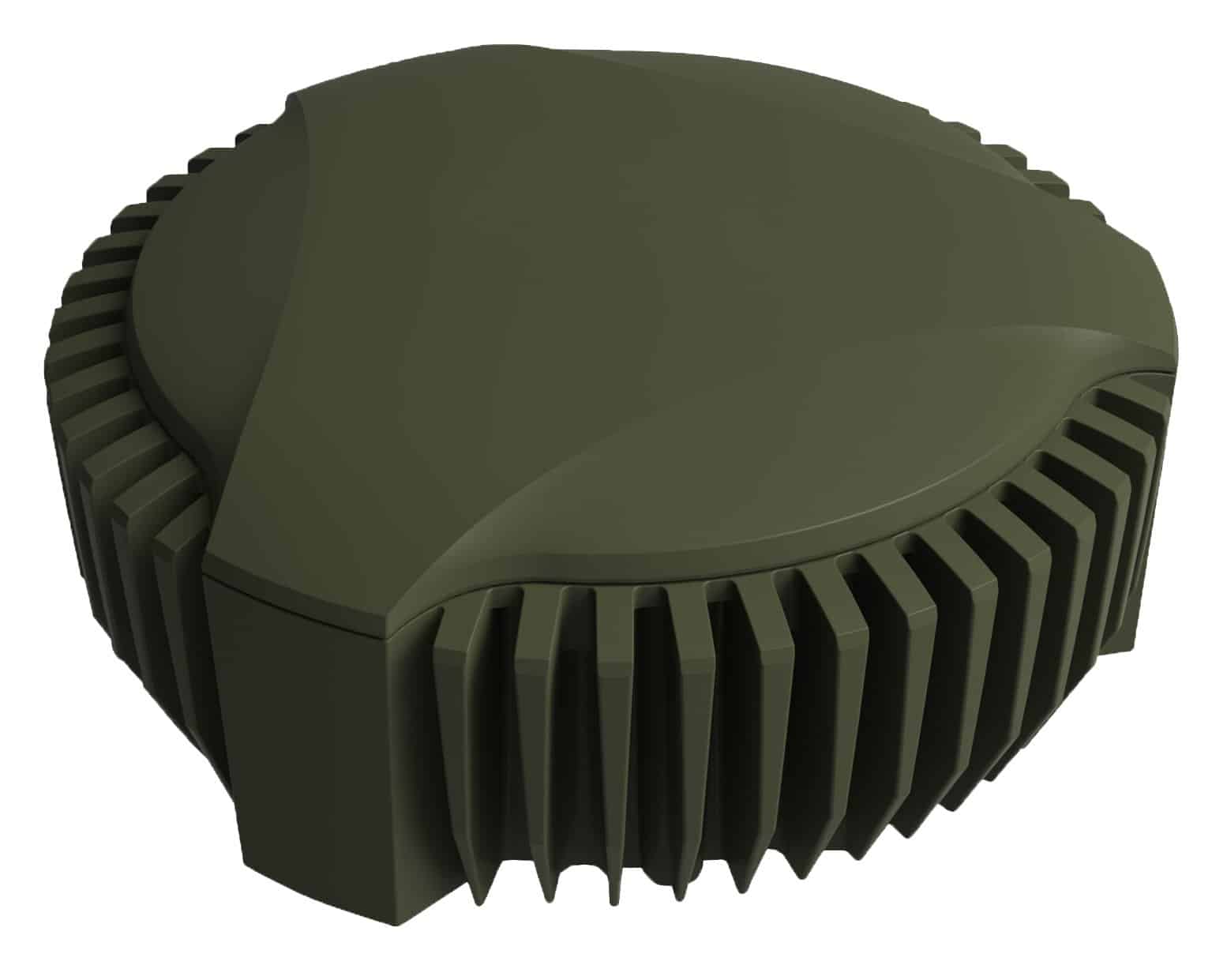
When comparing drone anti-jamming devices, four parameters do most of the work: J/S ratio, number of nulls, supported bands, and SWaP (size, weight, and power). Top-tier systems survive a +40 dB J/S ratio or more, compact CRPAs (Controlled Reception Pattern Antennas) typically mitigate one to three simultaneous jammers, and small UAV modules usually land under 200 g and 3 W.
The table below summarizes the ranges I use as a first-pass filter when evaluating hardware for a cooperative deployment.
| Parameter | Typical Range | Notes |
|---|---|---|
| J/S ratio | +40 dB or more (top tier) | Higher is better; drives cost and size |
| Nulls | 1-3 (compact CRPA) | Each null counters one jammer direction |
| Bands | L1, L2, L5 | Multi-constellation: GPS, Galileo, BeiDou, GLONASS |
| SWaP | Under 200 g, 3 W | Small UAV modules; heat matters on long missions |
| Interfaces | UART, CAN, Ethernet | Flight controller and GNSS receiver compatibility |
| Jamming targets | 900 MHz, 2.4 GHz, 5.8 GHz, 4G/5G | Threats the system should be rated against |
Read that table as a trade space, not a checklist. A defense-grade UAV can carry multi-band, multi-null protection, while a lightweight commercial drone needs compact low-power modules and will accept narrower protection. High-end devices may also fall under ITAR/EAR export restrictions, which can quietly kill a procurement plan long before the technical review does.
Anti-Jamming Path Planning and Channel Selection in Urban Environments
Anti-jamming path planning actively adjusts UAV positions so that data transmission happens in geometrically favorable spots. In urban environments, high-rise structures create multipath and shadowing that change block by block, and a jammer's line of sight can be broken by simply moving a few dozen meters. Work on anti-jamming path planning for UAVs in urban environments (December 2025) treats trajectory as a control variable alongside channel and power.
Channel selection and path planning are coupled, not sequential. Choosing a clean channel is pointless if the geometry forces the drone through a jammed corridor, and a good trajectory can rescue a mediocre channel. Cooperative schemes handle this by modeling the problem as a Dec-POMDP, designing distributed algorithms, obtaining a Stackelberg equilibrium where applicable, and then analyzing convergence and transmission power impact.
For teams starting out, I'd suggest evaluating the operational environment first — urban versus rural, proximity to airports, border areas, and military zones — because that single question narrows the architecture more than any algorithm choice.
What Jamming Threats Do UAVs Actually Face?
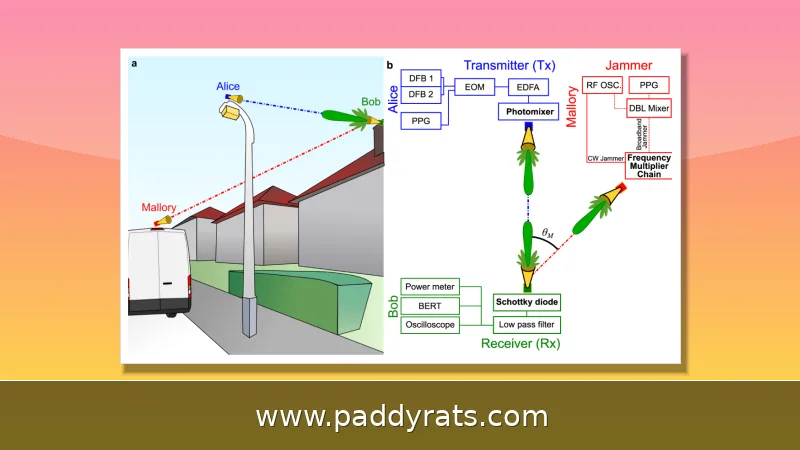
The threat list is longer than most operators expect. RF jamming targets 900 MHz, 2.4 GHz, 5.8 GHz, and 4G/5G bands, which covers most consumer and commercial control links. GPS jamming overwhelms the receiver and causes loss of position data, while GPS spoofing misleads onboard systems about where they are — a subtler and often more dangerous failure. Broadband jamming floods the airspace with high electromagnetic noise, whereas narrowband jamming targets specific frequencies with fewer collateral impacts.
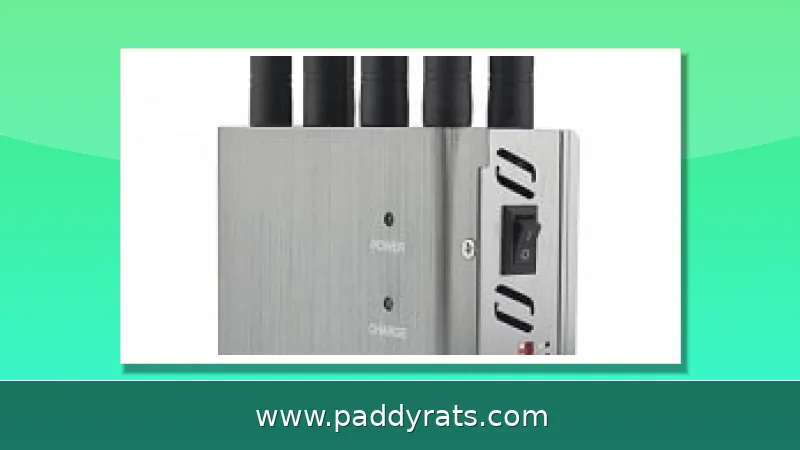
There is also interference nobody is aiming at you. Swarms generate internal mutual interference between their own radios, and GNSS/GPS signals degrade from natural magnetic interference, complex geological terrain, high-rise urban structures, and emissions from nearby equipment. Geopolitically, the European Union Aviation Safety Agency has reported increased GNSS jamming and spoofing across the eastern Mediterranean, the Baltic Sea, and Arctic regions since the Russian invasion of Ukraine. Drone jamming is also rising along the US-Mexican border, where drug traffickers use jammers against border security drones. A jamming device can cost only a couple hundred dollars.
How Do You Choose and Deploy a Cooperative Anti-Jamming Setup?
Start with the operational environment: urban or rural, near airports, border areas, or military zones. Then consider mission duration, because power consumption and heat management decide whether a 3 W module survives a two-hour sortie. Assess integration complexity next — plug-and-play units versus OEM modules that need firmware work — and check budget alongside export limitations, since ITAR/EAR restrictions can rule out otherwise ideal hardware.
On the cooperative side, the workflow is consistent across projects: model the problem as a Dec-POMDP, design distributed algorithms, obtain a Stackelberg equilibrium where the interaction supports it, and analyze convergence and transmission power impact. Traditional anti-jamming methods that rely on predefined rules or simple parameter adjustments are increasingly inadequate against intelligent jammers that learn UAV communication behaviors and flight patterns and adjust their strategies for precise targeting.
One regulatory point worth stating plainly: jammers are illegal to operate in many jurisdictions, including Australia, due to public safety risks, while anti-jamming systems are legal and often essential. Fibre-optic tethering, which keeps drones physically connected to operators through lightweight optical cables, remains a brute-force but effective fallback when RF links cannot be trusted.
Frequently Asked Questions
How does a UAV cooperative anti-jamming system work?
Multiple UAVs share perception of the electromagnetic environment and jointly choose channels, power, or trajectories. Agent-based designs follow a Perception-Decision-Action loop, using game theory to model UAV-jammer interaction and reinforcement learning to derive adaptive strategies, so the swarm avoids or mitigates jamming collectively rather than per-drone.
What algorithms are used for multi-UAV anti-jamming?
Common approaches include Stackelberg and local altruistic games for channel selection, decentralized partially observable Markov decision processes (Dec-POMDP), independent Q-learning such as the mission-driven MD-QL algorithm, hierarchical DQN with federated learning, and reinforcement learning for UAV relay policy optimization.
What performance metrics matter for drone anti-jamming devices?
Key parameters include J/S ratio (top-tier systems survive +40 dB or more), number of nulls (typically 1-3 for compact CRPAs), supported bands L1/L2/L5 with multi-constellation GPS, Galileo, BeiDou and GLONASS, and SWaP, usually under 200 g and 3 W for small UAV modules.
What jamming threats do UAVs face?
Threats include RF jamming on 900 MHz, 2.4 GHz, 5.8 GHz and 4G/5G bands, GPS jamming and spoofing, broadband jamming that floods airspace with electromagnetic noise, narrowband jamming targeting specific frequencies, plus internal mutual interference within swarms and environmental interference.