Deep reinforcement learning lets satellites learn spectrum, time slot, and power decisions that dodge jammers in real time. Multi-agent, quantum adversarial, and transfer-learning variants now deliver measurable gains in LEO constellations, fast frequency hopping, and radar.
What Is Deep Reinforcement Learning Anti-Jamming for Satellites?
Deep reinforcement learning, or DRL, treats anti-jamming as a learning problem: a satellite or ground terminal acts as an agent that figures out how to transmit while a jammer keeps trying to shut it down. There's no fixed frequency-hopping pattern or preset power rule to fall back on. Instead, the agent watches the spectrum, picks an action — a channel, a time slot, a power level — and then adjusts its policy based on the reward it gets back. Deep neural networks do the heavy lifting here, pulling useful features out of raw observations and approximating the Q-function, which lets the system connect messy spectrum states to good decisions without anyone hand-coding the rules.
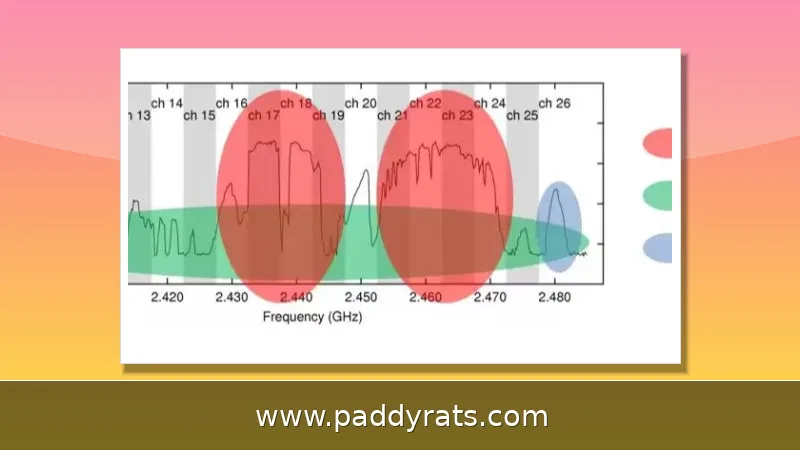
The whole thing runs on the classic reinforcement learning loop: the agent looks at its environment, picks an action, sees how that action affects signal quality or throughput, and then tweaks its network weights to maximize long-term reward. In satellite anti-jamming, that reward typically combines successful packet delivery, low interference, and smart use of the available frequency set. Legitimate users dodge jamming by locating spectral holes—the gaps a jammer leaves open—and shifting their traffic into them before the jammer closes in.
This is exactly where deep learning earns its keep over tabular Q-learning. Think about a LEO downlink: it can cover hundreds of beams and dozens of channels, all while the interference shifts from one moment to the next. Building an explicit state-action table for that is simply not realistic. Deep Q-Networks, by contrast, generalize across similar states, which means the agent can still make reasonable decisions even in situations it has never encountered before. That generalization ability is really the main reason DRL has turned into the go-to framework in recent anti-jamming research.
How Does Deep Reinforcement Learning Help Satellites Avoid Jamming?
Instead of following a fixed rulebook, DRL agents figure out their transmission decisions by learning from past experience. When you drop them into a LEO constellation, a fast frequency hopping setup, or a UAV relay, they pick channels, time slots, or power levels on their own to slip past jammers and keep communication quality up. What's nice is that one learned policy can handle a constant jammer, a random jammer, and even a reactive jammer that senses before it strikes, all without being rebuilt from scratch for each new threat.
One good way to see the difference is to put the traditional toolbox side by side with the DRL approach. Traditional anti-jamming methods typically rely on a single mechanism at a time, so when the jammer switches up its behavior, they can't adapt all that well.
How Multi-Agent DRL Enables LEO Satellite Spectrum Access
No single satellite has a full view of the constellation, which is exactly why multi-agent DRL is used to coordinate decisions across many distributed nodes. Each agent learns its own local policy, while a shared objective keeps the whole constellation from interfering with itself as it works to dodge the jammer. This becomes especially important in dense LEO constellations, where dozens of satellites and ground terminals are all competing for the same spectrum at the same time.
One multi-agent DRL approach to anti-jamming spectrum access in LEO satellites reported near-optimal user satisfaction of about 97%, along with minimal link overhead, high data rates, and wide geographical coverage. The same study struck a balance between training costs and anti-jamming performance, improving jamming avoidance and user satisfaction while cutting computational overhead. There's also been work proposing distributed multi-agent DRL for LEO satellite constellations, aimed specifically at tackling anti-jamming at the constellation level.
Quantum Adversarial DRL Against AI-Based Jamming
Once jammers start using machine learning themselves, the defender's job changes: you're no longer up against a fixed threat, but an adversary that adapts. That's the problem quantum adversarial deep reinforcement learning (QADRL) for LEO satellite networks is built to handle, going after AI-driven jamming by pairing quantum techniques with adversarial training. The reported numbers are promising — QADRL beat classical adversarial DRL (CADRL), cutting the jamming success rate by 33.33% while also raising throughput.
This adversarial setup is important to keep in mind. A reactive jammer listens for a transmission and then responds to it, so the problem stops being a static optimization and becomes a two-player game. That's where game theory comes in—researchers often use the Stackelberg game to capture this jammer-defender interaction, with the defender committing to a strategy first and the jammer responding in the way that hurts it most. Quantum methods add another layer by expanding the policy space the defender can search over. That flexibility pays off when the jammer is itself a learning agent and keeps changing its behavior.
Measured Performance: User Satisfaction, Jamming Success Rate, and Overhead
The reported numbers give a pretty concrete sense of what DRL actually delivers in practice. In one case, multi-agent DRL for spectrum access in LEO satellites reached about 97% user satisfaction, and it did so with minimal link overhead. On the quantum side, QADRL cut the jamming success rate by 33.33% compared with CADRL, all while pushing throughput higher. There's also a spatial anti-jamming scheme for the Internet of Satellites that combines DRL with a Stackelberg game, and it came out ahead of existing approaches on both routing cost and anti-jamming performance.
The table below summarizes the headline results and the baseline each method is measured against.
Which Reinforcement Learning Types Are Used for Anti-Jamming Research?
Surveyed RL-based anti-jamming solutions include Q-learning, multi-armed bandit (MAB), deep reinforcement learning, and transfer RL. Deep RL combines RL with deep learning, employing deep neural networks to extract useful features and approximate the Q-function. Each family fits a different problem shape: MAB suits fast channel selection with little state, Q-learning suits small discrete state spaces, and DRL suits large, high-dimensional spectrum observations.
The table below maps the main RL families to their typical anti-jamming role and limits.
Transfer Learning and Adaptive DQN for Dynamic Jamming
Dynamic wireless networks punish slow learners, because a policy that takes thousands of episodes to converge may be obsolete before it finishes training. Transfer learning (TL) addresses this by letting a DRL agent reuse knowledge from a related task so it learns fast in a new environment. One proposed TL-based anti-jamming approach is designed exactly for this: the agent confronts jamming attacks in dynamic wireless networks without retraining from scratch.
Adaptive DQN takes a related tack for mobile ad hoc networks (MANET). A Deep Q-Network generates transmission decisions at the transmitter, and an adaptive DQN variant copes with changing jamming conditions. Reported results show it learns an optimal policy to avoid jamming more quickly and efficiently than a Q-learning baseline.
Feature Engineering, Fast Frequency Hopping, and Radar Applications
Not every gain comes from a bigger network. An improved anti-jamming method based on DRL and feature engineering analyzes spectrum differences between adjacent time slots to extract jamming patterns, which reduces computational complexity and outperforms traditional CNN-based approaches. The insight is that jamming leaves a fingerprint across time, and encoding that fingerprint as a feature makes the learning problem easier.
Fast frequency hopping (FFH) systems benefit from the same idea. One 2025 approach introduces the available frequency set (AFS) concept and applies DRL to FFH systems, so the agent reasons about which frequencies are usable rather than hopping blindly. Cognitive radar has moved in a similar direction: multi-agent DRL has been used to improve anti-jamming decision-making through an adversarial anti-jamming decision-making network, and DRL has been applied to airborne radar anti-jamming waveform design by sensing input environmental information.
DRL has also been applied to defeating proactive jammers in custom simulations using a fully connected neural network architecture, and to UAV relay policy for anti-jamming maritime communications. A communication anti-jamming system based on DRL specifically targets the instability of deep learning anti-jamming algorithms, since that stability is greatly influenced by the samples the agent sees. Simulation showed the decision scheme choosing the best anti-jamming option for a complex environment and improving communication quality.
Limitations, Tradeoffs, and What to Watch
The honest caveat is that deep learning anti-jamming algorithms remain sensitive to their training samples. If the sample distribution does not match the deployed interference, performance can degrade sharply, which is why transfer learning and adaptive variants matter. Training cost is the second constraint: multi-agent methods must balance the compute spent learning against the anti-jamming performance they deliver, and that tradeoff is explicit in the reported LEO results.
Traditional methods still have a place. Frequency hopping, spread spectrum, time slot control, power control, rate control, anti-jamming case libraries, and particle swarm optimization are mature and predictable, but they use a single approach and cannot adaptively adjust strategy. The practical direction in the literature is hybrid: keep the robust physical-layer tools and layer a learned policy on top that decides when and where to use them.
For anyone tracking this field, the signals worth watching are convergence speed under a reactive jammer, the compute budget per satellite, and whether reported gains hold when the jammer is also learning. The results so far, from roughly 97% user satisfaction in multi-agent LEO spectrum access to a 33.33% reduction in jamming success for QADRL, suggest the approach is past the proof-of-concept stage. This article is not investment advice.
Quick Reference: Method Comparison
| Method | Setting | Reported result |
|---|---|---|
| Multi-agent DRL spectrum access | LEO satellites | ~97% user satisfaction, minimal link overhead |
| Quantum adversarial DRL (QADRL) | LEO satellite networks | 33.33% lower jamming success vs. CADRL, higher throughput |
| Adaptive DQN | MANET | Faster, more efficient jamming avoidance than Q-learning |
| DRL + feature engineering | General wireless | Lower complexity, beats CNN-based approaches |
| DRL + Stackelberg game | Internet of Satellites | Lower routing cost, better anti-jamming performance |
Frequently Asked Questions
How does deep reinforcement learning help satellites avoid jamming?
DRL agents learn transmission decisions from historical experience, using deep neural networks to extract features and approximate Q-functions. Applied to LEO constellations, fast frequency hopping, or UAV relays, they select channels, time slots, or power to dodge jammers and improve communication quality.
What results do multi-agent DRL anti-jamming methods achieve?
A multi-agent DRL spectrum-access method for LEO satellites reached near-optimal user satisfaction of approximately 97% with minimal link overhead, high data rates, and wide geographical coverage, while balancing training costs against anti-jamming performance.
How does quantum adversarial DRL compare with classical adversarial DRL?
The proposed quantum adversarial deep reinforcement learning (QADRL) approach for LEO satellite networks outperformed classical adversarial DRL (CADRL), reducing the jamming success rate by 33.33% and increasing throughput while mitigating AI-based jamming attacks.
Which reinforcement learning types are used for anti-jamming?
Surveyed RL-based anti-jamming solutions include Q-learning, multi-armed bandit (MAB), deep reinforcement learning, and transfer RL. Deep RL combines RL with deep learning, employing deep neural networks to extract useful features and approximate the Q-function.