Intelligent anti-jamming communication technology pairs deep neural networks with deep reinforcement learning to sense jamming, pick channels, and hold a link. This guide covers the algorithms, the measured accuracy and convergence numbers, and the GNSS nulling, beamforming, and excision defenses that keep positioning alive.
What Is Intelligent Anti-Jamming Communication?
Intelligent anti-jamming communication technology marks a real shift: instead of relying on fixed, pre-programmed interference rejection, these systems sense the electromagnetic spectrum, learn how the jammer behaves, and rewrite their own transmission strategy on the fly. In my reading of the literature, the dividing line is pretty simple. Adaptive anti-jamming tweaks a handful of parameters inside a fixed rule set; intelligent anti-jamming goes further and builds a model of the environment, then decides what to do next. A 2024 review traced roughly 50 years of evolution from adaptive communication anti-jamming to intelligent communication anti-jamming built on game theory and machine learning, which is a handy frame for anyone entering the field today.
Nearly every published design leans on the same basic building blocks. An interference sensing module keeps an eye out for abnormal signals, deep neural networks pull out and process the relevant signal features, and an optimization layer adjusts the communication strategy on the fly. The older adaptive approaches worked too, but they only tuned a handful of communication parameters in response to the jamming environment, which formed a kind of cognitive loop. The intelligent version closes that loop far more quickly and across a much bigger decision space. That's exactly why it can stand up to sweeping frequencies, burst transmissions, and deceptive waveforms, the very tactics that make static spectrum allocation fall apart.
How Does Intelligent Anti-Jamming Work?
The process begins with electromagnetic spectrum feature cognition: the receiver keeps an eye on its own band, picks up on anything abnormal, and works out what kind of interference it's dealing with. From there, deep neural networks pull out and process the relevant signal features, while a near-end strategy optimization step tweaks the communication strategy on the fly. In some designs, the whole problem gets framed as a Markov Decision Process—or a Partially Observable Markov Decision Process when the receiver can't see the full Channel State Information—and is then tackled with deep reinforcement learning methods like PPO, MAPPO, or DRQN to decide which channels to use and how much power to transmit.
One thing I think gets overlooked here is exploration control. There's an algorithm that automatically adjusts the exploration rate decay factor, and it can still hit near-optimal performance even when you start with a large decay factor—which saves you a ton of tedious manual tuning. That actually matters in practice, because anti-jamming is a moving target: the jammer responds to whatever policy you adopt, so if your strategy locks in too rigidly early on, it's going to get exploited. The cognitive loop needs to keep sampling alternatives while still keeping the link alive.
Key Algorithms: PPO, MAPPO, DRQN, and Q-Learning
What really separates these algorithm families is the assumptions they make about observability and coordination. Ding et al. (2024) brought PPO into anti-jamming communication, modeling a jammer that picks the M channels (where M is less than N) the system is most likely to use, with the jamming signal's total transmit power spread across N_J levels, from a minimum of P_J,1 up to a maximum of P_J,N_J. Zhang et al. (2025, Scientific Reports and MDPI Electronics) took a different route, framing anti-jamming under malicious jamming as a Markov Decision Process and applying MAPPO with centralized training and decentralized execution (CTDE). The appeal there is straightforward: multiple agents can coordinate while they're training, yet still act independently once they're deployed in the field.
Zhang et al. (2025, Scientific Reports) ran into the problem of limited Channel State Information head-on, framing it as a Partially Observable Markov Decision Process and pairing that with a Deep Recurrent Q-Network built around LSTM. Here's the basic idea: the LSTM picks up on temporal features in the signal history, the network flattens what it learns, and then fully connected layers spit out the anti-jamming strategy. What makes the recurrent memory matter is that it lets the agent piece together the jammer's hidden state from a short window of past observations, rather than requiring a complete channel estimate up front. That's a big deal, because a full channel estimate is precisely what's out of reach for many RF receivers whose tunable bandwidth only spans a few tens of megahertz.
Measured Performance: Accuracy, Convergence, and Throughput
The results people are reporting line up well enough that they're actually useful as benchmarks. Zhao et al. (2025, PLOS ONE) put forward an intelligent anti-interference algorithm that pairs deep neural networks with game theory, built on proximal policy optimization, and they reported 95.23% accuracy in identifying interference signals along with 85.47% anti-interference accuracy, beating out random forest and deep Q-network models. The table below pulls together the headline numbers I'd point to when comparing these approaches.
| Study | Method | Reported Result |
|---|---|---|
| Zhao et al. (2025, PLOS ONE) | Deep neural network plus game theory, near-end strategy optimization | 95.23% interference identification accuracy; 85.47% anti-interference accuracy |
| Zhang et al. (2025, Scientific Reports) | POMDP with DRQN and LSTM | 45% fewer time slots to converge under periodic jamming; 32% fewer under intelligent blocking jamming |
| Wang et al. (2026) | Proposed intelligent interference resistance technology | Average performance estimation value of 0.8435 |
| Shawly et al. (2026) | Probability-aware AI framework | 92.3% successful communication rate under dynamic jamming |
Those convergence numbers are worth unpacking. When Zhang et al. tested their DRQN with LSTM under periodic jamming and intelligent blocking jamming, it cut the time slots needed to converge by 45% and 32%, respectively, compared to Double DQN. And once it settled, normalized throughput came out a bit above what DQN and Q-Learning managed. That speed matters more than it might seem. Every slot the system spends figuring things out is a slot running at degraded throughput, and while it's learning, the jammer is adapting right alongside it. Across these studies, the same trend keeps showing up: intelligent methods outperform random forest, DQN, DDQN, and Q-Learning in the reported tests, though how big the gap is depends on the jamming model and what the system can actually observe.
GNSS Anti-Jamming: Nulling, Beamforming, and Excision
GNSS is a bit of a special case. By the time satellite signals travel through space and the atmosphere and finally reach Earth, they're incredibly weak, which means even a relatively low-power jammer can drown them out. That's a real problem, since positioning, navigation, and timing services underpin everything from military operations to aviation, maritime traffic, autonomous vehicles, and financial networks. The defenses that have emerged fall into two broad categories, antenna-level and signal-level techniques, and in practice they tend to be used together rather than as competing options.
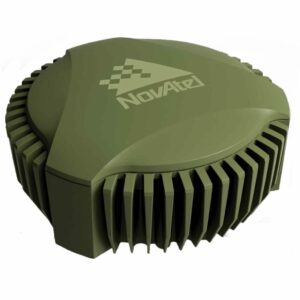
Nulling creates a null, a direction of low sensitivity, toward the jammer, with the number of nulls dictated by the system channel count. Beamforming instead directs an RF beam toward a recognized GNSS satellite, which raises the received signal and makes jamming harder. Excision eliminates narrowband interference that exceeds a statistical power threshold, and the remaining signals are then transformed for nulling. Controlled reception pattern antennas, or CRPAs, dynamically steer nulls toward jamming sources, which is why they show up in high-end receivers where the antenna array and the digital backend are co-designed.
Sensor Fusion and Frequency Diversity for Resilience
When jamming wins temporarily, the goal becomes graceful degradation rather than outage. Frequency diversity helps first: GPS L1, L2, and L5 give dual or multi-frequency receivers the option to switch to unaffected bands when one is contested. Sensor fusion picks up where radio stops. An inertial navigation system can bridge GNSS loss for minutes or hours, and it is commonly combined with visual odometry, barometric altimeters, and terrain contour matching to bound drift. In my experience reviewing these architectures, the fusion layer is where the real engineering effort sits, because the error characteristics of each sensor are completely different.
Military users add another layer: GPS M-Code or Galileo PRS, plus signal authentication and encryption to prevent spoofing. It is worth separating jamming from spoofing here. Spoofing is a distinct threat that uses false satellite signals to push a receiver toward a wrong position or time, and it can succeed even when the link looks healthy. Authentication and encryption address that class of attack, while nulling and beamforming address the power-based one.
What Are the Limits and Risks of Intelligent Anti-Jamming?
Jammers are becoming cheaper and more accessible, and reported jamming cases are rising, which is the main reason this topic moved from defense journals into commercial receiver design. Anti-jamming remains a technological arms race rather than a solved problem. Jammers use sweeping frequencies, burst transmissions, and deceptive waveforms, and each of those stresses a different part of the cognitive loop. Traditional spread-spectrum anti-jamming lacks adaptability to time-varying jamming, and static spectrum allocation with fixed interference patterns cannot adapt to rapidly changing electromagnetic environments while also facing computational complexity with large volumes of real-time data.
Limited Channel State Information is the constraint I would flag to anyone planning a deployment. It constrains some radio frequency receivers, particularly those with tunable bandwidth of only a few tens of megahertz, and it is the reason partially observable formulations and recurrent networks appear so often in the recent literature. The honest summary is that intelligent anti-jamming buys real performance gains, but the gains depend on how much the system can observe, how fast it can react, and whether the jammer is optimizing against the same policy.
Frequently Asked Questions
How does intelligent anti-jamming communication work?
Systems sense abnormal signals in the electromagnetic spectrum, extract features with deep neural networks, then dynamically adjust communication strategies. Some designs model the problem as a Markov Decision Process or a Partially Observable Markov Decision Process and solve it with deep reinforcement learning such as PPO, MAPPO, or DRQN to pick channels and transmit power.
What accuracy do intelligent anti-jamming models achieve?
A deep neural network plus game theory model based on near-end strategy optimization reported 95.23% accuracy in identifying interference signals and 85.47% anti-interference accuracy, outperforming random forest and deep Q-network models. A probability-aware AI framework reported a 92.3% successful communication rate under dynamic jamming conditions.
What is the difference between nulling, beamforming, and excision?
Nulling creates a low-sensitivity null toward the jammer, with the number of nulls set by the system channel count. Beamforming directs an RF beam toward a recognized GNSS satellite, making jamming harder. Excision removes narrowband interference that exceeds a statistical power threshold, and the remaining signals are then transformed for nulling.
Why is GNSS vulnerable to jamming?
GNSS signals are weak by the time they reach Earth after traveling through space and the atmosphere, so relatively low-powered jamming devices can overpower them. That can impair positioning, navigation, and timing services used by military, aviation, maritime, autonomous vehicles, and financial networks, which is why nulling, beamforming, and sensor fusion are deployed together.