Anti-theft GPS trackers turn your vehicle from an easy target into a recoverable asset by broadcasting its exact location in real time. Here is how they work, where to hide them, and why they outperform alarms and steering wheel locks.
What Is an Anti-Theft GPS Tracker and How Does It Actually Work?
An anti theft gps tracker is a small electronic device that uses satellite signals to identify the exact latitude and longitude of your car, continuously transmitting this data back to a server accessible via smartphone or computer app. The GPS you have on your dashboard is generally only for navigation; security tracker is purpose-built to continue reporting even when the car has been parked, locked up, and gone silent.
The mechanics are important as they clarify the advantage. An intruder could break a window, sever the cable to the battery or fray the steering wheel lock but they will not be able to disable a satellite constellation. If the tracker is powered and in a position to see the sky, it continues relaying where it currently resides. From testing those devices, the distinction between a navigation unit and an anti-theft tracker is actually that of map versus witness.
What Security Features Separate Anti-Theft Trackers From Ordinary GPS Devices?
Anti-theft trackers are unique because they come with a whole suite of security features that sit on top of the tracking itself.
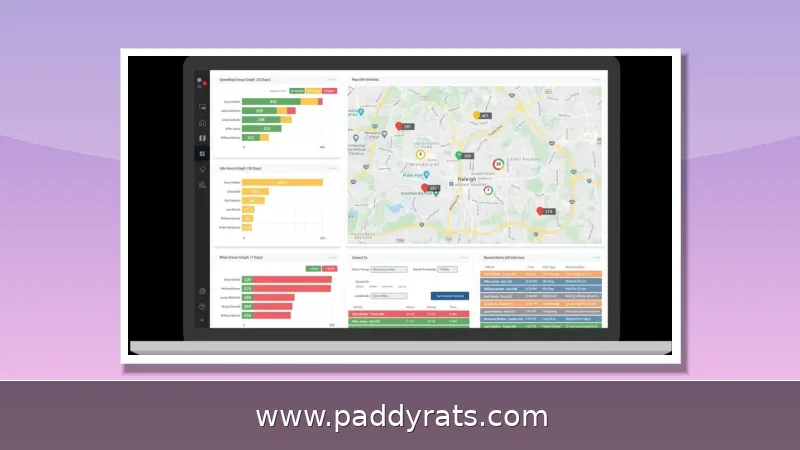
That means you receive alerts as soon an intruder starts driving your parked car — so that rather than learn of a theft hours later, you're informed while it's happening. Moreover, you can set up digital zones (geofences) around your home, office or a client area and be notified whenever the vehicle comes in running these areas.Of this kind of gadget, the LandAirSea 54 is definitely a testament to its namesake. It combines real-time tracking with an integrated magnet strong enough to hide almost anywhere on the vehicle, and offers vital security attributes over basic location reporting. For fleet managers and individual owners, these alerts change a largely passive history of location into an early warning system.
But theft recovery isn't the only thing these trackers are good for. A lot of insurance companies, for instance, see the security value in them and will actually cut you a break on your premiums. And the real-time tracking side of things has plenty of other uses too — keeping an eye on a teen driver, checking that a rideshare car is actually taking the route it should, or helping a delivery business keep its logistics in order.
Where Should You Install a Car GPS Tracker for Maximum Protection?
A tracker only works if a thief is not able to disable it first, hence any ideal installation spot should therefore be hidden but also placed in an area that can receive GPS signals successfully. The four best hiding places are those that a criminal conducting a cursory search is unlikely to check: inside the vehicle's frame, in a bumper or inside of wheel well. Items for interior-hidden placement suggest deep inside glove compartments, securely tied down beneath a seat or behind plastic paneling in the trunk and/or under the dashboard.
I see people make one mistake over and over: hiding a tracker in an entirely metal-sealed box. Because GPS signals are blocked by metal shielding, a device that cannot see the sky will be unable to provide its position. You can also test your signal before you actually send it from where you've chosen (or balanced concealment vs reception).
The LandAirSea 54 comes with a strong built-in magnet and a waterproof body, so you can stick it onto basically any metal surface of your car without much effort. That kind of flexibility matters more than people think, because it means you're not stuck with one fixed spot. You can move it around until you find a place that keeps it hidden but still gives you a solid GPS signal, which is really the whole point.
How Do You Compare GPS Trackers for Vehicle Use Before Buying?
One of those differentiators is installation flexibility, while battery life could be the ultimate specification amongst them all. Since stolen vehicles are sometimes parked and "cooked" for days or even months after going missing, a recovery device must continue to report. If batteries run dry on day 2, it would be case-closed.
For instance, in order to increase the battery life, you can tell the device how often it should send its location data back until server. Higher ping cycles offer more recent coordinates but not every device allows that change, and most will have empty batteries sooner with so many transmissions. You respect rated battery life, part without fail and to set up since buying.
The comparison criteria that matter most break down like this:
What Happens When a Car Is Stolen Without GPS Protection?
When a vehicle without a tracker is stolen, the owner is immediately at a severe disadvantage. The typical first step is a call to law enforcement with the car's last known location, but that information is already outdated the moment it is spoken. From then on, it becomes a race against a clock that heavily favors the thief.
Police can quickly file a report and enter the vehicle's VIN into a national database, but without live location data their search is reactive and often depends on catching a lucky break. Within hours, a stolen vehicle can be driven across state lines, hidden in a private garage, or delivered to a chop shop to be dismantled for parts. Professional thieves know how to replace VIN plates on popular makes and models, which makes a stolen car that much harder to trace.
This is the gap a GPS tracker closes. Instead of waiting passively, you hand investigators a moving dot on a map, and the search becomes targeted rather than speculative.
Why Do Thieves Target Certain Vehicles, and How Does Tracking Change the Math?
If you follow news coverage of car theft rings, patterns emerge quickly: the same makes and models get stolen again and again. For criminals, stealing is a calculation of risk versus reward. A thief seeks maximum value for minimum risk of being caught, which usually means a popular model with high-demand parts, parked in a low-light or unmonitored area with the fewest visible deterrents.
An anti-theft GPS tracker alters that risk equation. The thief may succeed in the initial theft, but the car is now broadcasting its location, and every minute they possess it increases the chance of being caught. If they know a car is tracked by GPS, it suddenly becomes an unattractive target. If they do not know, they are walking into a trap.
The psychology cuts both ways. Visible deterrents like a blinking alarm light or a steering wheel lock push a thief toward an easier mark, while a hidden tracker removes the easy exit even after the crime is committed.
Hidden Power: How Do Small GPS Devices Deliver Big Results?
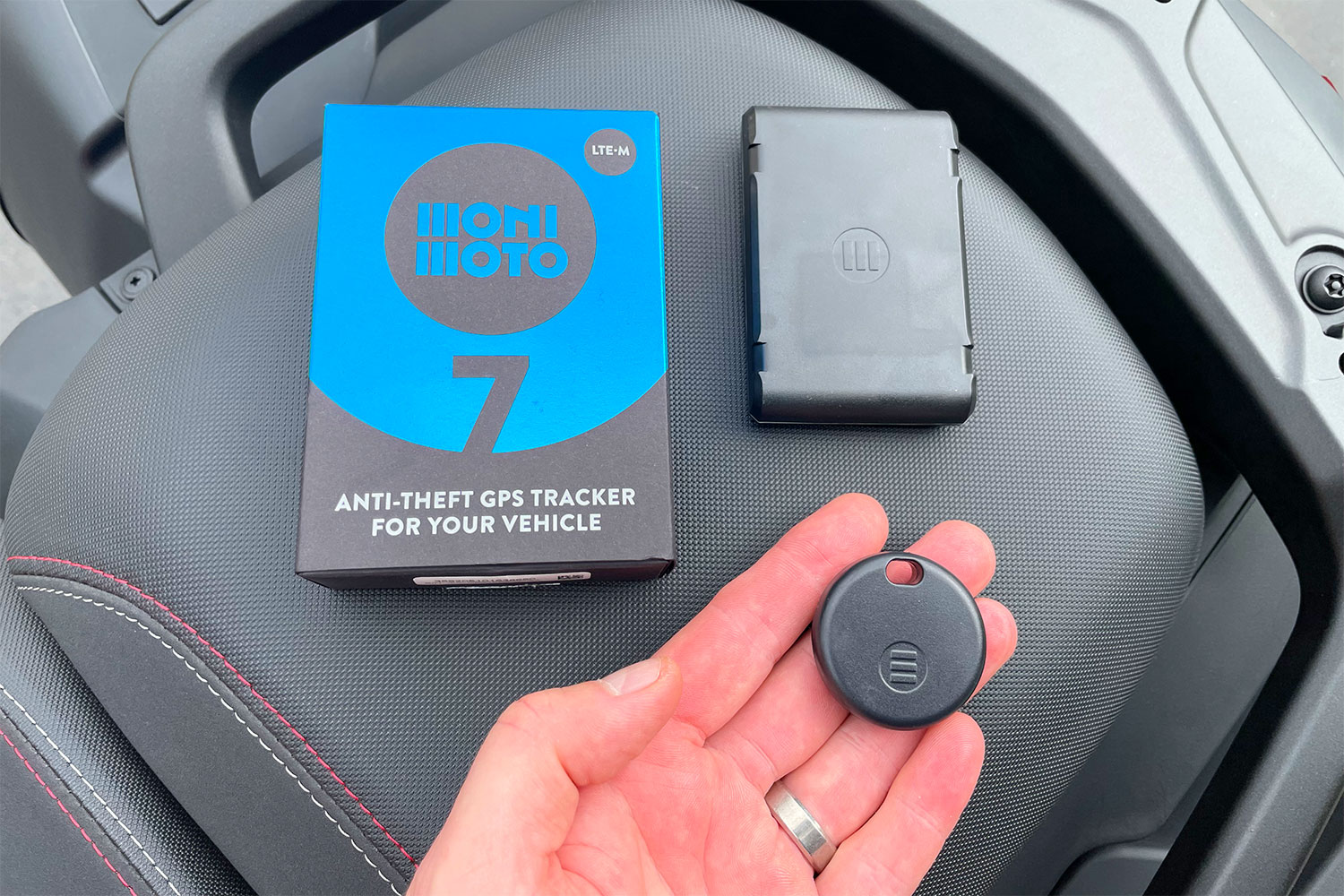
Stealth installation is crucial because it does not tip off a potential thief. A bulky, obvious device can be found and discarded in seconds, rendering it useless. Smaller trackers deliver value well beyond their size, and the LandAirSea 54 is a good illustration: compact, magnetic, and packed with high-performance GPS technology that lets it hide in countless locations a thief would never think to check.
Despite its small footprint, the 54 provides pinpoint GPS accuracy, sends real-time alerts to your GPS apps, and runs on a long-lasting rechargeable battery. That combination is why many consider it the definition of a low-profile, high-impact security solution. Its hidden power ensures that if your vehicle is ever compromised, you remain in control of the recovery process.
Which Myths About Car GPS Trackers Should You Stop Believing?
If trackers are so effective, why don't more owners use them? The main reason is that persistent myths deter people from even exploring the category. Here are the common misconceptions and why they fall apart under scrutiny.
Myth one: trackers are too expensive. Considering the average cost of a new car and the size of insurance deductibles, a high-quality GPS tracker is a relatively small investment, especially with affordable hardware and flexible, low-cost monthly data plans. Myth two: they are only for businesses and fleets. While popular in commercial settings, today's smartphone-enabled GPS apps are user-friendly for individual owners protecting a family car, monitoring a new teen driver, or securing a valuable classic vehicle.
Myth three: thieves can just find and disable them. That assumes a thief knows where to look. With a device like the LandAirSea 54, its compact size, magnetic mount, and Dark Mode allow it to be hidden in places a criminal will not have time to check. A thief cannot disable a device they do not know exists.
Can GPS Trackers Prevent Carjackings or Break-Ins?
It is important to hold realistic expectations about what a tracker can and cannot do. A tracker is a surveillance and recovery tool, not a physical barrier, so it cannot physically prevent a violent crime like a carjacking or a smash-and-grab break-in. Your personal safety should always be the top priority in any confrontation, and no device is worth your life.
That said, a GPS tracker plays a critical role in the aftermath. In the event of a carjacking, once you are safe, you can immediately provide law enforcement with the vehicle's real-time location, which leads to a much faster recovery and a higher chance of apprehending the thieves. The device does not stop the crime, but it dramatically shortens the criminal's window of freedom.
How Does GPS Tracking Help After the Theft, Not Just Before?
While deterrence gets most of the attention, the real value of an anti-theft GPS tracker shows up in the critical moments after a theft has occurred. If a criminal manages to bypass your other defenses, your tracker transitions from a silent guardian into an active recovery tool. You become a partner in the recovery process, armed with critical location information.
In the event of a theft, you can open your GPS app to pinpoint your vehicle's exact coordinates and share that data directly with law enforcement, narrowing a broad search to a targeted location. Features such as location history provide a digital breadcrumb trail that reveals the thief's route and potential hiding spots. Modern tracking lets you change the narrative of vehicle theft from passive waiting to active recovery.
An anti-theft GPS tracker is ultimately an investment in peace of mind. While not all anti-theft devices are built the same, LandAirSea devices offer maximum anti-theft security, with US-based manufacturing, in-house customer support, no binding contracts, and no surprise cancellation fees. This article is informational only and does not constitute investment advice.
Frequently Asked Questions
Do anti-theft GPS trackers work if the thief disconnects the car battery?
Yes, most dedicated anti-theft trackers run on their own rechargeable battery rather than the vehicle's electrical system, so cutting the car battery does not stop location reporting. Battery life varies by device and update frequency, which is why comparing rated runtime before purchase matters so much for long-term recovery.
Where is the best place to hide a GPS tracker in a car?
The best spot is hidden from a quick search but still exposed to the sky, such as inside a bumper, a wheel well, along the frame, or behind plastic paneling in the trunk. Avoid fully enclosed metal boxes, because metal shielding blocks GPS signals and a tracker that cannot receive satellite data cannot report its location.
Are GPS trackers worth it if I already have an alarm and steering wheel lock?
Alarms and steering wheel locks deter amateur thieves, but experienced criminals bypass them quickly. A GPS tracker adds a layer those devices cannot: real-time location data after a theft. Many insurers also recognize trackers with premium discounts, which offsets part of the cost over time.
Can a GPS tracker stop a carjacking from happening?
No. A tracker is a surveillance and recovery tool, not a physical barrier, so it cannot prevent a violent carjacking or a break-in. Its value comes afterward, when you can share live coordinates with law enforcement to speed recovery and improve the odds of catching the thieves.
What is an anti-theft GPS tracker and how does it work?
An anti-theft GPS tracker is a compact device that uses satellite signals to determine your car's exact location in real time. It transmits coordinates to a server, which you access via a smartphone app or computer. If your car is stolen, you can share the live location with law enforcement to aid recovery. Many models also send alerts for movement or geofence breaches.
Where should I install a GPS tracker in my car for maximum protection?
For maximum protection, install the tracker in a well-hidden location that still allows reliable GPS signal reception. Good spots include inside a bumper, within a wheel well, or on the vehicle's frame. For interior placement, consider deep inside a glove compartment, beneath a seat, or behind trunk paneling. Avoid fully enclosed metal boxes, which can block signals.